
Subdivision license in Colombia, urban and rural: which modality the curaduría requires, what it does not authorize, and when each lot can be sold
Before advertising a portion of land as an independent lot, you need the correct modality, the license, the deed that formalizes it, and the registration. Here is the map.
IDIOMA DEL ARTÍCULO
Showing original language
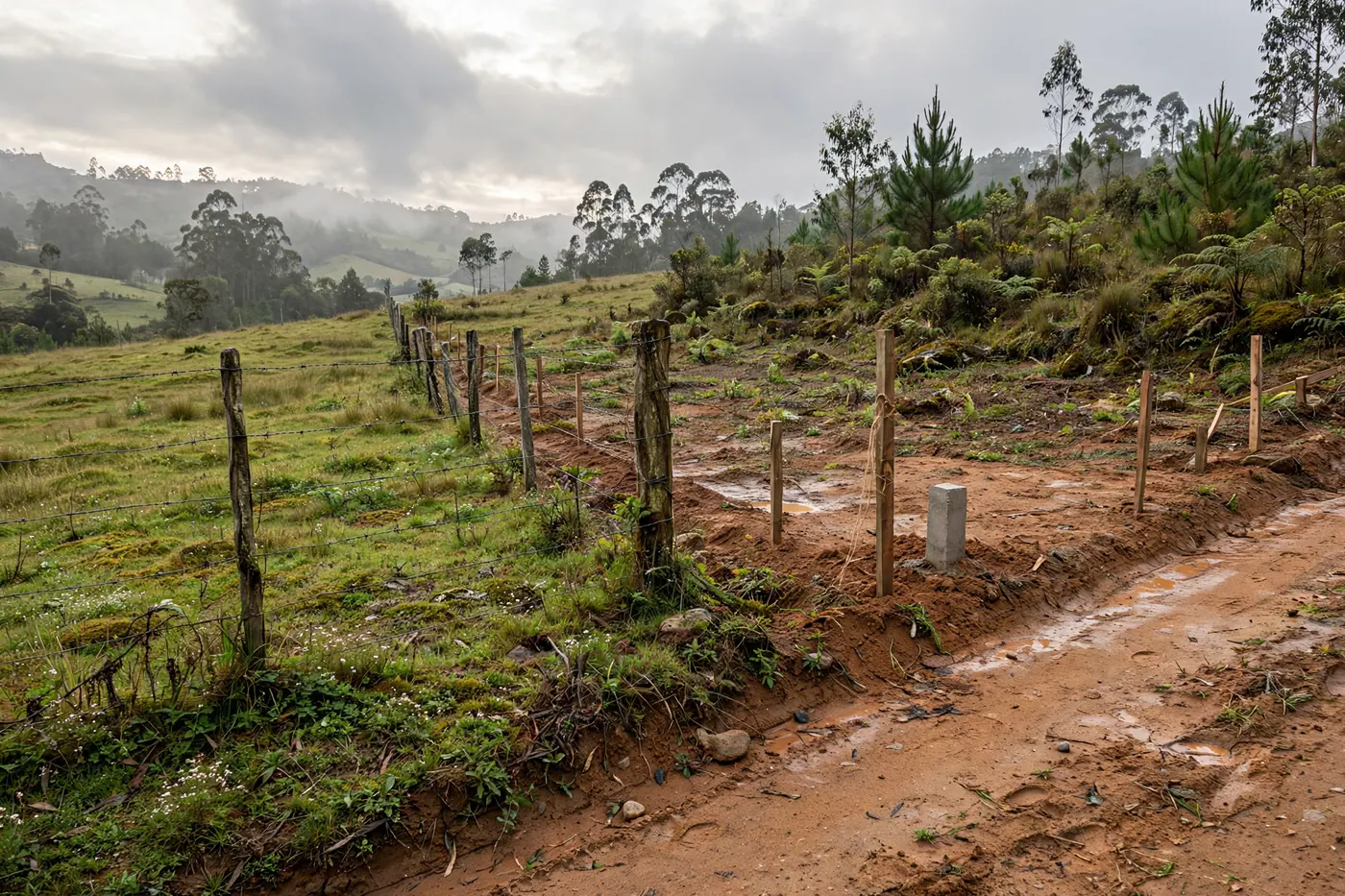
Short answer: you still cannot advertise a fraction as its own lot if you only have a plan or a few stakes in the ground. For that you need the right license modality, the deed that formalizes it, and the registration that opens a new title (matrícula). And watch out: that license does not let you build.
Many landowners split the pasture with a measuring tape, promise "lots of such-and-such by such-and-such" and then realize the notary will not sign. Let's take it step by step, friend, with the current rule: article 2.2.6.1.1.6 of Decree 1077 of 2015, modified by article 9 of Decree 1783 of December 20, 2021 (sources consulted on October 21, 2026).
Which modality applies to you
The subdivision license is the prior authorization to divide one or several properties in rural, urban or expansion land, in accordance with the POT and the applicable rules. If the division was already approved in an urbanization or parceling license, no separate subdivision license is required.
| Your situation | Modality |
|---|---|
| Property in rural or expansion land | Rural subdivision |
| Urbanizable, non-urbanized property in urban land, in one of three specific cases | Urban subdivision |
| Property already urbanized or legalized that you want to redistribute | Relotting |
| The division already comes in an urbanization or parceling license | You do not request a subdivision license |
Two more exits without this license: when the partition or material division is ordered by a final court ruling, or when the subdivision is required for a public utility project. In that last case, the public entity has six months after registration to send the topographic record to the municipal authority and update the cartography.
Urban subdivision: three situations and nothing more
Here is the surprise for anyone who wants to "make building plots" out of a city lot. Urban subdivision only authorizes dividing urbanizable, non-urbanized properties in urban land in one of these situations:
- Separating the urban part from the expansion or rural part.
- Applying special rules for subdivision prior to urbanization contained in the POT or its instruments.
- Separating the urbanizable, non-urbanized area from environmental protection land or from areas affected by article 37 of Law 9 of 1989, within the same property.
In other words, it is not the general tool for turning an urbanizable property into several lots for sale. For that, the usual route is the urbanization license. My honest advice: before paying for a plan, ask the planning office of your municipality which route the POT requires for your property.
Also, in urban land the resulting parcels must meet the minimum areas and frontages of the local urban act, have frontage on a public vehicular or pedestrian road, and cannot be accessed through green or communal areas. The minimum size in meters is local: there is no national figure, so don't look for it in a YouTube video.
Relotting: when the property is already urbanized
Relotting authorizes dividing, redistributing or modifying the lot layout of properties already urbanized or legalized, according to the POT, and it may redistribute private spaces. You must submit the plan with which the property was urbanized and a plan of the resulting parcels, staked, boundary-marked and with an area table, signed by an architect with a license or by an authorized surveying professional.
The same frontage and access rules apply. And it still does not authorize construction. If you sell urban lots, also review how the plusvalía participation is calculated in our guide on the plusvalía tax on selling lots.

Rural, in short
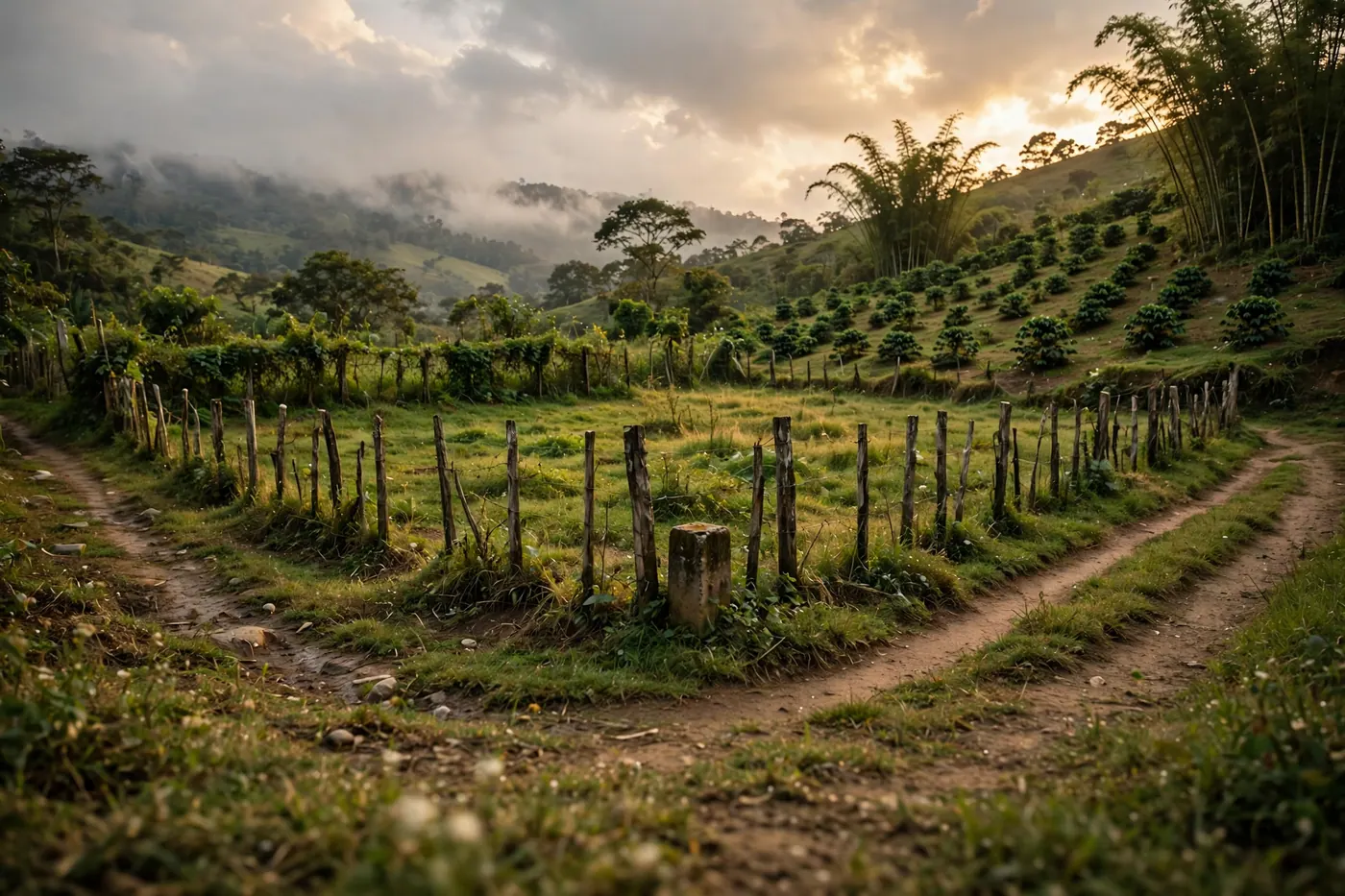
In rural and expansion land the modality is rural subdivision: it materially divides the property according to the POT and the agrarian, cultural and environmental rules, and must guarantee access to each resulting parcel. The general rule is not to go below the Family Agricultural Unit (UAF) of the municipality or the area. Article 44 of Law 160 of 1994 sanctions with absolute nullity the act or contract that produces that division, except for the exceptions in article 45, which must be justified in writing when filing; the authority checks whether the written justification fits, it does not promise approval. The resulting parcels keep their rural nature.
There is no single hectare size for the whole country. The range is checked by municipality in the viewer of the ANT's Rural Lands Observatory (observatorio.ant.gov.co); if your municipality does not appear, confirm it with planning and the land authority, without copying another area's figure. For exceptions, agrarian reform and successions, read our guide on disintegration of rural properties.
Who issues it, what documents, and what it does not authorize
It is issued by the urban curator in municipalities and districts that have that figure. Where it does not exist, and in the Archipelago of San Andrés, Providencia and Santa Catalina, it is issued by the competent municipal or district authority. It is filed in the municipality where the property is located; registration is done at the ORIP of the property's circle.
National documents (Resolutions 462 of 2017 and 1025 of 2021 of the Ministry of Housing):
- Certificate of title and freedom from encumbrances no older than one month (the one for the larger property may be used if there is not yet a disintegration).
- Single national form, with information on neighbors.
- Identity document or certificate of existence and representation no older than one month, and a special power of attorney if there is a proxy.
- Property tax statement from the last year or another official document identifying the property.
- Professional license card of those who intervene.
- Topographic plan before and after (rural and urban), staked, boundary-marked and with an area table, signed by a licensed topographic engineer or licensed professional surveyor.
And most importantly: no modality authorizes infrastructure or construction works. Incorporating the subdivision into the official cartography also does not authorize urbanizing, parceling or building. To build anything on the new lot you need the other procedure: the construction license at the curaduría.
On costs: curator's fees, notary and registration fees must be requested in writing from the curaduría or planning office, the notary's office and the ORIP. I do not publish amounts here. According to the Superintendencia de Notariado y Registro, the certificate of title and registration have a cost, while the owners index search is listed as free.
Twelve months to notarize and register
The license has a non-extendable validity of twelve months from when the act becomes final, for the authorization and registration actions of article 7 of Law 810 of 2003 and article 108 of Law 812 of 2003, and for incorporating the subdivision into the official cartography. It does not admit extension or renewal. The six-month term of Decree 1469 of 2010 was replaced, and Decree 74 of 2025 expressly excluded this license from its transitional extension, which in any case closed on June 30, 2026.
Notaries and registrars do not authorize or register a deed of land division or parceling without the license notarized in that deed, except when complying with a court ruling. If your deadline expires, you have to start over; that is why you should not file without having the surveyor and the notary ready.
A special case: paragraph 4 of article 2.2.6.1.1.6 says that subdivisions made by public deed registered before Law 810 of 2003 do not require a subdivision license to carry out procedures. Do not confuse it with the rural rule on deeds registered before June 13, 2003 that the Ministry of Housing mentions; these are different points, and not every small property from that period can be re-lotted without a license.
What can go in the listing when there is already a title
A private promise, a plan with stakes or the sale of a percentage of the parent folio do not replace the license or create, on their own, an independent title. Before registration, advertise the parent property, not the fractions drawn. And do not receive or request a deposit for a "parcel" that only exists on a plan.
With its own folio, the listing must include: the title number available to the serious buyer, area with its source, written access, use according to planning (confirm it with your municipality's office and do not promise "suitable for building") and photos of the real land. Share the exact pin after screening, and the price and payment terms, before the visit. For photos and filtering out lookers, see how to publish a lot for sale. You can see comparable offers in lots y country houses, within the housing.
Frequently asked questions
❓ Can I split any urban lot with an urban subdivision license in order to sell it?
No. It only applies to urbanizable, non-urbanized properties in three situations: separating the urban part from the rural or expansion part, applying pre-urbanization rules of the POT, or separating environmental protection land. To subdivide and sell several building lots, urbanization is usually required (verify with the official source).
❓ Are relotting and urban subdivision the same request?
No. Relotting is for properties already urbanized or legalized that you want to redistribute; urban subdivision is for urbanizable, non-urbanized properties and only in the three cases of the rule. Each requires different plans (verify with the official source).
❓ Does the license let me build on the new lots?
No. No subdivision license modality authorizes infrastructure or construction works. To build you need the corresponding construction license, which is a separate procedure before the curaduría or the municipal authority (verify with the official source).
❓ Can I subdivide the farm below the UAF?
No, unless the license authorizes an exception under article 45 of Law 160 of 1994, or the case of a deed registered before June 13, 2003 described by the Ministry of Housing applies. The UAF is checked by municipality in the ANT viewer (verify with the official source).
❓ How much time do I have to notarize and register?
Twelve months, non-extendable, from when the license becomes final, according to Decree 1783 of 2021 (consulted on October 21, 2026). It does not admit extension or renewal, so organize the surveyor, notary and registration before the term runs out (verify with the official source).
❓ How much do curaduría, notary and registration cost?
There is no single fee in this guide: each entity calculates its charges in writing. The certificate of title and registration have a cost, while the owners index search is listed as free by the SNR. Request the calculation before filing (verify with the official source).
❓ How do I sell safely and avoid scams with a parcel?
Do not publish it as an independent lot until it has its own title, and do not pay or receive a deposit for a fraction that only exists on a plan. A serious buyer asks for the certificate of title of the new folio; request it and review it (verify with the official source).
Comments
Loading comments...
Checking sign-in status...