
Leased Property Restitution Process in Colombia: How to Recover Your Property Due to Breach or Default
Learn the legal procedure to recover a rented home or commercial space when the tenant falls into arrears, without resorting to extrajudicial actions.
IDIOMA DEL ARTÍCULO
Showing original language
Leasing a property in Colombia is one of the most common traditional investments, but when the tenant stops paying the rent, utilities, or HOA fees, the situation can quickly become a headache. Faced with default or non-compliance, many landlords wonder how to evict a tenant who is not paying without making legal mistakes that end up harming the owner themselves.
In Colombian legal practice, the only valid and authorized path to take possession of the property is the leased property restitution process. Attempting to take justice into your own hands—such as changing door locks, suspending public utilities, or withholding the tenant's belongings—constitutes a clear violation of rights that can lead to criminal charges against the landlord for illegal coercion or trespassing.
In this legal and practical guide, we break down the causes, the notification stage, the golden rules for civil courts under Law 820 of 2003 and the General Code of Procedure (CGP), and the correct way to protect your future leases.
1. Legal Grounds for Demanding Restitution under Law 820 of 2003
The Urban Housing Leasing Regime (Law 820 of 2003, Article 22) empowers the landlord to unilaterally terminate the contract and request the immediate delivery of the property due to non-compliance. The most frequent situations that motivate a lawsuit are:
- Default in rent payment: Non-payment of just a single month of rent past the agreed date is sufficient for the landlord to initiate the corresponding actions.
- Non-payment of utilities or administration fees: If the contract stipulated that water, electricity, gas bills, or HOA fees were the tenant's responsibility and they fall into arrears, the service provider or the homeowners' association can demand payment from the owner, constituting a direct contractual breach.
- Unauthorized subleasing or assignment: Assigning the contract or renting out rooms to third parties without the prior written authorization of the owner.
- Changes of use or unauthorized improvements: Using the residence for unauthorized commercial purposes or carrying out structural work without permission.
- Incurring in acts that threaten public tranquility: Repeated behaviors that affect neighbors in housing complexes subject to horizontal property rules.
Before filing any document in court, it is crucial to have proof of the non-compliance and the respective lease agreement. If you need to verify which stipulations were valid, you can consult our analysis on abusive clauses in lease contracts in Colombia.
2. Preliminary Step: Formal Requirement and the Conciliation Option
When a default occurs, the first prudent step is to send a written communication or formal requirement via certified mail to the property address or the email address stipulated for notifications in the contract. This document must detail the amounts owed and grant a reasonable period to settle the debt or voluntarily return the property.
If the tenant does not respond or refuses to hand over the property, the owner may choose to exhaust a stage of extrajudicial conciliation. Going to a conciliation center, a university legal clinic, or a municipal office (personería) allows you to attempt an amicable agreement regarding the eviction date and deferred payment of the balances.
It is relevant to clarify that prior conciliation is not a mandatory procedural requirement to file a lawsuit when the cause invoked is solely the non-payment of rent.
3. The Judicial Property Restitution Lawsuit (Art. 384 of the CGP)
If conciliation is not viable or fails, the landlord must file a claim for the restitution of possession through a licensed attorney before the Civil Municipal or Circuit Courts of the city or municipality where the property is located (except in minor value proceedings where you can act directly, although professional assistance is always recommended).
Evidentiary requirements
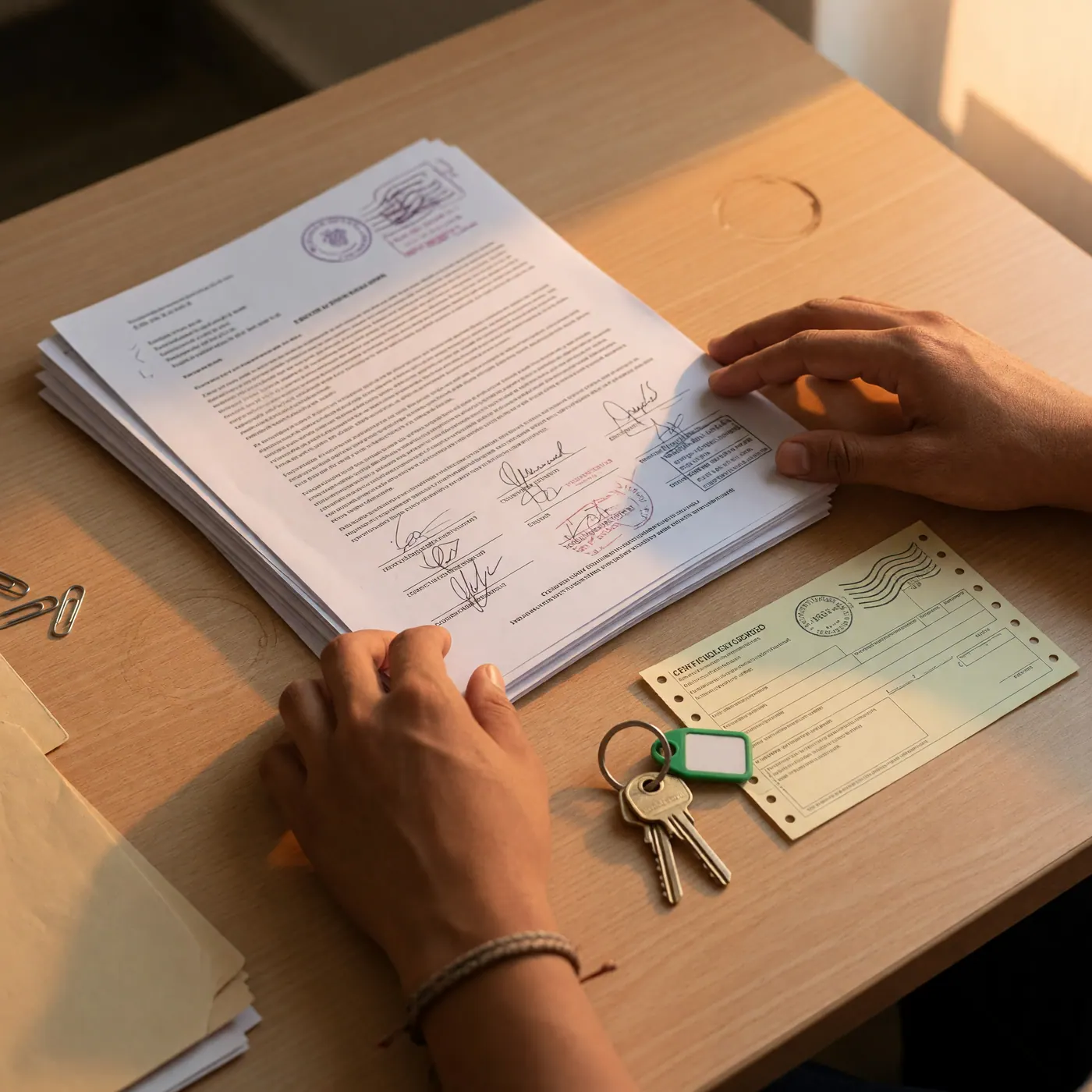
Along with the lawsuit, the plaintiff must submit documentary proof of the lease contract (a private document or notarized). In the event that the contract was verbal, summary proof must be provided, such as testimonial evidence that validates the rental relationship or the extra-procedural confession of the tenant.
The Golden Rule of Art. 384 (Paragraph 4): Obligation to Deposit
One of the strongest guarantees offered by the General Code of Procedure (Law 1564 of 2012) to protect the owner is the burden imposed on the defaulting tenant:
"If the lawsuit is based on the failure to pay rent, the defendant will not be heard in the process until they demonstrate that they have deposited with the court the total value of the unpaid rent or present the payment receipts for the last three periods."
This means that if the tenant answers the lawsuit but does not provide judicial deposits or receipts showing that they are up to date, the judge will not take their arguments into account as long as they do not fulfill this procedural burden.
Precautionary Measures and Provisional Restitution
Within the same restitution process, it is possible to request the preventive attachment and seizure of the tenant’s assets and those of their co-debtors or guarantors to guarantee the payment of owed rent and procedural costs.
Likewise, paragraph 8 of Article 384 of the CGP notes that if during the prior inspection or the course of the process it is verified that the property is unoccupied, abandoned, or presents a serious state of deterioration, the judge can decree the provisional restitution of the asset, handing custody over to the landlord before issuing the final sentence to avoid further damage or losses.
4. Sentence and Eviction Procedure
When the court issues a favorable judgment ordering the delivery of the property, a date and time are set for the eviction proceeding (formal eviction). This proceeding is carried out by the competent authority (judge or commissioner in police inspection) with the accompaniment of the Public Force if necessary.
During the proceeding, the physical keys are handed over to the owner along with an inventory of the property's condition. To properly conclude this stage and provide a formal record of the property's physical state, the corresponding document is signed. You can use our template and instructions for the property handover and 'paid in full' document when ending a lease in Colombia.
Depending on the caseload of the judicial offices, the entire process from filing the lawsuit to the physical handover proceeding usually takes between 6 and 14 months, depending on how easy it is to notify the tenant and the congestion of the assigned court.
5. Self-Help Measures: What a Landlord Should Never Do
Desperation in the face of financial default sometimes leads property owners to make impulsive decisions. It is imperative to remember that Colombian laws protect the possession and effective tenure of whoever occupies the property, regardless of whether they owe money or not.
Attention Property Owners! Actions such as changing the locks on the property, cutting off water or electricity connections, entering the property without authorization, or forcibly removing the tenant's belongings are considered self-help measures. These behaviors constitute crimes defined in the Colombian Penal Code (such as illegal coercion and trespassing) and give the tenant the tools to file police complaints or writs of protection (tutelas) that will paralyze the restitution process.
6. How to Reduce Risk and Delinquent Tenants in Future Leases
The best strategy against a restitution process is prevention. Before handing over the keys to your property to a new tenant, implement these fundamental measures:
- Credit and background checks: Require verification of financial history through credit bureaus (DataCrédito/CIFIN), pay stubs, or bank statements that demonstrate income equivalent to at least double the rent. To delve deeper into this stage, review our guide on tenant lease screening and insurance requirements.
- Lease insurance or surety bonds: Contracting lease insurance ensures that the insurer or surety company continues to pay you the monthly rent on time even if the tenant falls into arrears, while also assuming legal representation in the restitution lawsuit.
- Signing a written and notarized contract: Always keep clauses clear regarding payment, deadlines, annual increases, and the designation of official email addresses for notifications.
Frequently Asked Questions
❓ How long does a property restitution process take in Colombia?
Generally between 6 and 14 months, depending on the judicial office and whether the defendant opposes or complies with the claims. The speed of personal or electronic notification determines a large part of the initial time of the lawsuit.
❓ Can I change the locks or cut off utilities if the tenant doesn't pay?
No, under no circumstances. Taking self-help measures constitutes punishable conduct such as illegal coercion or trespassing, which enables the tenant to file criminal charges against the landlord and halt the legal eviction.
❓ What happens if I don't have a written lease agreement?
The legal process can be initiated by demonstrating the verbal agreement through summary evidence. This includes an extra-procedural party interrogation before a notary/judge or the formal testimony of witnesses who confirm the rental relationship.
❓ Why can't the tenant defend themselves in court without paying?
Paragraph 4 of Article 384 of the General Code of Process requires the tenant to deposit the full amount of owed rent under the court's order in order to be heard. If they do not prove payment, the judge will not consider their opposition until they fulfill that procedural burden.
❓ Is it mandatory to hire a lawyer to sue for restitution?
Yes, legal representation by a qualified lawyer is mandatory in the vast majority of cases, except for minimum amount processes where the law allows acting on one's own behalf, although expert advice is still highly recommended.
❓ Can I collect overdue rent months in the same lawsuit?
Yes, procedural legislation allows for the accumulation of the executive collection claim for owed rent and public utilities within the same lawsuit for restitution of leased property, requesting preventive seizures on the debtor's assets.


Comments
Loading comments...
Checking sign-in status...