
Urban Residential Lease Agreement Template under Law 820 in Colombia
Legal structure and base model for an urban residential lease agreement in Colombia adapted to Law 820 of 2003. A practical guide for independent landlords looking to rent safely.
IDIOMA DEL ARTÍCULO
Showing original language
Legal framework: why a written contract under Law 820 of 2003 protects your property
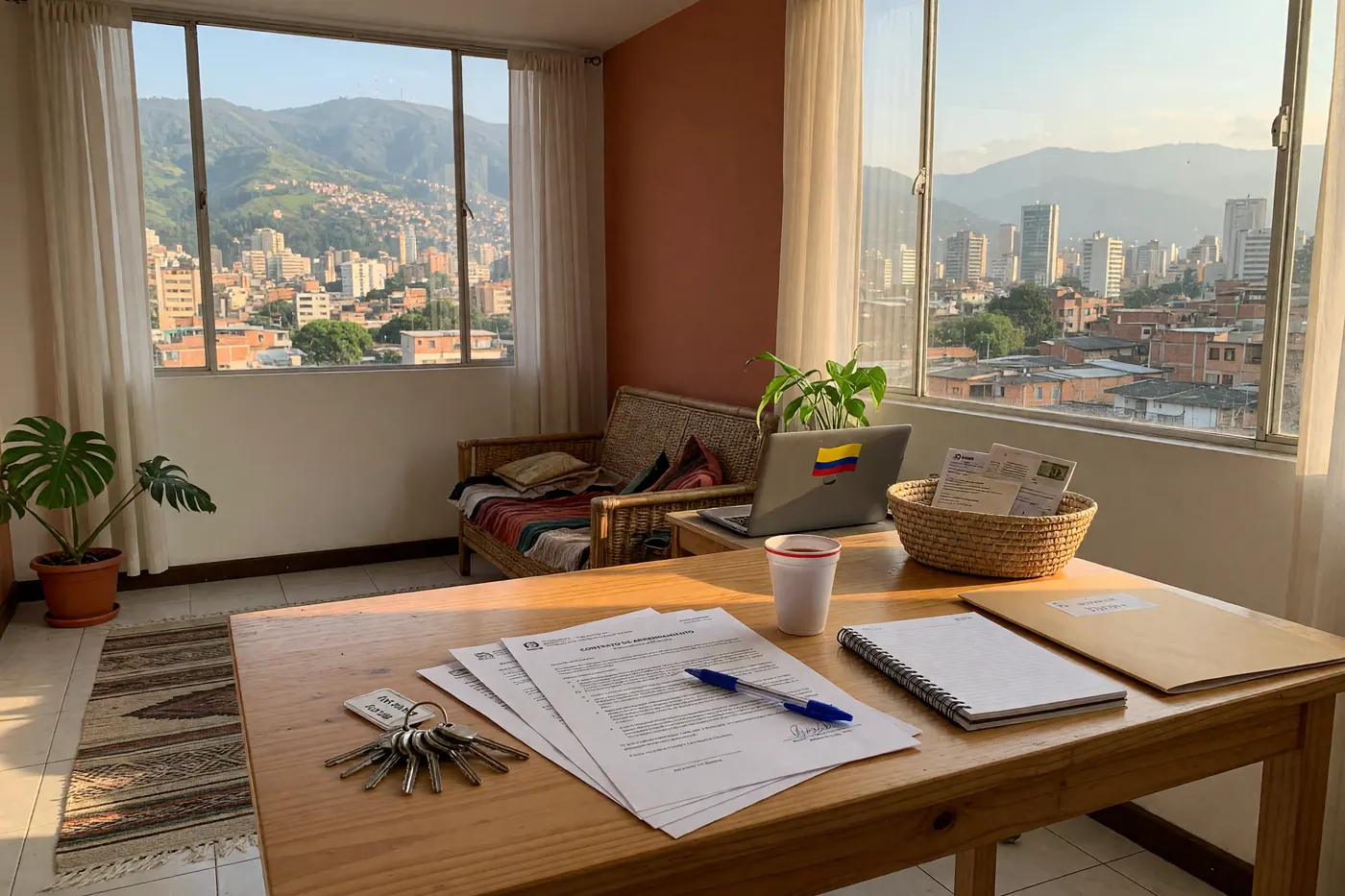
Renting an apartment, house, or studio directly without the intermediation of a real estate agency offers the benefit of saving on administrative fees. However, resorting to verbal agreements or using generic stationary store templates that do not reflect current Colombian legislation exposes the owner to severe legal risks, delays in rent payments, and difficulties in property restitution.
In Colombia, residential rentals are regulated by Law 820 of 2003. This public order regulation establishes the inalienable rights and duties of both the landlord and the tenant in urban areas. A rigorously drafted contract constitutes an executive title that allows for the initiation of judicial collection or property restitution procedures in the event of tenant default.
According to active listings on Colombia Move (August 2026), the housing section registers 120 active listings for direct rental properties in the country's main cities. To close these negotiations with peace of mind, it is fundamental that the contract contains the key stipulations permitted by law.
Clause-by-clause structure for a bulletproof lease agreement
Every residential lease agreement must include a series of essential clauses set forth in Article 3 of Law 820 of 2003. Below are the indispensable points that must be recorded in writing:
1. Full identification of the parties
Full name, identification document (cédula de ciudadanía, foreign resident ID, or passport), notification address, and email address of the landlord, tenant, and joint co-debtors or guarantors must be detailed precisely.
2. Purpose of the contract and property address
Indicate the exact address according to the property deed and the property tax receipt (including apartment number, tower, parking space, and storage unit if applicable). Exclusive use as a family residence must be specified, expressly prohibiting commercial use or use for illicit activities.
3. Rent and place of payment
Fix the monthly amount in Colombian pesos (COP) and the timely due date (for example, the first five days of each month). By law (Article 18 of Law 820), the monthly rent cannot exceed 1% of the property's commercial value, which in turn cannot be higher than twice the current cadastral assessment. Clearly write the bank account number for deposits or transfers.
4. Term and automatic renewal
Define the duration term (usually 12 months). Article 6 of Law 820 establishes that the contract will be understood as automatically renewed under the same conditions and for the same initial term, provided the tenant has fulfilled their obligations and the landlord has not terminated the contract with the written notice required in Article 22 (at least three months in advance, via authorized postal service). The adjustment under Article 20 is a separate legal obligation: it applies to the rent after 12 months of continuous execution and is not a tenant "approval" requirement for the renewal to exist.
5. Annual rent adjustment by CPI
The rent increase can only be applied every 12 months of continuous contract execution. According to Article 20 of Law 820 of 2003, the maximum increase limit is 100% of the Consumer Price Index (CPI) variation of the immediately preceding calendar year, as set by DANE. The landlord must notify the tenant in advance of the date and amount of the adjustment by certified mail or the agreed-upon means.
6. Public utilities and administration
Determine who is responsible for paying public utility bills (water, electricity, gas, internet) and the administration fee in units subject to Law 675 regarding horizontal property.
What you should NEVER include: cash deposits and abusive clauses
One of the most common mistakes made by independent landlords is requesting "a one-month cash deposit in case of property damage." Article 16 of Law 820 of 2003 clearly states:
"In urban residential lease agreements, it is not permitted to demand cash deposits or any other type of real guarantees to ensure the fulfillment of obligations derived from the contract."
Any stipulation demanding a monetary deposit is legally ineffective, and the tenant can claim its refund. To secure rent and utility payments without violating the law, valid alternatives are:
- Joint co-debtors: Request one or two co-debtors who own real estate or have demonstrable income through bank statements or employment certificates.
- Public utility guarantees (Art. 15): Request independent policies or bank guarantees issued by utility companies to cover potential bill debts after restitution.
- Rental policy or bond: Contract a collective or individual policy with regulated insurance companies that cover rent and utilities.

Base model of an urban residential lease agreement (Editable)
You can copy, adapt, and fill out the following outline in word processors to consolidate the legal draft for your direct rental:
CONTRATO DE ARRENDAMIENTO DE VIVIENDA URBANA

Lugar y fecha del contrato: [Ciudad], [Fecha: Día/Mes/Año]
Arrendador: [Nombre del Propietario], C.C. No. [Número] expedida en [Lugar].
Arrendatario: [Nombre del Inquilino], C.C. No. [Número] expedida en [Lugar].
Codeudor Solidario: [Nombre del Codeudor], C.C. No. [Número] expedida en [Lugar].
Dirección del Inmueble: [Nomenclatura exacta, Ciudad, Departamento].
Canon de Arrendamiento: [Monto en letras] ($[Monto en números] COP) mensuales.
Vigencia: [Número de meses, ej. 12 meses], contados a partir del [Fecha de inicio].

Las partes suscriben el presente contrato de arrendamiento de vivienda urbana, el cual se regirá por la Ley 820 de 2003 y las siguientes cláusulas:

PRIMERA. OBJETO: El Arrendador entrega al Arrendatario el uso y goce del inmueble ubicado en la dirección descrita, destinado exclusivamente para vivienda familiar del Arrendatario y su grupo familiar nuclear.

SEGUNDA. CANON Y FORMA DE PAGO: El Arrendatario pagará al Arrendador el canon mensual acordado dentro de los primeros [Número, ej. 5] días de cada período mensual, mediante consignación o transferencia a la cuenta de ahorros No. [Número de cuenta] del banco [Nombre del Banco] a nombre del Arrendador.

TERCERA. REAJUSTE DEL CANON: Cada doce (12) meses de ejecución continua del contrato, el canon de arrendamiento se incrementará en una proporción no superior al cien por ciento (100%) del incremento que haya tenido el Índice de Precios al Consumidor (IPC) en el año calendario inmediatamente anterior, según lo dispuesto en el Artículo 20 de la Ley 820 de 2003.

CUARTA. PRÓRROGAS: El contrato se entenderá prorrogado automáticamente por períodos iguales al término inicial y en las mismas condiciones, siempre que el Arrendatario haya cumplido las obligaciones a su cargo y el Arrendador no haya dado por terminado el contrato mediante preaviso escrito conforme al Artículo 22 de la Ley 820 de 2003. La prórroga opera de pleno derecho y no requiere aceptación expresa del Arrendatario. El reajuste del canon se rige por la cláusula TERCERA (Artículo 20). El Arrendatario podrá dar por terminado el contrato al vencimiento del plazo o de sus prórrogas con el preaviso del Artículo 24.

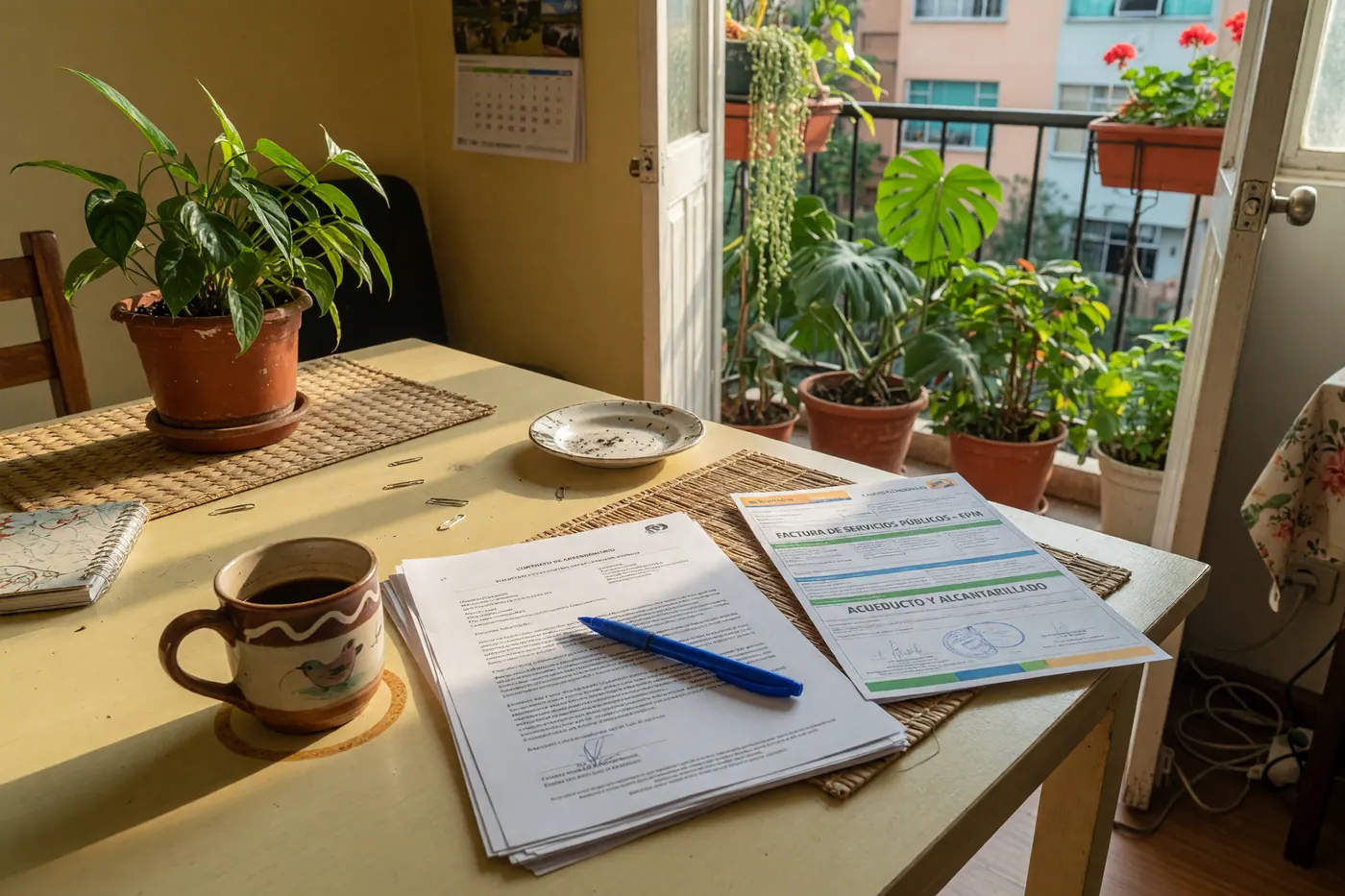
QUINTA. SERVICIOS PÚBLICOS: El pago de los servicios públicos domiciliarios de acueducto, alcantarillado, energía eléctrica, gas natural y aseo estará a cargo exclusivo del Arrendatario desde la fecha de entrega del inmueble hasta su restitución.

SEXTA. CUIDADO DEL INMUEBLE Y REPARACIONES: El Arrendatario mantendrá el inmueble en el estado en que lo recibe según el Acta de Inventario adjunta. Las reparaciones locativas derivadas del uso ordinario estarán a cargo del Arrendatario. Las reparaciones necesarias o estructurales corresponderán al Arrendador.

SÉPTIMA. PROHIBICIÓN DE SUBARRIENDO Y CESIÓN: El Arrendatario no podrá ceder el contrato ni subarrendar total o parcialmente el inmueble sin autorización previa y escrita del Arrendador (Art. 17 Ley 820 de 2003).

OCTAVA. CLÁUSULA PENAL: El incumplimiento de cualquiera de las obligaciones nacidas de este contrato dará derecho a la parte cumplida a exigir a título de pena el pago de una suma equivalente a [Ejemplo: dos (2)] cánones de arrendamiento vigentes, sin perjuicio de las acciones judiciales de restitución y cobro de perjuicios.

NOVENA. NOTIFICACIONES: Para todos los efectos legales, las direcciones de notificación son:
- Arrendador: [Dirección física] - Correo electrónico: [Correo]
- Arrendatario: [Dirección física del inmueble] - Correo electrónico: [Correo]
- Codeudor: [Dirección física] - Correo electrónico: [Correo]

En constancia de aceptación se firma por las partes en dos ejemplares a los [Días] del mes de [Mes] de [Año].

___________________________        ___________________________
ARRENDADOR                         ARRENDATARIO
C.C.                               C.C.

___________________________
CODEUDOR SOLIDARIO
C.C.
The physical inventory handover report: the essential annex
The signed contract lacks proven support regarding the condition of the asset if an Initial Inventory Recordis not attached. This annex document must be drawn up on the day the keys are handed over and must detail:
- Condition of paint on ceiling, walls, and facade.
- Functionality of faucets, shut-off valves, sinks, and toilets.
- Condition of floors, tiles, or laminate wood.
- Electrical points, outlets, switches, and tested lamps.
- Initial reading of public utility meters (water, electricity, gas).
- Number of sets of keys and access controls handed over.
It is a highly recommended practice to take a photo or video record of the property on the day of signing, save it digitally, and sign a printed acceptance report between both parties.
Notarial authentication and identity verification
Although a lease agreement in Colombia is a consensual agreement that enjoys legal validity with the parties' handwritten signatures, going to a public notary to perform the authentication of signatures with biometric recognition offers the following advantages:
- Certainty of identity: Prevents cases of identity theft or forgery of co-signer documents.
- Indisputable executive merit: In the event of a lawsuit for non-payment of rent, the authenticated signature prevents the counterparty from denying authorship of the document in the judicial process.
Frequently asked questions
❓ Is it safe to ask the tenant for one month's rent in cash as a deposit?
No, Article 16 of Law 820 of 2003 strictly prohibits demanding cash deposits for urban housing. Source: Law 820 of 2003, valid in 2026; use co-signers or a rental insurance policy.
❓ How much is the maximum monthly rent I can charge for my property?
The monthly rent cannot exceed 1% of the commercial value of the property. Source: Article 18 of Law 820 of 2003, valid in 2026; that commercial value cannot exceed twice the cadastral appraisal.
❓ When and how much can I increase the rent each year?
The increase only applies every 12 months of continuous execution at the same value. Source: Article 20 of Law 820 of 2003, valid in 2026; the cap is 100% of the DANE CPI from the previous year, with written notice.
❓ Is it mandatory to authenticate the lease agreement at a notary?
It is not an essential legal requirement for the contract to exist or be valid. Biometric authentication at a notary, a practice valid in 2026, prevents identity theft and reinforces executive merit.
❓ What legal guarantees can I request if I cannot ask for a cash deposit?
You can demand one or two solvent joint co-signers with employment certificates or real estate ownership. Source: Articles 15 and 16 of Law 820 of 2003, valid in 2026; rental insurance policies or utility service coverage are also options.
❓ How can I terminate the contract if I need the tenant to return the property to me?
You can request restitution upon expiration by giving notice three months in advance via certified mail. Source: Articles 22 and 24 of Law 820 of 2003, valid in 2026; in extensions without just cause, an indemnity of three months' rent also applies.
❓ Where can I list my property for direct rent in Colombia?
You can list your property in the housing section of Colombia Move. It is a free channel, updated in 2026, to show photos, rent, and details, and to talk directly with interested parties, without agency commissions.



Comments
Loading comments...
Checking sign-in status...