
How to Demand Preventive Maintenance for Gas Water Heaters in Rented Properties
Did your apartment's gas water heater fail, or is it time for the 5-year inspection and no one wants to pay for the repair? We explain what Law 820 of 2003 and the Civil Code say about who pays and how to demand maintenance without conflict.
IDIOMA DEL ARTÍCULO
Showing original language
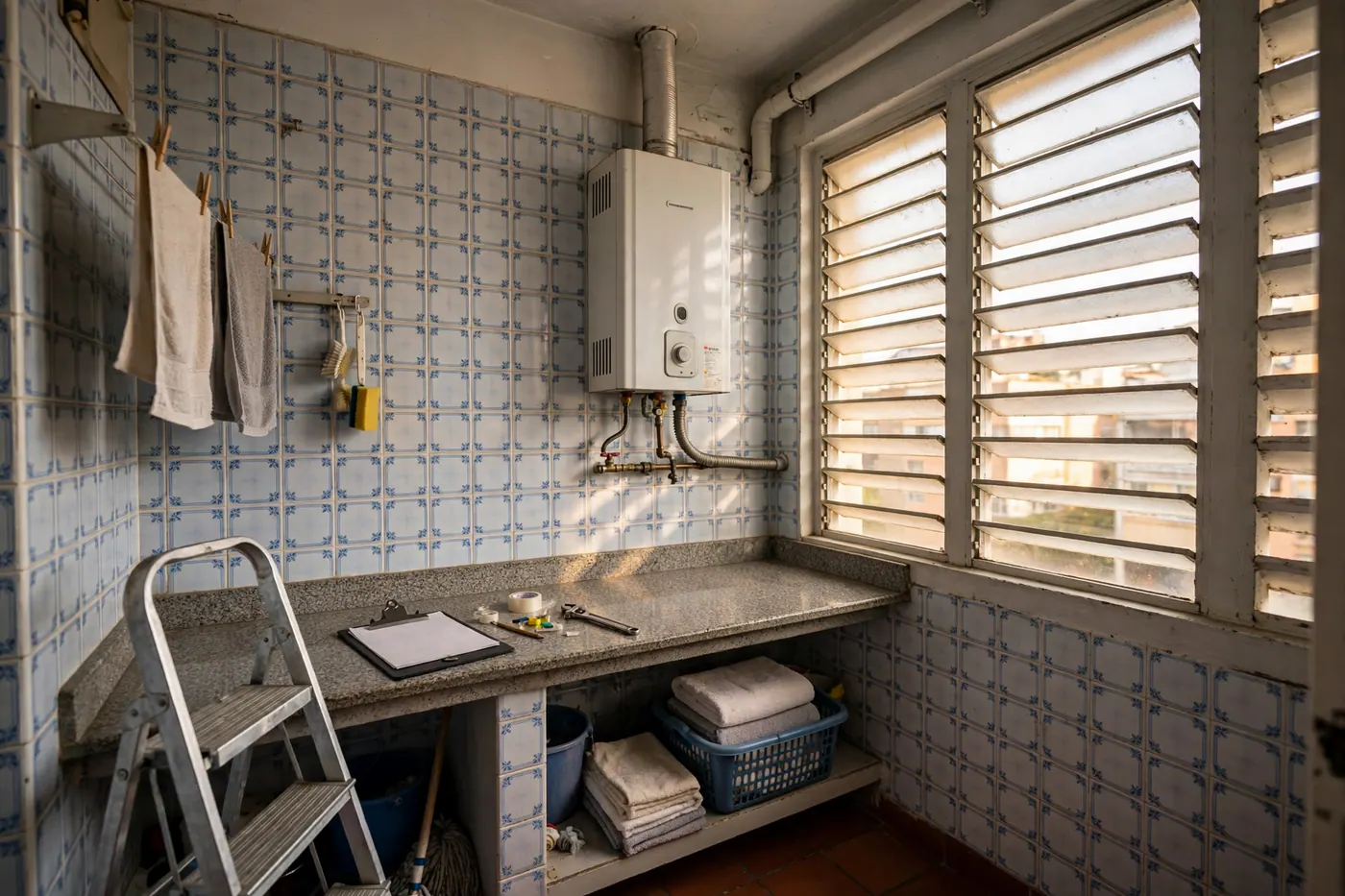
Few moments generate as much friction in a rental as turning on the shower at six o'clock on a Monday morning and receiving a jet of freezing water because the instantaneous gas water heater shut off or locked up. The usual clash arises immediately: the landlord argues that the tenant is using it and must pay for any technical service, while the tenant maintains that the equipment came with the property and its structural repair is the owner's responsibility.
In Colombia, this dispute is not resolved with personal opinions or ambiguous verbal agreements. There is a clear regulatory framework in Law 820 of 2003, the Colombian Civil Code and the resolutions of the Energy and Gas Regulation Commission (CREG) that define with millimetric precision the border between minor maintenance derived from use and a repair that is indispensable due to natural wear and tear or age.
The legal framework: locative repairs vs. indispensable non-locative repairs
To understand who bears each invoice, it is mandatory to distinguish two legal concepts enshrined in Colombian civil law:
- Locative repairs (borne by the tenant): These are the types of deterioration that ordinarily occur due to the fault of the tenant or their dependents, or that result from the daily use and cleaning of the property (Civil Code, art. 1998).
- Necessary or indispensable repairs (borne by the landlord): These are works indispensable for the leased property to serve the agreed purpose, or to prevent its destruction or serious deterioration (Civil Code, art. 1985).
Additionally, subsection 2 of article 8 of Law 820 of 2003 obliges the landlord to "maintain in the property the services, things, and related and additional uses in good condition to serve the purpose agreed upon in the contract". The gas water heater is an integral part of these related services provided in the initial inventory.
The decisive point that many landlords overlook is article 2028 of the Civil Code: the tenant is not responsible for deterioration that has occurred due to the passage of time and legitimate use (what is legally known as vetustezor age), nor for the poor quality of the item or pre-existing hidden defects.
Who pays for what regarding the gas water heater? Practical table of responsibilities
To avoid sterile arguments between owners, tenants, and real estate agencies, the following table breaks down the most common technical scenarios:
| Concept or technical breakdown | Primary responsible party | Legal and technical basis |
|---|---|---|
| Periodic replacement of ignition batteries | Tenant | Elementary locative repair derived from daily consumption. |
| Surface cleaning and removal of exterior soot | Tenant | Ordinary cleaning maintenance to be carried out by those living on the premises. |
| Rupture or calcification of the coil due to age | Landlord | Age and unavoidable wear and tear due to prolonged use (Art. 2028 C.C.). |
| Failure of the electronic board or flame sensors | Landlord | Failure of internal essential parts not attributable to user fault. |
| General preventive maintenance before delivery | Landlord | Obligation to provide equipment in optimal working condition (Law 820, Art. 8). |
| Total replacement of the obsolete water heater | Landlord | Replacement of an asset essential for the habitability of the property. |
If the gas water heater fails because it has reached the service life recommended by the manufacturer or because the coil accumulated scale after years of continuous service, the tenant is not obligated to pay for a spare part that adds value to someone else's property. According to active listings on Colombia Move (September 2026), there are 16 repair listings, 6 for plumbing, and 4 for cleaning; if you need to hire a qualified specialist to evaluate your installation, check our guide on hiring home maintenance and repair services in Colombia with verifiable service guarantees.
The mandatory 5-year periodic review (CREG Resolution 059 of 2012)
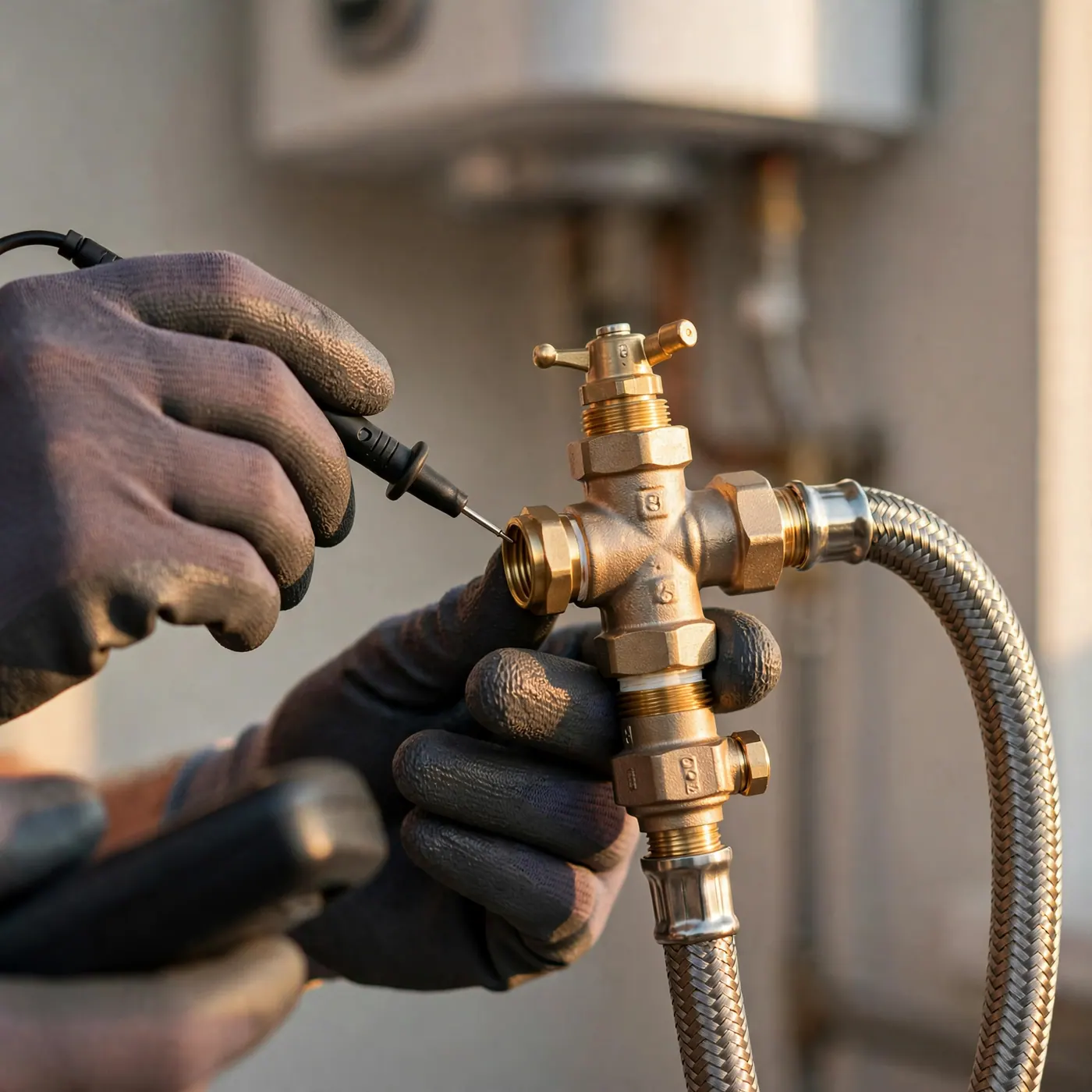
Another recurring reason for conflict is the Periodic Inspection of the Internal Gas Installation (RPO). Regulated by CREG Resolution 059 of 2012, this technical inspection is mandatory every 60 months (5 years) for all properties connected to the natural gas network.
The distributor notifies the obligation on monthly bills between month 55 (minimum deadline) and month 60 (maximum deadline). The inspection must be carried out by an Inspection Body Accredited (OIA) before the National Accreditation Body of Colombia (ONAC) or directly by the public utility company.
Regarding the public residential utility company (under Law 142 of 1994), the fee for the inspection arrives on the monthly bill issued to the inhabited premises. However, in the private realm of the rental contract:
- The visit and inspection: It is usually agreed in the contract who assumes the cost of the basic visit. If the contract is silent, many real estate agencies deduct it from the rent if the tenant has been in the home for a few months, as the certification protects the landlord's asset for a whole five-year period. To know the implications of shared obligations on bills, see how public utility guarantees in rental contracts in Colombia work.
- Mandatory technical upgrades: If the inspector rejects the installation because a ventilation grille is missing according to the NTC 3631 technical standard, because the carbon monoxide evacuation duct does not meet the minimum slopes, or because the main network has leaks, all adaptation works are at the sole expense of the landlord.
Heads up on this: If the maximum deadline of 60 months passes without obtaining the Certificate of Conformity, the distributor will immediately proceed to suspend the service for safety reasons. The cost of reconnection and additional procedures will be attributable to whoever ignored the technical visit notifications.
Step-by-step to formally demand the repair from the landlord
When a gas appliance fails, improvisation and informal claims via phone calls usually end in prolonged disagreements. If you need to demand an essential technical repair, follow this legal procedure:
1. Request a certified technical diagnosis
Do not allow unqualified people to disassemble the water heater. Hire or request a visit from a technician certified in gas appliances who can issue a written report indicating the exact cause of the failure: whether it is due to a lack of minor cleaning (tenant's responsibility) or material fatigue and internal corrosion due to the passage of time (landlord's responsibility).
2. Notify in writing with photographic support
Send a formal communication (registered email or a letter filed with the real estate agency or landlord) attaching the technical report, photos of the heater, and a clear description of the anomaly. Remember that the lack of hot water for an extended period affects the habitability of the property and may lead to major legal contingencies contemplated in the regulations regarding the early termination of the lease under Law 820 in Colombia if the owner systematically ignores their essential duties.
3. Apply the discount authority under the Civil Code (if there is negligence)
The Article 1993 of the Civil Code establishes a fundamental tool: if the tenant timely notifies the landlord of an essential repair and the latter does not proceed to carry it out with due promptness, the tenant may have the technical repair executed and deduct its reasonable cost up to 30% of the monthly rent value in each payment period, until the total sum invested is covered, by providing the corresponding legal invoices.
Frequently asked questions
❓ Who should pay for the cost of the annual preventive maintenance of the gas heater in a rented property?
It depends on the origin: routine cleaning and changing batteries are the responsibility of the tenant. Comprehensive preventive maintenance and combustion calibration are the responsibility of the owner if the equipment was not delivered newly certified (regulation in effect in 2026).
❓ What happens if the gas heater breaks down due to natural wear and tear or old age (deterioration)?
The total cost of the spare part or the replacement of the gas appliance falls on the landlord. Article 2028 of the Colombian Civil Code, in effect in 2026, explicitly stipulates that the tenant is not responsible for deterioration caused by the passage of time or the pre-existing poor quality of the materials.
❓ Who is responsible for paying for the mandatory 5-year periodic gas inspection (CREG 059)?
The charge for the ordinary inspection arrives billed to the user who inhabits the home. Any structural adjustments required by the inspector (grilles, ducts, or piping) are the responsibility of the owner; it is advisable to agree in writing if the cost of the visit will be reimbursed (regulation in effect in 2026).
❓ Can the tenant have the heater fixed and deduct the cost from the rent?
Yes, provided that they have previously informed the landlord in writing and the landlord has not promptly attended to the essential repair. Article 1993 of the Civil Code, in effect in 2026, authorizes the tenant to deduct up to 30% monthly from the rent until the reasonable costs incurred are compensated.
❓ Is it safe to skip the gas inspection within the maximum 60-month period set by CREG?
The distribution company will preventively suspend the supply of residential gas to the property for strict technical safety reasons. To resume service, it will be necessary to resolve the non-conformities, pay for the re-inspection visit, and assume the reconnection charges in effect in 2026.
❓ Where can I find or publish services for certified heater technicians in Colombia?
On direct and transparent platforms like the services section of Colombia Move, where plumbers and gas appliance technicians publish their services without commissions or intermediaries. Contact is kept on WhatsApp, under the control of the person offering the service.


Comments
Loading comments...
Checking sign-in status...