
How Law 675 Works for Renting in Gated Communities in Colombia
Renting an apartment in a gated community (conjunto cerrado) in Colombia requires coordinating Law 820 with the horizontal property regime of Law 675. Learn the legal limits on administrators, fine caps, moving-in and moving-out procedures, and pet rules.
IDIOMA DEL ARTÍCULO
Showing original language
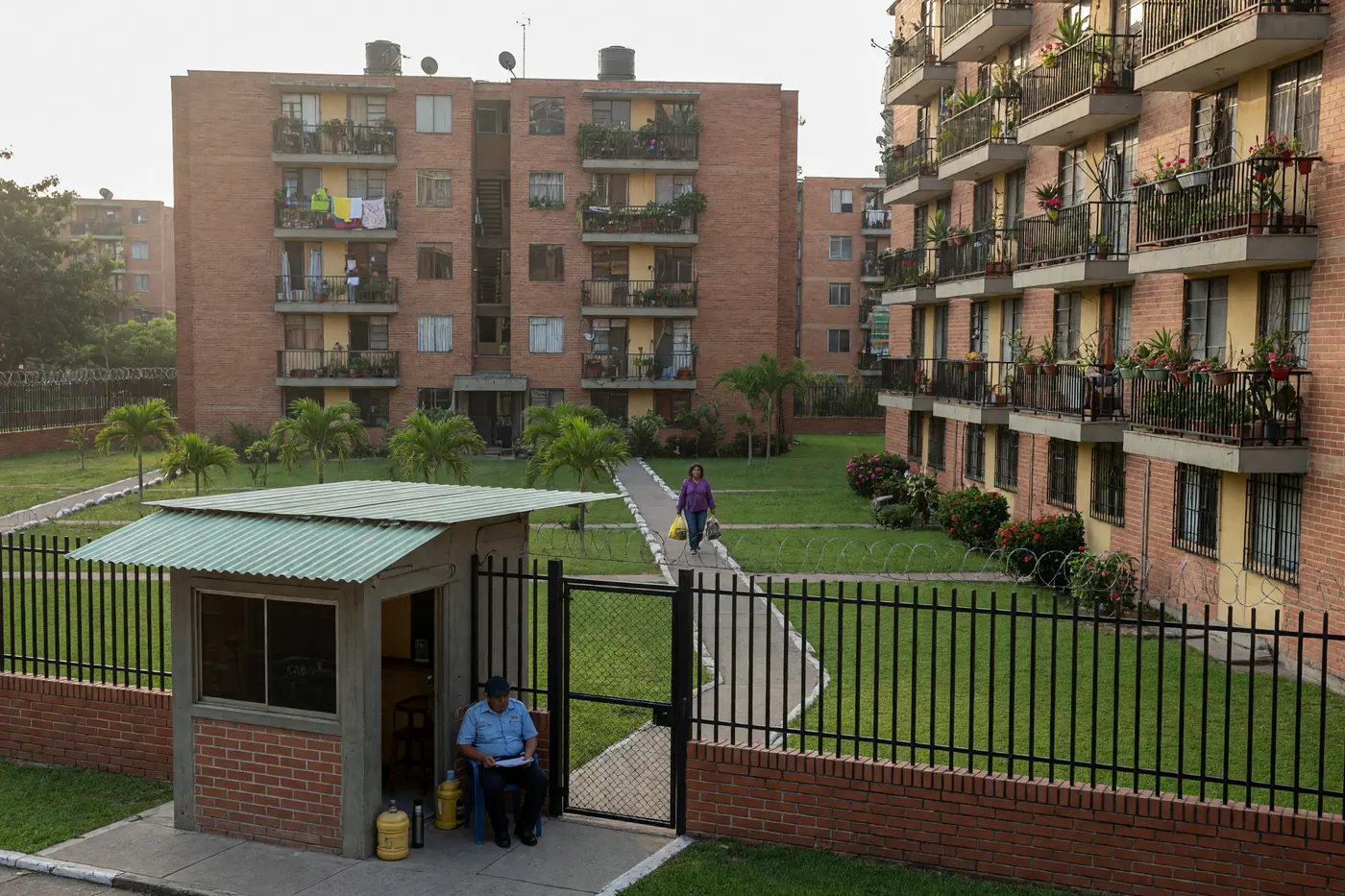
Renting a home in a gated community or building in Colombia involves much more than setting a monthly rent and signing a contract. Those who lease out or take on a property under the horizontal property regime quickly find that they live under two parallel regulatory frameworks: the private lease agreement and the building's internal regulations. When noise, unexpected moves, or pet ownership come up, questions often arise about how far the administrator's authority extends and what the actual rights of owners and tenants are.
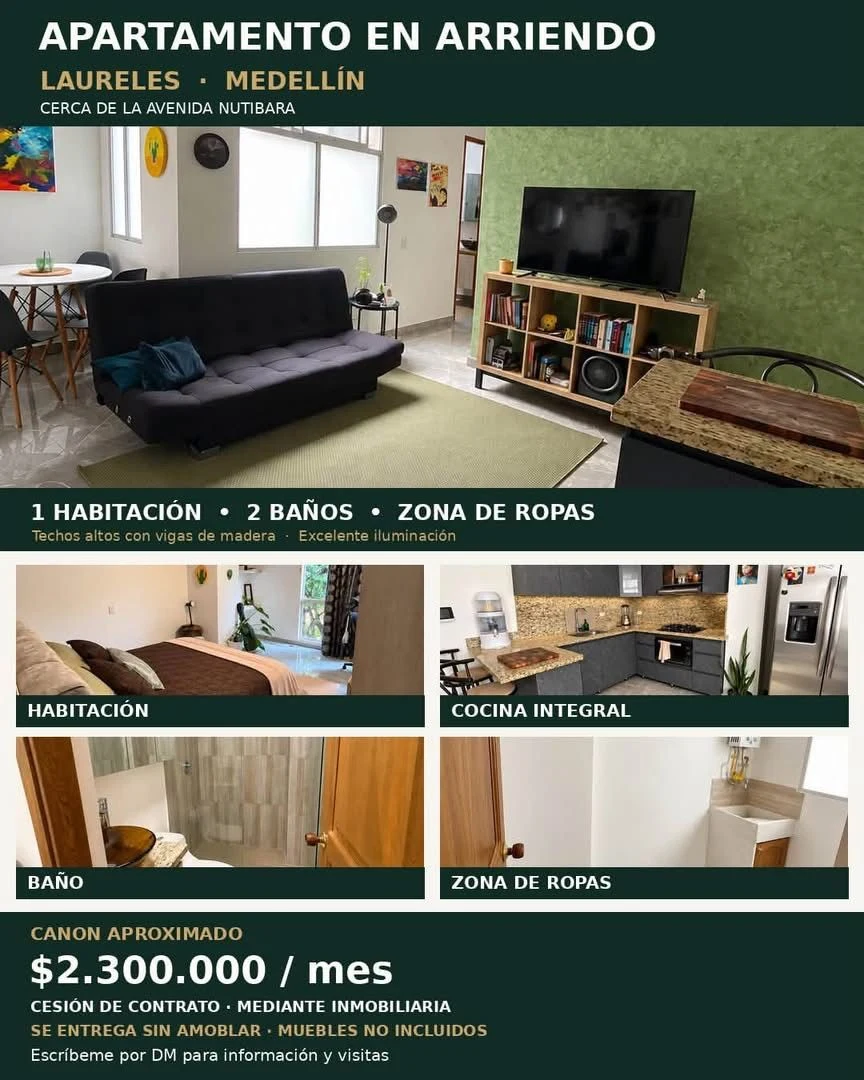
In the Colombian real estate market, the vast majority of urban apartments are governed by the Ley 675 de 2001. Understanding its scope prevents common abuses, arbitrary fines, and unnecessary friction between neighbors, ensuring that the rental is profitable for the owner and peaceful for the occupant. According to active listings on Colombia Move (September 2026), the housing section has 135 listings, with 44 active apartments, 25 of them for rent, while short-term rentals have only 2 listings compared to 330 views: there is demand for housing, but few owners publish with clear condominium rules. If you are looking for a tenant, keep an eye on the building desk's WhatsApp and copy the regulations into the contract: the owner (landlord) is answerable to the complex, even if the occupant pays the fee.
The two laws that govern renting in condominiums
When a property subject to horizontal property is rented, two completely distinct legal relationships apply:
- The contractual rental relationship (Ley 820 de 2003): It binds exclusively the lessor (owner) and the lessee (tenant). It regulates the rent, the term, annual increases, and the grounds for terminating the contract.
- The horizontal property regime (Ley 675 de 2001): It regulates the relationship between the owners of private units and the common areas of the complex (front desk, elevators, hallways, green areas).
According to Article 18 and Article 22 of Ley 675, holders under any title, including tenants, are subject to the coexistence rules and the condominium regulations. To make this obligation transparently enforceable, numeral 4 of Article 8 of Ley 820 de 2003 imposes on the owner the legal obligation to give the tenant a copy of the horizontal property regulations at the start of the contract. A useful template is in the urban residential lease contract template under Ley 820.
Administration fee: who is legally liable to the complex?
It is very common for the lease to stipulate that the tenant pays the monthly ordinary administration fee directly to the building's account or through the lessor. However, with respect to the condominium administration, the only primary obligor is the owner, as stipulated in Article 29 of Ley 675 de 2001.
If the tenant falls behind on the common expense payment, the building administration will not sue the tenant: it will start pre-judicial and judicial collection directly against the property holder. For this reason, the owner should verify monthly that payments are up to date and not delegate full control to the occupant. To learn more about late payment procedures and interest calculation, you can consult our guide on how to collect and pay the administration fee in gated communities.
Keep reading: How to Collect and Pay the Administration Fee in Gated Communities — late interest, pre-judicial collection, and enforcement proceedings.
Legal limits on coexistence fines and sanctions
One of the biggest sources of conflict in buildings and gated communities is the imposition of fines for violations of the coexistence manual: noise at prohibited hours, improper garbage disposal, or encroachment on common areas. To address this, Ley 675 sets strict limits that every administration must follow:
| Regulated aspect | Legal limit (Ley 675 de 2001) | Prohibited practice |
|---|---|---|
| Sanctioning authority | General Assembly or Administration Council (if the regulations expressly delegate it). | Sanctions imposed unilaterally by the administrator or security guards. |
| Cap per individual fine | Up to 2 times the monthly administration fee of the offender. | Arbitrary fines or fines set at disproportionate multiples of the minimum wage. |
| Annual cumulative cap | Maximum of 10 monthly administration fees within one year. | Unlimited successive charges that economically suffocate the occupant. |
| Due process | Prior written notice, formal charges, and the right to present a defense and evidence. | Adding the fine to the bill without prior notice or an opportunity to defend oneself. |
Likewise, Article 58 clarifies that the coexistence committee has no power to sanction or fine; its only function is that of a mediator, seeking to resolve neighborhood disputes through agreement minutes. Additionally, the Constitutional Court in Judgment C-318 of 2002 guaranteed that tenants have full right to be heard and to exercise their defense against any complaint that affects their peace or their wallet. Charges for common areas such as visitor parking have their own rules; see charging for visitor and private parking in horizontal property.
Moving and removals: hours, deposits, and the illegality of withholding furniture
Move-in and move-out days often create operational friction at the front desk. The condominium has the right to set reasonable hours for moves (generally Monday to Saturday during daytime) so as not to disturb collective rest, as well as to request advance notice to schedule use of the freight elevator.
It is also legal for the complex to request a refundable security deposit intended to cover possible damage to walls, doors, or elevators during the move. Once the integrity of the common areas has been verified, this deposit must be returned immediately.
What is absolutely illegal is for the administration to block a move in or out because of administration debts. The Constitutional Court, in Judgment T-440 of 1997, established clear case law: preventing the removal of goods or withholding furniture constitutes an unconstitutional vía de hecho. Debts must be claimed through enforcement proceedings in civil courts, presenting the debt certificate issued by the administrator (Article 48 of Ley 675), but never by violating freedom of movement or taking possession of others' belongings de facto. Before closing out a move-out, it is essential to review how to request the administration clearance certificate (paz y salvo) in horizontal property.
Keep reading: Moves in residential complexes: permits, hours, and deposits for damages — notice to the front desk and what the complex can actually require.
Pets in gated communities: what the Constitutional Court says
No horizontal property regulation or lease contract may absolutely prohibit keeping domestic animals in apartments. The Constitutional Court (Judgments T-035/97, T-034/13, and T-199 of 2026) has repeatedly protected this right under the principles of the free development of personality and personal and family privacy.
The complex's restrictions may only aim to guarantee safety and hygiene in common areas:
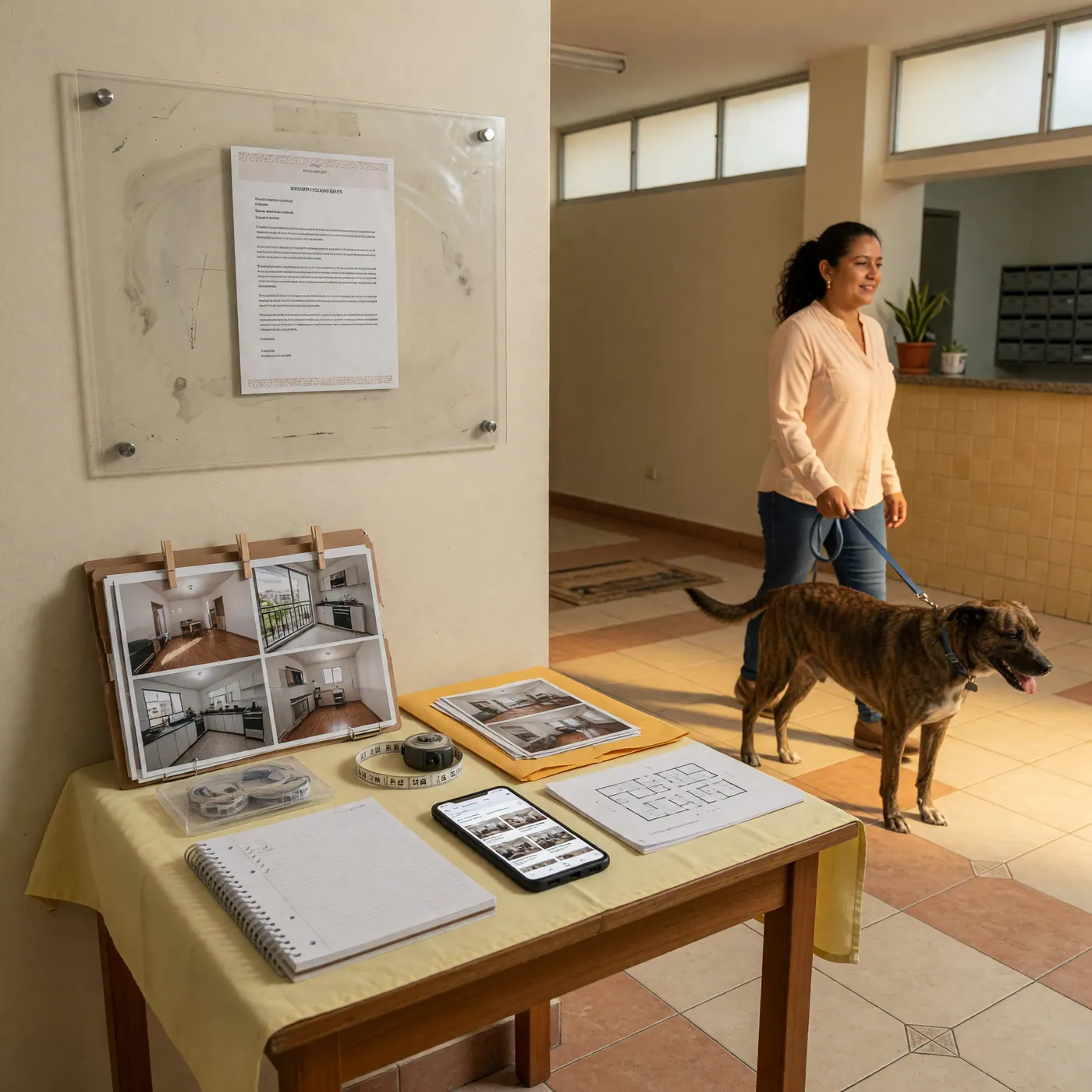
- Mandatory leash use: Dogs must be leashed in hallways, elevators, and green areas.
- Muzzle use: Applies only to breeds classified as special handling under the National Code of Security and Citizen Coexistence (Ley 1801 de 2016).
- Hygiene and cleanup: The keeper must immediately pick up feces and maintain proper hygiene to avoid offensive odors.
It is prohibited to bar residents accompanied by their pets from using the elevator or to charge extra administration fees for keeping companion animals in the home.
Traditional rental versus tourist accommodation (Airbnb)
It is crucial to distinguish between two modalities with completely opposite legal regimes:
- Traditional residential rental (30 days or more): It is governed by Ley 820 de 2003. The condominium cannot prohibit an owner from renting out their apartment to families or individuals who comply with the coexistence rules.
- Tourist housing or short stay (less than 30 days): Regulated by Ley 2068 de 2020. This activity is commercial and hospitality-related. By legal provision, it is only permitted if the horizontal property regulations expressly authorize it. If the regulations do not provide for it or the assembly prohibited it, the complex may deny entry to rotating guests and take the corresponding actions before tourism authorities.
If you rent out your property traditionally, make sure to include clear clauses on the exclusively residential use and verify your candidates' background by consulting our recommendations on how to prevent identity theft in rentals.
Frequently asked questions
❓ Can the administration of a complex prohibit the tenant from having pets?
No: under the case law of 1997, 2013, and 2026, the complex cannot prohibit pets in the home. It may only require a leash, hygiene, and a muzzle for special-handling breeds, according to the Constitutional Court and Ley 1801 de 2016.
❓ Can a building administrator impose fines directly?
No. Article 60 of Ley 675 de 2001, still in force, denies the administrator that unilateral power. Only the assembly or the council may fine, if the regulations delegated it to them, and always after prior written defense.
❓ What is the maximum fine a gated community can charge?
Up to two monthly administration fees per fine, according to Article 59 of Ley 675 de 2001. In a calendar year the cumulative total cannot exceed ten fees; source: current legal text.
❓ Is it safe for the complex to withhold a move if there are outstanding fees?
It is neither safe nor legal: Judgment T-440 of 1997 prohibits withholding belongings over late payments. Collection goes through enforcement proceedings against the owner, not through blocking at the front desk.
❓ Does the tenant have the right to attend and vote at co-owners' assemblies?
They have a voice on habitability matters, according to Judgment C-318 of 2002, still in force. The vote exists only if the owner grants them written power of attorney; without it, they cannot vote at the assembly.
❓ Where can I list an apartment for rent in a gated community without paying commissions?
In the housing section of Colombia Move, with no real estate agency commission. Details rent, administration, and regulations to filter out casual lookers and talk on WhatsApp with genuinely interested buyers.


Comments
Loading comments...
Checking sign-in status...