
Where to Legally Sell Used Car and Motorcycle Parts in Colombia
Learn how and where to sell used car and motorcycle parts in Colombia while complying with current legal frameworks and protecting yourself against the crime of handling stolen goods.
IDIOMA DEL ARTÍCULO
Showing original language
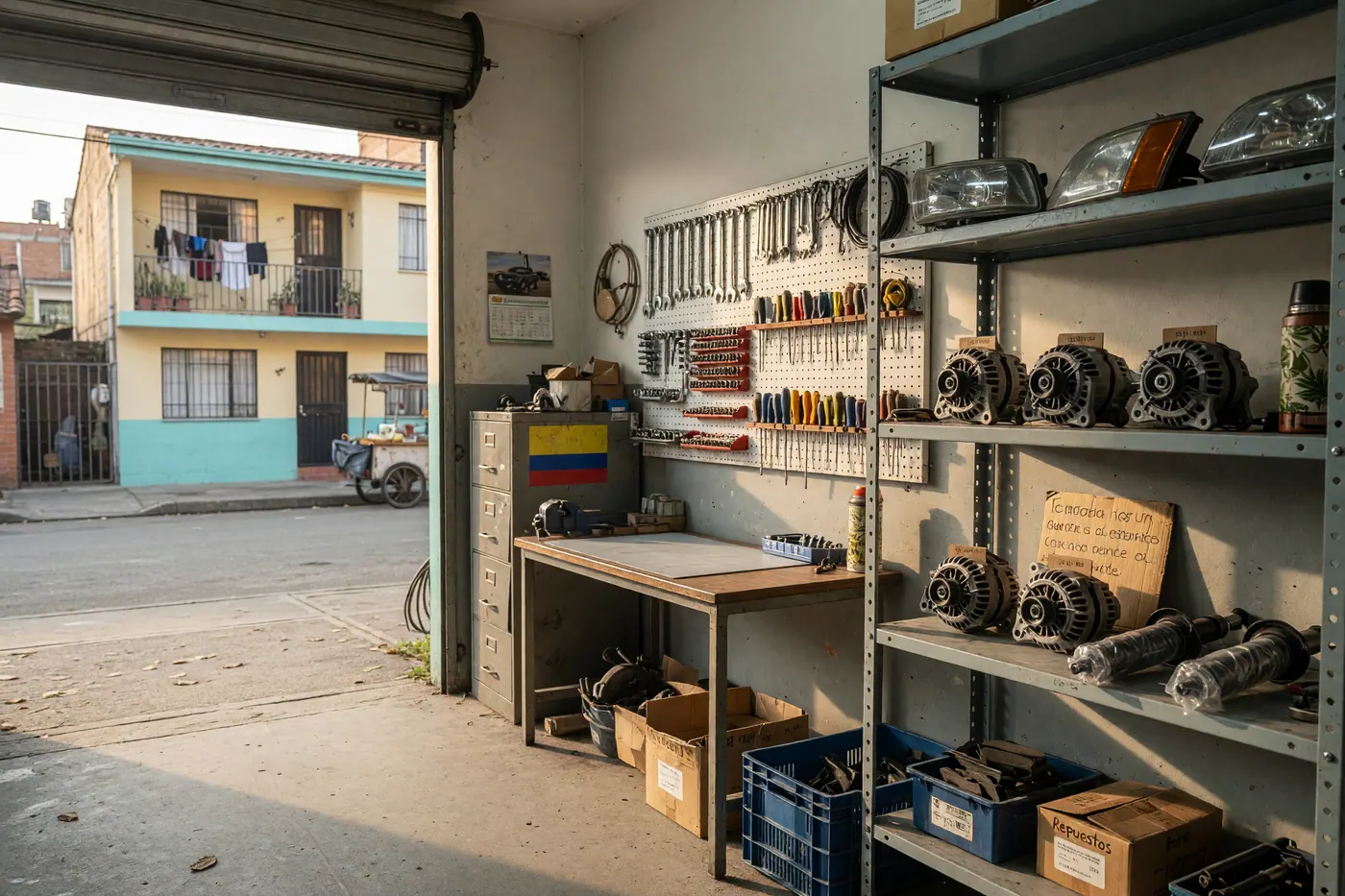
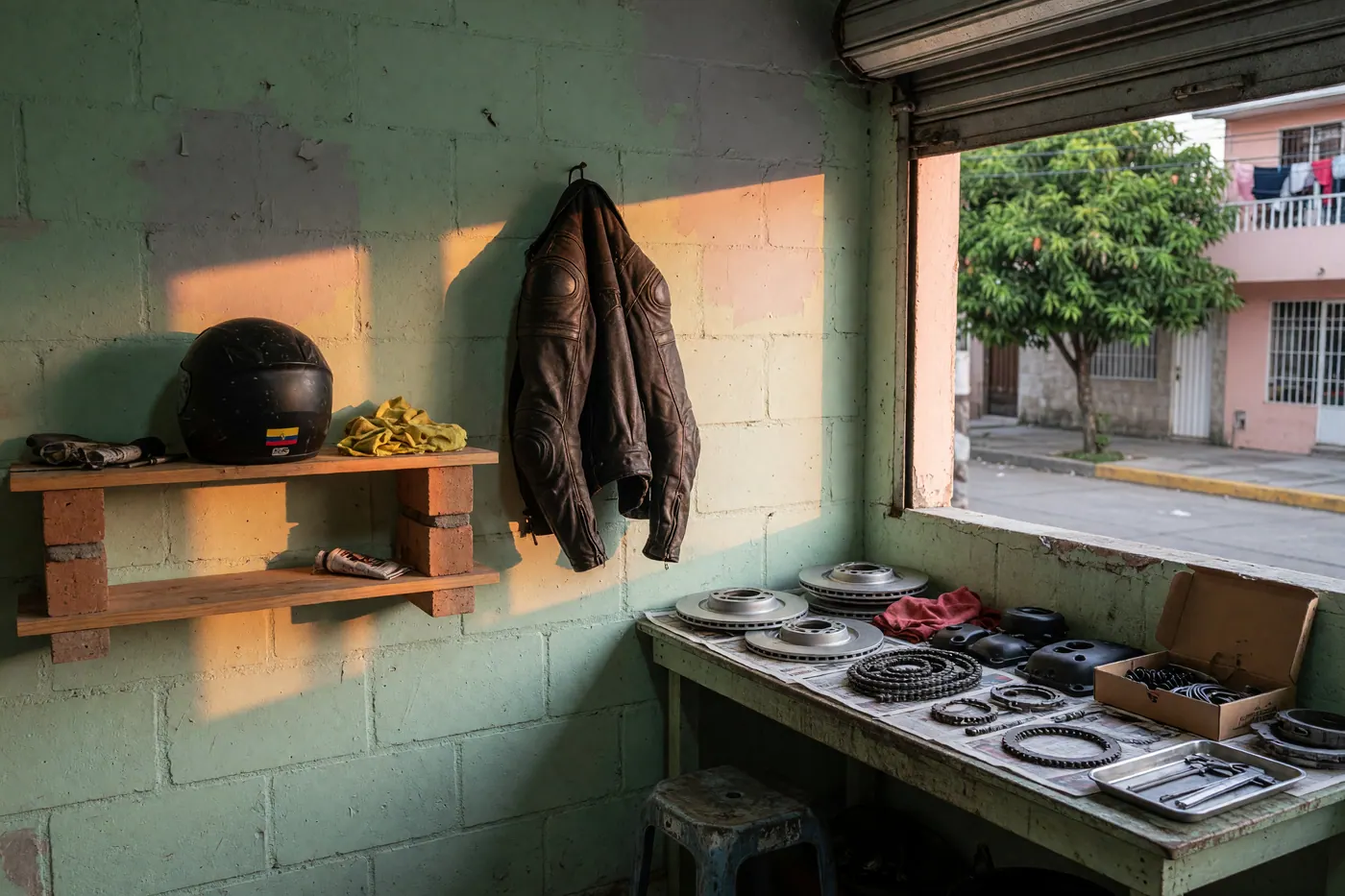
Having a batch of mechanical auto parts, original headlamps, or motorcycle spare parts in perfect functional condition in a workshop or garage represents a clear source of income. However, in Colombia, the second-hand parts trade is not an area where it is enough to simply post a photo on social media and receive cash. The used auto parts market is strictly monitored to curb vehicle theft, and anyone who sells without knowing the rules of the game runs unnecessary legal risks.
To place spare parts in the hands of serious buyers without spending weeks negotiating with intermediaries who slash prices or risking police seizure, it is essential to understand what the law requires and which channels offer the greatest security.
Legal framework in Colombia: the crime of fencing (receptación) and lawful provenance
Many sellers mistakenly believe that the trade of used parts is governed by a special scrapping law. In reality, the former Law 738 of 2002 on auto parts was declared entirely unenforceable (inexequible) by the Constitutional Court in Ruling C-205 of 2003. Since then, legal and criminal control in Colombia is directly based on the Colombian Penal Code (Law 599 of 2000, Article 447, modified by Law 1142 of 2007).
This article typifies the crime of fencing and establishes a strong aggravating factor: when the conduct involves motor vehicles, their auto parts, or essential stolen parts, the custodial prison sentence ranges between 6 and 13 years in prison, along with fines ranging from 7 to 700 current monthly legal minimum wages. The burden of proof regarding the origin of the part rests on the person who keeps or commercializes it.
Added to this is the customs regulation administered by DIAN and foreign trade provisions (Incomex Circulars), which severely restrict the importation of used auto parts and spare parts under the prior license regime. Therefore, any used part commercialized legally within the national territory must come from a vehicle legally disassembled in Colombia, an insurance salvage duly liquidated, or a demonstrable private replacement.
Mandatory documents to support the sale of used spare parts
To avoid misunderstandings during National Police inspections or judicial requirements, any private individual, mechanic, or workshop must have a clear documentary trail before handing over a part. The key documents are:
- Copy of the transit license (registration card) of the donor vehicle: Demonstrates that the part comes from a car or motorcycle legitimately registered under the seller's name or acquired transparently.
- Certificate of registration cancellation or removal from the RUNT: Essential if the vehicle was scrapped or declared a total loss following an accident.
- Commercial invoice or accounting acquisition support: Useful when parts were purchased from recognized insurance auction companies.
- Private contract of sale of movable property: A simple document signed by the buyer and seller, with photocopies of ID cards, specifying the exact reference of the spare part, physical condition, and OEM part number.
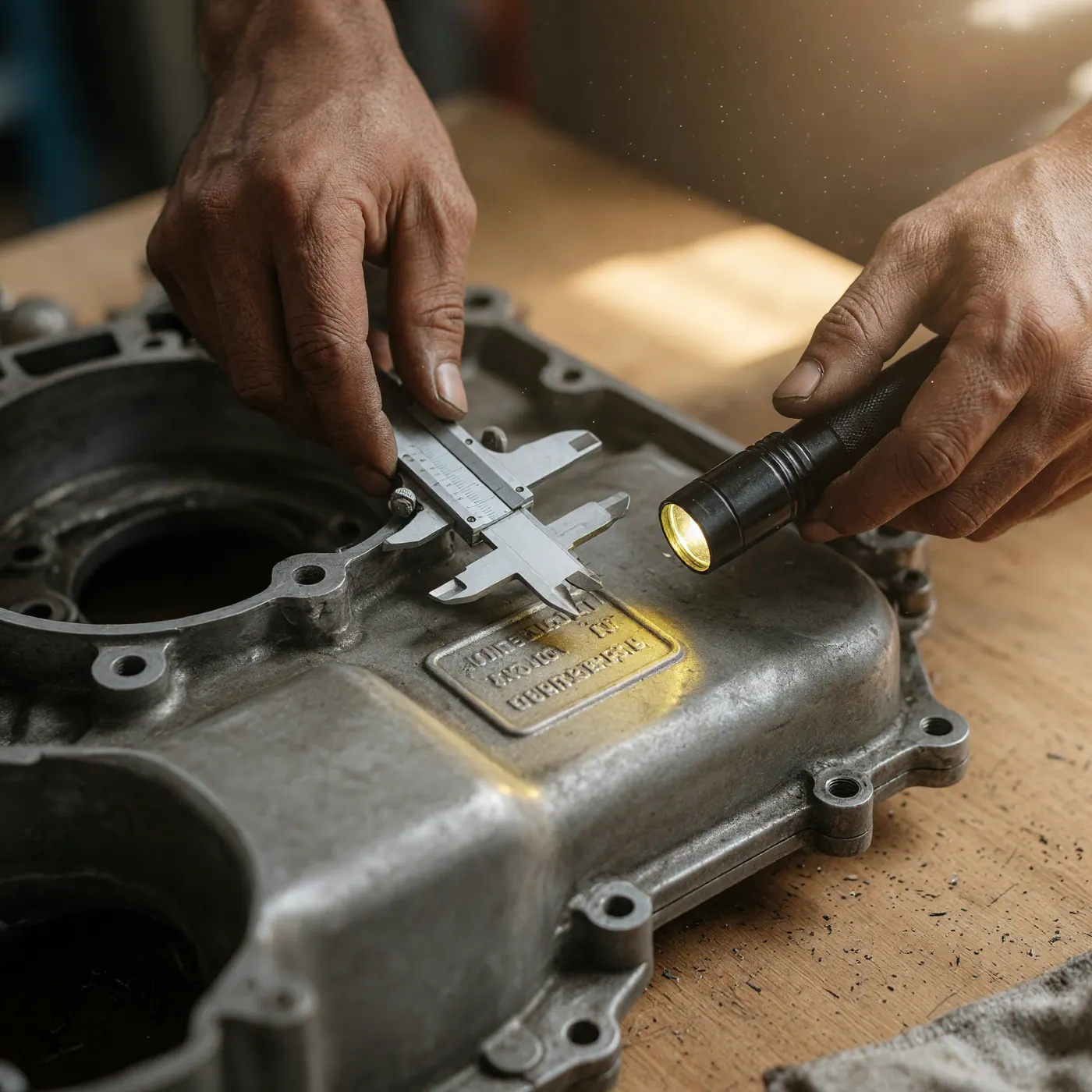
In the case of critical parts containing engraved serial identification (such as the engine block or chassis), the Criminal Investigation Directorate and INTERPOL (DIJIN / SIJIN) have an official digital scheduling portal for technical review and expert evaluation of identification systems. If you are going to transfer a complete engine, that certificate of originality is a mandatory technical requirement, but it is not enough on its own: the buyer also needs the sales contract, the proof of provenance (donor's card or invoice), and the cancellation or record at RUNT to register the engine change with their transit authority.
Channel comparison: where to sell used spare parts in Colombia?
Choosing the right channel defines the profit margin and the level of security during the transaction. According to active ads on Colombia Move (September 2026), there are 6 active motorcycle listings and 10 in the vehicle section, with 1,098 recent views: there is buyer demand, but the supply of parts and vehicles remains thin.
- Traditional scrapyards and dismantling yards: They buy by volume, weight, or scrap, at liquidation prices that leave a very unfavorable margin compared to direct sales. It is a quick exit, but economically penalized.
- Trusted mechanical workshops: If you have original parts from high-turnover brands, independent workshops in the sector often acquire them for clients with tight budgets. The disadvantage is that demand is specific and limited to their immediate workflow.
- Informal groups and social networks: Although they have visibility, they are saturated with fake profiles, unserious offers, and security risks when arranging face-to-face deliveries with strangers.
- Direct classified marketplaces: Specialized platforms where you connect directly with vehicle owners and mechanics. They allow you to show the original part number and agree on the price without intermediary commissions. For general guides on peer-to-peer transactions, you can consult our guide on where to sell used things in Colombia without intermediaries.
Which parts sell easily and which ones represent a risk
Not all components of a car or motorcycle should be commercialized in the same way. The market values parts differently according to their wear and technical criticality:
| Component type | Common parts | Demand level | Legal and technical recommendation |
|---|---|---|---|
| Mechanics and engine | Alternators, starter motors, cylinder heads, injectors | Very high | Clean without erasing engraved codes; verify mechanical tolerances. |
| Bodywork and lighting | OEM headlamps, tail lights, mirrors, grilles, tailgates | High | Photograph plastic anchor points and intact factory seals. |
| Suspension and brakes | Calipers, control arms, gas shock absorbers | Medium | Do not sell fatigued parts or brake discs with limit wear. |
| Passive safety | Airbag modules, seat belts with pretensioners, helmets | Very low / Restricted | Avoid resale; they can compromise useful life and entail civil liability. |
If you specialize in the two-wheel segment, also review the specific guidelines in our article on how to sell used motorcycle spare parts and accessories. In case the vehicle is still running and you prefer not to dismantle it, it is more practical to check how to sell a complete motorcycle directly.
Pricing strategy: how to charge a fair price for OEM parts
In the second-hand spare parts market in Colombia, original equipment manufacturer (OEM) parts in good functional condition are usually priced at an estimated range of between 30% and 50% of the value of a new original part at a dealership. Factors such as the scarcity of the spare part in the country or official import times can raise this range, while aesthetic wear or minor marks adjust it downward.
To post effectively, take sharp, close-up photographs of the part number stamped by the manufacturer, the brand of the donor vehicle, and the electrical connectors. Clarify in the text if the part was bench-tested or if it requires the buyer to replace seals or minor gaskets.
Frequently Asked Questions
❓ Is it legal to sell used car or motorcycle parts in Colombia?
Yes, it is legal if you prove the lawful origin of the donor vehicle and the parts are not stolen. The Penal Code in effect in 2026 prosecutes fencing, so each part needs a trail of origin to avoid a judicial investigation.
❓ What document do I need to prove that a used auto part is mine?
Keep the vehicle registration card of the donor vehicle or the purchase invoice. For engines or chassis, add the DIJIN/SIJIN identification expertise; a chattel sales contract, valid as support between private parties in 2026, reinforces the trail.
❓ How much money can I ask for a used automotive part?
The typical value ranges between 30% and 50% of the list price of the new part. That estimated market range, checked as of September 2026, drops with aesthetic wear and goes up if the component is scarce locally.
❓ What happens if the authorities inspect used parts without paperwork?
The National Police can seize the parts and take them for technical vehicle expertise. If there is re-stamping or a theft report, the Prosecutor's Office can open a criminal proceeding for aggravated fencing, according to Article 447 in effect in 2026.
❓ Can I sell a second-hand engine for another vehicle to install?
Yes, but the buyer needs proof of origin paperwork and DIJIN/SIJIN expertise. Without an invoice or donor card plus deregistration in the RUNT, they will not be able to register the engine change at their traffic authority, according to the vehicle identification rules in effect in 2026.
❓ Where is it safer and more profitable to sell used spare parts in Colombia?
In direct classifieds, where you post without commission and talk to the buyer. You avoid junkyard cuts and sketchy network profiles; arrange delivery at a guarded site and keep the signed contract.

Comments
Loading comments...
Checking sign-in status...