
How to Sell Used Motorcycle Spare Parts and Accessories in Colombia Without Intermediaries
A practical guide for bikers and mechanics on how to sell mechanical spare parts, certified helmets, and used accessories in Colombia, guaranteeing legal provenance and avoiding intermediaries.
IDIOMA DEL ARTÍCULO
Showing original language
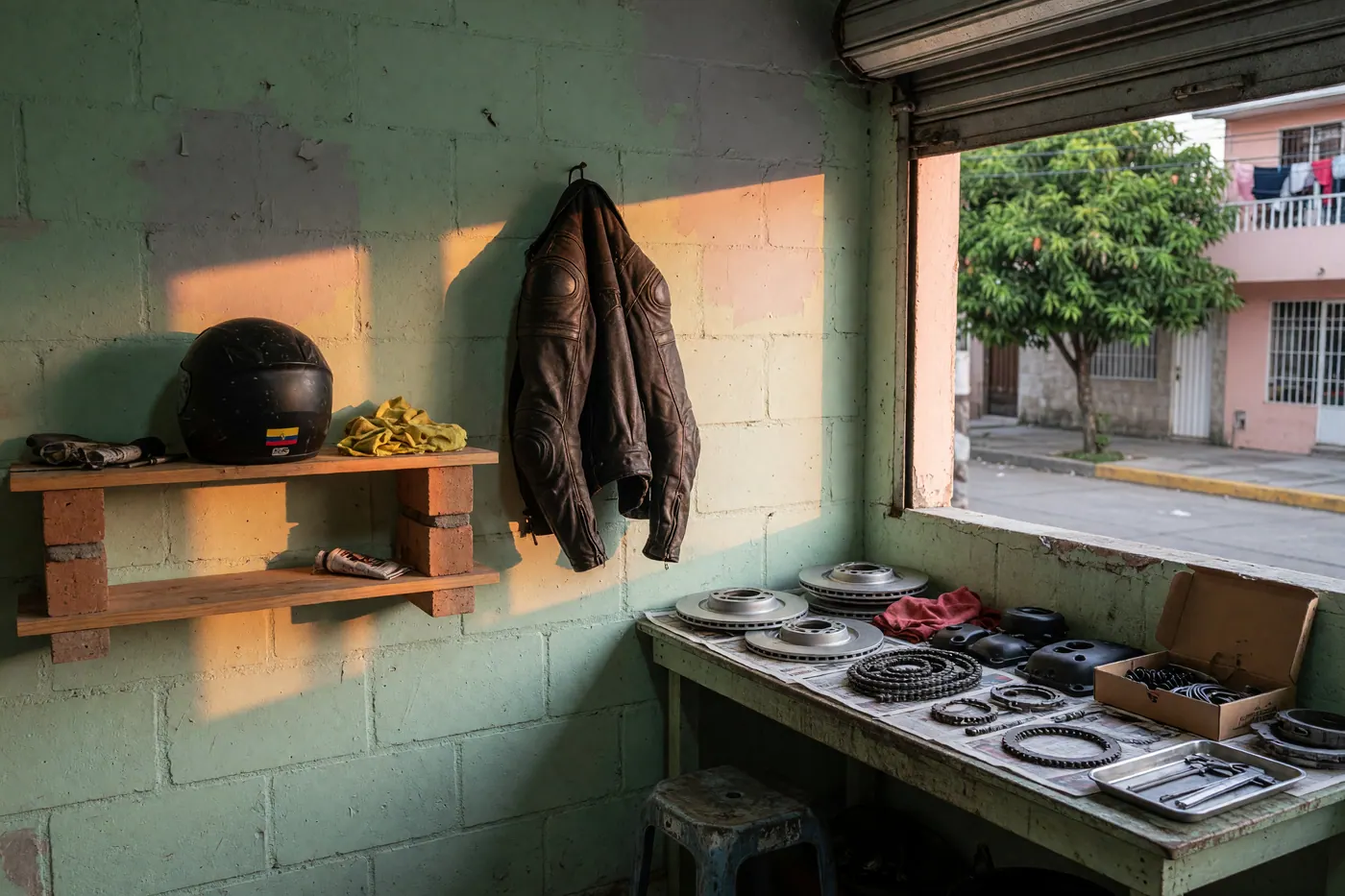
The motorcycle market in Colombia continues to grow at an accelerated pace, and with it, the buying and selling of mechanical spare parts, protective clothing, and second-hand accessories. Whether you have modified your bike, upgraded your gear, or have parts stored in the garage after maintenance, selling those used parts is an excellent way to recover money. However, to close quick sales, it is essential to avoid middlemen who cut into your margin and to know the local regulations regarding legal origin and safety.
According to the active ads on Colombia Move (August 2026), there are 9 active listings in the motorcycle category, 8 recent ones, and 746 views: bikers are looking for components and accessories, and many prefer a used original spare part (OEM) over a generic copy. Here is the practical order: prepare the parts, verify legality, and sell them directly to the end buyer without paying brokerage commissions.
Quick answer: Sell directly, with an invoice or the donor vehicle's registration card, photos of serial numbers and labels, and a price anchored to the new OEM cost. If, in addition to spare parts, you are thinking of selling your complete motorcycle, read the guide on first used motorcycle ownership transfer without commission.
- Major parts (engine, chassis): invoice + trail for RUNT.
- Helmets: visible certification (Resolution 1080 of 2019) and no serious impacts.
- Delivery at a workshop or neutral point; Nequi or Daviplata after verification.
1. Ensure legal origin (avoid the crime of receiving stolen goods)
The most important aspect when selling used motorcycle parts in Colombia is demonstrating the legitimate origin of the pieces. Commercially, selling a spare part without legal support generates mistrust; legally, the trade of stolen auto parts constitutes the crime of receiving stolen goods, defined in Article 447 of the Colombian Penal Code (Law 599 of 2000), which provides for custodial sentences.
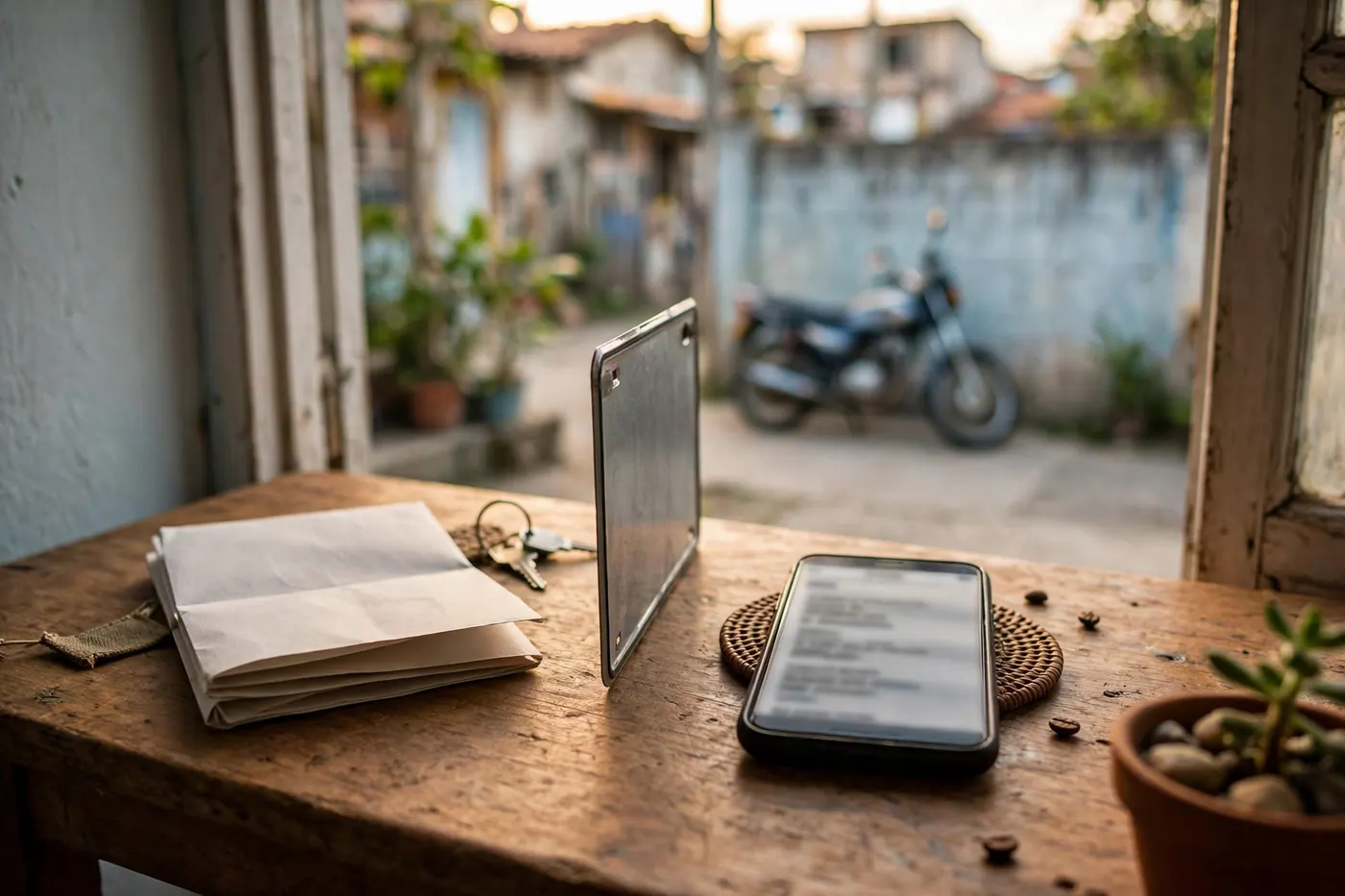
Keep the purchase invoice, the import manifest if applicable, or the registration card of the motorcycle from which the part came. A serious buyer—especially a workshop—will ask you for that document before releasing cash. Without a trail, the price drops or the conversation stops.
A mirror or a brake pad is not the same as an engine block or a chassis. Those major parts carry a serial number and the buyer needs to be able to update the vehicle's identity before their sectional secretariat and the RUNT. A motor or a frame without a serial number, without an invoice, or from “a friend who no longer has the papers” should not be marketed: there, the risk stops being commercial and becomes criminal.
The real frustration is that documenting origin takes more time than uploading three photos to a WhatsApp group. I would do it anyway: the first buyer who arrives asking “where did this come from?” filters out those who only want cheap parts without questions. Just as it happens with other used items in Colombia, the direct channel works better when the ad already includes the trail; if you want the general overview of selling between private parties, there is the guide on where to sell used things without paying a commission.
If the donor motorcycle is still in your name and you want to get rid of it completely, the paperwork process is not the same as for a trunk. Use the route of RUNT, SOAT, fines, and transfer when publishing a motorcycle.
2. Sale of helmets and protective equipment
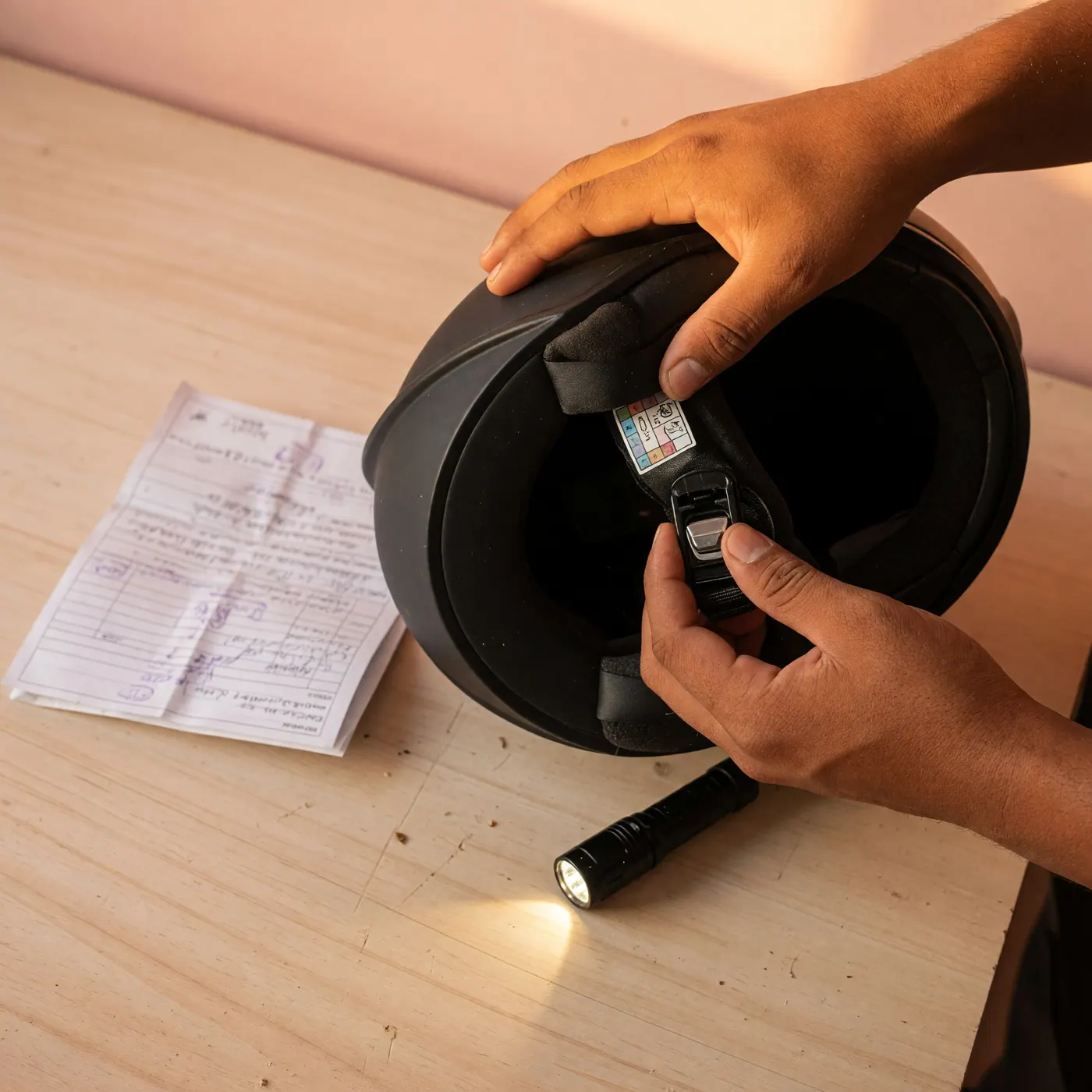
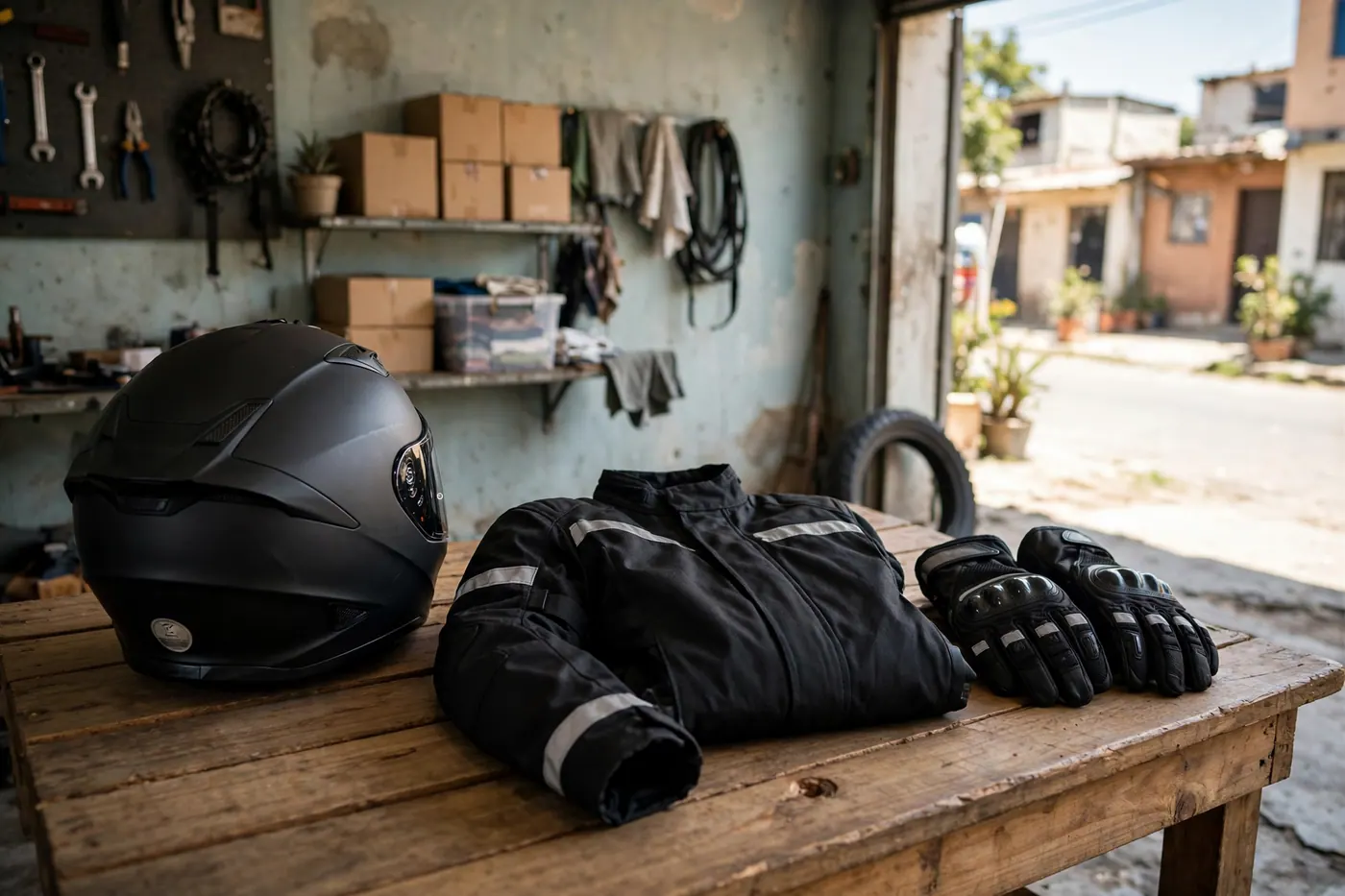
A helmet is not an aesthetic accessory. In Colombia, the Resolution 1080 of 2019 requires that the helmet meets recognized standards (NTC 4533, ECE 22.05/22.06, or DOT FMVSS 218) and that the certification label is legible. If you are going to sell a used one, photograph that label, the inside of the polystyrene, and the pads: the buyer is buying protection, not a “pretty” helmet.
I would skip selling a helmet that has already taken a hard hit, even if the helmet “looks intact.” Polystyrene compresses once; reselling it as if it were useful for another accident is a bad deal and a risk for the biker who puts it on. The same applies to a jacket with destroyed protections or a top case cracked at the anchor points.
For jackets, gloves, sliders, intercoms, and rigid top cases, be brutally honest: size, years of use, if the protections are still in place, if the intercom pairs, or if the top case includes the mounting plate. The SIC also expects truthful advertising in second-hand items: if you say “unused” and it arrives with open seams, the complaint is yours.
| Do publish it | Better not sell it as protection |
|---|---|
| Helmet with legible label, firm polystyrene, intact strap | Accidented helmet, sunken polystyrene, or scraped label |
| Jacket with CE protections in place and functional zipper | Wet jacket, with mold, or missing internal plates |
| Top case with complete anchors and plate measurements | Broken box or improvised hardware |
3. How to set a realistic price and reduce curious people
The trick is not to invent a magical list: it is to anchor it. Check what the same OEM spare part costs at a dealership or distributor and go lower. A used original in good condition is usually priced—as a practical reference and not as an official table—between 40% and 60% of that value, depending on the wear. A used generic is worth less; if you publish it as if it were original Honda or Yamaha, they will eat you alive in the comments.
Write the exact compatibility: make, model, and engine displacement. “Fits various Nakeds” doesn't work. “Pads for NKD 125” does. The buyer who arrives by WhatsApp already has the bike in mind; if your ad saves them that back-and-forth, they stop being curious and become serious.
Be careful with the eternal haggling. State if the price is firm or if there is a small margin for picking it up in person. If you accept offers, say it once. If not, say it too. Facebook groups and Mercado Libre move volume, but they take time and, in the case of agencies or “compraventas,” they take a commission. The direct channel leaves you with the price you agreed upon with the buyer, without an intermediary cut.
4. Key photos and transparent description
Three cellphone photos in the dark do not sell a carburetor. You need daylight, a simple background, and detail: serial number if it exists, friction wear, anchor points, connectors, and what is included (screws, gaskets, intercom control). If it is an exhaust, show welds and clamps. If it is a headlight, turn it on.
In the ad text, do not repeat the title. Tell hours of use if you know them, why you are removing it (upgrade, selling the bike, workshop stock), and what is not included. A clear ad in the motorcycle category of the vehicles section saves the buyer the obligatory “is it still available?”
5. Security in local payment and delivery
Meeting at a shopping mall parking lot or a trusted workshop is still better than inviting a stranger to your home. Bring the part and the paperwork; ask the buyer to test whatever can be tested right there. Cash or an immediate transfer via Nequi or Daviplata once they have seen the item. Do not ship to another area against a blurry “receipt”.
The ugly part: there are people who ask for ten more photos, set up a meeting, and don't show up. Cut it short. To coordinate direct sales and in-person deliveries without intermediaries, the same live testing criteria we use for used electronics apply here.
6. Where to post without paying a commission
Facebook Marketplace and biker groups in your area are still fast, at the cost of scams, cloned accounts, and people who want you to bring them the part at 10 PM. Mercado Libre charges fees and handles claims. An informal pawn shop pays you immediately, but cuts into your margin.
Posting between individuals, for free and without commission, lets you set the price and talk via WhatsApp. Colombia Move does not inspect or authenticate the parts: the ad is yours, the photos are yours, and you demonstrate the provenance. That is exactly what a serious biker wants to read before making a move.
Frequently Asked Questions
❓ Is it legal to sell usable motorcycle parts in Colombia?
Yes, it is legal if the parts are yours or you bought them with an invoice and can show their origin. The Penal Code (Law 599 of 2000, Art. 447, in force) sanctions the receiving of stolen auto parts; a serious buyer will ask you for that history before paying.
❓ Is it safe to sell a used motorcycle helmet in Colombia?
Yes, if it is structurally sound, has not suffered a hard impact, and retains its certification label. Resolution 1080 of 2019 requires standards such as NTC 4533, ECE 22.05/22.06, or DOT; do not sell a crashed helmet even if the styrofoam looks “presentable”.
❓ What documents should I provide when selling a used motorcycle engine?
Provide the invoice or the bill of sale and the history of the donor vehicle. With that, the buyer can process the engine change with the RUNT and their sectional secretariat (rules consulted in 2026); without a serial number or invoice, that part should not be in circulation.
❓ How do I determine the price of a second-hand motorcycle part?
Anchor the price to the new OEM and lower it according to wear; a used original in good condition usually goes, as a practical reference in 2026, between 40% and 60% of that value. A used generic part is worth less and you shouldn't sell it as if it were original.
❓ What information should not be missing when posting motorcycle parts or accessories?
Brand, model, year, and compatible engine displacement, wear status, photos of mounts or connectors, and legal provenance. If you omit the displacement, the buyer assumes that “maybe it works” and stops writing to you; that list is still current in 2026.
❓ Where can I post my motorcycle parts and accessories without paying a commission?
You can post the ad for free and without commission in the motorcycle category to talk directly with buyers in your area. Facebook groups are still fast, but filter well: ask for testing at a neutral point and do not ship against suspicious receipts.
Comments
Loading comments...
Checking sign-in status...