
Lease Screening for Tenants in Colombia: What Insurers Value and How to Pass
Passing the lease screening process with insurers in Colombia requires understanding the double income rule, gathering the exact set of documents, and knowing what options exist if you don't have a traditional co-signer.

IDIOMA DEL ARTÍCULO
Showing original language
Renting an apartment or house through a real estate agency in Colombia involves facing one of the most feared hurdles for any tenant: the insurability study or risk analysis. Insurance companies and financial intermediaries like El Libertador (Grupo Bolívar), SURA, Seguros Bolívar, or Mapfre are in charge of evaluating whether you have the financial capacity and solvency to fulfill the lease agreement throughout its entire term.
For many tenants, the process can seem like a black box full of paperwork, requests for repetitive documents, and uncertainty as to why a request is approved or rejected. The good news is that insurance companies evaluate objective and predictable parameters. If you understand exactly what metrics risk analysts review, how your payment capacity is calculated, and what legal alternatives exist when you lack a traditional requirement, your chances of receiving a favorable response increase considerably.
Related article: To understand your contractual rights and the legal caps for rent increases in Colombia, consult our guide on Law 820 of 2003 and the CPI (IPC) increase.
1. What does an insurance company really evaluate in a rental study?
When you submit your documents to a bond entity or insurance company, the entity does not judge intentions; it analyzes the credit risk that the contract will fall into default and that they will have to answer to the owner for unpaid rent, administration fees, or utilities. Insurance companies focus their assessment on four fundamental pillars:
- Verifiable payment capacity: That the primary applicant (or the permitted group total) receives recurring income that is demonstrable through formal channels.
- Credit history: Your payment behavior recorded in credit information bureaus like DataCrédito and TransUnion.
- Occupational stability: Tenure in your current job, type of employment contract, or the continuity of economic activity if you are a freelancer.
- Identity validation and security: Facial biometric verification and cross-referencing against public databases to prevent fraud or identity theft.
In the current housing market in Colombia, analyses have migrated to 100% digital platforms. According to active signals from Colombia Move (August 2026), the housing section gathered 100 active listings and 19,424 views. It is a useful sample showing real interest in comparing housing options, although those data points do not predict the approval of a rental study.
2. The 2x rule: The minimum income calculation you must meet
The basic rule applied by almost all insurance companies in Colombia is the so-called double rule (2x). This means that the tenant's demonstrable net monthly income must be at least twice the value of the monthly rent plus the administration fee (if applicable).
For example, if you want to rent an apartment with a rent of $2,000,000 COP and a monthly administration fee of $300,000 COP (for a total cost of $2,300,000 COP), the insurance company will require your net monthly income to exceed $4,600,000 COP.
In most procedures, the joint debtors (co-signers) must also individually demonstrate income of that same value (2x). It is crucial to note that, as a general rule for risk underwriting, insurance companies do not allow "summing" the income of two people who do not live together to meet the primary applicant's goal, unless they are spouses or permanent partners who will live in the same property and both appear as co-tenants.
3. Requirements and document folder according to your economic profile
Having your document folder ready before submitting the application prevents delays that could cause another interested party to take the property. Requirements vary substantially depending on whether you are an employee, freelancer, or retiree:
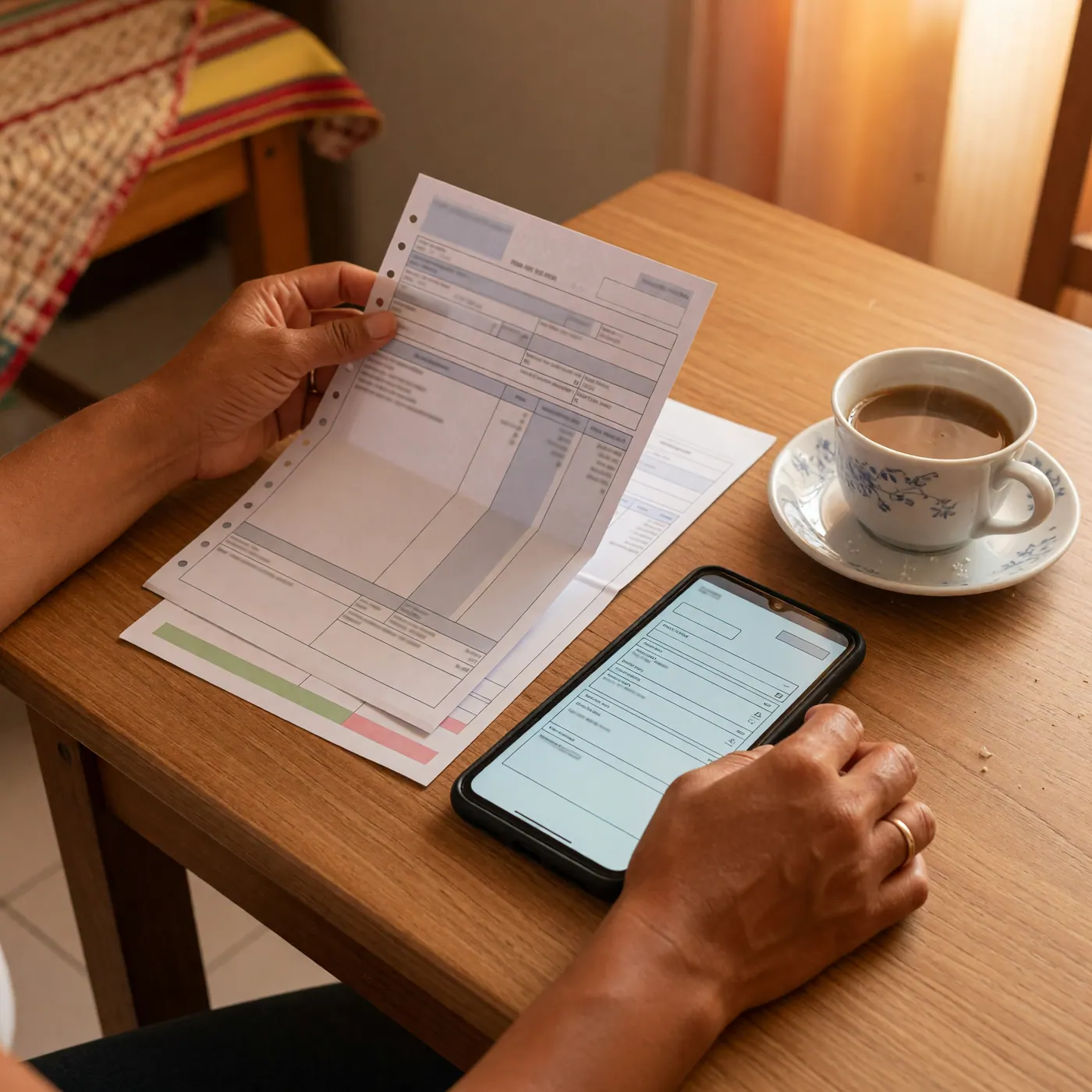
For Employees with a Formal Contract
- Copy of the citizen ID (cédula) enlarged to 150% (or a valid Foreigner's ID/Cédula de Extranjería).
- Employment letter issued within the last 30 to 60 days, specifying position, salary, type of contract (indefinite, specific work/project, fixed term), and seniority at the company.
- Payroll pay stubs corresponding to the last 3 months.
- Bank statements from the account where you receive your payroll, corresponding to the last 3 months.
For Freelancers and Business Owners
- Copy of the citizen ID and updated Tax ID (RUT).
- Bank statements from your personal or business account for the last 3 to 6 months demonstrating a constant flow of funds.
- Income tax return for the last fiscal year filed with the DIAN (if you are required to file).
- Certification of monthly income signed by a licensed Public Accountant, attaching a photocopy of their professional ID card and the certification of validity issued by the Central Board of Accountants.
Supplementary guide: If you work remotely for companies abroad or do not receive your payment into a local bank account, read our guide on how to prove income to landlords in Colombia.
4. The Joint Debtor: How many you need and when real estate is required
The joint debtor (or co-signer) is the legal figure who commits to answering for exactly the same financial obligations of the lease agreement if the primary tenant defaults. The requirement for debtors usually depends on the total amount of the lease:
- Rents up to $1,250,000 – $1,500,000 COP: Generally, one (1) joint debtor with verifiable income of 2x the rent value is required.
- Rents above $1,500,000 COP: It is very common for the insurance company to require two (2) joint debtors with income, or alternatively, one (1) joint debtor who provides real estate.
When the insurance company requests a co-signer with real estate property, the property presented must be an urban or rural property located in Colombia, documented through a Certificate of Freedom and Tradition (Certificado de Libertad y Tradición) issued no more than 30 days ago. To be accepted by the risk analyst, the property must be free of liens: it must not show seizures, active mortgages, family homestead protections, or family housing liens, unless the commercial appraisal of the property amply compensates for the risk.
5. What alternatives exist if you do not have a joint debtor?
Not having a family member or friend willing to sign as a joint debtor is one of the biggest bottlenecks for tenants in Colombia. Fortunately, there are legal and financial solutions to overcome this obstacle:
- Direct digital insurance and bonds: Real estate bonding platforms and modern insurance companies analyze your individual profile using risk algorithms. If your credit score is outstanding and your income comfortably exceeds the 2x rule, these entities can grant the policy, approving the application without requiring an additional co-signer.
- Certificate of Deposit (CDT) as collateral: It is a completely legal mechanism where you open a CDT at a bank and pledge or endorse it as collateral in favor of the insurance company or the real estate agency during the contract term. Generally, the pledged amount must cover between 4 and 6 months of rent plus maintenance fees.
- Direct lease agreements with owners: Some owners choose to agree on guarantees directly with the tenant without the intermediation of an institutional policy. However, you must be very clear about current legislation.
Regarding money guarantees, Colombian law is emphatic: Article 16 of Law 820 of 2003 expressly prohibits requiring cash deposits, money as a guarantee, or blank promissory notes to back urban housing lease contracts. Any collateral guarantee must be channeled through formal instruments such as insurance policies, bonds, or endorsed CDTs.
6. Credit bureaus and credit scores: Does being reported disqualify you?
Insurance companies automatically check your background in DataCrédito and TransUnion. A very common myth is to think that any negative report causes an immediate rejection of the application. In practice, entities evaluate the nature and severity of the report:
If the negative report corresponds to a minor delinquency in cell phone services or credit cards that has already been paid off, and you have the official letter of release issued by the creditor, you can attach said letter to the file. In many cases, human analysts re-evaluate the application and approve the lease if your other income and your joint debtors demonstrate high solvency.
7. Checklist to pass your rental review on the first try
Apply this structured step-by-step guide to send an impeccable application that reduces response times and minimizes additional requirements:
- Calculate your rental cap: Take your total verifiable net income and divide it by two. That result represents the maximum rent plus maintenance fee you should apply for to avoid being rejected due to payment capacity.
- Validate your DataCrédito in advance: Check your free credit history before starting your property search to detect inconsistencies or verify that your letters of release are updated in the system.
- Gather digital documentation in PDF format: Keep clear scans (no blurry cell phone photos) of your last 3 pay stubs, your last 3 complete bank statements (all pages), and your recent employment letter.
- Inform your joint debtors and references in advance: Insurance companies make verification calls to personal, family, and professional references. Ensure your contacts know they will be called to speed up the validation.
- Complete biometric validation on the same day: When you receive the link from the insurance company to take the photo and validate your ID, execute it immediately in a well-lit space to prevent the process from being put on hold.
Recommended reading: If you prefer to explore rental alternatives without the intermediation of traditional insurance companies, check out our guide on contracts and requirements for direct rentals with owners.
Frequently asked questions
❓ How long does it take for an insurance company to respond to a rental review?
In digital processes with insurance companies like El Libertador or SURA, the decision is usually issued between 24 and 48 business hours. This time depends on the applicant and their debtors completing the biometric validation and professional/personal references responding promptly to verification calls.
❓ How much does the rental review cost and who should pay for it?
As a general rule in the Colombian real estate market, the cost of the review is assumed by the applicant tenant. The cost usually ranges around 5% of the total rent value plus VAT (19%), although there are insurance companies and digital platforms that handle fixed rates by price ranges or free promotions.
❓ Can the income between the tenant and the joint debtor be combined to meet the requirement?
No. Per credit underwriting rules, combining income between the tenant and their co-signer to reach the goal is not allowed. Both the applicant and each joint debtor must individually demonstrate income equivalent to double (2x) the rent plus maintenance fee, except in cases of spouses applying as co-tenants.
❓ Can I pass a rental review if I have a negative report in Datacrédito?
The chances decrease if the delinquency is still open, but it is possible to pass the review if the reported debt has already been paid and you attach the written letter of release. In cases of minor reports with a letter of release, insurance companies may approve the application if the joint debtors have an outstanding financial profile.
❓ What alternatives exist if I don't have a co-signer with real estate assets?
You can present two joint debtors who demonstrate payroll or independent income, take out direct digital insurance or a bond without a co-signer based on your credit score, or choose to set up a CDT as collateral pledged in favor of the insurance company for an amount equivalent to several months of rent.
❓ How long does an approved rental review last?
An approved insurability study generally has a validity of 60 to 90 calendar days. During that period, you can apply the approved result to rent another property managed by the same real estate agency or insurance company, provided that the rent does not exceed the value authorized in the initial evaluation.




Comments
Loading comments...
Checking sign-in status...