
Public Utility Reconnection Fees in Colombia: When Is It Legal and What Are the Superservicios Regulations?
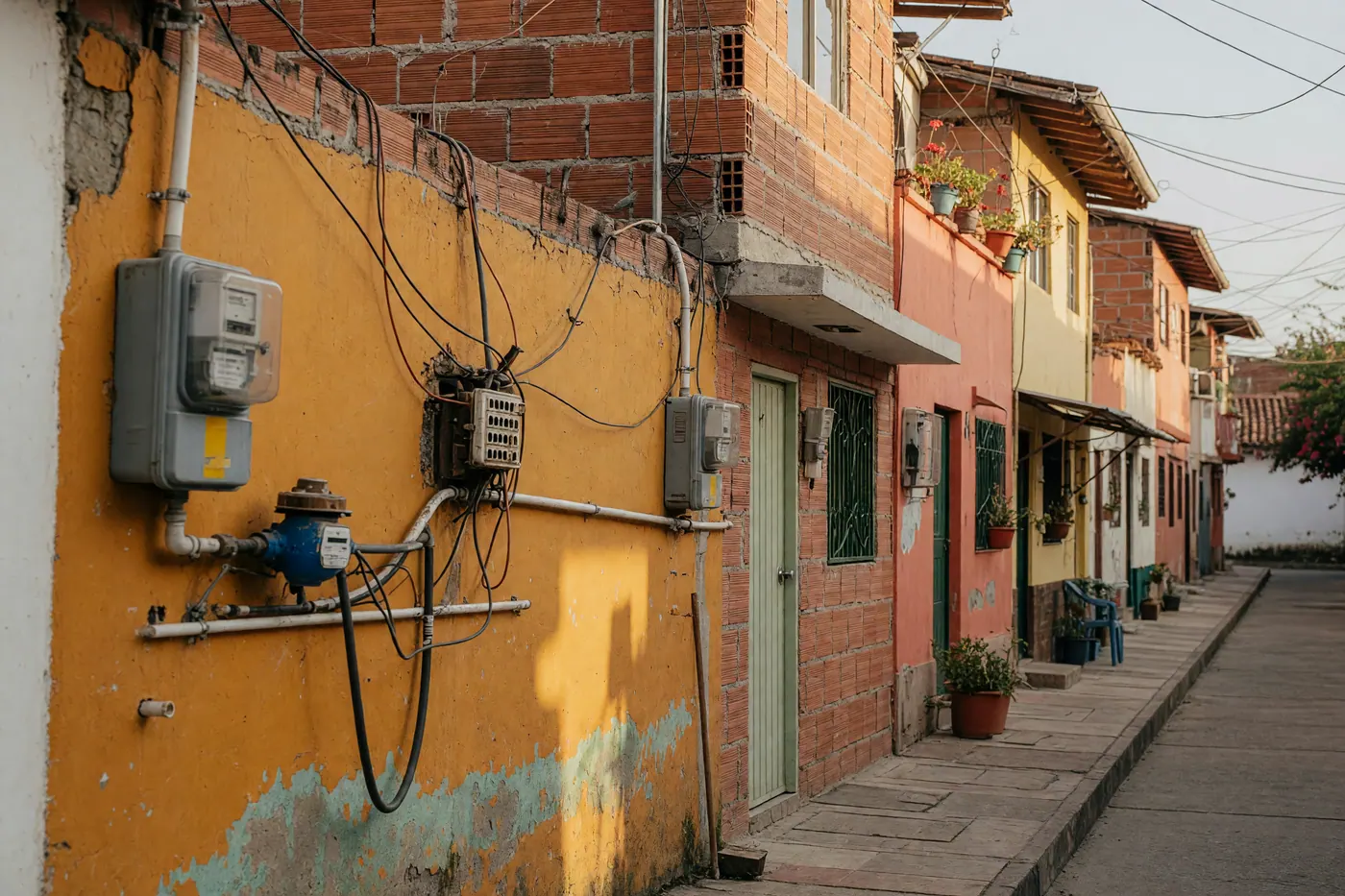
Facing the suspension of water, electricity, or gas due to late payments is distressing, but utility companies cannot charge for reconnections as they please.
IDIOMA DEL ARTÍCULO
Showing original language
Suffering from the suspension of a basic service like water, electricity, or natural gas immediately generates stress and disorganization in the household. Beyond the annoyance of being left without supply, thousands of users in Colombia face high fees or additional charges when requesting restoration. This is where the recurring question arises: when is the reconnection fee for public utilities actually legal, and under what limits can service providers act?
Yes: water, electricity, and gas companies can charge for reconnection, but only to recover the efficient costs of a valid suspension due to user delinquency, not as a penalty or profit.
There is a widespread belief that reconnection is a fine for late payment. However, within Colombia's legal framework, residential public utilities are governed by strict principles of cost recovery and the guarantee of due process. According to active listings on Colombia Move (August 2026), there are 121 active housing listings—41 apartments and 14 houses—and when delivering or taking over a property, utility debts and reconnection charges remain one of the main points of friction between landlords and tenants.
In this guide, we detail the pillars of Law 142 of 1994, the doctrine of the Superintendency of Residential Public Utilities (Superservicios), the recent confusion with internet regulations, and the legal procedure to defend yourself if the company tries to charge you for a reconnection that violates the rules.
1. The Legal Framework: Why is Reconnection Charged According to Law 142 of 1994?
The regime for residential public utilities in Colombia is regulated by Law 142 of 1994. This regulation empowers service providers to cut or suspend supply when the user fails to meet payment obligations, but it imposes clear rules on charging for reconnection and reinstallation.
Specifically, Articles 96 and 142 of Law 142 of 1994 establish the following basic conditions:
- Attributable to the user: Charging for reinstallation or reconnection only proceeds when the service suspension was caused by a reason attributable to the subscriber or user, such as failing to pay invoices on time within contractual deadlines.
- Recovery of efficient costs: The amount charged to reconnect the service is not a sanction or a fine, nor can it become a source of profit or extraordinary gain for the company. Its only legal purpose is to recover the efficient costs incurred by the provider to perform the technical operation.
- Uniform contract conditions: The values set for these operations must be related to the methodologies established by the corresponding regulatory commissions (CRA for water and sewage, CREG for electricity and gas) and must be previously specified in the contract of uniform conditions.
If the company applies an automatic charge without justifying the technical labor or arbitrarily inflates the cost of the operationally necessary procedure, it is engaging in a practice contrary to the doctrine of Superservicios. The specific amount varies depending on the contract, the type of connection, and the methodologies of each commission; there is no single national value that applies to all companies. To understand how the socioeconomic level (estrato) changes the regular invoice—distinct from the reconnection charge—it is worth checking how the cost of public utilities is calculated by socioeconomic level (estrato).
2. Myth vs. Reality: Law 2485 of 2025 and Residential Services
Over the last few months, misinformation has circulated on social media regarding the enactment of Law 2485 of 2025, claiming that this rule prohibited water, electricity, or gas reconnections or reduced them to a symbolic value (such as $1,000 COP). It is essential to clarify this legal misunderstanding to avoid unfounded complaints.
| Public Service | Applicable Legal Regime | Does Law 2485 of 2025 Apply? | Nature of the Charge |
|---|---|---|---|
| Electricity | Law 142 of 1994 (CREG Regulation) | No | Recovery of operational cost for cut-off/reconnection. |
| Water and Sewage | Law 142 of 1994 (CRA Regulation) | No | Recovery of efficient cost of technical operation. |
| Residential Gas | Law 142 of 1994 (CREG Regulation) | No | Recovery of reconnection costs and technical tests. |
| Internet and Telephony | Law 1341 of 2009 / Law 2485 of 2025 (CRC) | Yes | Caps and special regulations for telecommunications reconnection. |
Law 2485 of 2025 modifies exclusively the rules of the telecommunications sector and ICT services (governed by Law 1341 of 2009 and supervised by the Communications Regulation Commission). Therefore, water, electricity, and residential gas services continue to be governed by Law 142 of 1994. Electricity or water companies remain legally empowered to charge for efficient restoration expenses if the delinquency was real.
3. When is a Reconnection Charge Illegal?
The Superintendency of Residential Public Utilities has issued various uniform concepts (including Concepts 460 of 2021 and 16 of 2022) specifying situations in which a reconnection charge becomes improper and illegal. If you are in any of the following scenarios, you can challenge the invoice:
- Absence of an actual physical suspension: If you paid your overdue invoice, but the service provider never sent their operators nor executed the technical cut-off at the meter or connection point, it is completely illegal for them to include a reconnection charge in the following period. If there was no operational work, there is no cost to recover.
- Cut-off due to company error: If the suspension occurred while you were up to date with your payments, or if it resulted from a failure in the provider's banking input system, the cut-off is arbitrary. In this case, reconnection must be immediate, at no cost to the user, and with the right to compensation if damages were caused.
- Lack of notification or violation of due process: The company cannot suspend the service suddenly without having notified the delinquency on the invoice or through the procedure stipulated in the contract. Without due process, the cut-off is illegal, and therefore, the reconnection should not be paid.
- Non-existence of an executed technical order: In services with remote or digital suspension, the charge must strictly correspond to the actual costs of the remote operation and not to the traditional costs of a field technician visit.
A frequent—and expensive—error is trying to "fix it yourself" by breaking seals or reconnecting the meter. That is not a shortcut: in Colombia, it can constitute fluid theft. The correct path is to pay what is actually owed, reclaim what is not, and keep written records. If you also need the PQR channel for regular invoices, not just reconnection, here is the guide on how to pay and file complaints for public utilities in Colombia.
4. Subjects of Special Protection and the Vital Minimum of Water
A crucial aspect of Colombian jurisprudence is the protection of the fundamental right to a dignified life and health. The Constitutional Court (in rulings such as Judgment T-188/18) has set clear limits on the right to completely suspend public services when basic rights are violated.
In the case of water service, when the residence is inhabited by individuals requiring special constitutional protection (the elderly, children in early childhood, people with catastrophic illnesses, or those with severe disabilities), the utility provider cannot perform a full and absolute suspension of the potable water supply due to late payments..
Instead of a complete cutoff, the company is required to install a restriction system or flow reducer that guarantees a minimum sufficient quantity of potable water (vital minimum) for the household's subsistence and sanitation. In these special contexts, if the company carries out a total cutoff in violation of constitutional jurisprudence, the user can file a tutela action and challenge any reconnection fee associated with that irregular procedure.
5. How to Dispute an Unfair Charge: PQR and Right of Petition
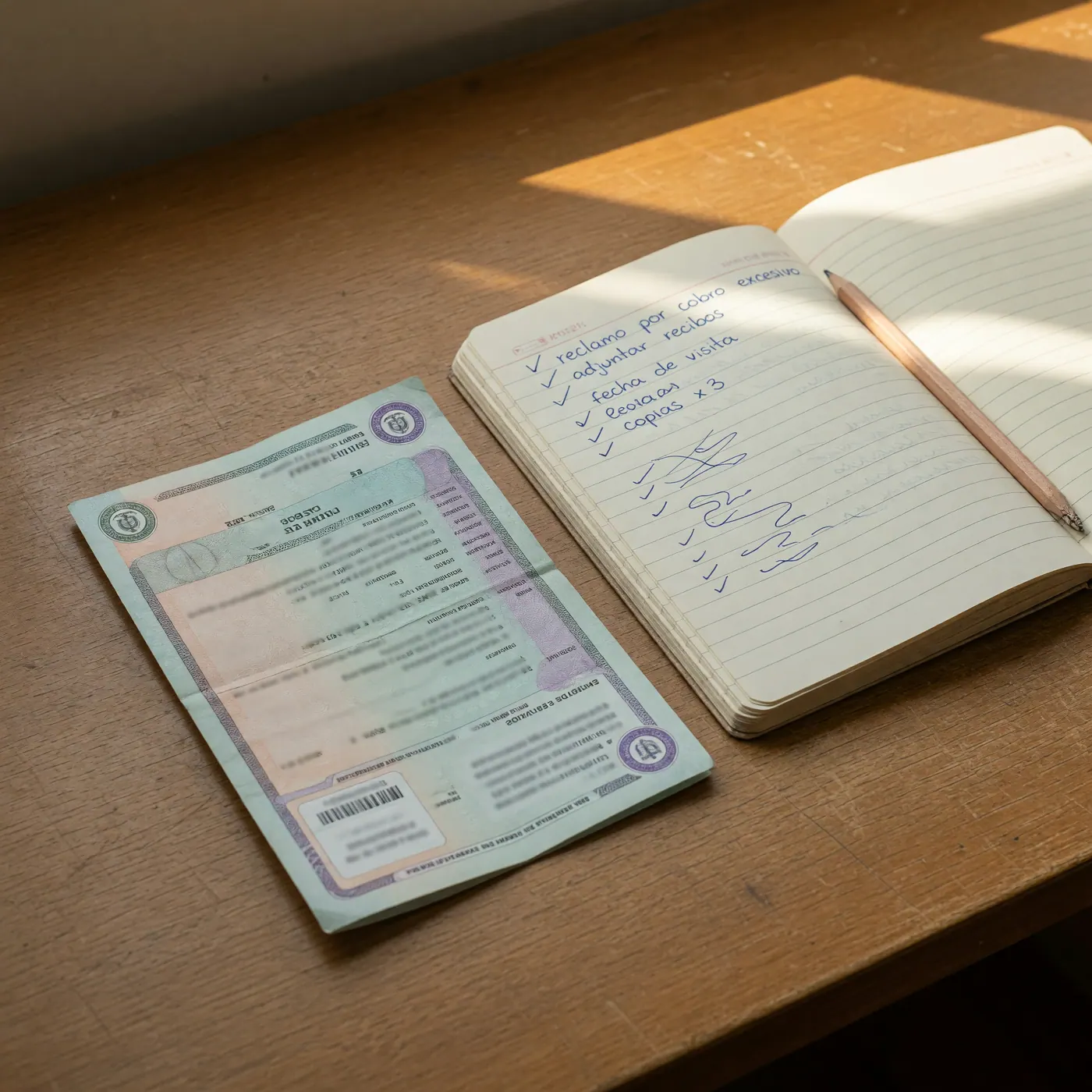
Before escalating to the Superservicios, file the PQR on the company's virtual channel. Article 158 of Law 142 of 1994 allows 15 business days for a response. If they do not reply or deny it without foundation, use TeRespondo. Attach the invoice, proof of payment, and evidence that no physical cutoff took place. The real annoyance is paying, waiting for reconnection, and discovering a charge without a technical visit: request the charge be annulled and keep a record of when the cause for the suspension was removed.
Template to copy: To: PQR Office of [company]. Subject: Right of Petition — improper reconnection charge. I, [name and ID number], account [number], request to annul the reconnection charge on invoice [number] based on articles 96 and 142 of Law 142 of 1994, because [there was no physical suspension / it was a company error / there was no notification]. I request a substantive response in 15 business days (art. 158), re-invoicing, and, if applicable, restoration. Attachments: invoice, payment, and photo of the meter.
6. Recommendations for Tenants and Landlords
In a rental, the company charges the subscriber, but the property ends up without service. When signing or handing over, ask for a clearance certificate (paz y salvo), compare meter readings, and put in writing who assumes reconnection costs. That overlaps with Law 820; detail it in public service guarantees in the lease agreement. If the contract burdens you with external cutoffs, compare it against the abusive clauses prohibited by Law 820.
The typical annoyance: the owner finds out about the cutoff when the tenant has already left, or the tenant pays for a reconnection of a previous debt. The remedy is the handover report and the PQR; do not break the meter seals.
Frequently asked questions
❓ Is it legal for companies to charge for reconnecting electricity, water, or gas in Colombia?
Yes, it is legal under articles 96 and 142 of Law 142 of 1994 if the suspension was due to late payment and the charge only covers efficient costs. It is not a fine. If the amount is not in the uniform terms and conditions or there was no technical work performed, dispute it (rule in force in 2026; source: Law 142).
❓ Does the new law limiting reconnection charges apply to water and electricity?
No, Law 2485 of 2025 applies only to internet and telephony, not to water, electricity, or gas. Those services remain under Law 142 of 1994. The $1,000 COP cap circulating on social media does not apply to water, energy, or gas (source: Law 2485 of 2025).
❓ Can they charge me for reconnection if the service was never physically suspended?
No: if there was no technical suspension procedure, or the cutoff was the company's error, the charge is inappropriate according to the Superservicios. Keep evidence from the meter and proof that the supply was not interrupted (2021-2022 concepts; source: Superservicios).
❓ How long does the company have to reconnect the service once the debt is paid?
After paying or settling the debt, they must reconnect in the shortest technical time possible, usually 24 hours in urban areas. The contract for uniform conditions may specify the deadline; if they delay without reason, mention it in your PQR (technical deadline, 2026).
❓ Can they completely cut off water to a vulnerable family in Colombia?
No. Judgment T-188/18 requires a flow reducer (vital minimum) if there are individuals requiring special protection, not a total cutoff for late payments. An absolute cutoff in those households can also lead to a tutela (source: Constitutional Court, T-188/18).
❓ How long does the public utility company have to respond to a claim or Right of Petition?
Under article 158 of Law 142 of 1994, the company has a maximum of 15 business days to resolve and notify the response to petitions, complaints, or appeals. If the deadline passes or the response is evasive, the next step is TeRespondo before the Superservicios (deadline in force in 2026; source: art. 158).



Comments
Loading comments...
Checking sign-in status...