
Using Credit Cards in Colombia: Foreign Cards, Local Cards & What Actually Works
Every swipe of a foreign credit card in Colombia costs you more than you think. Here's which cards to use, how to avoid the most common fee traps, and when to just use cash.
IDIOMA DEL ARTÍCULO
Showing original language
Colombia runs on cash in ways that'll surprise you — but reaching for your foreign credit card everywhere isn't the smart move either. After months of fumbling with ATMs, getting hit with mystery fees, and learning the hard way that 'pay in USD' is never the right answer, here's what actually works.
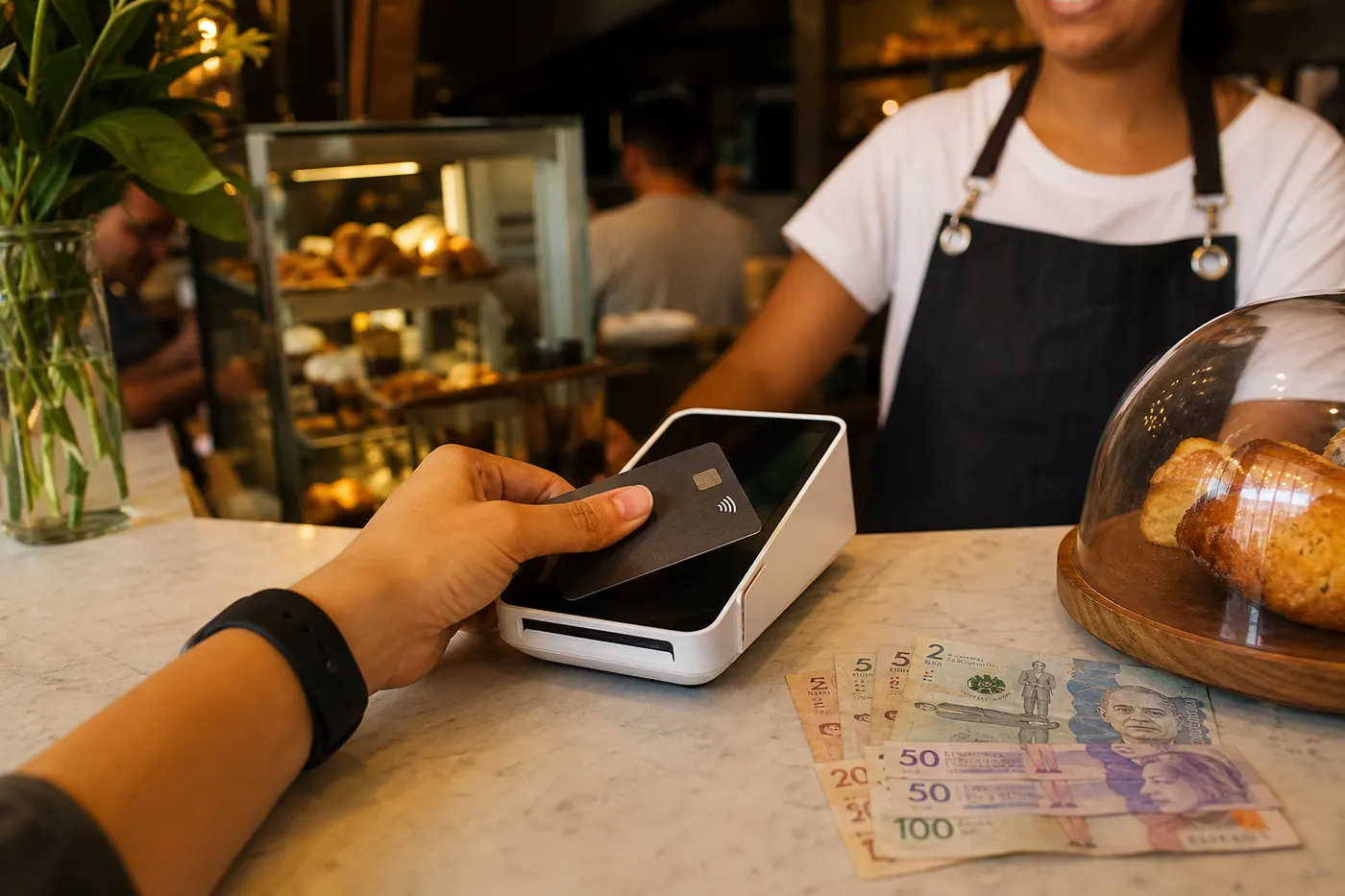
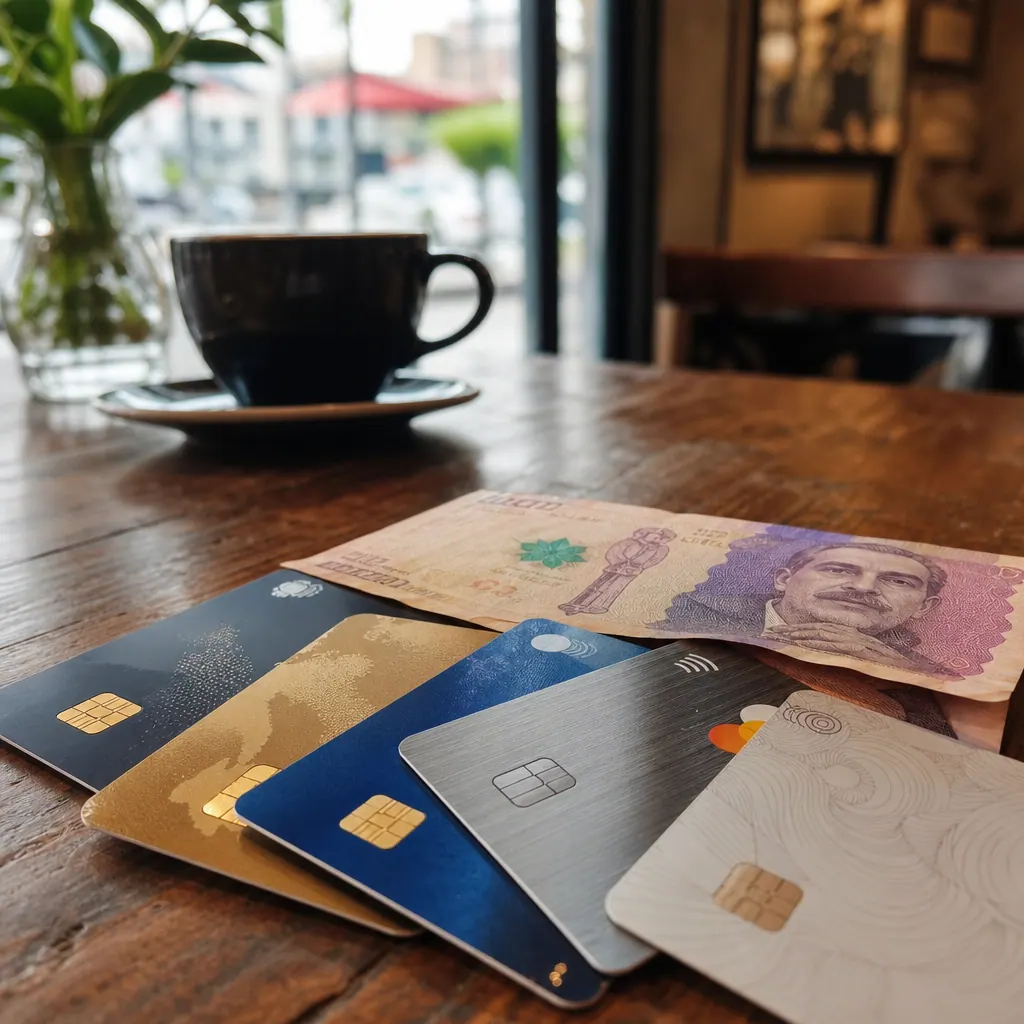
The good news: Visa and Mastercard are accepted across Colombia in malls, restaurants, supermarkets, and most hotels. The less good news: every swipe of a foreign card costs you 3–5% in foreign transaction fees, ATM withdrawals come with their own surcharges, and contactless payments are more hit-or-miss than you'd expect outside the big-city malls.
Whether you're arriving for a month or setting down roots, this guide covers which foreign cards to use, how to minimize fees, when cash is genuinely unavoidable, and how to eventually get a Colombian credit card so you stop bleeding money on every transaction.
What to know before you swipe
- Your Visa or Mastercard works in most shops, restaurants, and hotels
- Always pay in pesos (COP) — never accept the "pay in USD" offer at terminals
- ATM withdrawals cost $8,000–$15,000 COP per transaction at most networks
- Charles Schwab and Wise cards are the lowest-cost options for ATM withdrawals
- Getting a Colombian credit card typically takes 6–12 months of local banking history
Does Your Foreign Credit Card Work in Colombia?
For Visa and Mastercard, the short answer is yes — broadly. Most supermarkets (Éxito, Jumbo, Carulla), chain restaurants, hotels, and larger shops in Bogotá and Medellín accept them without issue. Amex is the exception: it's widely rejected in smaller restaurants, local tiendas, and anything outside the major cities.
That said, you'll hit cash-only situations more often than you might expect:
- Neighborhood tiendas and market stalls
- Many taxi drivers (though Uber and InDrive solve this)
- Public transport top-ups in some cities
- Many private landlords for monthly rent
- Local repair shops, mechanics, and informal services
One rule that matters every time: whenever a card terminal asks if you want to pay in USD or stay in local currency, always choose pesos (COP). The Dynamic Currency Conversion (DCC) markup the merchant applies is typically 3–8% on top of your bank's foreign transaction fee — a double trap that's easy to miss if the terminal defaults to USD before you notice.
ATM Fees in Colombia — What You'll Actually Pay
Colombian ATMs charge their own fee on top of whatever your home bank charges. Here's what to expect across the main networks:
| ATM Network | Fee per Withdrawal | Notes |
|---|---|---|
| Bancolombia | $8,000–$10,000 COP | Most widely available, reliable |
| Davivienda | $9,000–$12,000 COP | Common in malls and airports |
| Banco de Bogotá | $8,000–$10,000 COP | Good coverage in Bogotá |
| ATH / 4-72 | $10,000–$15,000 COP | Less common, higher fees |
Withdrawal limits are usually 400,000–600,000 COP per transaction (roughly $90–$135 USD at current rates), with a daily maximum around 1,200,000–1,600,000 COP depending on the bank and your card. Plan ahead if you need larger amounts of cash — you may need multiple trips or two different ATMs.
The Best Cards to Use in Colombia as a Foreigner
Some cards are dramatically better than others for Colombia specifically — the difference can be $15–$25 on a single cash withdrawal.
Charles Schwab High Yield Investor Checking (US residents) is the gold standard for international travelers. Schwab reimburses all ATM fees globally at the end of each month, charges zero foreign transaction fees, and uses the mid-market exchange rate. The only catch: you need a US address to open one. If you're eligible, open it before you travel — open a Schwab account here.
Wise card works for almost anyone worldwide — you load it with Colombian pesos at the mid-market rate, and Wise waives the ATM fee for your first two withdrawals each month (up to ~$200 equivalent). After that, there's a small flat fee. For occasional large withdrawals, it's one of the cheapest options available anywhere.
Revolut (popular with Europeans) is solid for Colombia — no foreign transaction fees, competitive rates, and similar ATM allowances on premium tiers. Just note that some Colombian ATMs report issues with Revolut; Bancolombia terminals generally work fine.
Capital One Venture and Quicksilver charge no foreign transaction fees, which removes one layer of cost. But they don't refund ATM fees, so you're still paying the Colombian bank's surcharge per withdrawal.
Cards to avoid in Colombia: most standard US bank debit cards (Bank of America, Wells Fargo, Chase basic checking) charge a foreign transaction fee AND a 3% ATM fee on top of the local ATM surcharge. You can lose $10–$15 equivalent on a single $100 withdrawal.
The 4x1000 Tax and How It Affects You
Colombia has a financial transaction tax called the Gravamen a los Movimientos Financieros (GMF) — universally called the '4x1000' because it's a 0.4% charge on transactions from Colombian bank accounts.
If you're using a foreign card to pay at a Colombian merchant, this typically doesn't affect you directly. The 4x1000 hits the Colombian bank's end of the transaction, and point-of-sale purchases with foreign cards don't usually surface it as a separate charge.
Where it matters is once you open a Colombian bank account and start making withdrawals from it. Each ATM withdrawal above your monthly exempt threshold (~$100,000 COP cumulative for basic accounts) gets taxed at 0.4%. For most expats this adds up to a few thousand pesos per month — annoying, but manageable. One account at each bank is usually exempt up to the threshold, so having one clean account for daily use limits exposure.
Contactless Payments and Digital Wallets in Colombia
The contactless situation is improving but still patchy outside big-city malls.
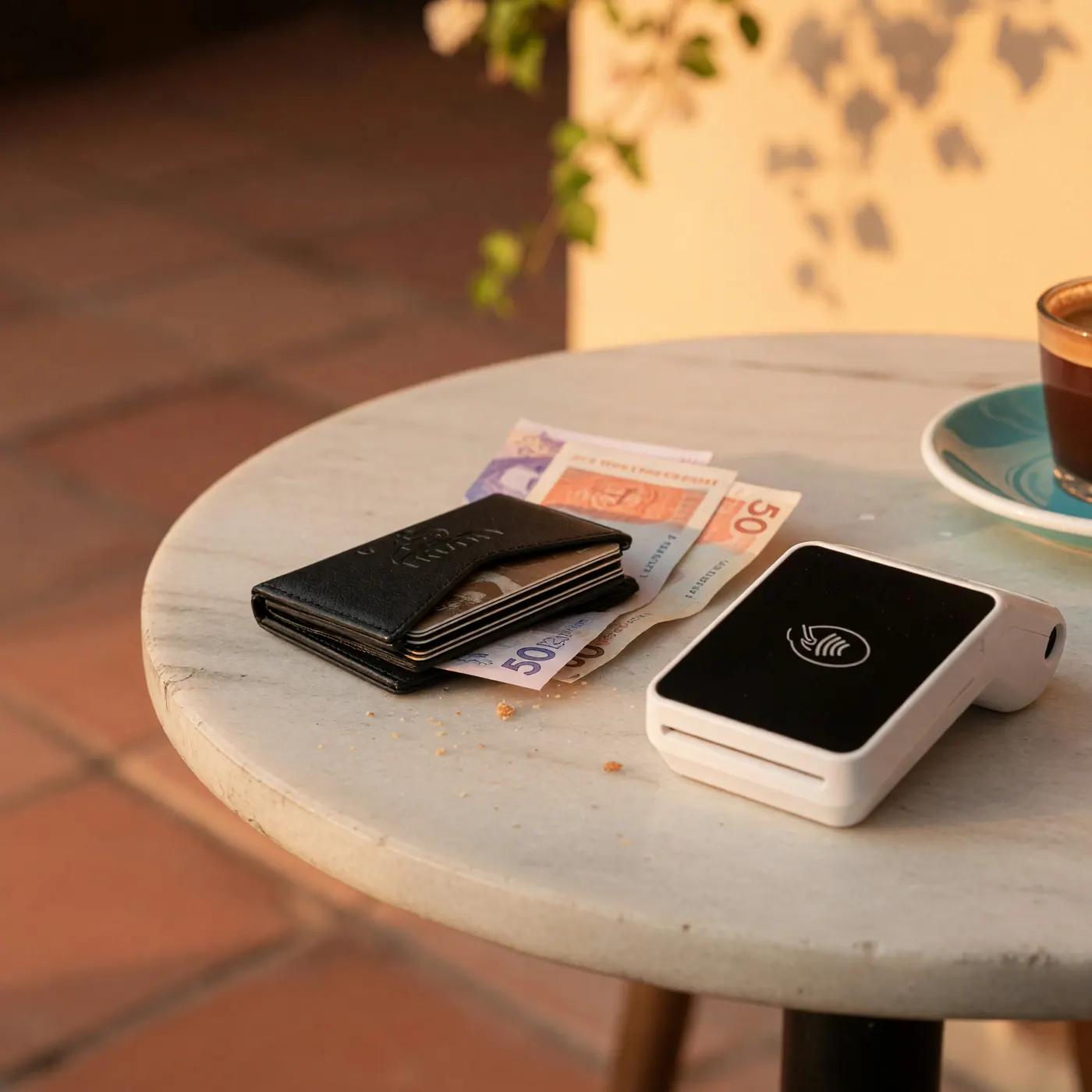
Apple Pay and Google Pay work in chain stores (Falabella, Home Center, Éxito in major malls) and international chains (McDonald's, Starbucks). Expect roughly 60% acceptance at places displaying the contactless symbol. Independent restaurants and neighborhood stores are hit-or-miss.
QR payments are actually more widely adopted than NFC tap for everyday spending. Nequi and Daviplata both use QR codes that small vendors accept everywhere. If you get a Nequi account — possible for foreigners with a cédula de extranjería, and in some cases with a passport — you can pay by QR at corner stores, markets, and food vendors that don't take cards at all.
PSE (Pagos Seguros en Línea) is Colombia's bank-to-bank online payment system. You'll encounter it constantly when paying bills online, booking domestic flights, or shopping on local e-commerce. It requires a Colombian bank account — another reason that opening local banking sooner rather than later makes daily life significantly easier. See our guide to opening a bank account as a foreigner.
How to Get a Colombian Credit Card
After 6–12 months in Colombia with a local bank account, you can apply for a Colombian credit card. It's worth doing: you'll pay in COP, eliminate foreign transaction fees on everyday spending, and potentially earn local rewards points.
What banks typically require:
- Cédula de extranjería (foreigners) or cédula de ciudadanía (Colombians)
- Colombian savings account with 3–6 months of transaction history
- Proof of income: work contract, bank statements, or tax declaration
- Colombian phone number for verification codes
Bancolombia is the most accessible starting point for foreigners — their secured prepaid Visa has no income requirement and functions like a credit card for online purchases. Davivienda and BBVA Colombia issue real credit cards to foreigners with a formal work contract or consistent demonstrable income. Credit limits start conservatively — usually 1–3x your declared monthly income — but they grow over time.
One Colombian-specific thing to know: locals often buy larger items on 'cuotas' (interest-free installments across 3–36 months). Foreign cards don't participate in cuotas, so you'd pay full price upfront while your Colombian colleagues split the same purchase across six months. Getting a local card unlocks this.
When Cash Is Genuinely the Better Option
Despite everything above, cash is still the right tool for:
- Neighborhood tiendas and local markets
- Paying private landlords for monthly rent
- Local bus systems outside Bogotá and Medellín
- Tips in restaurants — cash goes directly to the server, card tips often don't
- Informal services: repairs, domestic help, parking attendants
Having 100,000–200,000 COP in cash on you at all times is practical. For funding your Colombian account from abroad — especially for rent payments — money transfer services beat bank wire rates significantly.
Remitly is one of the fastest options for USD→COP transfers, often arriving same-day. For more on getting the best rates, see our full guide to exchanging money in Colombia and receiving money as an expat.
📚 Keep Reading
→ Exchanging Money in Colombia: Casas de Cambio, ATMs & Best Rates
→ How to Open a Bank Account in Colombia as a Foreigner
Frequently Asked Questions
❓ Should I pay in pesos or dollars when the terminal asks?
Always choose pesos. The 'pay in your home currency' option — Dynamic Currency Conversion — adds a hidden markup of 3–8% on top of your bank's regular foreign transaction fee. There is no upside to paying in USD at a Colombian terminal. Always check before hitting confirm.
❓ Is it safe to use my credit card in Colombia?
Yes, in most contexts. Use ATMs inside bank branches or mall locations rather than standalone street ATMs. Cover your PIN as you would anywhere. Card skimming happens but is not especially common at formal establishments in Medellín, Bogotá, or Cartagena.
❓ What's the daily ATM withdrawal limit in Colombia?
Most Colombian ATMs cap transactions at 400,000–600,000 COP (about $90–$135 USD) with a daily maximum around 1,200,000–1,600,000 COP depending on the network. Your home bank may also impose its own lower daily limit. If you need a larger amount, plan across two visits or two different ATMs.
❓ Can I get a Colombian credit card without a formal job?
It's harder but not impossible. Bancolombia's secured prepaid card requires no income proof and works like a credit card for online purchases. For a real credit card, banks want to see consistent deposits into your Colombian account as a proxy for income. Self-employed expats can sometimes use bank statements or a tax declaration to qualify. Expect the process to take 3–6 months after your account is established.
❓ Does Nequi count as a bank account for credit card applications?
Not typically. Nequi is classified as a digital wallet (billetera digital), not a traditional savings account. While it's useful for daily payments and QR transactions, banks looking at your financial history for credit card applications want to see a formal Cuenta de Ahorros at a traditional bank like Bancolombia, Davivienda, or BBVA Colombia.


Comments
Loading comments...
Checking sign-in status...