
Bringing Your Dog or Cat to Colombia: What to Prepare Before You Fly
Moving to Colombia with a dog or cat? Here's exactly what documents, vaccines, and paperwork you need — and what to expect at the ICA airport inspection.
IDIOMA DEL ARTÍCULO
Showing original language
A colleague of mine spent two weeks on hold with USDA APHIS the month before her move to Medellín, trying to get her cat's health certificate endorsed in time. She'd done everything right — vet appointment, vaccines, microchip — but nobody told her the USDA endorsement takes five to seven business days by mail. She made her flight with 48 hours to spare. Her cat, a twelve-year-old tabby named Mango, did not seem to appreciate the ordeal.
The paperwork for bringing pets to Colombia is not complicated, but it has a sequence — and the timing windows are tight. Start too early on some steps, too late on others, and you're scrambling. Most expat guides skip this because most writers moved without a pet. Here's what you actually need, in the order you need to do it. If you want to see real-world options right now, you can browse pets and supplies on Colombia Move — posting is completely free.
What to Know First
- Microchip: ISO-compliant chip required — must be in place before the health certificate is issued
- Rabies vaccine: Given no earlier than 21 days before travel, and within the past 12 months
- Health certificate: Issued by an accredited vet within 10 days of your flight, then officially endorsed (USDA APHIS for US travelers)
- Parasite treatment: Documented flea/tick and dewormer treatment within 15 days of departure
- ICA inspection at the airport: Quick but mandatory — bring originals of all documents
- Fee on arrival: Approximately 60,000–80,000 COP (~$14–20 USD) for the ICA inspection
What Colombia Requires to Import Your Pet
Colombia's agricultural authority, the ICA (Instituto Colombiano Agropecuario), sets the rules for importing pets. The requirements apply equally to dogs and cats, and they're the same regardless of which country you're coming from — though travelers from countries with higher disease risk can face additional testing. Coming from the US, Canada, or Western Europe, you won't hit extra hurdles.
Here's the complete checklist:
Colombia Pet Import Requirements Checklist
| Requirement | Details |
|---|---|
| Microchip | ISO 11784/11785 standard. Must be implanted before health certificate is issued. |
| Rabies vaccine | At least 21 days before travel; valid within past 12 months. |
| Core vaccines (dogs) | Distemper, parvovirus, leptospirosis — standard annual shots. |
| Core vaccines (cats) | FVRCP (panleukopenia, rhinotracheitis, calicivirus). |
| Parasite treatment | Flea/tick treatment + dewormer, documented within 15 days of travel. |
| Health certificate | Issued within 10 days of departure, officially endorsed by your country's authority. |
One thing worth verifying: if your pet already has a microchip, confirm it's ISO-compliant. Some older US chips used a proprietary 10-digit standard — Colombia's readers work on 15-digit ISO chips. Your vet can scan it with a universal reader during your pre-travel appointment.
The Health Certificate — Your Most Time-Sensitive Step
This is where the timing trap lives. The international health certificate is the central document for entry, and it has a strict validity window: it must be issued within 10 days of your departure date. Not 11. Not two weeks. Ten days.
For US travelers, the process has two parts that each take time:
- Step 1: Get the certificate from a USDA-accredited veterinarian. Most regular vets qualify, but verify before booking the appointment. The vet will examine your pet, confirm the microchip and vaccine records, document the parasite treatment, and sign the certificate.
- Step 2: Get the certificate endorsed by USDA APHIS (Animal and Plant Health Agency). This is a government stamp that validates the vet's signature. Without it, Colombia will not accept the certificate.
The USDA APHIS endorsement is the step people miss. You can do it by mail (5–7 business days — use registered mail, send originals) or in person at a USDA APHIS Veterinary Export Trade Services office the same day. Given the 10-day window, plan your vet appointment for around day 8 before your flight, then rush-process the APHIS endorsement in person or overnight it.
UK residents need APHA (Animal and Plant Health Agency) endorsement. Canadians need CFIA. The principle is identical — the certificate must be signed by an accredited vet and then stamped by an official government authority before you board.
Keep physical originals plus clear phone photos. If anything gets lost in transit, the photos won't substitute for the inspection — but they'll help you make calls quickly.
Flying with Your Pet to Colombia
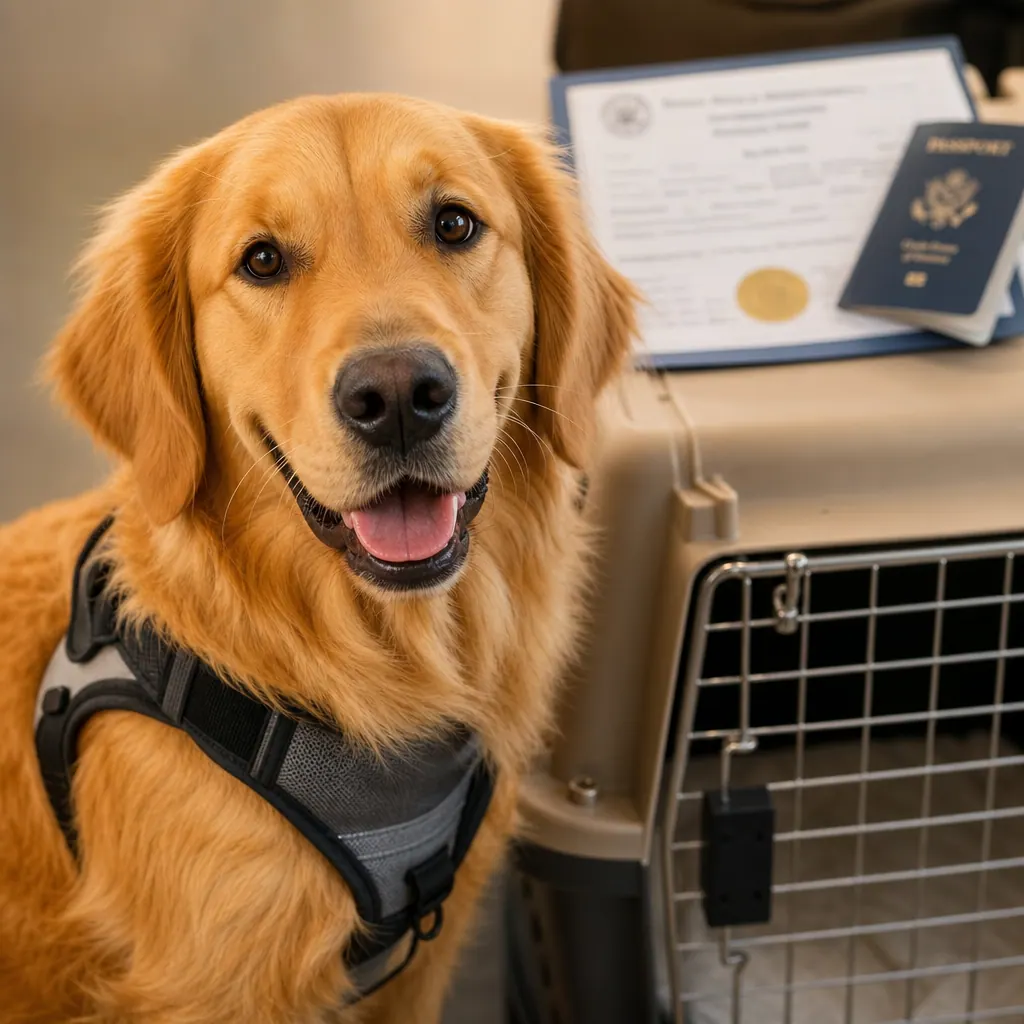
Every airline handles pet travel differently, and the policies change. A few constants that apply across most carriers:
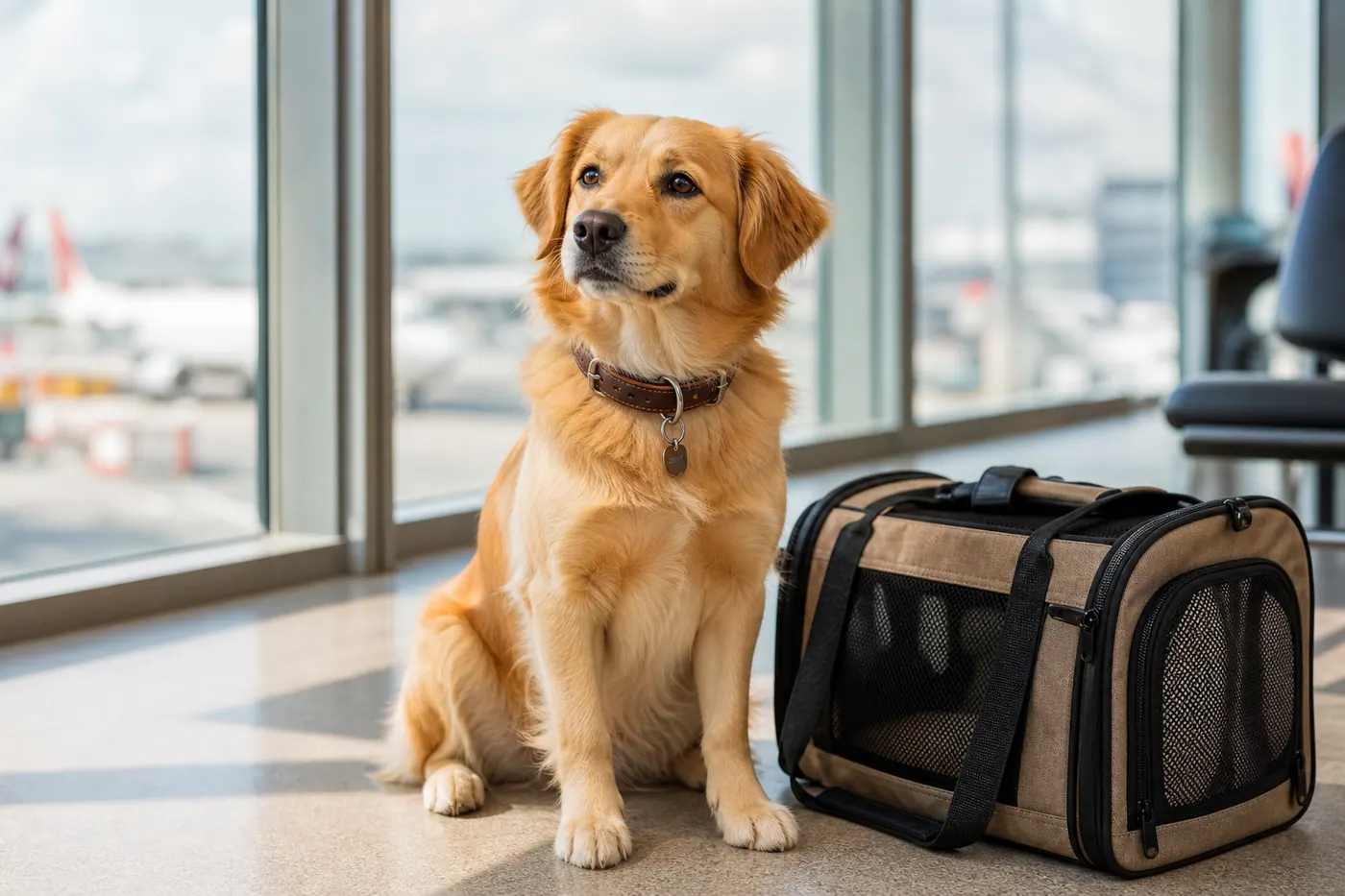
- Small dogs and cats (typically under 8 kg with carrier) can fly in-cabin on most routes. The carrier must fit under the seat in front of you — standard dimensions are roughly 45 × 35 × 20 cm, though this varies by airline and seat class.
- Medium and large dogs travel in the cargo hold, either as checked baggage or freight depending on weight. This process uses the same health certificate and goes through the same ICA inspection on arrival.
- Snub-nosed breeds (French bulldogs, pugs, Boston terriers, Persian cats, Himalayan cats) face restrictions or outright bans on many airlines due to breathing risk at altitude. Avianca and Copa tend to be more flexible here than US carriers, but confirm before booking.
- Airlines cap in-cabin pets per flight — often 2–4 spots per cabin. Book the pet spot the same day you book your ticket.
Airlines expats have successfully used on Colombia routes: Avianca, Copa Airlines, American Airlines, United, and LATAM. Avianca is often the most accommodating for pets, including on domestic Colombian connections — which matters if you're landing in Bogotá and continuing to Medellín or Cartagena. Pet fees run $125–200 USD each way in cabin; cargo fees depend on size and weight.
One honest note on cargo travel: it's safe for most healthy adult dogs, but it's genuinely stressful for the animal. If your dog is anxious, elderly, or a restricted breed, look into specialized pet freight companies that handle the logistics professionally and have temperature-controlled transport — it costs more but reduces risk considerably.
What Happens at Colombian Customs (ICA Inspection)
When you land in Colombia with a pet, look for the ICA inspection point — usually adjacent to the customs hall, not at passport control. If your dog or cat came in cargo, coordinate the animal's release with the airline cargo desk before heading to ICA.
The ICA inspector will scan your pet's microchip, verify the chip number against the health certificate, check all vaccine dates, confirm the parasite treatment timing, and collect the inspection fee. Currently around 60,000–80,000 COP (approximately $14–20 USD) — have local cash or card ready.
Colombia does not require quarantine for pets from low-risk countries. If your documents are complete and the vaccine dates check out, the whole inspection takes 10–20 minutes.
If something is flagged — a wrong date, a missing endorsement stamp, an expired vaccine — they can hold your pet in airport facilities while you attempt to resolve it. This is rare but not unheard of. Know your vet's phone number and have the vaccine manufacturer lot numbers handy just in case.
The main airports with full ICA inspection facilities: El Dorado (Bogotá, BOG), José María Córdova (Medellín, MDE), Alfonso Bonilla Aragón (Cali, CLO), Rafael Núñez (Cartagena, CTG), and Ernesto Cortissoz (Barranquilla, BAQ). Don't route through smaller regional airports — they generally don't have ICA pet inspection capability.
🐾 Keep Reading
Once you've cleared customs, you'll want a local vet on speed dial. See our guide: Vet Care in Colombia: Finding a Vet, Costs and What Pet Owners Need to Know
Settling In: The First Weeks After Arrival
The good news: once you've cleared ICA, Colombian life for your pet is straightforward. Local vets are affordable, widely available, and increasingly well-equipped — especially in larger cities. You won't be starting from scratch with every medical record; establish a file with a local Colombian vet during your first couple of weeks so you have an ongoing record in the country.
A few things to sort early:
- Register with a local vet and get a Colombian vaccination booklet — this matters for future travel within South America.
- Get a local flea and tick preventative. Bogotá's altitude keeps fleas manageable, but Medellín, Cali, and coastal cities are higher-risk environments.
- Check your building or rental agreement for pet policies. Colombian law increasingly protects pet owners, but some older buildings still restrict large breeds — it's worth knowing before you sign.
Budget-wise: airline pet fees plus the ICA inspection fee are the main one-time costs. If you're sending money ahead for deposits or first-month rent, a service like
Remitly offers good rates on peso transfers and lets you lock in an exchange rate before your move date.
Frequently Asked Questions
❓ Does Colombia require quarantine for imported pets?
No — Colombia does not require routine quarantine for dogs or cats from low-risk countries (US, Canada, EU, UK). As long as your health certificate and vaccine timing are correct, you'll clear ICA at the airport and leave directly with your pet.
❓ How close to my departure date should I schedule the vet appointment?
Aim for 8–9 days before your flight. That gives you the 10-day health certificate window while leaving time for the official endorsement (USDA APHIS for US travelers). If you need to mail documents, factor in that the endorsement return trip alone can take 5–7 business days.
❓ Can I bring more than one pet?
Yes, but you need a separate health certificate for each animal. Airlines also limit in-cabin pets — usually one per passenger, though some routes allow two. Confirm with your specific airline. If you're traveling solo with two pets, one may need to go in cargo.
❓ My dog is large and must fly in cargo. What should I know?
Large dogs in cargo use the same health certificate and face the same ICA inspection on arrival. The main concerns are heat (check airline embargo dates for summer months), breed restrictions, and crate requirements (IATA-approved crates are mandatory). For anxious or elderly dogs, ask your vet about mild sedation — though most vets now advise against sedation for cargo flights due to breathing changes at altitude.
❓ What vaccines does Colombia require for cats specifically?
The core requirement is the FVRCP combination vaccine (feline panleukopenia, rhinotracheitis, calicivirus) plus rabies. The rabies timing is the same as for dogs: at least 21 days before travel, within the past 12 months. Your vet's standard annual vaccine schedule will likely already cover these.



Comments
Loading comments...
Checking sign-in status...