
What to Eat in Colombia: Regional Dishes, Street Food & Dining Tips
Everything you need to know about eating in Colombia — from bandeja paisa and ajiaco to corrientazos and street arepas, with real prices and honest advice.
IDIOMA DEL ARTÍCULO
Showing original language
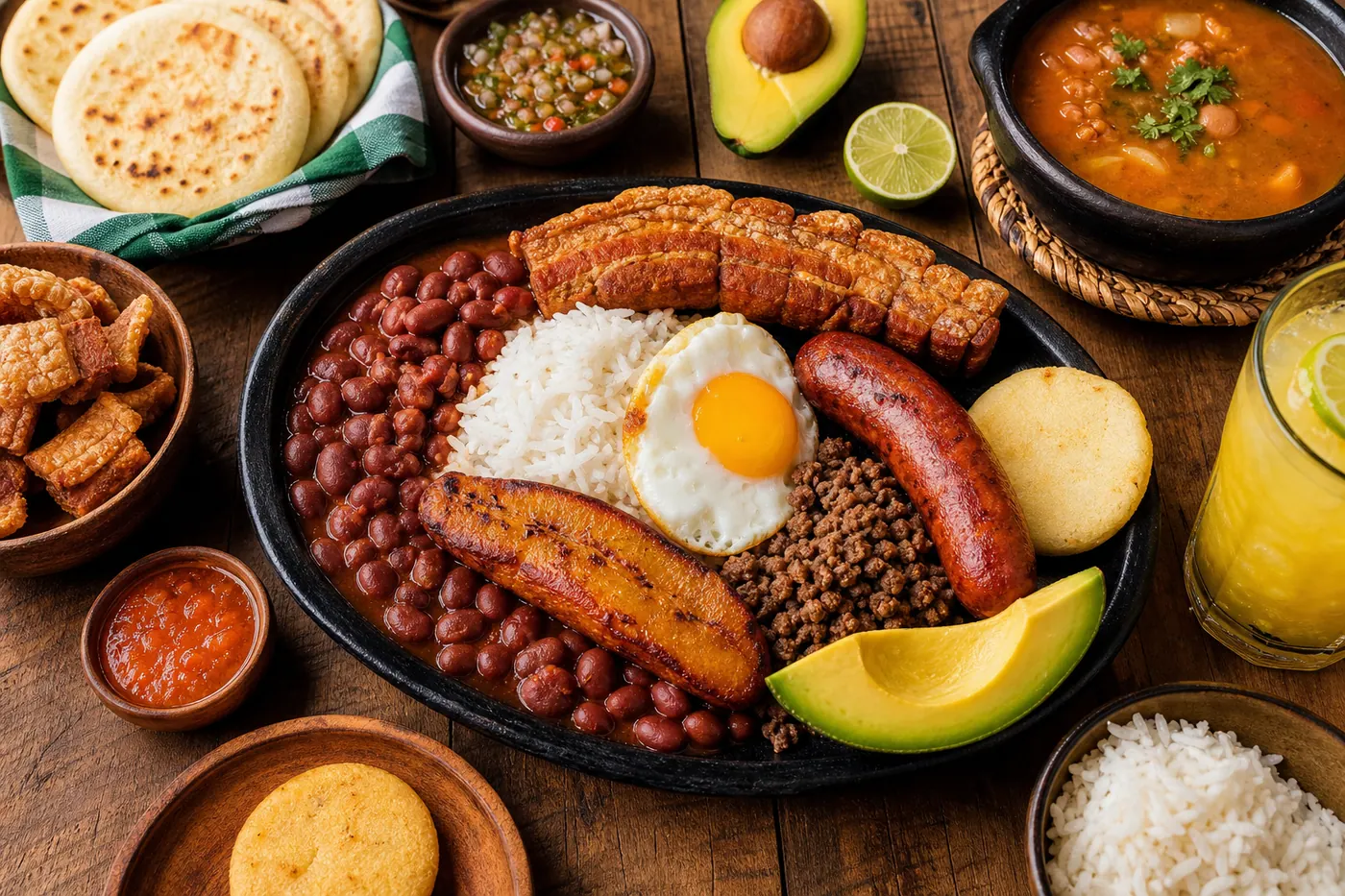
The first time someone handed me a bandeja paisa, I genuinely didn't know where to start. The plate was bigger than my head: red beans stewed with pork, white rice, ground meat, chicharrón, a fried egg, an arepa, sweet plantain, and a slice of avocado. Eating it felt less like a meal and more like a ceremony — one Colombians take seriously and repeat without apology.
Colombian food doesn't get the global recognition it deserves. It's not flashy or Instagram-centric. It's about abundance, comfort, and feeding people until they can't move. Once you understand that philosophy, everything else clicks into place — the enormous portions, the mid-day main meal, the obsessive pride over which city's ajiaco is superior.
This guide covers the essential dishes, how regional cooking varies across the country, where to eat on a real budget, and the things that trip up most newcomers when they first try to eat their way through Colombia.
What to Know First
- Lunch (almuerzo) is the main meal — corrientazo restaurants serve a fixed menu noon–2pm for 10,000–18,000 COP (~$2.50–4.50 USD)
- Three dishes to try first: bandeja paisa (Medellín), ajiaco (Bogotá), sancocho (everywhere)
- Street food is safe, cheap, and usually the best thing you'll eat — arepas, empanadas, obleas
- Coffee at a tienda = small black tinto, not a latte — adjust expectations accordingly
- Daily budget eating well: 30,000–50,000 COP ($7–12 USD) with corrientazo lunch + street snacks
How Colombian Food Actually Works
Most foreigners arrive expecting something like Peruvian or Mexican food — complex sauces, chilies, bold spice. What they find is different: hearty, slow-cooked, protein-heavy, and filling to the point of needing a nap afterward. The cuisine isn't spicy (Colombians genuinely don't cook with much chili heat), but it's deeply flavored. Fat, salt, and long cooking times do most of the work.
The structure of eating here is worth understanding before you arrive. Lunch is the main meal, eaten between noon and 2pm. A full almuerzo — the set lunch menu at most restaurants — includes soup, a main plate with protein, rice, beans, salad, and plantain, a glass of fresh fruit juice, and sometimes a small dessert. Dinner tends to be lighter: an arepa with cheese, leftover soup, or just a piece of fruit. If you're only eating out in the evenings, you're going to miss most of what Colombian food actually is.
The Dishes You Have to Actually Try
Bandeja paisa is the one everyone knows before they arrive. It's a platter from the Antioquia region: red beans cooked with pork, white rice, ground beef, chicharrón (fried pork belly), chorizo, a fried egg, a plain arepa, and avocado. At a proper sit-down restaurant it runs 25,000–35,000 COP. It's enormous. Two people splitting one is completely normal and honestly the smarter call — especially on a first try.
Bogotá's most famous dish is ajiaco: a thick potato soup made with three distinct native varieties — papa criolla, papa pastusa, and papa sabanera — plus chicken, dried guascas herb, corn on the cob, and a serve-yourself spoonful of crema and capers. Ajiaco is one of the few Colombian dishes that genuinely has no close equivalent anywhere else. If you spend any time in Bogotá, it should be the first thing you order.
Sancocho is more concept than single recipe. Colombia's universal stew — chicken in the mountains, fresh fish on the Caribbean coast, beef ribs on weekends. The base is always roots and tubers (yuca, potato, plantain), corn, and a lot of cilantro. It's Sunday food. It's recovery food. Every family has their own version, and everyone is certain their grandmother's is definitive.
If you end up on the Caribbean coast — Cartagena, Santa Marta, Barranquilla — the food shifts completely. Coconut milk goes into almost everything: arroz con coco is the standard side dish rather than white rice, and cazuela de mariscos (seafood stew in coconut broth with shrimp, fish, and crab claws) is the signature dish you'll dream about afterward. The coast operates as a separate culinary culture from the Andean interior, and it's worth treating it that way.
For specific restaurant picks in Medellín where you can try these dishes, our Medellín food restaurant guide covers the best spots for each dish type, from traditional fondas to upscale takes on classic recipes.
Street Food Worth Every Peso
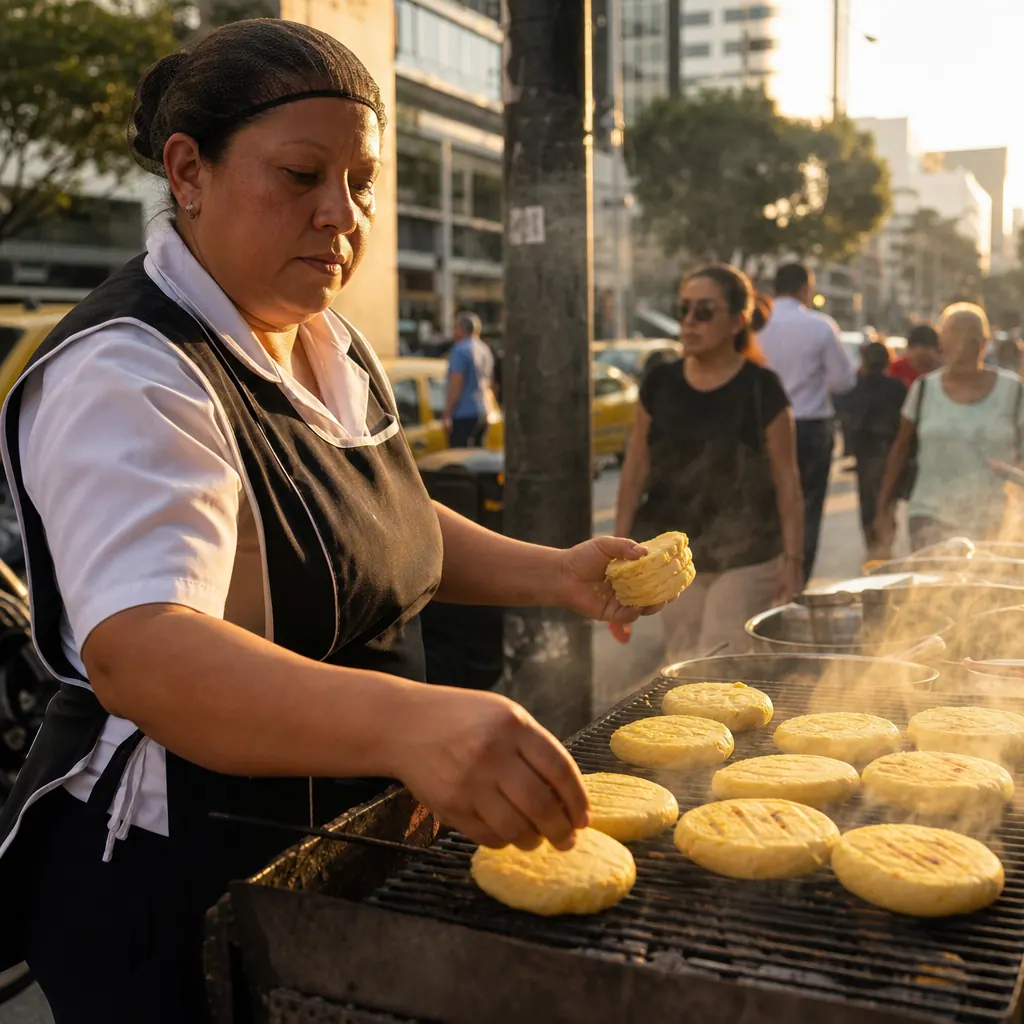
Street food in Colombia is generally safe, fast, and genuinely good. Freshly cooked items from high-turnover vendors — made in front of you, eaten immediately — are almost always fine. The key is volume: avoid anything that's been sitting uncovered in heat for hours. Otherwise, eat freely.
Arepas are the baseline. Every city does them slightly differently. Bogotá's arepa de choclo is sweet corn, thicker and slightly chewy. Medellín's is plain corn, thinner, meant to be folded and stuffed. The Caribbean coast fries them stuffed with egg (arepa de huevo). One costs 1,500–3,000 COP. You'll eat hundreds. You'll develop opinions about which version is correct. (You'll be wrong, but that's fine.)
Empanadas are fried corn pastry filled with potato, rice, and ground meat — a quick snack from sidewalk vendors at any time of day. The one thing to know: always ask for ají (hot sauce on the side). Colombian food doesn't normally include spice, but empanadas and ají are the exception. It makes a real difference to the flavor.
Obleas are two thin wafer rounds sandwiched with arequipe (Colombia's version of dulce de leche), jam, and cream cheese. A classic Bogotá street snack sold from folding cart vendors on pedestrian walkways. Sugary and quick — worth stopping for.
Pandebono and pan de queso deserve a special mention for breakfast. Warm cheese bread rolls made with yuca starch, eaten with a tinto. You'll smell them from the bakery before you see them. Pandebono is chewier; pan de queso is lighter. Both are worth 1,500 COP every single morning.
A Regional Snapshot: What to Eat Where
Colombia's regional food differences are real and meaningful — it's not just marketing. The Andean interior, Caribbean coast, Pacific coast, Amazon basin, and Llanos plains all have distinct cooking traditions shaped by climate, geography, and ingredient availability. Here's a quick reference:
| Region | Signature Dish | Key Ingredient |
|---|---|---|
| Antioquia (Medellín) | Bandeja paisa, mondongo | Pork, red beans |
| Bogotá / Cundinamarca | Ajiaco, changua, puchero | Papa criolla, guascas herb |
| Caribbean Coast | Cazuela de mariscos, pescado frito con patacones | Coconut milk, fresh fish |
| Eje Cafetero | Trucha (trout), tamales antioqueños | Trout, corn, pork |
| Pacific Coast | Encocado de jaiba, arroz con leche | Crab, coconut |
| Los Llanos | Mamona (whole spit-roasted beef) | Beef, open fire |
Where and How to Actually Eat
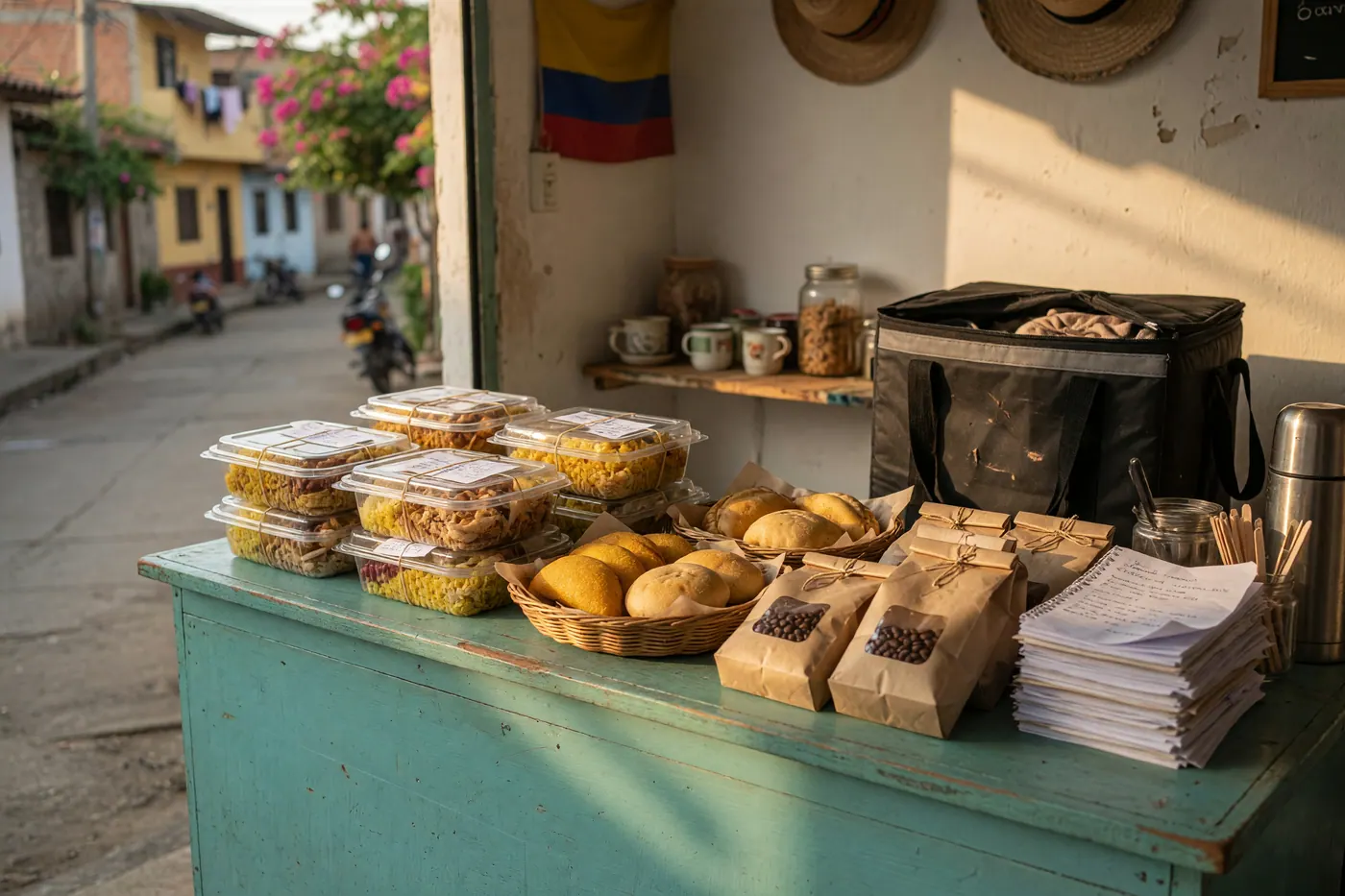
The corrientazo is how most of the country eats lunch. Every neighborhood has multiple restaurants serving a fixed menu from around noon to 2pm: soup, main plate (protein, rice, beans, salad, plantain), a glass of fresh juice, and sometimes a small dessert. Price: 10,000–18,000 COP ($2.50–4.50 USD). The practical rule: find the restaurant that's crowded at 12:30pm with workers from nearby offices. That's the one worth eating at. A handwritten chalkboard menu usually means better value than a laminated printed one.
For days when you're still figuring out your neighborhood, or late nights when everything nearby is closed, Rappi and iFood cover most major Colombian cities and deliver from hundreds of restaurants within 30–45 minutes. Useful in the first week especially.
Medellín's Minorista market, Bogotá's Paloquemao, Cartagena's Bazurto — these are the real introductions to how Colombian food operates at scale. Overwhelming on the first visit, genuinely rewarding once you know where to go. The produce prices alone justify the trip; the hot food vendors around the edges are usually the best cheap lunch in the city.
Three Things Expats Get Wrong
The coffee expectation mismatch catches almost everyone. The default Colombian coffee is a tinto — a small black coffee, filtered, sometimes served with sugar, in a tiny cup. It's not espresso, it's not specialty, and no tienda de barrio will have oat milk. It's good in a direct, unfussy way. If you want a cortado or a pourover, you'll find it in certain neighborhoods (Laureles, Chapinero, El Centro of any city), but the tienda genuinely doesn't care about your order preferences.
Showing up hungry at 9pm expecting full dinner options is a recurring mistake. Corrientazo restaurants close after the lunch service — usually by 3pm at the latest. Most Colombians eat lighter in the evening, often at home. Full sit-down restaurants do operate at night in expat-heavy areas, but in residential neighborhoods the kitchen has usually been closed for hours by the time you're hungry. Eat a big corrientazo at lunch and plan accordingly.
Not ordering the fresh juice is the thing I notice most with newly arrived expats. Every corrientazo restaurant and most tiendas have a jugo natural: lulo (a tart, bright citrus-adjacent fruit), maracuyá (passionfruit), mora (blackberry), guanábana, tomate de árbol. They cost an extra 3,000–5,000 COP and they're extraordinary. Most people skip them the first week without knowing what they're missing.
Frequently Asked Questions
❓ Is Colombian food spicy?
No. Colombian cooking doesn't build chili heat into dishes by default. Ají (hot sauce) is served on the side at street food stalls and some restaurants — you add it yourself, and most Colombians don't use much. The cuisine gets its flavor from fat, salt, slow cooking, and aromatic herbs rather than from heat. It's one of the first things foreigners from spicy-food cultures notice.
❓ What should I eat on my first day in Colombia?
Find the most crowded corrientazo restaurant at lunchtime and order the set menu — that's the fastest way into real daily Colombian food. If you're in Bogotá, add an ajiaco as soon as possible. In Medellín, a bandeja paisa. Don't overthink it; the best Colombian food is eaten at lunch in ordinary neighborhood restaurants, not at tourist-facing places.
❓ Is street food safe to eat in Colombia?
Generally yes. Freshly cooked food from busy vendors with high turnover is low-risk. Stick to items made in front of you — empanadas coming out of hot oil, arepas off the grill, chuzos from the skewer. Avoid pre-made food sitting uncovered in heat for long periods. The same practical common sense as eating street food anywhere.
❓ How much does it cost to eat in Colombia per day?
A corrientazo lunch runs 10,000–18,000 COP (~$2.50–4.50 USD). Street snacks are 1,500–5,000 COP. A sit-down dinner at a mid-range restaurant: 25,000–60,000 COP per person. Upscale or international dining: 80,000+ COP. Eating corrientazo at lunch and cooking or snacking for dinner, you can eat well every day in Colombia for under 50,000 COP (~$12 USD).
Have a regional dish that didn't make this list, or a specific city's food scene you think deserves more attention? Ask the community at colombiamove.com/comunidad — it's where expats and Colombians trade notes on exactly this kind of thing.
Comments
Loading comments...
Checking sign-in status...