
Best Neighborhoods in Santa Marta for Expats and Remote Workers
El Rodadero is the practical base, Minca is the cool-climate escape, and Taganga is better for a week than a month. Here's the honest breakdown of where to live in Santa Marta.
IDIOMA DEL ARTÍCULO
Showing original language
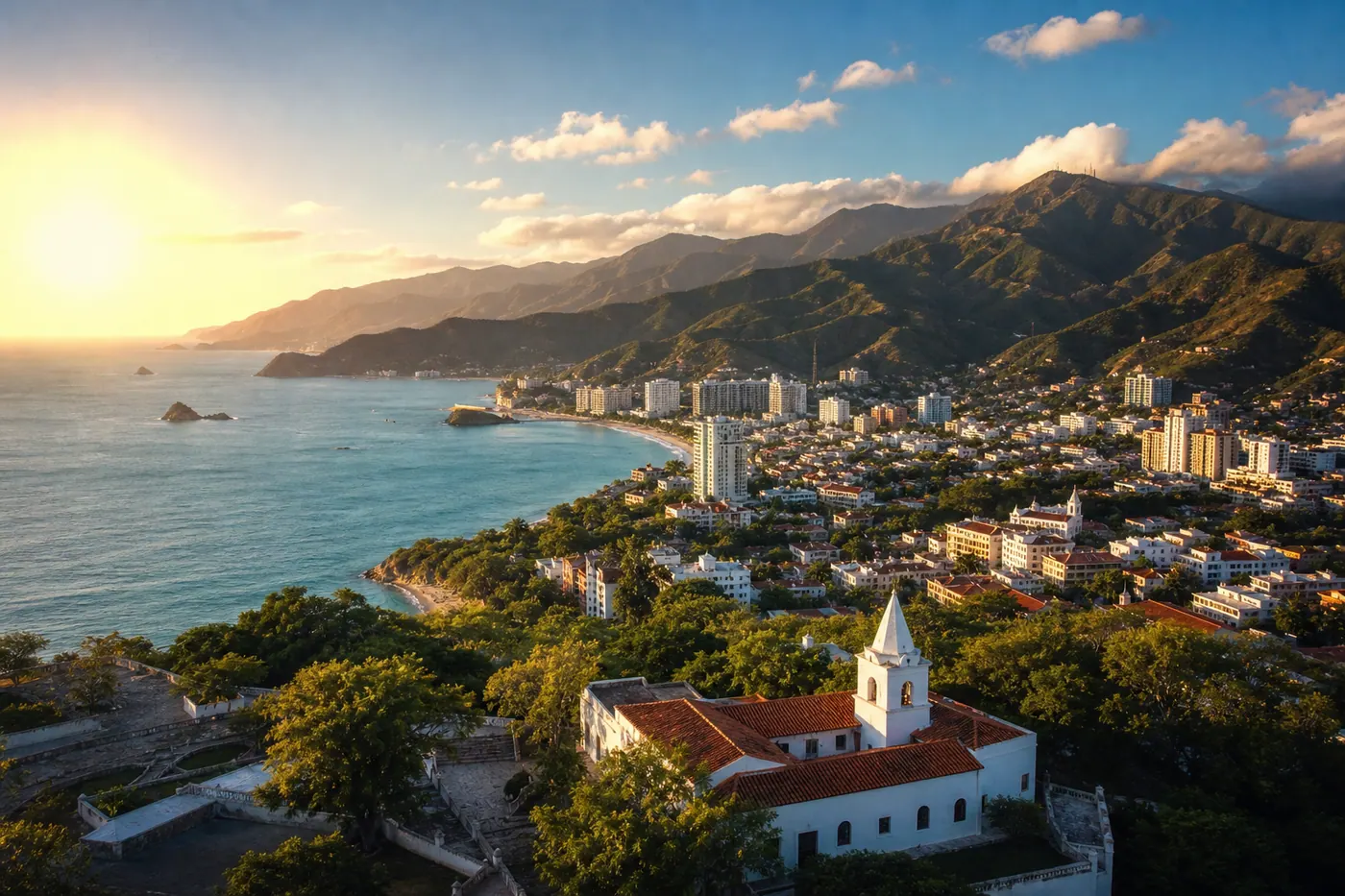
Most people doing Santa Marta pick El Rodadero, spend two weeks there, and leave thinking they've seen the city. They haven't. Santa Marta's real appeal is the variety — beach neighborhoods, a walkable historic center, a colonial marina district, and 30 minutes up the road, a mountain village at 600 meters where you can finally sleep without sweating. No other Caribbean coast city gives you that range.
The heat here is real but manageable. Santa Marta sits at 30–33°C most of the year, with a Caribbean breeze that Barranquilla doesn't have. What actually shapes your neighborhood decision isn't just vibe — it's whether you can work from your apartment without the AC running full-blast all day, how far you want to be from a decent supermarket, and whether you need reliable fiber or can tolerate the occasional connection drop. If you want to see real-world options right now, you can browse apartments and houses on Colombia Move — posting is completely free.
This guide covers the neighborhoods worth considering if you're planning to actually live in Santa Marta — not just pass through. I'll be specific about rents, honest about the downsides, and skip the neighborhoods that look good in photos but don't work for day-to-day life.
What to know first
- El Rodadero is the practical expat base — beach access, supermarkets, good internet, most foreigners start here
- Pozos Colorados / Bello Horizonte is the upscale quieter option south of El Rodadero
- Centro Histórico is charming to visit, rough to actually live in — heat, noise, older infrastructure
- Minca is the mountain escape 30 minutes away — cooler temps, slower pace, not for everyone
- Taganga is great for a week, painful for remote work — internet is still unreliable
- Average rent for a furnished 1-bedroom: COP 1.4M–2.8M/month depending on neighborhood and floor
What Shapes Your Neighborhood Decision in Santa Marta
Three things that don't apply in Medellín matter a lot here. First, the heat: it's consistent and real, and the difference between an apartment with solid AC and one with a rattling window unit is the difference between productive mornings and groggy ones. Modern buildings — mostly concentrated in El Rodadero and Pozos Colorados — have better electrical infrastructure. Older buildings in the historic center often share circuits in ways that trip breakers when you run AC and a coffee maker simultaneously.
Second, internet quality varies more than in any interior city. Fiber has reached most of El Rodadero and Pozos Colorados, and 100+ Mbps is standard in buildings constructed after 2015. The Centro Histórico and Taganga are a different story — fiber is patchier and more provider-dependent. Always ask specifically which ISP the building uses and request a speed test before signing anything.
Third, Santa Marta is Uber-dependent in a way that's somewhere between Medellín and Cartagena. El Rodadero and Pozos Colorados have walkable daily-life basics — groceries, pharmacies, restaurants, cafés. Outside those zones you're ordering rides for most errands. Uber coverage is reliable across the city proper; Taganga is a 10-minute ride from Centro.
Rent ranges (furnished, 2026): El Rodadero 1BR: 1.4M–2.5M COP/mo | Pozos Colorados 1BR: 2M–3.5M COP/mo | Minca room/studio: 700K–1.4M COP/mo | Centro Histórico 1BR: 1.2M–2.2M COP/mo. All below equivalent setups in Cartagena.
El Rodadero — The Place Most Expats Actually Land
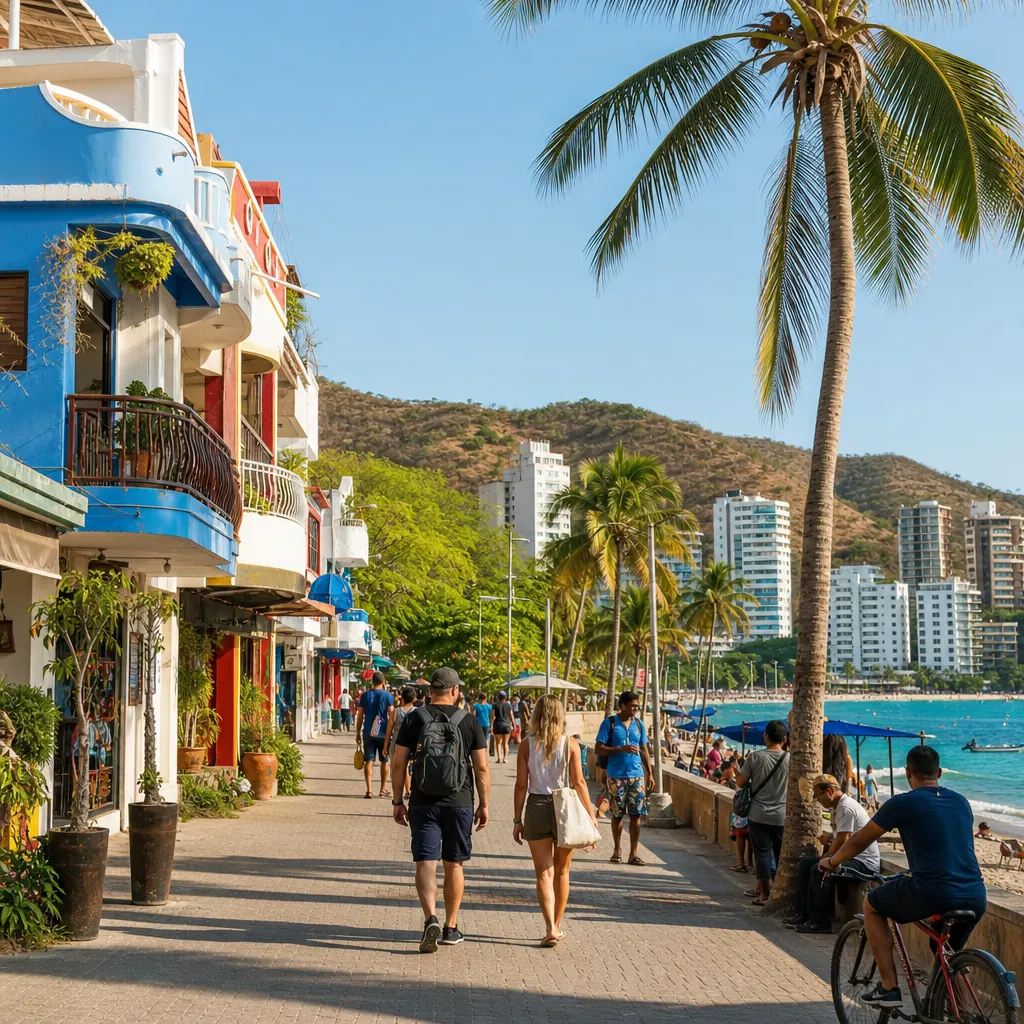
El Rodadero is Santa Marta's beach-residential workhorse, and it earned that status honestly. It's a compact neighborhood 6km south of downtown with a proper beach promenade, more supermarket options than you'd expect (including a Carulla with a decent imports aisle), pharmacies, coworking spots, and the kind of infrastructure density that makes daily life easy. For a first month or a longer stay where you want things to work without much effort, El Rodadero is the right call.
Internet here is the city's most reliable. Most modern towers have fiber from Claro or Movistar. Buildings from the late 2010s onwards typically have dedicated units with 100–200 Mbps. The older stuff from the 1980s and 90s on the hillside blocks can be patchier — check the building's vintage when you view.
Rent for a furnished 1-bedroom in a modern building runs COP 1,400,000–2,500,000/month (~$350–$620 USD). Beachfront buildings and those on the main promenade (Carrera 4–5) sit at the upper end. A block inland drops 15–20%. If you're planning 3+ months, negotiate unfurnished — you can usually get the same apartment for 25–30% less and furnish cheaply via the local classifieds.
The honest limitation: El Rodadero can feel a bit anonymous. It's a functional beach-town neighborhood rather than a character-rich one. Tourists cycle through, prices near the promenade reflect that, and you'll occasionally share the street with bachelor parties. If you need a neighborhood that feels embedded and local, it's not quite there — but for actually getting things done, it works well.
Browse El Rodadero apartment listings at colombiamove.com/ciudad/santa-marta/el-rodadero.
Pozos Colorados and Bello Horizonte — The Quieter Upgrade
Continue south past El Rodadero and the density drops fast. Pozos Colorados and Bello Horizonte are residential beach neighborhoods that function more like suburbs than urban neighborhoods — quieter streets, larger buildings set back from the road, fewer tourists, and a noticeably more private feel. This is where Colombian professionals who work remotely and longer-term expats who've tried El Rodadero tend to migrate.
Rents here run 20–40% higher than El Rodadero for equivalent apartment size — furnished 1-bedrooms from COP 2,000,000–3,500,000/month. You get more space, better building maintenance, and in many buildings, private parking. The beach in this zone is calmer and less crowded than the El Rodadero promenade, which either matters a lot or not at all depending on your lifestyle.
The trade-off is walkability. You'll need to Uber for most errands — the nearest well-stocked supermarket (Éxito) is 10–15 minutes away. Some newer developments near Pozos Colorados have small commercial strips with cafés and pharmacies, but it's not the same critical mass as El Rodadero. If you have a car or rent a scooter, the calculation changes completely.
Centro Histórico — More Interesting to Visit Than to Live In
The historic center of Santa Marta is Colombia's oldest surviving colonial city, and it genuinely has character: the cathedral, the plaza, Simón Bolívar's last house, a marina district that's been cleaned up significantly. On a Saturday afternoon it's one of the most pleasant spots on the coast.
For long-term stays, it's a harder sell. The heat hits differently without the beach breeze that El Rodadero gets from being on open water. The streets are noisier — Centro is genuinely alive, which sounds appealing until it's 11pm on a Tuesday and the bar two blocks away is still going. Building quality is mixed: some beautifully restored colonial apartments exist, but plumbing and electrical infrastructure is older and more variable.
Internet is available but requires more vetting than in El Rodadero. Fiber reaches Centro but building-level wiring varies widely. Prices have been creeping up as the neighborhood gets discovered — what you pay for a "historic center apartment" increasingly reflects the romantic framing rather than the actual infrastructure.
My honest take: spend a weekend in Centro, eat at the restaurants near the marina, walk the plaza at sunset. Then go sign your lease in El Rodadero.
📖 Keep Reading
Where to Buy Groceries in Santa Marta: Supermarkets, Mercados & Caribbean Coast Tips — covers every supermarket by neighborhood, from Olímpica to Mercado Público.
Taganga — Right for Some People, Wrong for Most Remote Workers
Taganga is a fishing village that became a backpacker destination that's slowly becoming something more. It sits in a cove 10 minutes north of Centro — a short Uber ride or a slightly sketchy walk along a narrow road. The beach is nice, the vibe is relaxed, and rents for a room or small studio are the lowest you'll find this close to the city: COP 700,000–1,200,000/month for something basic.
The problem for remote workers is internet. Taganga doesn't have consistent fiber coverage. Mobile data (4G/LTE) works but drops on video calls in a way that'll frustrate you within a week. Some guesthouses have improved their setups and now offer decent WiFi, but you're relying on the establishment rather than your own dedicated connection. If your work involves frequent video calls or large file transfers, Taganga will cost you clients before it costs you rent.
For people who work async, don't have video-heavy jobs, or are on a writing retreat — Taganga can actually be a great call. Just go in knowing what you're accepting. Also worth noting: Taganga has a reputation for petty theft after dark; keep your phone out of view on the road between there and Centro.
Minca — The Mountain Option That Changes Everything
Minca is 30 minutes up a winding mountain road from Santa Marta and feels like a different country. At around 600 meters, temperatures drop to 18–24°C — cool enough to sleep without AC, cool enough to hike without suffering, cool enough that your laptop doesn't overheat. That alone makes it worth knowing about if you're struggling with the coast heat.
It's a small village — maybe 3,000 permanent residents — surrounded by coffee farms, waterfalls, and cloud forest. The expat and digital nomad community here is real but intentionally small. People come to Minca to decompress: fewer calls, more hikes, meals at jungle hostels with good rice and slower wifi.
And about that wifi: internet is the honest limitation. Fiber hasn't reached Minca. Mobile data works in the village center but degrades past it. Some hostels and rental properties have satellite connections that function adequately for light work. If you're doing intensive remote work from Minca, expect to route heavy tasks through morning hours when local traffic is lower and keep a backup data SIM.
Minca works best as a base for 2–4 weeks of slower travel, a writing retreat, or for people whose work genuinely doesn't require video calls. As a permanent base for a remote worker with standard meeting schedules, it'll frustrate you. The right move for most people is to use El Rodadero as a primary base and take weekend trips to Minca rather than committing to it full-time.
For getting to Tayrona National Park from Santa Marta, the full logistics are in our Tayrona National Park guide. And for a comparison of all Caribbean coast options, see Best Beach Towns in Colombia for Expats.
Which Neighborhood Actually Fits You?
| Neighborhood | Best For | Avg. Rent (1BR) | Internet |
|---|---|---|---|
| El Rodadero | First-timers, remote workers, beach access | 1.4M–2.5M COP | ✅ Reliable fiber |
| Pozos Colorados | Longer stays, privacy, quieter pace | 2M–3.5M COP | ✅ Reliable fiber |
| Centro Histórico | Short visits, colonial character | 1.2M–2.2M COP | ⚠️ Varies by building |
| Taganga | Backpackers, async workers, budget | 700K–1.2M COP | ❌ Unreliable |
| Minca | Cool climate, retreats, hikers | 700K–1.4M COP | ⚠️ Light use only |
🏖️ Find an Apartment in Santa Marta
Browse furnished and unfurnished rentals across El Rodadero, Pozos Colorados, and more — listed by owners and agents, no commission, contact via WhatsApp.
Browse Santa Marta Rentals →Frequently Asked Questions
❓ Is Santa Marta cheaper than Cartagena for expats?
Yes, meaningfully so. A furnished 1-bedroom in El Rodadero runs 20–35% below an equivalent apartment in Cartagena's Bocagrande. Restaurants and daily costs are also slightly lower. Santa Marta gets less tourist-price inflation than Cartagena, partly because it hasn't been as heavily marketed internationally — though that gap is closing.
❓ Which neighborhood in Santa Marta has the best internet for remote work?
El Rodadero, followed closely by Pozos Colorados. Both have consistent fiber coverage from Claro and Movistar in modern buildings. Always do a speed test before signing a lease — ask the landlord for the ISP name and run a test during business hours when the network is under load.
❓ Is Santa Marta safe for expats?
El Rodadero and Pozos Colorados are generally safe for expat daily life — the same common-sense rules that apply across Colombia (don't flash valuables, use Uber at night, stay aware after dark). The road between Centro and Taganga after dark deserves more caution. Centro Histórico has improved significantly but still has petty theft in quieter areas at night.
❓ Can I use Uber to get around Santa Marta?
Yes. Uber coverage is reliable throughout the city proper, including El Rodadero, Pozos Colorados, and Centro. Coverage for Taganga and Minca is spottier — you may need to call a local driver (your landlord or hotel can usually connect you). InDrive also operates in Santa Marta and sometimes has shorter wait times.
❓ How far is Santa Marta from Tayrona National Park?
About 35km from the city center — roughly 45 minutes by minivan or car to the El Zaíno park entrance. From El Rodadero, add 15–20 minutes. Shared minivans leave from near Mercado Público throughout the morning. It's genuinely a day-trip-able national park from any Santa Marta neighborhood, which is one of the city's real advantages over Cartagena.
If you're still deciding between Santa Marta and Cartagena, see Best Neighborhoods in Cartagena for Expats for the full comparison. And if Santa Marta is confirmed, the grocery guide covers exactly where to shop by neighborhood.
Comments
Loading comments...
Checking sign-in status...