
Best Neighborhoods in Barranquilla: Where Expats and Locals Actually Live
Barranquilla has five neighborhoods worth knowing as an expat — and the differences in price, heat management, and daily life are significant. Here's who each one actually suits.
IDIOMA DEL ARTÍCULO
Showing original language
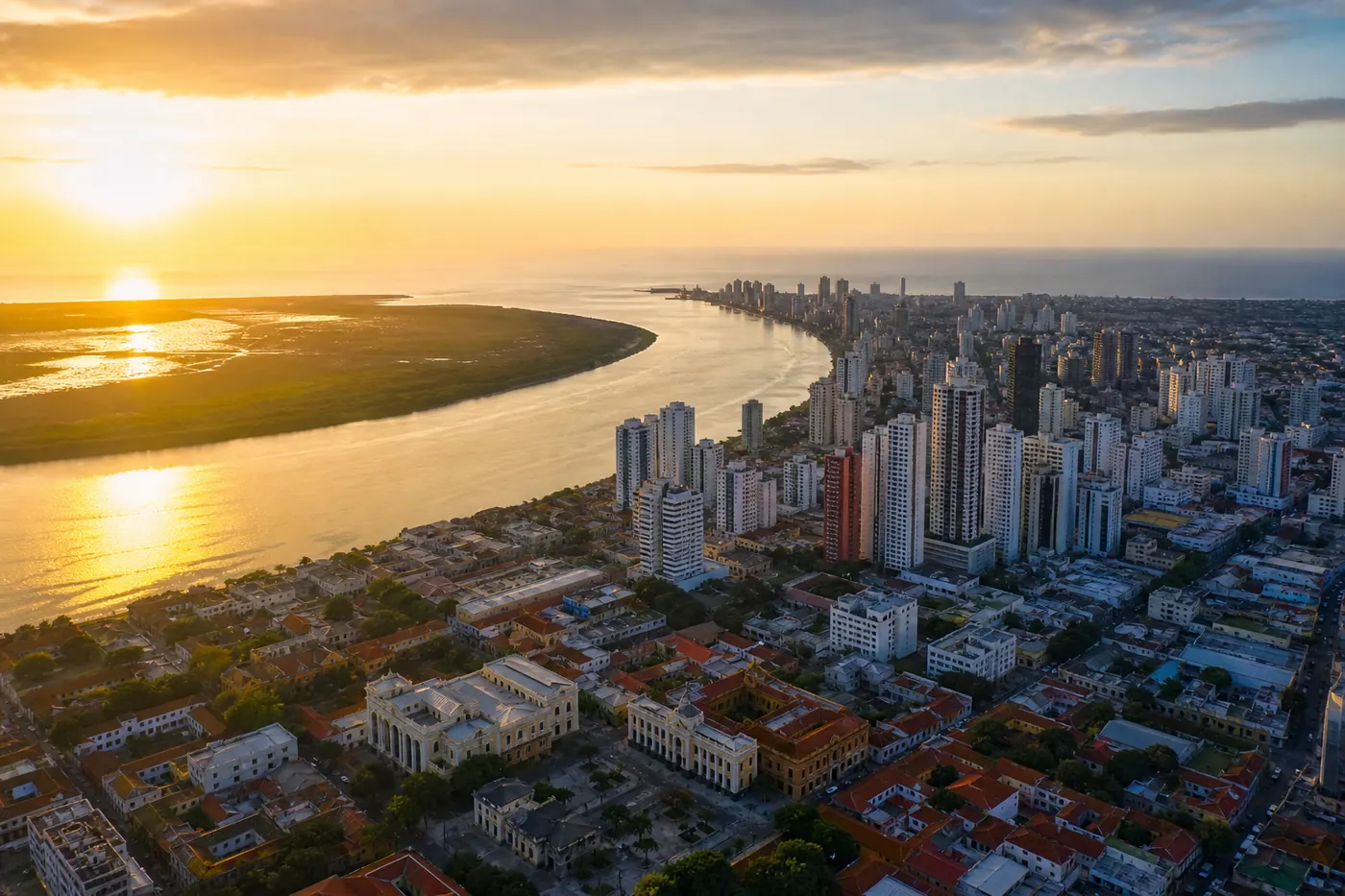
Every expat guide to Colombia has three cities: Medellín, Bogotá, Cartagena. Maybe Cali gets a paragraph. Barranquilla — Colombia's fourth-largest city, its main river port, the birthplace of Shakira and the world's second-largest Carnaval — gets a footnote at best. That's an opportunity if you're the kind of person who'd rather pay reasonable rent than compete with a hundred other remote workers for the 'nice' studio in El Poblado.
The city runs hot. Not metaphorically — I mean 30–35°C every day of the year, no variation, no mountain breeze to rescue you at night. Your neighborhood choice here doesn't just affect your commute; it affects your electricity bill, your sleep quality, and whether you're comfortable or slowly wilting. Getting this right early matters a lot more than it does in Medellín. If you want to see real-world options right now, you can browse apartments and houses on Colombia Move — posting is completely free.
That said, Barranquilla rewards the people who actually show up. Costeños — Caribbean Colombians — are genuinely more open and socially relaxed than their interior counterparts. The food is better than its reputation. Rent hasn't hit Medellín prices despite real economic growth. And when Carnaval takes over every February, you'll understand why UNESCO decided it belonged on the world heritage list.
What to know first
- Best for expats overall: Alto Prado — most restaurants, cafés, and reliable infrastructure
- Best value with character: El Prado — historic, walkable, cheaper than Alto Prado
- Best for families: Ciudad Jardín — quiet, spacious, well-maintained
- Budget option: El Recreo — honest neighborhood, lower rents, less polish
- Beach proximity: Puerto Colombia — separate municipality, 20 min west, genuine Caribbean access
- Critical factor everywhere: AC is infrastructure here. Always ask about electricity costs before signing.
What Makes Barranquilla Neighborhoods Different
Three things set Barranquilla apart from choosing neighborhoods in Medellín or Bogotá. First, the heat: every neighborhood decision is partly a decision about how you'll manage 35°C. Modern buildings with solid AC and double-glazed windows feel like a different city than older stock without insulation.
Second, it's car-dependent in a way that Medellín isn't. The northern residential neighborhoods are spread out, and while Uber coverage is reliable, you'll be booking rides more than walking. There's no metro system. TransMetro (the BRT network) covers main corridors but not the residential streets where most expats end up.
Third, the city is divided north-south in terms of quality and safety. The neighborhoods in this guide are all in the north — El Prado, Alto Prado, Ciudad Jardín, Riomar. The southern areas are more working class and, in parts, ones you'd avoid as a newcomer. Stick to the north until you know the city.
El Prado — History, Shade, and the City's Original Prestige
El Prado is what Barranquilla looked like when it was building its self-image. Wide, tree-lined streets (actual shade is a genuine advantage here), large homes from the 1920s–60s converted into apartments, offices, and restaurants, and a central location that puts everything within striking distance. The city's cultural landmarks cluster here — the Museo Romántico, the old Country Club, the colonial-era mansions that remain even as the neighborhood has modernized around them.
The trees are the thing that most people underestimate. Walking through El Prado at noon feels meaningfully different from walking through a block of modern towers with no canopy. It's still hot, but it's bearable hot.
Rents for a furnished apartment run 1.3–2.2M COP/month depending on whether you're in an older divided house or a newer small-block building. For the level of location and character, that's genuinely good value.
Best for: First-time expats wanting central location and character. Honest downside: Some blocks feel quiet after 9pm — it's not the neighborhood that buzzes late.
Alto Prado and La Cumbre — Where Barranquilla Actually Goes Out
Alto Prado is where Barranquilla concentrates its restaurant density, its rooftop bars, its gym-and-avocado-toast infrastructure. It sits above El Prado geographically and in most other ways too. La Cumbre — sometimes grouped with Alto Prado, sometimes considered its own zone — extends the same energy northward along Carrera 53 and the surrounding blocks.
The main draw for remote workers is the café density around Calle 84. There are enough places with reliable WiFi, decent espresso, and AC that you won't feel trapped in your apartment on work days. Building infrastructure in this zone tends to be newer — better electrical systems, fiber internet that actually delivers. These aren't small things in a city where the heat means you're asking more of your utilities every day.
Rents push higher here: 2–4M COP/month for a furnished apartment in a modern tower. The upper end goes past 5M for penthouses and premium buildings. Still below comparable setups in El Poblado, but you're paying for the best-located zone in the city.
Best for: Remote workers, young professionals, anyone wanting the social scene. Honest downside: It can feel sanitized — Centro Comercial Buenavista nearby, chain restaurants everywhere. If you came to experience Colombia, this version has the rough edges smoothed off.
Ciudad Jardín — The Practical Family Zone
Ciudad Jardín is where you move when you stop looking for nightlife and start looking for a parking spot. It's a large, quiet, solidly middle-to-upper-middle-class residential area in the north. Streets are clean, buildings are well-maintained, and the proximity to Buenavista mall and Alto Prado means you're not giving up access to good services — just noise and traffic.
For expats with families, or those doing a longer stay who've moved past needing nightly restaurant access, Ciudad Jardín is where a lot of longer-term Barranquilla residents end up. You get more space for your money than in Alto Prado — rents run 1.5–2.8M COP for a furnished place — and the quieter streets make it noticeably less stressful to decompress after work.
Best for: Families, couples wanting space, longer stays. Honest downside: Car-dependent. Getting around without wheels or Uber is annoying.
Riomar — The City's Riverside Future
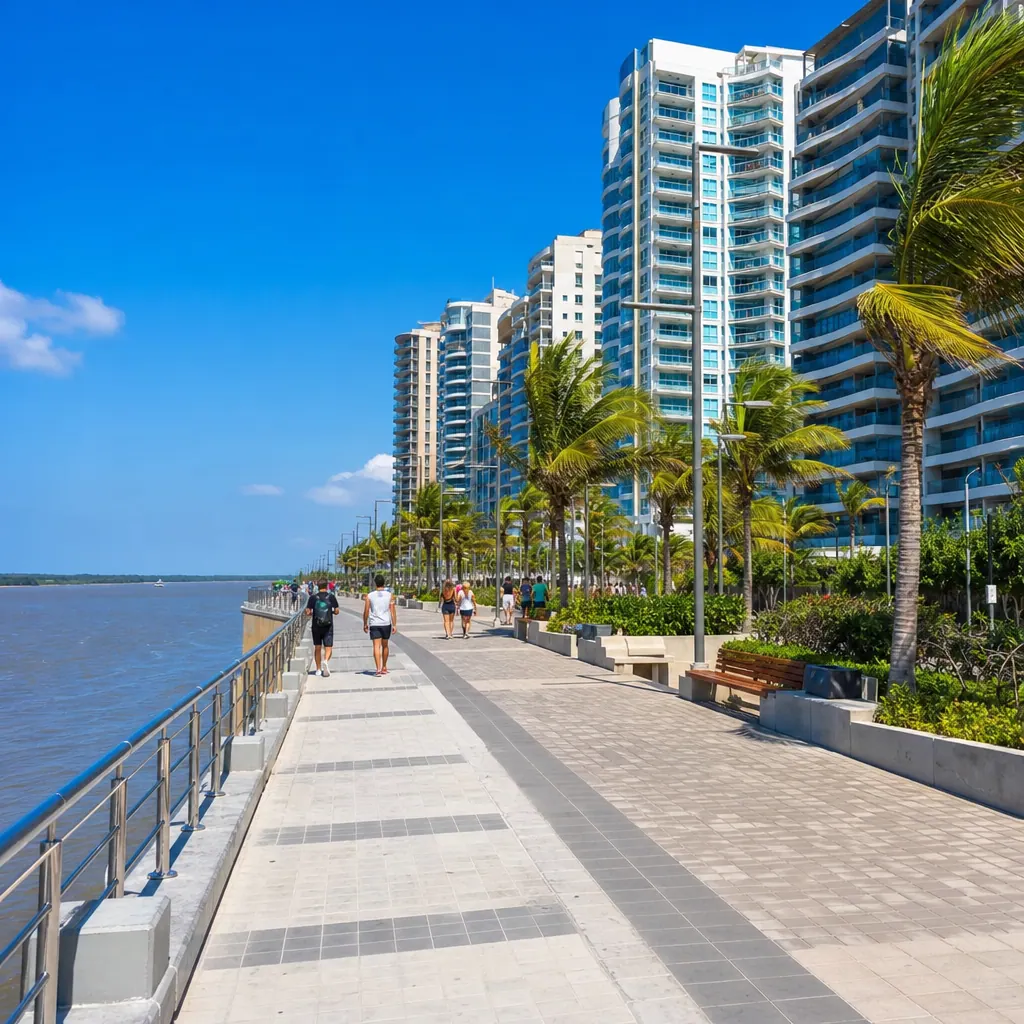
Riomar is the neighborhood the city's urbanists point to when they want to show Barranquilla building toward something. It runs along the Magdalena River and has seen serious development over the past decade — residential towers, the Puerto Moño promenade, and a cleaned-up riverfront that's slowly becoming a place people actually walk to instead of just drive past.
The vibe is newer and more planned than El Prado. Less architectural character, but better building infrastructure — newer electrical systems, reliable AC setups, fiber internet that behaves. The port proximity means occasional industrial noise and some truck traffic on the main roads, but it's far enough from the active port zones not to be a daily irritant.
Rents: 1.8–3.5M COP/month. The newest towers sit at the higher end. It's a good middle option — more modern infrastructure than El Prado, slightly lower prices than Alto Prado, with the waterfront character that neither of them has.
Best for: People who want modern infrastructure and a distinct neighborhood identity. Honest downside: Still developing — fewer walkable café options than Alto Prado.
El Recreo — Budget-Friendly and Honest
El Recreo is a large, spread-out middle-class neighborhood that most expat guides skip because it doesn't have a single defining visual or marketing angle. That's exactly the point. Rents sit at 900,000–1.6M COP for a furnished apartment — significantly lower than the northern prestige zones. Neighbors are Barranquillero families going about their lives. You get a much more grounded read on how the city actually works.
It's not for everyone. Getting anywhere requires Uber or wheels. The café infrastructure for remote work is thinner. But if you're on a budget, planning a longer stay, or simply want to actually live somewhere rather than tourist in a neighborhood, El Recreo delivers in a way that Alto Prado never quite does.
Puerto Colombia — When the Beach Matters More Than the City
Puerto Colombia is technically its own municipality, about 20 minutes west of Barranquilla's main residential zones. Expats who prioritize beach access sometimes base themselves here — direct access to Playa Salguero and the Caribbean coast, slower pace, lower prices (700K–1.5M COP for furnished places).
The tradeoff is real: every errand, every restaurant worth going to, every airport run adds 20 minutes each way in Uber costs. I wouldn't recommend it as a primary base unless beach living is genuinely your priority — not just 'nice to have.' But it's worth knowing it exists, especially for longer stays where you're building a routine around the beach rather than the city.
Neighborhood Comparison at a Glance
| Neighborhood | Avg Rent (furnished) | Best For | Main Downside |
|---|---|---|---|
| El Prado | 1.3–2.2M COP | Character, central location | Quieter evenings, older stock |
| Alto Prado | 2–4M COP | Social scene, remote work | Most expensive, feels sanitized |
| Ciudad Jardín | 1.5–2.8M COP | Families, quiet living | Car-dependent |
| Riomar | 1.8–3.5M COP | Modern infra, waterfront | Still developing, fewer cafés |
| El Recreo | 900K–1.6M COP | Budget, authentic local life | Car-dependent, fewer services |
| Puerto Colombia | 700K–1.5M COP | Beach proximity | 20-min commute for everything |
Finding a Place to Rent in Barranquilla
The rental market in Barranquilla is less formalized than Medellín. Facebook groups still drive a lot of listings. The 'un amigo de un amigo tiene un apartamento' route is genuinely common and often leads to better deals than going through a real estate agency. That said, Colombia Move lists free rentals across all major neighborhoods — no commission, no agency fee, direct contact with owners.
You can browse current Barranquilla housing listings directly at Colombia Move's Barranquilla page — and filter by neighborhood, price, and whether it's furnished. Listing is free for owners too, which is why you find a lot of direct-owner stock there that doesn't appear on the paid portals.
One thing I'd emphasize before anything else: always ask explicitly about the electricity bill. An apartment listed at 1.5M COP/month in a building with old AC and poor insulation can cost you another 350,000–450,000 COP in utilities alone during the hotter months. 'Servicios incluidos' should factor in the AC reality, not just water and building fees.
Direct-owner rentals — without a real estate agency taking a cut — are common here and can save you a month's fee in the process. The legal basics still apply: written contract, inventory list, clear terms on deposit return.
Keep Reading
Before you sign anything: Colombia Rental Contract Red Flags: What to Watch For — the clauses that cause problems later.
If you're comparing Barranquilla to other Colombian cities before committing, the full city comparison covers cost, climate, and lifestyle side by side.
Keep Reading
Best Cities to Live in Colombia: Ranked for Expats — how Barranquilla stacks up against Medellín, Cali, Cartagena, and more.
🏠 Browse Barranquilla Housing — Free
Direct-owner apartments and houses in El Prado, Alto Prado, Ciudad Jardín, and beyond. No agency fees. No commission. Filter by neighborhood, furnished status, and budget.
Search Barranquilla Listings →Frequently Asked Questions
❓ Is Barranquilla safe for expats?
The northern neighborhoods — El Prado, Alto Prado, Ciudad Jardín, Riomar — are considered safe and have relatively low crime. As in any Colombian city, common sense applies: don't display expensive gear on the street, use Uber at night rather than flagging random taxis, and get neighborhood-specific advice from people who actually live there before going somewhere unfamiliar. Avoid the southern areas until you know the city well.
❓ How much does it cost to live in Barranquilla?
A single person in Alto Prado or El Prado spending on a furnished apartment, Uber, eating out 3–4x/week, and a gym membership can live reasonably on $1,200–1,600 USD/month. The main variable is electricity — factor in 300,000–450,000 COP/month for AC-heavy apartments. Ciudad Jardín and El Recreo drop the housing cost meaningfully if you're on a tighter budget.
❓ Which Barranquilla neighborhood is best for remote workers?
Alto Prado, without much competition. Best density of cafés with reliable WiFi and AC, most modern building infrastructure, and the easiest Uber flow. El Prado comes second if you want more character and are comfortable working from your apartment most of the time.
❓ How hot is Barranquilla, really?
Consistently 30–35°C year-round, with high Caribbean humidity that makes it feel hotter than the number suggests. There's no cool season. Budget three to four weeks to adjust if you're coming from Medellín's 22°C spring. Good AC and a well-insulated building solve most of this — which is why building quality should be near the top of your apartment checklist.
❓ Is Barranquilla cheaper than Medellín for expats?
Generally yes, for comparable quality. Alto Prado rents are still below El Poblado prices. Ciudad Jardín and El Recreo offer significantly more space for the money. The main equalizer is the electricity bill — AC costs are higher here than in Medellín's temperate climate. Net-net, most expats find Barranquilla 10–20% cheaper for a similar lifestyle standard.
For everything else you need before arriving — healthcare, banking, visas, what daily life actually looks like — read the full Barranquilla expat guide.

Comments
Loading comments...
Checking sign-in status...