Cost of Living in Cartagena: Full Monthly Budget Breakdown
Cartagena is Colombia's most expensive major city for expats — but only if you live in the tourist bubble. Here's the honest breakdown of what it actually costs across three budget levels.

IDIOMA DEL ARTÍCULO
Showing original language
Nobody warns you about the month-two electricity bill. My first full month in Bocagrande I spent about $2,400 — which felt high but not alarming. Then the electric bill arrived at COP 480,000 ($117) and I realized I'd been running the A/C the way you would anywhere else. In Medellín, that same behavior would have cost $20. Cartagena is unforgiving about heat, and that changes the math in ways most cost-of-living guides don't fully account for.
Cartagena is Colombia's most expensive major city for expats, and the reasons are specific: a tourist premium baked into the most visible parts of town, electricity costs that have no equivalent elsewhere in the country, and real estate inflated by short-term rental demand. That said, the city has a parallel economy running right underneath the tourist layer — where a set lunch costs COP 14,000 ($3.40), mototaxis go anywhere for COP 4,000, and a furnished one-bedroom in Manga can cost less than a Medellín studio.
This breakdown covers what Cartagena actually costs across three budget levels, with specific numbers in both COP and USD at the current ~COP 4,100/$1 rate. If you're already looking for housing, you can browse Cartagena apartments and houses on Colombia Move — free listings, no commission, posted by real owners.
What you need to know first
- Frugal budget: ~$1,100–1,500/month (local neighborhood, home cooking, minimal A/C)
- Comfortable expat budget: ~$2,000–2,800/month (Bocagrande or Getsemaní 1BR, eating out regularly)
- Premium budget: $3,500–5,500+/month (Bocagrande or Castillogrande, beach clubs, no restrictions)
- Cartagena runs 20–35% more than Medellín for comparable expat neighborhoods
- Biggest variable: electricity — A/C in Cartagena heat adds $50–150/month you never pay in Medellín
- Biggest savings lever: where you eat — local almuerzo corriente is $3–4, tourist-zone restaurants are $15–25
Housing — The Bocagrande vs. Real Life Trade-off
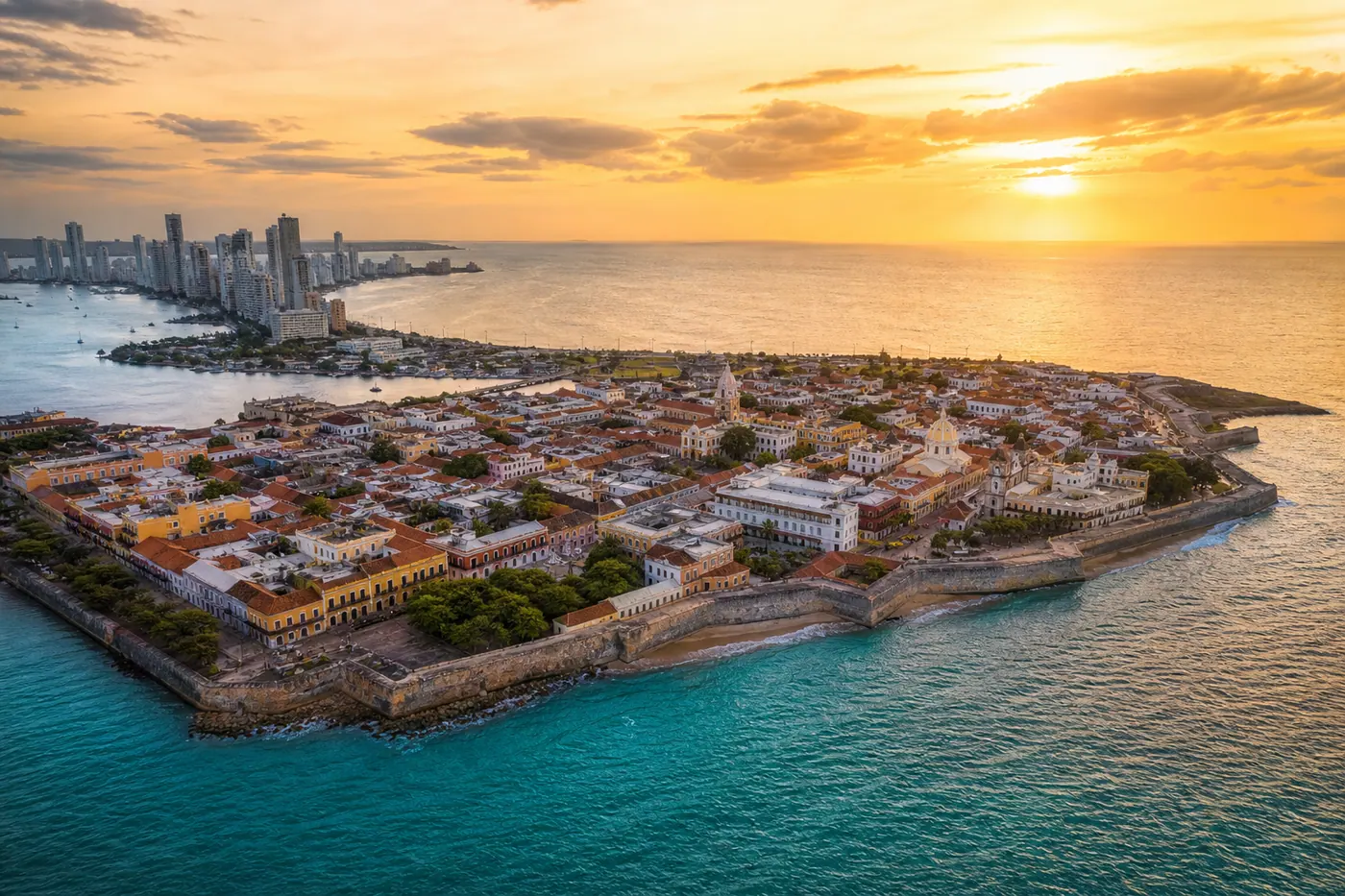
Bocagrande is the default landing spot for expats, and the prices reflect it. A furnished one-bedroom there runs COP 2,500,000–4,500,000/month ($610–1,100). Two-bedrooms push COP 4,000,000–7,000,000 ($975–1,700). You're paying for proximity to supermarkets, English-friendly services, and walkable beachfront (even if Bocagrande's beach is mediocre). The apartment quality is generally solid — high-rises with pools and 24-hour security — but it comes with a tourism premium locals simply don't pay.
Castillogrande, just past Bocagrande's tip, runs 15–20% more. Quieter, more residential, and favored by long-term expats and wealthy Colombians who want calm without giving up amenities. Unless that calm specifically appeals to you, it's hard to justify the extra cost at this level.
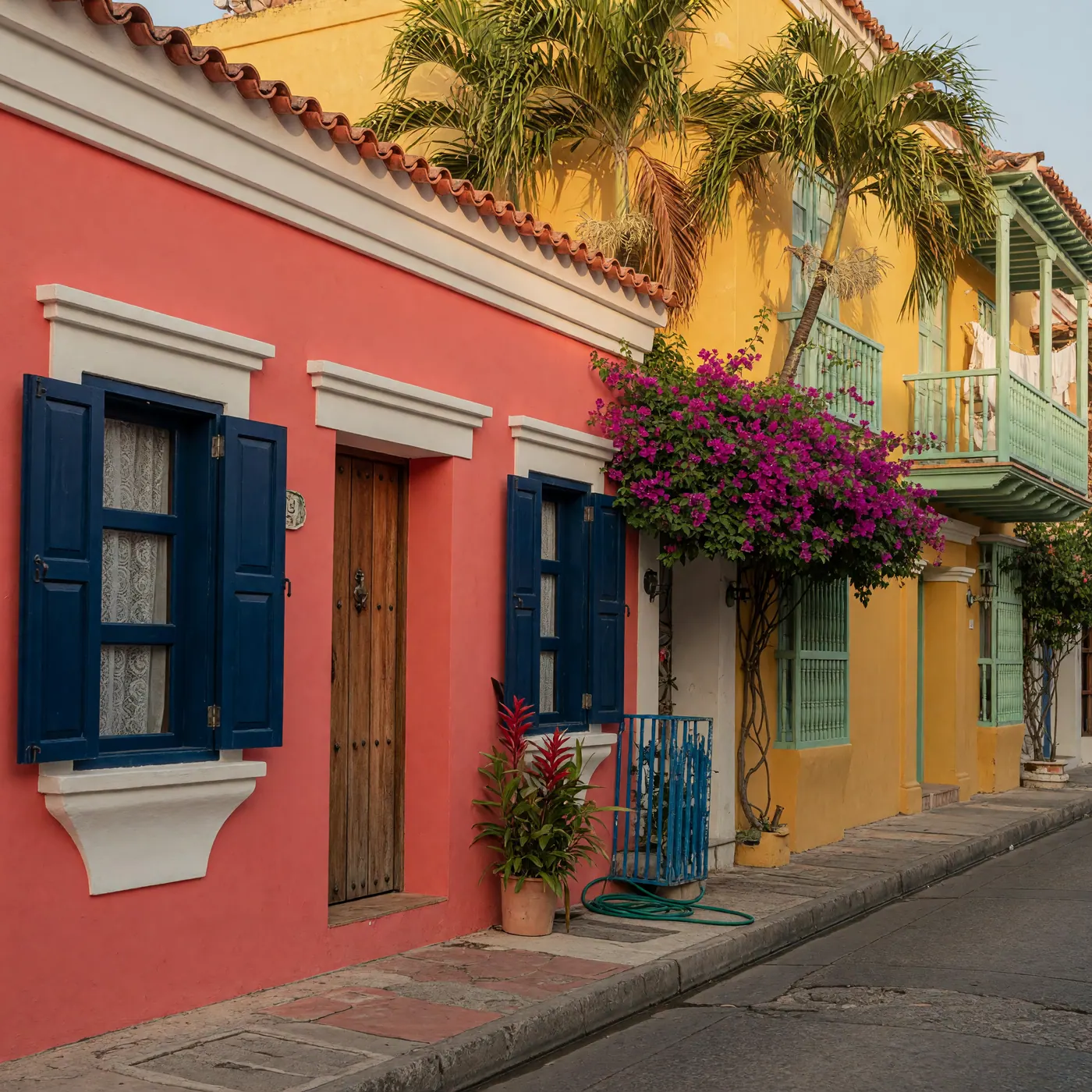
Getsemaní is where the math shifts. Cartagena's most artistic and rapidly gentrifying neighborhood sits right next to the walled city — walkable to everything, with the best street food in Cartagena and a real neighborhood energy that Bocagrande doesn't have. Furnished one-bedrooms here run COP 1,400,000–2,500,000/month ($340–610). The tradeoff: more foot traffic, some loud streets on weekends, and an area that's clearly mid-gentrification. For value per dollar of lifestyle, though, it's arguably the best neighborhood in the city.
Manga and Pie de la Popa are the sleeper picks — older, more residential neighborhoods on the island's interior, popular with Colombian families and professionals. Furnished one-bedrooms: COP 1,200,000–1,800,000 ($295–440). Not flashy, but genuinely quiet and cheap. The catch: you're dependent on taxis to get anywhere and the neighborhoods aren't especially walkable.
Going direct-to-owner cuts 15–25% off typical prices. Browse Cartagena housing listings on Colombia Move — free to post, listed by real owners without inmobiliaria markup.
Keep Reading
Deciding where in Cartagena to live? The complete Cartagena neighborhood guide covers Bocagrande, Getsemaní, Manga, and Castillogrande with honest pros, cons, and rent ranges for each.
The A/C Tax — Cartagena's Most Underestimated Cost
This deserves its own section because it genuinely surprises people who've budgeted based on Medellín or Bogotá numbers. Cartagena averages 35–38°C with 80–90% humidity from April through November, and even the 'cool' season (December–March) rarely drops below 28°C at night. A/C is not a luxury — it's what separates sleeping from lying there sweating.
Monthly electricity with consistent A/C use: COP 200,000–500,000 ($50–120). The range depends on your apartment's insulation, whether you have inverter-type units (far more efficient), and how many hours daily you're running them. A newly built Bocagrande high-rise with good insulation and modern inverter A/C might run $50/month. A ground-floor unit in an older Getsemaní building with no shade and a window unit can easily hit $120+. Budget conservatively at $80/month and adjust after your first bill.
Other utilities are predictable: internet runs COP 70,000–110,000/month ($17–27) depending on provider. Water is COP 30,000–60,000 ($7–15). Most apartments use electric stovetops, partly to avoid generating extra heat, so gas is minimal. Total non-electricity utilities: $25–40/month.
Food — Two Parallel Cities
The walled city and Bocagrande operate on tourist pricing. A main dish at a restaurant on Plaza Santo Domingo: COP 60,000–120,000 ($15–30). Cocktails at Café del Mar: COP 40,000–80,000 ($10–20) each. This isn't a rip-off by global standards, but eating this way more than a couple of times per week will destroy your food budget.
Three blocks outside the tourist zone, the arithmetic changes entirely. An almuerzo corriente in a local comedor — soup, protein, rice, salad, juice — runs COP 12,000–16,000 ($3–4). Cartagena has exceptional local seafood at street level: arroz con mariscos, fried whole fish, ceviche near La Boquilla. A plate of grilled Caribbean fish with coconut rice at a neighborhood spot costs COP 18,000–25,000 ($4.40–6).

For groceries: Bocagrande has an Éxito, Carulla, and D1. Getsemaní and Manga have local minimercados and the massive Bazurto market for produce and meat at the cheapest prices in the city. A weekly grocery run mixing D1 with the local market: COP 200,000–320,000 ($49–78) for one person cooking at home most nights. Monthly food budget: COP 800,000–1,150,000 ($195–280) for mostly home cooking with the occasional almuerzo out; COP 1,500,000–2,200,000 ($365–535) for regular restaurant meals at decent local spots; COP 3,000,000+ ($730+) for regular tourist-zone dining.
Getting Around — No Metro, Plenty of Options
Cartagena has no metro and patchy bus coverage. What it has is mototaxis everywhere — the fastest way to move short distances. A hop within the same zone costs COP 3,000–5,000 ($0.75–1.25). Cross-city trips: COP 6,000–10,000. Fast, ubiquitous, and used constantly by locals. The caveat: they're not the safest option, especially in heavy traffic on the main Bocagrande arteries.
Taxis and InDrive cover the rest. Bocagrande to Getsemaní: COP 8,000–14,000 ($2–3.40). InDrive typically runs 20–30% less than metered taxis. A busy month with daily movement: COP 180,000–350,000 ($44–85).
Beach logistics are their own budget line. Cartagena's city beaches (Marbella, Bocagrande beachfront) are functional but not the draw. Getting to the good ones — Playa Blanca, Islas del Rosario — requires a boat: COP 50,000–80,000 ($12–20) for Playa Blanca, COP 90,000–130,000 ($22–32) for Rosario Islands, plus beach club entry. If you're going twice a month, budget $60–120 just for beaches. For a complete overview of Colombia's ride apps and taxi costs, see the Colombia transport guide.
Monthly Budget by Tier
Here's how the full picture stacks up across three realistic Cartagena lifestyles:
| Expense | Frugal ($) | Comfortable ($) | Premium ($) |
|---|---|---|---|
| Rent (1BR furnished) | $340–500 | $600–900 | $1,000–1,800 |
| Electricity (with A/C) | $40–60 | $70–110 | $120–180 |
| Internet + water | $22–30 | $25–35 | $35–55 |
| Food (groceries + dining out) | $200–280 | $380–520 | $700–1,200 |
| Transport (taxis, motos) | $40–65 | $80–120 | $150–280 |
| Beach trips & entertainment | $30–60 | $100–200 | $400–800 |
| Health insurance | $40–60 | $60–100 | $120–250 |
| Total | ~$1,100–1,500 | ~$2,000–2,800 | $3,500–5,500+ |
The frugal tier assumes a local-neighborhood rental, home cooking most nights, minimal beach club spending, and strategic A/C use. The comfortable tier is genuinely pleasant — a decent Getsemaní or Bocagrande apartment, regular restaurant meals, a few beach days per month. Premium means no restrictions, frequent beach clubs, and larger apartments in Bocagrande or Castillogrande.
How Cartagena Compares to Other Colombian Cities
Cartagena is the most expensive major Colombian city for expats, but the gap concentrates in two areas: rent and electricity. Groceries, transport, and services are roughly comparable to Medellín. On the same comfortable expat budget, Medellín delivers more apartment space, lower electricity costs, and more dining variety at lower price points. Bogotá's expat-friendly northern neighborhoods (Chicó, Usaquén) run similar to Bocagrande but offer more mid-tier neighborhood flexibility. Cali is the cheapest of the four major cities across the board.
The Cartagena premium is real but bounded — roughly $400–600/month more than Medellín at the comfortable tier. Whether that's worth it depends entirely on how much you value Caribbean lifestyle, beach access, and colonial ambiance. For a side-by-side view of all Colombia's cities, the Colombia cost of living guide lays out all the options.
🩺 Health Insurance Before Your EPS Kicks In
SafetyWing travel medical insurance covers you from day one in Cartagena — no Colombian residency needed, starting around $50/month.
Get a Quote →FAQ
❓ Is Cartagena more expensive than Medellín?
Yes, typically 20–35% more expensive at the comfortable expat tier, concentrated in rent and electricity. A furnished 1BR in Bocagrande costs $610–1,100/month versus $400–650 in comparable Medellín neighborhoods like Laureles or El Poblado. Electricity adds $50–120/month in Cartagena that you simply don't pay in Medellín's spring climate. Groceries and transport are roughly comparable across both cities.
❓ How much is electricity in Cartagena with air conditioning?
Budget COP 200,000–500,000/month ($50–120). The range depends on apartment insulation, A/C type (inverter vs. window unit), and your usage habits. Newer Bocagrande high-rises with inverter A/C tend toward $50–70. Older buildings in Getsemaní or Manga with less efficient units can easily hit $120. This is the single most surprising cost for people arriving from inland Colombian cities — plan for it explicitly.
❓ Can you live in Cartagena on $1,500 USD per month?
Yes, but it requires living in a local neighborhood (Getsemaní, Manga, or Pie de la Popa rather than Bocagrande), cooking most meals at home, limiting beach club trips, and being strategic about A/C. At $1,500 you live decently — tight but genuinely comfortable in a neighborhood that matches the budget. Bocagrande on $1,500/month is very difficult.
❓ What's the best neighborhood in Cartagena to avoid tourist prices?
Getsemaní is the sweet spot for most expats — great street food, walkable to the walled city, real neighborhood vibe, and rents 40–60% below Bocagrande. Manga is quieter and even cheaper, better for people who want a calm residential environment. Both avoid the Bocagrande tourist premium while keeping you in Cartagena's core.
❓ How much do beach trips from Cartagena cost?
Plan $12–32 per person per trip. Playa Blanca (Isla Barú) is the cheapest option: COP 50,000–80,000 ($12–20) round trip by lancha from the Muelle Turístico. Islas del Rosario runs COP 90,000–130,000 ($22–32) round trip, usually including snorkeling. Beach clubs at both add entry fees plus food and drink on top. If you're going twice a month, budget $60–120 just for beaches.


Comments
Loading comments...
Checking sign-in status...