
Buying Fresh Meat, Seafood & Organic Produce at Plazas de Mercado in Bogotá & Medellín
Ditch the sanitized supermarket aisles. Learn how to source restaurant-grade beef cuts, fresh coastal seafood, and farm produce at Bogotá's Paloquemao and Medellín's Plaza Minorista.
IDIOMA DEL ARTÍCULO
Showing original language
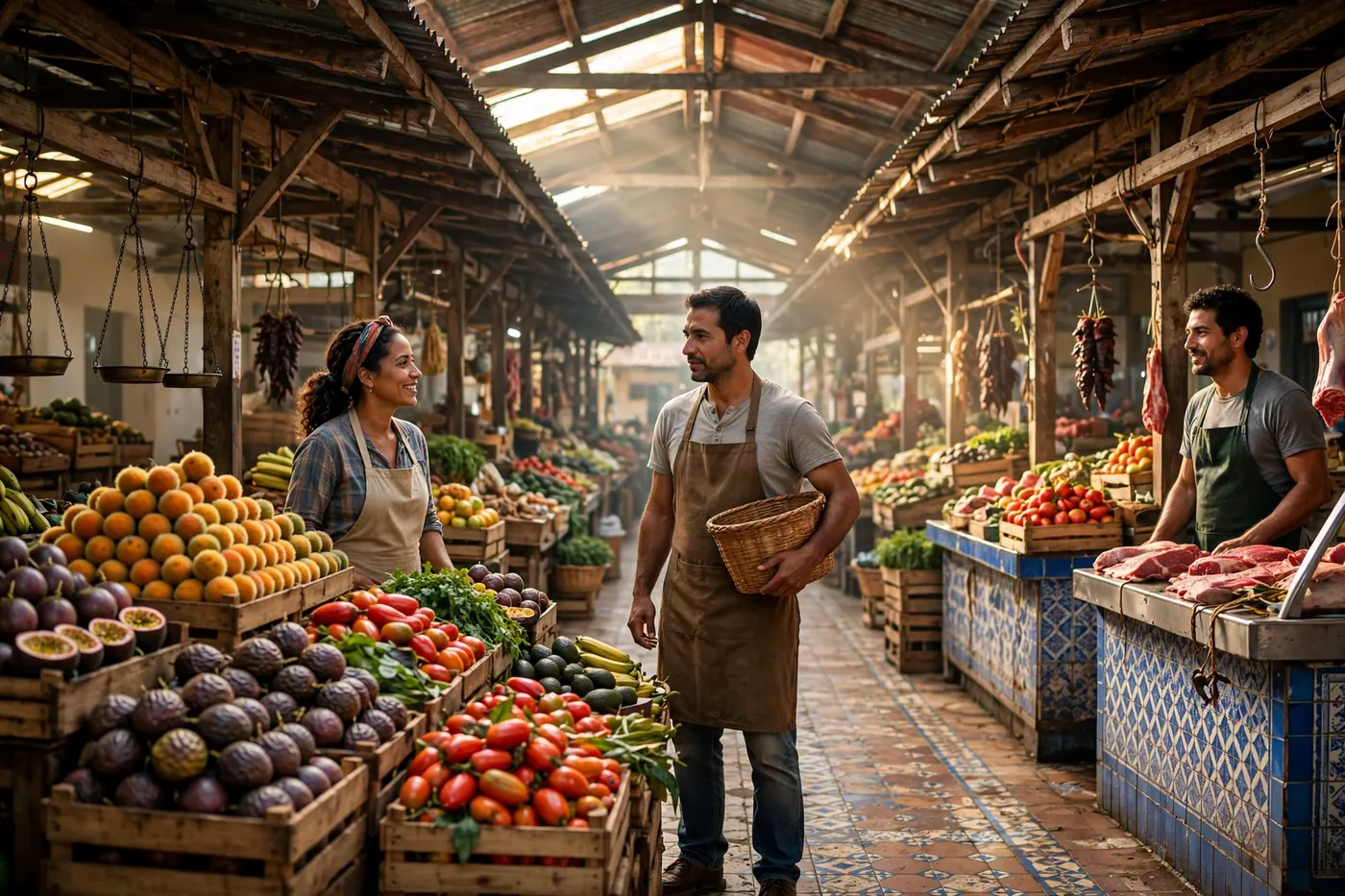
If your grocery routine in Colombia is limited to the fluorescent-lit aisles of premium chains like Carulla or Éxito, you are missing out on the culinary heart of the country. While standard supermarkets offer convenience, their pre-packaged beef cuts are often cut too thin for grilling, their seafood selection is heavily frozen, and prices carry corporate markups. Step into a traditional public market hall, however, and the entire culinary landscape shifts.
Colombia’s municipal plazas de mercado are sensory powerhouses. Visiting a market like Paloquemao in Bogotá or Plaza Minorista in Medellín connects you directly with family-run butcher counters, coast-direct fishmongers, and smallholder farmers. Beyond the cultural spectacle, the financial incentive is real: sourcing your proteins and vegetables directly at wholesale market halls typically delivers a 20% to 40% discount compared to premium chain supermarkets, provided you know how to navigate the stalls, identify fresh stock, and order like a local.
According to active listings on Colombia Move (September 2026), the alimentos section shows 7 active ads (5 posted recently) and 566 views, while frutas-verduras still has 0 active listings—so bulk produce still lives at the plaza, not on the classifieds board.
This tactical guide walks you through the two anchor markets of Colombia’s largest cities, breaks down Colombian butchery terminology so you get the exact cut you want, provides a cold-chain seafood checklist, and reveals practical rules for payment and logistics.
The Two Anchor Markets: Venues, Hours, and Layout
While every municipal district in Colombia boasts neighborhood markets, two sprawling central halls stand as the undisputed epicenters of fresh food sourcing for both home cooks and top restaurateurs.
Plaza de Mercado Paloquemao (Bogotá)
Located in the Los Mártires locality at Av. Calle 19 #25-04, Los Mártires, Bogotá, Paloquemao is a legendary institution. The facility covers several square blocks, famous for its world-renowned dawn flower market on the exterior perimeter, while its covered interior is strictly organized by food group. The cárnicos (meats) and pescadería (seafood) pavilions occupy dedicated corridors with concrete refrigerated counters and drainage tracks.
- Operating hours: Monday to Saturday from 4:30 a.m. to 4:30 p.m.; Sundays and public holidays from 5:00 a.m. to 2:30 p.m.
- Best arrival window: 6:30 a.m. to 9:30 a.m. for top-tier seafood and prime butcher cuts.
If you already do basic runs at modern supermarkets in Bogotá, adding a bi-weekly trip to Paloquemao will dramatically upgrade your kitchen pantry while slashing your monthly food budget.
Plaza Minorista José María Villa (Medellín)
Known universally as "La Minorista," this vital commercial hub is operated by the Coomerca cooperative and situated at Calle 55A #57-80, La Candelaria / Chagualo, Medellín. The multi-level structure accommodates over 3,000 commercial spaces. For raw ingredients, you will focus on Sector 08 for butcher shops (carnicerías) and Sectors 12 and 13 for fishmongers (pescaderías), with produce radiating outward across the ground floor.
- Operating hours: Monday to Saturday from 4:30 a.m. to 6:00 p.m.; Sundays and public holidays from 4:30 a.m. to 3:00 p.m.
- Best arrival window: Arrive before 10:00 a.m. to beat the midday heat and traffic around the city center.
Long-term expats tired of the limited meat selections common when buying groceries in Medellín find that Minorista butchers are happy to custom-cut whole loins on request.
Deciphering the Colombian Butcher Counter (Carnicería)
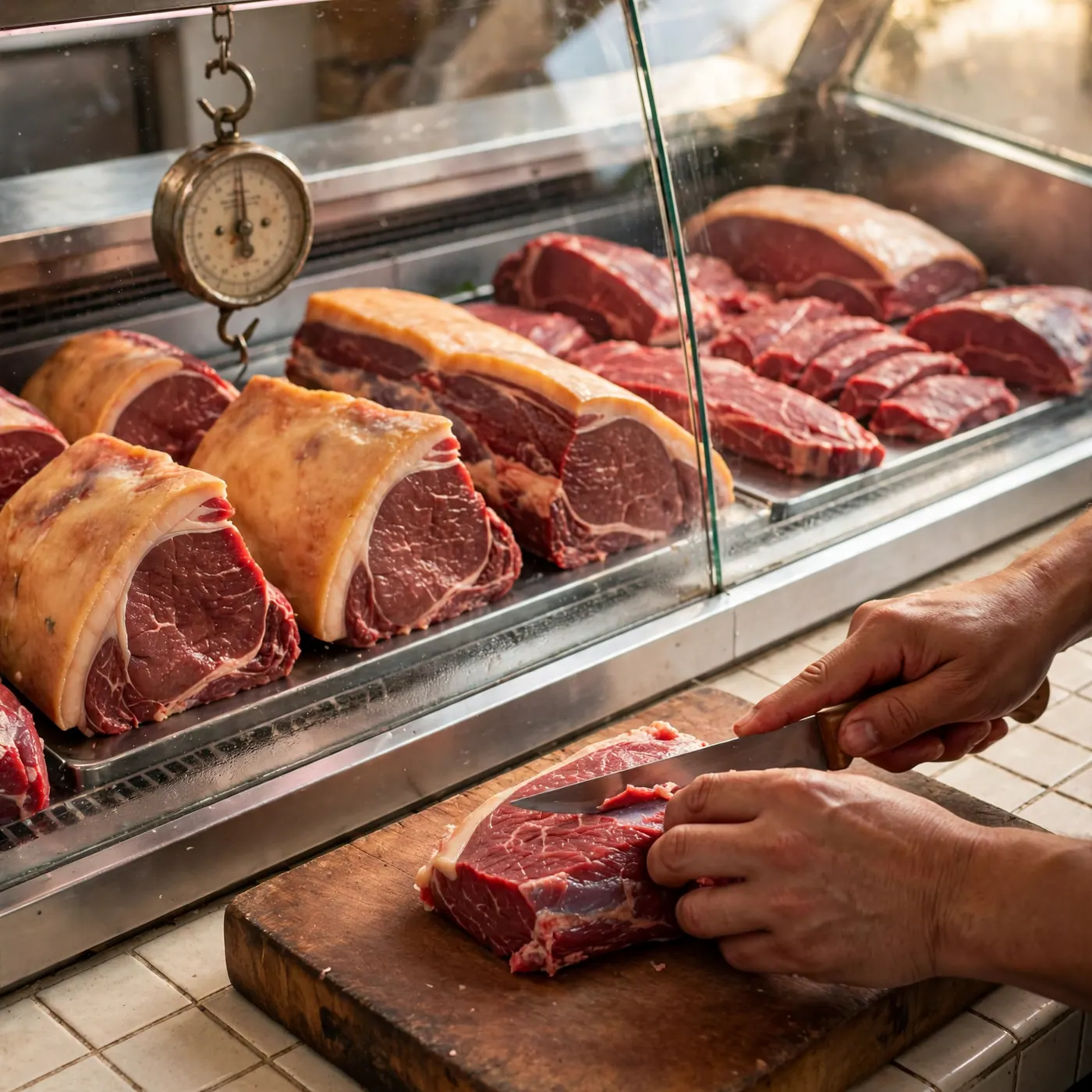
Walking up to a Colombian carnicería without knowing local cut names usually leads to receiving a mystery slice of pounded beef intended for stewing. Colombian butchery divides cattle differently than American, British, or Argentine systems. To order effectively, memorize these core terminology pairs:
| Colombian Cut Name | International Equivalent | Best Cooking Method | Texture & Characteristics |
|---|---|---|---|
| Chatas / Lomo Ancho | Striploin / New York Strip | Grill / Skillet | Tender, robust beef flavor with a protective outer fat strip. |
| Lomo Fino / Solomito | Tenderloin / Filet Mignon | Pan-sear / Roast | The leanest and most tender cut, called solomito across Antioquia. |
| Punta de Anca | Picanha / Top Sirloin Cap | Grill / Churrasco | Signature thick fat cap; delivers incredible juiciness when grilled fat-side down. |
| Cadera | Top Sirloin / Rump Steak | Quick sear / Stir-fry | Lean, everyday cut with good flavor; can dry out if overcooked. |
| Sobrebarriga | Flank / Flat Brisket | Pressure cooker / Braise | Classic Colombian cut; fibrous and tough until braised tender in a criollo sauce. |
| Costilla | Short Ribs / Beef Back Ribs | Slow braise / Sancocho | Bone-in cut rich in connective tissue, ideal for rich weekend broths. |
How to Order Like a Chef at the Stall
Butchers at Paloquemao and Minorista are artisans with incredible knife skills. They expect a dialogue. Rather than pointing silently, use these specific phrasing guidelines:
- Specify the thickness: Most butcher cuts in standard stores are shaved wafer-thin for quick pan-frying. If you plan to grill, specify your preferred thickness in finger-widths: "Por favor, tres cortes de chatas de dos dedos de grosor para asar" (three cuts of striploin, two fingers thick, for grilling).
- Request custom trimming: If you want the silverskin peeled off a tenderloin while retaining the fat cap on a striploin, ask clearly: "¿Me ayuda a limpiar el lomo fino pero sin quitarle la grasa a la punta de anca?"
- Fresh ground beef: Never purchase pre-ground beef sitting in a tray. Select a lean piece of beef (such as cadera or pulpa negra) and say: "¿Me puede moler este trozo en el momento, por favor?" The butcher will run the chosen cut through the grinder right in front of you.
Sourcing Coast-Fresh Seafood with Confidence (Pescadería)
Neither Bogotá nor Medellín is situated on the coastline. Fresh ocean catches sold in their municipal markets arrive via daily refrigerated road freight or direct air logistics primarily from Pacific ports (Buenaventura and Tumaco) as well as Atlantic coastal distribution centers. In addition, Colombian public markets feature high-volume freshwater aquaculture, notably rainbow trout (trucha) from high-altitude Andean streams and red tilapia (mojarra) from inland reservoirs.
Because fresh fish has traveled several hundred kilometers from coastal waters, you must apply a rigorous inspection checklist before buying:
- Ice Bed Inspection: The stall should keep whole fish embedded deep into clean, fresh flaked ice—not merely resting on top of melted slush or warm metal trays.
- The Eye Test: Look directly at the fish’s eyes. They should be crystal clear, bright, and convex (bulging slightly outward). Clouded, milky, or sunken eyes indicate old catch that has been sitting for days.
- Gill Color: Ask the vendor to lift the gill plate (las agallas). Fresh fish shows bright, vivid red or rich pink gills completely free of grey slime or dull brown discoloration.
- Flesh Elasticity: Gently press your finger into the muscular flank. The flesh should feel firm and resilient, immediately springing back without leaving an indented depression.
- The Scent: Fresh ocean fish smells clean, briny, and reminiscent of sea salt and crisp ocean air. If a counter smells sharply pungent or carries an ammonia odor, walk away immediately.
If you prefer ready-to-cook fillets, pick your whole sea bass (corvina), snapper (pargo rojo), or snook (róbalo) first, then request the vendor to clean, scale, and fillet it: "Por favor, arreglarlo en filetes limpios sin espinas."
Navigating Organic, Agroecological, and Exotic Produce Stalls
The produce corridors of Paloquemao and Minorista offer biodiversity that simply does not exist in standard supermarkets. Towering wooden crates overflow with passion fruits (maracuyá, gulupa, granadilla), tree tomatoes (tomate de árbol), curuba, uchuvas, and massive avocados (palta papelillo).
However, long-term residents should understand local labeling conventions regarding organic produce:
The Campesino Reality vs. Certified Organic
Very few traditional market vendors carry expensive third-party certified organic labels (like USDA Organic or EU Bio). Most smallholder fruit and vegetable tables are operated as traditional conventional farms or small-family plots (agricultura campesina).
If you want produce cultivated without heavy industrial pesticides, look for dedicated agroecological cooperatives (often stationed in specific fruit corners or weekend farmers' corners) and ask the vendor: "¿Estos productos son agroecológicos o cultivados sin químicos?" Stalls carrying mountain herbs (hierbas aromáticas y medicinales) frequently source wild-harvested or chemical-free greens directly from regional countryside producers.
Buying Weights: Kilos vs. Libras
Remember that Colombian market vendors think in libras (pounds) as well as kilos, but a Colombian market pound is traditionally standardized at 500 grams (half a kilogram), rather than the imperial 454-gram pound. If a vendor quotes a price "por libra", you are getting exactly half a kilo. For large batches of produce, buying by the half-dozen (media docena) or by the basket (canastilla) unlocks wholesale pricing.
Practical Plaza Rules: Cash, Logistics, and Etiquette
Shopping successfully at Paloquemao or Minorista requires a bit more logistical planning than throwing groceries into a cart during everyday grocery shopping in Colombia. Keep these operational realities in mind before you head out the door:
- Bring Cash in Small Denominations: While major butcher suppliers and corporate distributors now feature point-of-sale card terminals, individual stall operators rely heavily on cash or local mobile transfers. Carry Colombian peso notes in $10.000, $20.000, and $50.000 denominations. Trying to pay a $6.000 COP herb purchase with a crisp $100.000 note will stall the transaction while the vendor hunts for change across three neighboring stalls.
- QR Payments Are Everywhere: If you run out of cash, almost every stall owner in both Bogotá and Medellín displays a personal QR code for Nequi or Daviplata. Paying via instant app transfer is widely welcomed and eliminates the need to carry huge wads of physical cash.
- Protect the Cold Chain: Colombia’s tropical mountain valleys can warm up quickly by late morning. Bring heavy-duty insulated cooler bags (bolsas térmicas) with frozen ice blocks in your backpack for raw beef and seafood. Once your bags are full, do not wander around the city; take a registered taxi or rideshare app directly back to your apartment to preserve food safety.
- Market Etiquette: Aggressive bargaining over a couple thousand pesos is considered disrespectful. Vendors work hard and keep margins thin. Instead of aggressive haggling, cultivate relationships with your favorite casero (regular vendor). Once you become a loyal weekly customer, vendors will naturally gift you la ñapa—an extra handful of limes, fresh cilantro, or an extra slice of beef tucked into your bag with a smile.
Frequently Asked Questions
❓ Are plazas de mercado in Bogotá and Medellín cheaper than standard supermarkets?
Yes, plaza meat, seafood, and produce typically cost 20% to 40% less than premium chains. Exact boards move weekly with harvests, fuel, and DANE SIPSA indices as of 2026.
❓ What is the best Colombian beef cut for grilling a steak?
Punta de anca (top sirloin cap or picanha) and chatas (striploin or New York strip) are the premier cuts for grilling. Both feature a rich external fat layer that protects the meat from drying out over charcoal or hot skillet heat.
❓ How do I know if fish at Paloquemao or Minorista is truly fresh?
Check that the fish rests deeply in clean flaked ice, features clear convex eyes rather than cloudy sunken lenses, has vivid red gills, and exhibits firm flesh that bounces back instantly when pressed. The fish must smell cleanly of seawater without ammonia tones.
❓ Do market stall vendors accept credit cards, or do I need cash?
Most individual fruit, herb, and fish stalls operate exclusively on cash or local mobile payments like Nequi and Daviplata. Credit and debit card terminals are generally found only at larger, formal butcher facilities within the market complex.
❓ Can I buy certified organic vegetables at Colombian public markets?
Certified organic labels are rare at traditional plaza stalls. Ask for produce that is agroecológico or cultivado sin químicos, especially in campesino aisles, as of 2026.
❓ What is the safest way to transport fresh meat and fish home from the plaza?
Use an insulated cooler bag with ice packs and go straight home by taxi. Finish meat and fish last so the cold chain holds, a 2026 food-safety habit that still matters in warm midday valleys.

Comments
Loading comments...
Checking sign-in status...