
Grocery Stores & Supermarkets Near Me in Colombia: Expat Daily Life & Shopping Guide
Navigating Colombian grocery shopping as a newcomer involves four distinct supermarket tiers, checkout cédula prompts, and smart split-basket strategies. Here is how to shop like a local.
IDIOMA DEL ARTÍCULO
Showing original language
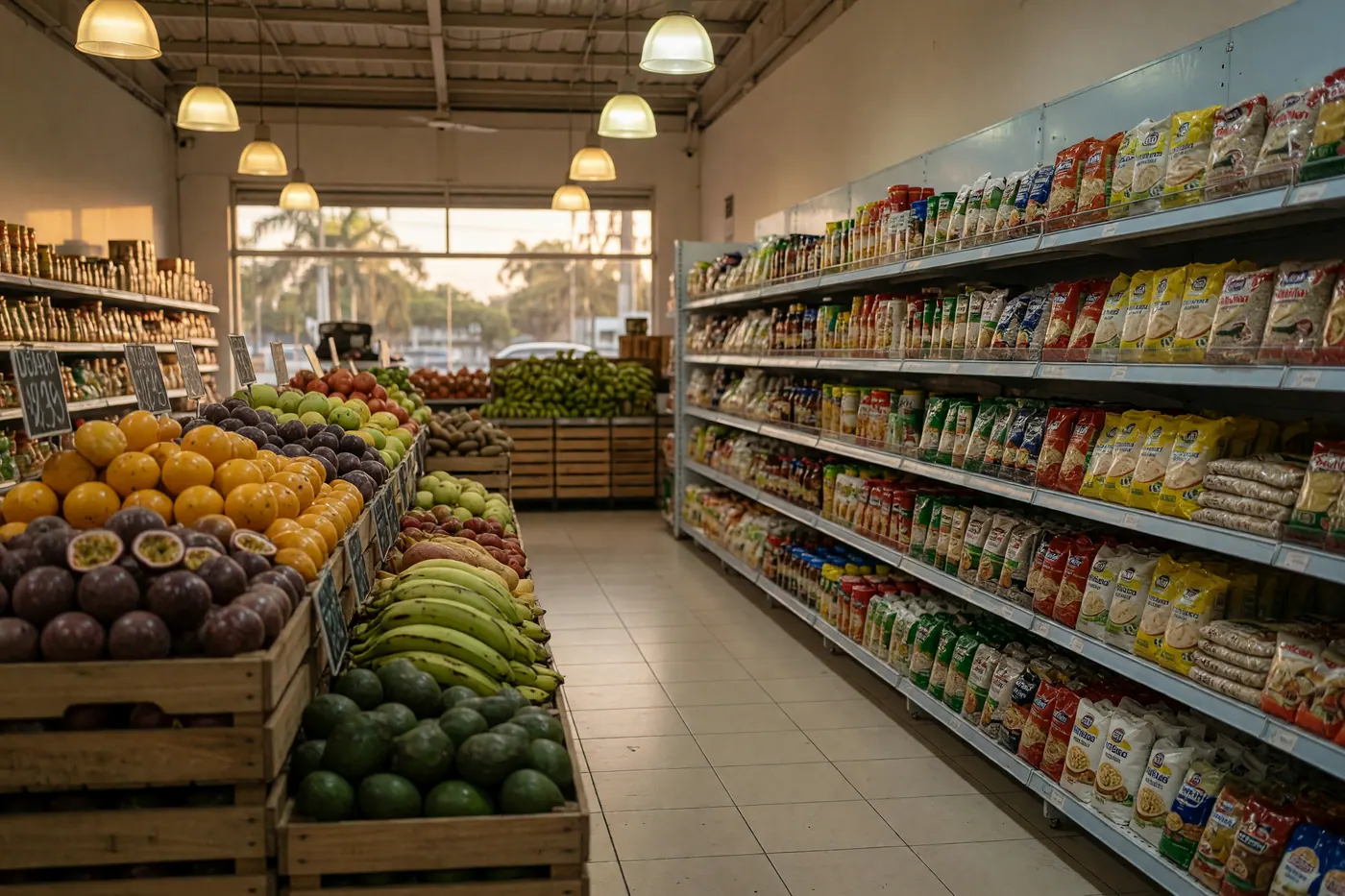
When you touch down in Colombia and type “grocery store near me” into your phone, the results can be bewildering. Instead of a uniform suburban supermarket chain, you will likely see a patchwork of pocket-sized discount shops, sprawling multi-level hypermarkets, gourmet food halls, and neighborhood produce stalls known as fruvers.
Grocery shopping in Colombia is not a one-stop-fits-all errand. If you push a cart through a premium store for everyday staples like rice and paper towels, you will easily pay double what a local spends. Conversely, if you rely exclusively on corner discount shops, you will quickly hit a wall when hunting for imported olive oil, specific cheeses, or familiar personal care items. Navigating daily life here means understanding how the retail ecosystem works, avoiding common payment pitfalls, and mastering checkout customs.
Heads up: If you are looking for specific neighborhood store recommendations in the country’s two largest metropolitan hubs, check out our localized breakdowns for where to buy groceries in Medellín and our companion guide on finding supermarkets across Bogotá.
The 4 Tiers of Colombian Supermarkets Explained
Colombia’s grocery industry is sharply divided into four distinct retail tiers. Knowing which store solves which problem will save your monthly budget and your sanity.
1. Hard Discounters (Tiendas D1, Ara, Ísimo)
Hard discounters have revolutionized daily commerce across the country over the last decade. Market audits by NielsenIQ highlight that discount chains like D1 and Ara maintain over 66% of their shelf space in private labels—the highest private-label penetration in Latin America. You will not find piped ambient music, decorative displays, or wide wandering aisles here. Products are presented on warehouse pallets in their original shipping cartons.
What to buy here: Dairy products (milk, plain yogurt, local fresh cheeses), eggs, rice, dry beans, cooking oil, canned tuna, bottled water, coffee, and household cleaning chemicals (detergent, bleach, trash bags). Hard discounters typically undercut traditional grocers on these basic staples.
2. Traditional Supermarkets & Hypermarkets (Éxito, Olímpica)
Éxito (part of Grupo Éxito) and Olímpica function as Colombia’s core mainstream retailers. In their larger “Éxito Wow” or hypermarket footprints, you will find full fresh bakery sections, butcher counters, delicatessens, clothing lines, cookware, and home electronics. They carry a broad mix of domestic name brands alongside standard fresh fruits and vegetables.
What to buy here: General pantry staples where you prefer specific national brand names, packaged snacks, fresh cuts of meat, cookware, kitchen appliances, and personal care supplies that corner discounters do not stock.
3. Premium & Gourmet Chains (Carulla, Euro Supermercados)
Carulla is Colombia’s flagship upscale grocer, recognized by its sleek dark-green branding and modern “FreshMarket” formats. It is clean, well-lit, and offers an extensive selection of European wines, imported cheeses, artisan sourdoughs, gluten-free pantry alternatives, and Asian cooking pastes. For an exhaustive breakdown of their loyalty programs and specialized departments, see our comprehensive Carulla supermarket expat guide.
What to buy here: Specialty imported goods, delicate salad greens, imported beers and wines, aged cuts of beef, and hard-to-find international ingredients.
4. Big-Box & Wholesale Clubs (Alkosto, PriceSmart)
If you prefer bulk shopping or need to stock a household with pantry dry goods, paper products, and cleaning fluids, wholesale stores are widely available in major metropolitan areas. Alkosto is an open-access Colombian warehouse hypermarket; you do not need a paid membership card to walk in and purchase bulk goods or electronics. PriceSmart, by contrast, operates on the standard North American membership club model (similar to Costco) and requires an annual paid subscription card for entry.
Operating Hours & Finding Late-Night or 24-Hour Groceries
Standard grocery store hours throughout Colombia are relatively predictable. Most D1 and Ara discount branches open between 8:00 AM and 9:00 PM Monday through Saturday, often closing an hour earlier on Sundays and official holidays (festivos). Larger Éxito and Carulla locations generally operate from 7:00 AM or 8:00 AM until 9:00 PM or 10:00 PM.
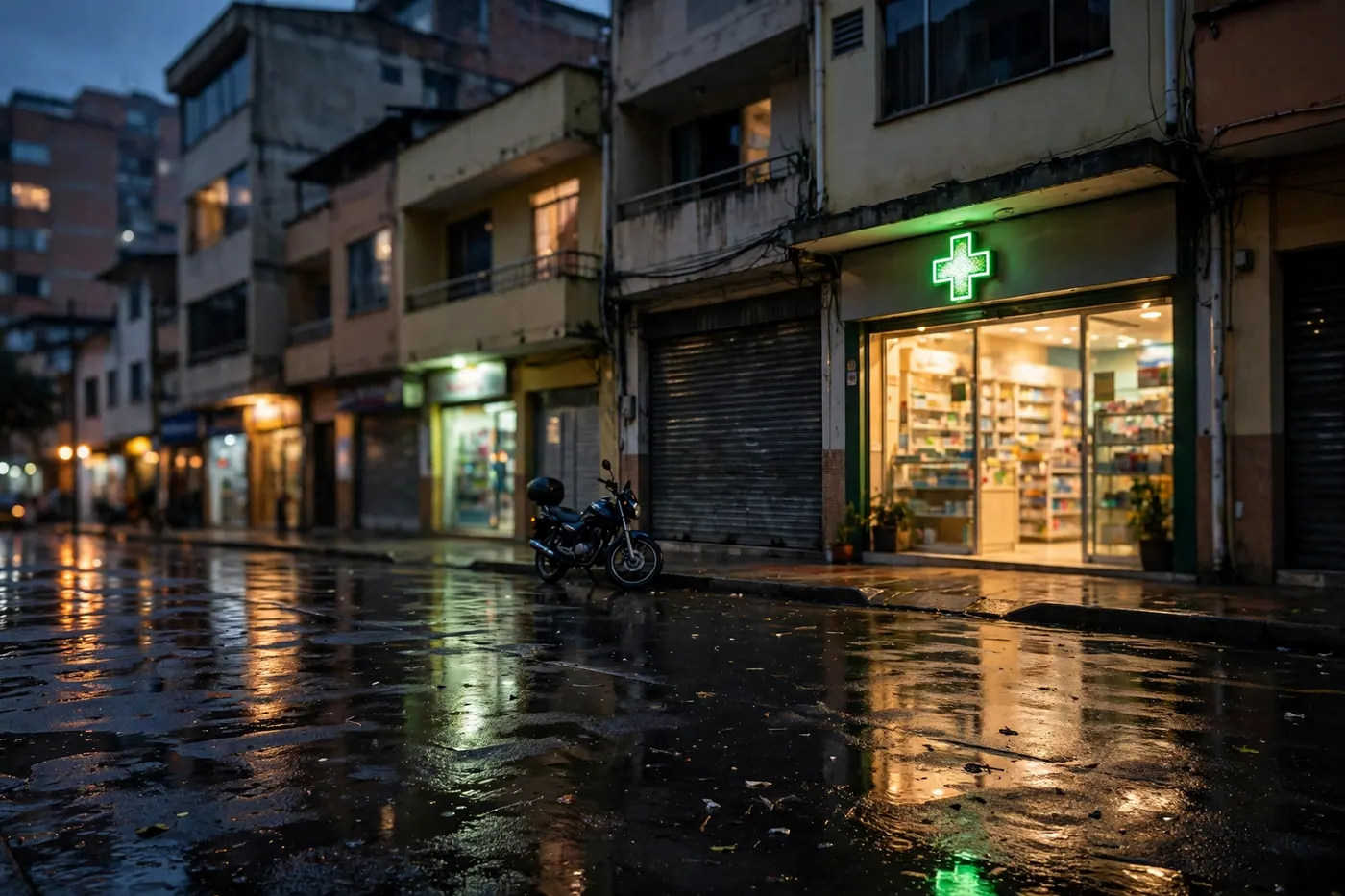
However, full walk-in 24-hour hypermarkets are practically non-existent due to overnight store-closure rules. When you need food, water, or basic medicine in the middle of the night, you rely on the ventanilla nocturna (night window)—a reinforced glass service counter where an overnight clerk retrieves items from the sales floor while you wait on the sidewalk.
Several verified urban Carulla Express locations provide overnight counter service or extended late-night hours:
- Bogotá: Carulla Express Salitre, located in Ciudad Salitre at Calle 23 # 66-39.
- Bogotá: Carulla Express Puente Largo, situated in Puente Largo at Calle 106 # 57-23.
- Medellín: Carulla Poblado, located in El Poblado at Calle 11A # 42-49.
- Medellín: Carulla Laureles, situated in Laureles at Circular 73B # 39B-20.
- Envigado: Carulla Villa Grande, located at Transversal 27 Sur # 42B-80.
If you are not within walking distance of an open night window, delivery apps represent the primary lifeline. Ultra-fast grocery delivery services like Rappi Turbo operate 24 hours a day in core residential neighborhoods, bringing basic snacks, beverages, and pharmacy items to your building door in under 20 minutes. Learn more about navigating app orders in our detailed breakdown of grocery delivery apps in Colombia.
At the Checkout Counter: Cédula Prompts, Bags, and Foreign Cards
Checking out at a Colombian cash register involves three distinct cultural quirks that catch newly arrived expats off guard.
The Inevitable “¿Tiene Cédula?” Prompt
Almost before scanning your first grocery item, the cashier will ask: “¿Tiene cédula?” or “¿Puntos?” Cashiers are trained to request this for two reasons: enrolling transactions into store loyalty systems (such as the ubiquitous Puntos Colombia network shared by Éxito and Carulla) and attaching electronic tax invoices to formal citizen tax IDs.
If you are a tourist or have not yet received your residency paperwork, you do not need to fumble with a passport. In fact, according to official Puntos Colombia terms, enrollment strictly requires a Colombian Cédula de Ciudadanía or Cédula de Extranjería; foreign passports cannot be used to register an account. Simply smile and say “No tengo” (I don’t have one) or “Sin registrar” (unregistered), and the cashier will bypass the prompt with a generic customer key.
The Single-Use Plastic Bag Tax
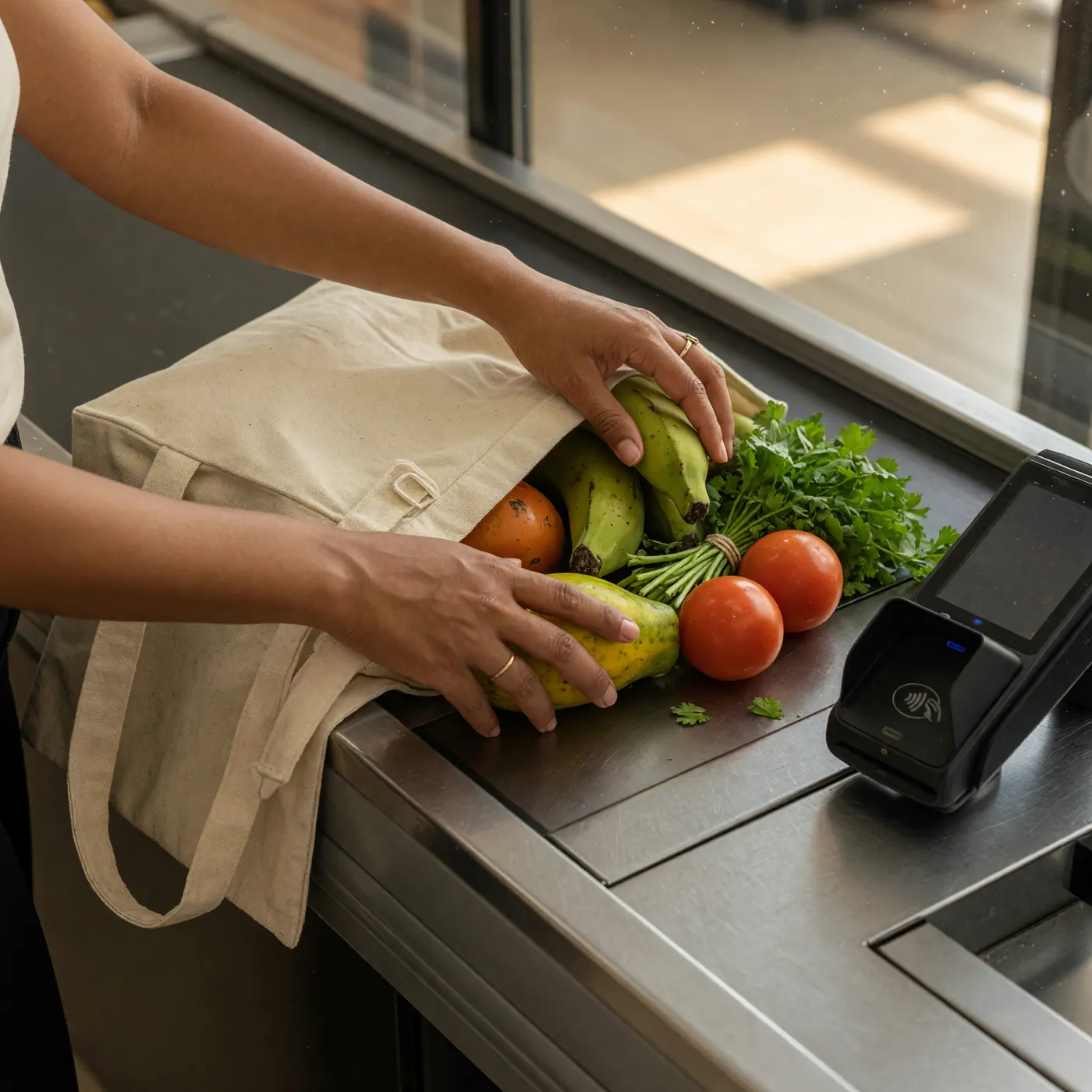
Under statutory regulations enforced by the DIAN (Dirección de Impuestos y Aduanas Nacionales), Colombia levies a mandatory national consumption tax on single-use plastic checkout bags (Impuesto Nacional al Consumo de Bolsas Plásticas). Supermarkets do not hand out free plastic sacks. Cashiers will ask “¿Bolsa?” and will charge a set fee per bag on your final receipt. In discount grocers like D1, checkout bags are not pre-packaged for you; you must pack your own items at a side counter. Keeping two or three sturdy reusable fabric tote bags (bolsas reutilizables) in your daypack is both financially practical and culturally standard.
Avoiding the Foreign Card DCC Markup Trap
International Visa and Mastercard credit or debit cards are accepted at virtually every supermarket checkout in Colombia. However, when the cashier hands you the card payment terminal (datáfono), the screen may ask you to choose between paying in Colombian Pesos (COP) or your home currency (USD, EUR, GBP, CAD).
Always select COP (Colombian Pesos). If you select your home currency, you are agreeing to Dynamic Currency Conversion (DCC). The terminal operator will apply a retail conversion rate with a markup above the official exchange rate. Selecting COP forces the transaction through your home bank’s wholesale mid-market rate instead.
The Smart Expat Strategy: The Split-Basket Method
Expats who spend their first month buying everything at upscale stores inevitably complain that Colombian food prices match European or North American grocery costs. Conversely, those who shop only at discount stores miss out on variety and quality fresh produce. The secret to eating well while keeping a realistic budget is the split-basket method:
- Tier 1 — Hard Discounters (D1 / Ara): Buy your shelf-stable dry pantry essentials (oats, pasta, beans, sugar, salt), paper goods, laundry detergent, dish soap, and bulk dairy here.
- Tier 2 — Neighborhood Fruvers or Local Plazas: Colombia’s fresh agricultural abundance is legendary, but grocery hypermarkets often sell slightly bruised, refrigerated produce at marked-up prices. Buy fresh avocados, tropical fruits (lulo, maracuyá, mango, papaya), tomatoes, and leafy greens from a neighborhood fruver (fruit and vegetable shop) or local wholesale market plaza. Price tracking by DANE SIPSA confirms substantial weekly price fluctuations in agricultural produce between wholesale hubs and supermarket chains, making independent produce vendors far more affordable.
- Tier 3 — Premium Chains (Carulla / Euro): Reserve these trips strictly for international goods you cannot find elsewhere—deli meats, artisan cheese, specific spices, specialty baking ingredients, imported sauces, and wine.
Moving Heavy Groceries & Setting Up a New Home
Stocking an unfurnished or newly leased apartment from scratch means hauling heavy gallon containers of oil, 5-liter water jugs, bulk cleaning supplies, and kitchenwares. In dense Colombian cities where foreign residents frequently live car-free, walking four blocks with ten heavy grocery bags is an unpleasant chore.
Most major hypermarkets maintain a dedicated home-delivery desk (servicio a domicilio) near customer service, where you can leave your packed boxes for same-day delivery to your residential building for a small local delivery fee. Alternatively, larger supermarket exits often have waiting cars whose drivers will help load bulky bags into the trunk.
For initial large-scale apartment setups, furniture deliveries, or moving multiple heavy crates between neighborhoods, hiring a trusted local transport operator (acarreo) is the most efficient solution.
Frequently Asked Questions
❓ Can I use a foreign passport to sign up for supermarket loyalty points at Éxito or Carulla?
No, you cannot use a foreign passport to register for Puntos Colombia. The official loyalty platform (terms reviewed 2026) strictly requires an authentic Colombian Cédula de Ciudadanía or Cédula de Extranjería, meaning temporary visitors and tourists cannot create an account.
❓ Why does the cashier ask for my cédula every time I buy groceries in Colombia?
Cashiers ask for your cédula to credit retail loyalty points and satisfy electronic tax invoicing requirements. If you do not hold a Colombian ID, simply reply “No tengo” or “Sin registrar” to complete checkout immediately (same Puntos Colombia ID rule as of 2026).
❓ Are grocery stores open 24 hours in Colombia?
Full 24-hour walk-in supermarkets are rare in Colombia due to evening closure rules. However, select Carulla Express locations operate 24-hour night windows (ventanillas) for sidewalk ordering, and app delivery services like Rappi Turbo run around the clock in major cities.
❓ Should I pay in Colombian Pesos or my home currency when using a foreign credit card?
Always select Colombian Pesos (COP) on card payment terminals. Choosing your home currency triggers Dynamic Currency Conversion (DCC), which imposes substantial hidden foreign-exchange margins from the terminal provider rather than your home bank (still the safer checkout habit in 2026).
❓ Do Colombian supermarkets provide free plastic bags?
No, supermarkets in Colombia do not provide free plastic bags because DIAN’s national consumption tax on single-use bags (2026) requires retailers to charge a fee per bag. Shoppers routinely bring their own reusable canvas or nylon bags.
❓ What is the cheapest supermarket chain for daily groceries in Colombia?
Tiendas D1 and Ara are the most affordable nationwide chains for packaged staples, dairy, eggs, and cleaning supplies. Their hard-discount business model relies heavily on private-label manufacturing and bare-bones store footprints to deliver low prices.
❓ Can I get groceries delivered directly to my Airbnb or apartment in Colombia?
Yes, on-demand apps such as Rappi, alongside store-specific online services from Éxito and Carulla, deliver full grocery carts directly to your building lobby or reception desk throughout major Colombian urban centers.

Comments
Loading comments...
Checking sign-in status...