
How to Shop at Colombia's Plazas de Mercado: A Guide for Expats
Colombia's public markets offer an incredible variety of fresh, seasonal produce and local culture. Here is how to shop them confidently as an expat.
IDIOMA DEL ARTÍCULO
Showing original language
Quick Answer: Colombia’s plazas de mercado (public markets) are excellent places to buy fresh, seasonal produce, meats, and flowers, and can offer better prices than chain supermarkets. To shop successfully, arrive early in the morning, bring small COP bills and reusable bags, compare prices across a few stalls before committing, and keep your phone and valuables discreet.
What Are Plazas de Mercado (and How Do They Compare to Supermarkets)?
If you have recently moved to Colombia, you might be doing all your shopping at Éxito, Carulla, or D1. While those supermarkets are highly convenient for packaged goods and household items, traditional plazas de mercado offer a different variety and fresh-food shopping experience.
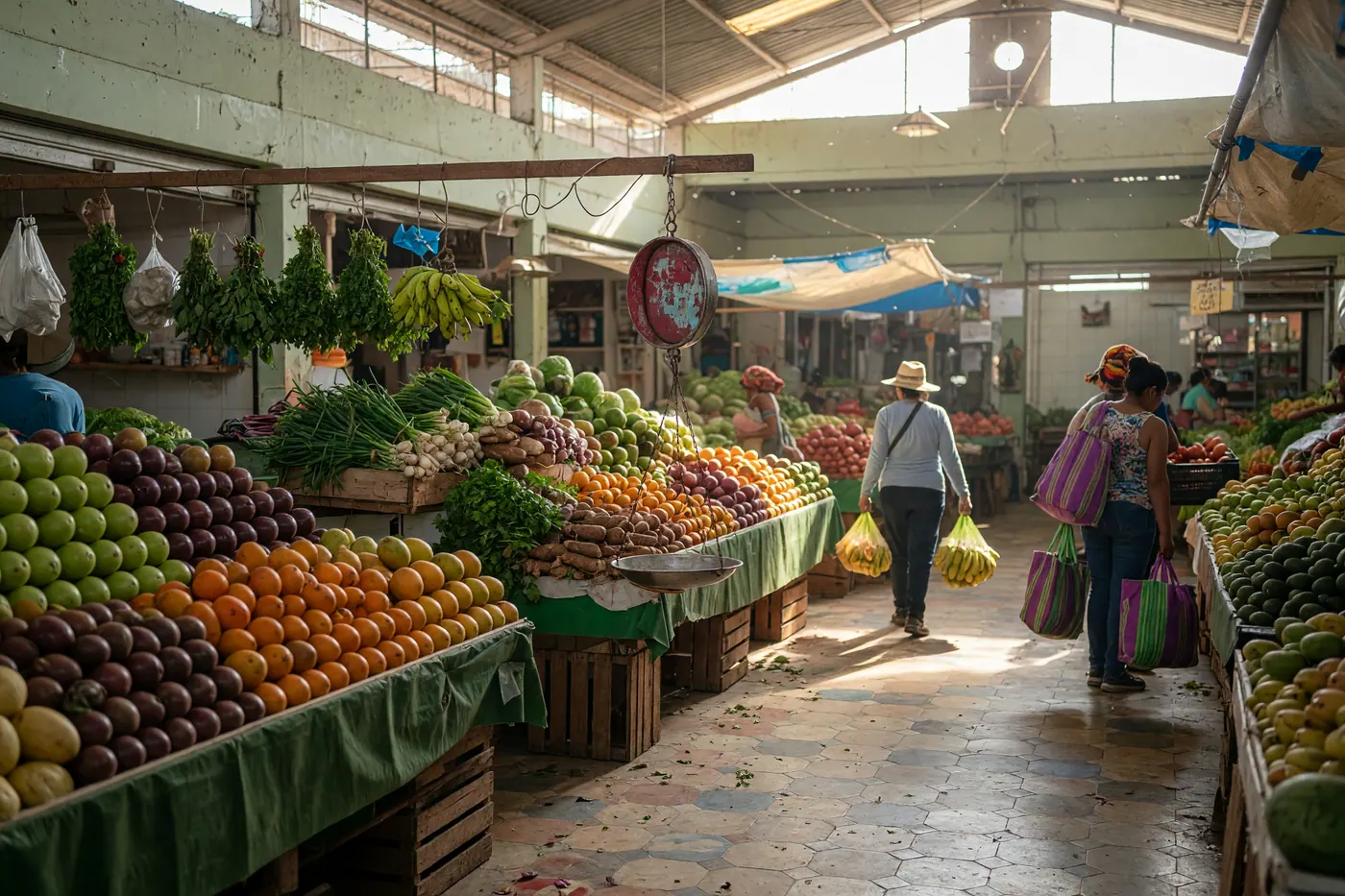
Public markets are massive, multi-vendor hubs where local farmers, butchers, and artisans sell directly to the public. They are officially recognized as vital centers for food supply, regional integration, and local economic activity. You will find aisles dedicated to tropical fruits you have never seen before, fresh herbs, bulk grains, and even sectors for freshly prepared local meals.
While plazas are the go-to for fresh ingredients, the digital supply landscape is still catching up. According to active marketplace signals on Colombia Move (July 2026), the local "alimentos" (food) category recorded over 300 views but only 3 active listings. This shows a gap for direct online food delivery, meaning physical markets remain a practical option for direct-from-source variety and availability.
Major City Markets You Should Know
Many Colombian cities and towns have a central market. If you live in Bogotá or Medellín, you have access to some of the largest and most organized systems in the country.
Bogotá: Paloquemao and the District Network
Bogotá has 44 market plazas, including 19 public district markets administered by the government entity IPES. The most famous for both locals and expats is Plaza de Mercado Paloquemao. Located at Av. Calle 19 No. 25-04, it is a massive hub for fresh food and a daily flower market.
- Hours: Monday to Saturday from 4:30 a.m. to 4:30 p.m.; Sundays and holidays from 5:00 a.m. to 2:30 p.m. (The flower sector usually wraps up by 11:00 a.m.). Hours checked July 23, 2026.
- Access: Admission is free. You can reach it via the CAD TransMilenio station or nearby SITP routes.
Medellín: La América and Beyond
Medellín’s official sources reference several major market plazas, including La Minorista, Plaza de Flórez, Campo Valdés, and Plaza La América. For expats living in the central-western neighborhoods, La América (Calle 45 #79A-100) is highly accessible and less overwhelming than the massive Minorista.
- Scale: It houses over 110 businesses across 240 locales.
- Hours: Commerce runs Monday to Saturday from 6:00 a.m. to 6:00 p.m., and Sundays/holidays from 6:00 a.m. to 1:30 p.m. Hours checked July 23, 2026.
A Step-by-Step Shopping Routine for Expats
Shopping at a plaza requires a bit more preparation than tapping a delivery app. Build a weekly routine by hitting the market for your fresh items and saving the supermarket for cleaning supplies and pantry staples.
Market Day Checklist
- Go early: The best produce arrives before dawn. Aim to be there between 7:00 a.m. and 9:00 a.m. for the best selection and manageable crowds.
- Bring small bills: Vendors may not have change for a $50,000 or $100,000 COP note. Carry $10,000, $5,000, and coins.
- Carry reusable bags: Bring sturdy bags or a rolling cart. You will also want a few smaller bags to separate wet items like meats or damp herbs.
- Do a lap first: Walk the aisles before buying. Compare quality and prices across 2-3 stalls.
Market Etiquette, Prices, and Bargaining Rules
Colombian consumer law (overseen by the SIC) requires that public-facing prices be clear, visible, sufficient, and generally displayed in Colombian pesos. Many stalls will have small cardboard signs indicating the price per libra (500 grams), kilo, or unit.
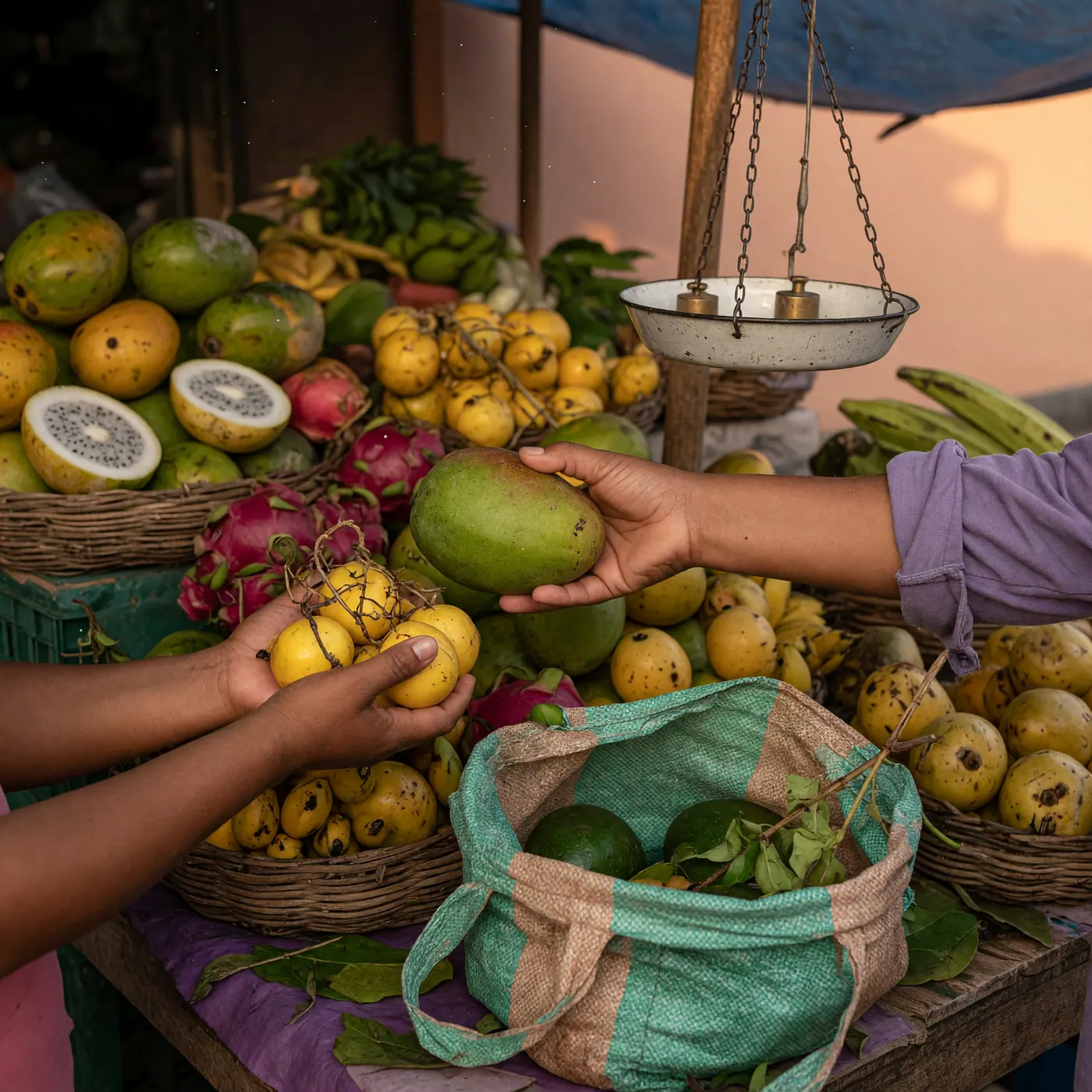
When approaching a stall, always start with a polite greeting ("Buenos días" or "Buenas tardes"). Ask before squeezing or handling delicate fruits, as vendors take pride in their displays.
As for bargaining, it is not as universal as some tourist guides claim. If a price is clearly posted, that is generally what you pay. However, if you are buying a large quantity of items from a single vendor, it can be normal to ask politely for a small discount ("¿En cuánto me lo deja si llevo tres libras?") or ask for the ñapa (a small free extra, like an extra handful of cilantro or a lime, sometimes given to regular customers).
Safety and Transport Logistics
Public markets are busy, crowded environments. The UK government’s (GOV.UK) safety advice for Colombia notes that street crime and pickpocketing can occur in major cities, so use normal city precautions in dense crowds.
Keep your safety practical: avoid displaying expensive jewelry, watches, or large amounts of cash. Keep your smartphone in a secure front pocket or an anti-theft bag, and only take it out when necessary.
Finally, plan your transport home before you buy. If you end up purchasing 15 kilos of fresh fruit, vegetables, and meat, you will not want to carry it onto a crowded TransMilenio or Metro bus. Have a taxi app ready, or check for an official taxi stand outside the market to get your groceries home.
Frequently Asked Questions
❓ Are plazas de mercado cheaper than supermarkets in Colombia?
Often yes, especially for seasonal fresh produce, but it depends on the stall and the specific item. It is always best to compare a few stalls before buying to ensure you get a fair deal.
❓ What should I bring to a Colombian public market?
Bring cash backup in small denominations, sturdy reusable bags, a phone with a map, and a simple shopping list. A rolling cart is also highly recommended if you plan to buy heavy items.
❓ Can foreigners shop at plazas de mercado without speaking much Spanish?
Yes, you can manage with basic phrases for quantities, prices, and payment. Pointing and using translation apps works, but patience and a friendly attitude go a long way.
❓ Is Paloquemao worth visiting if I live in Bogotá?
Yes. It is a free-to-enter market for fresh produce, meats, and a large flower sector. It is practical for weekly shopping, not just a tourist stop; its operator hours were checked July 23, 2026.
❓ Which plazas de mercado should I know in Medellín?
Plaza La América is a verified example for expats. Medellín also officially references other major markets including La Minorista, Plaza de Flórez, and Campo Valdés.
❓ Is it safe to shop in Colombian public markets?
Use normal city precautions. Keep your valuables discreet, carry limited cash, stay alert in dense crowds, and plan your transport home in advance.
❓ Do vendors accept cards or should I bring cash?
Bring cash as a backup. Some vendors may accept local bank transfers or cards, but acceptance varies between stalls, so confirm the payment method before ordering.

Comments
Loading comments...
Checking sign-in status...