
Carnaval de Barranquilla: Dates, Events, and How to Actually Enjoy It
Four days, a million people, and one of the world's great street parties. Here's everything you need before you go — dates, events, tickets, and the things that actually trip people up.
IDIOMA DEL ARTÍCULO
Showing original language
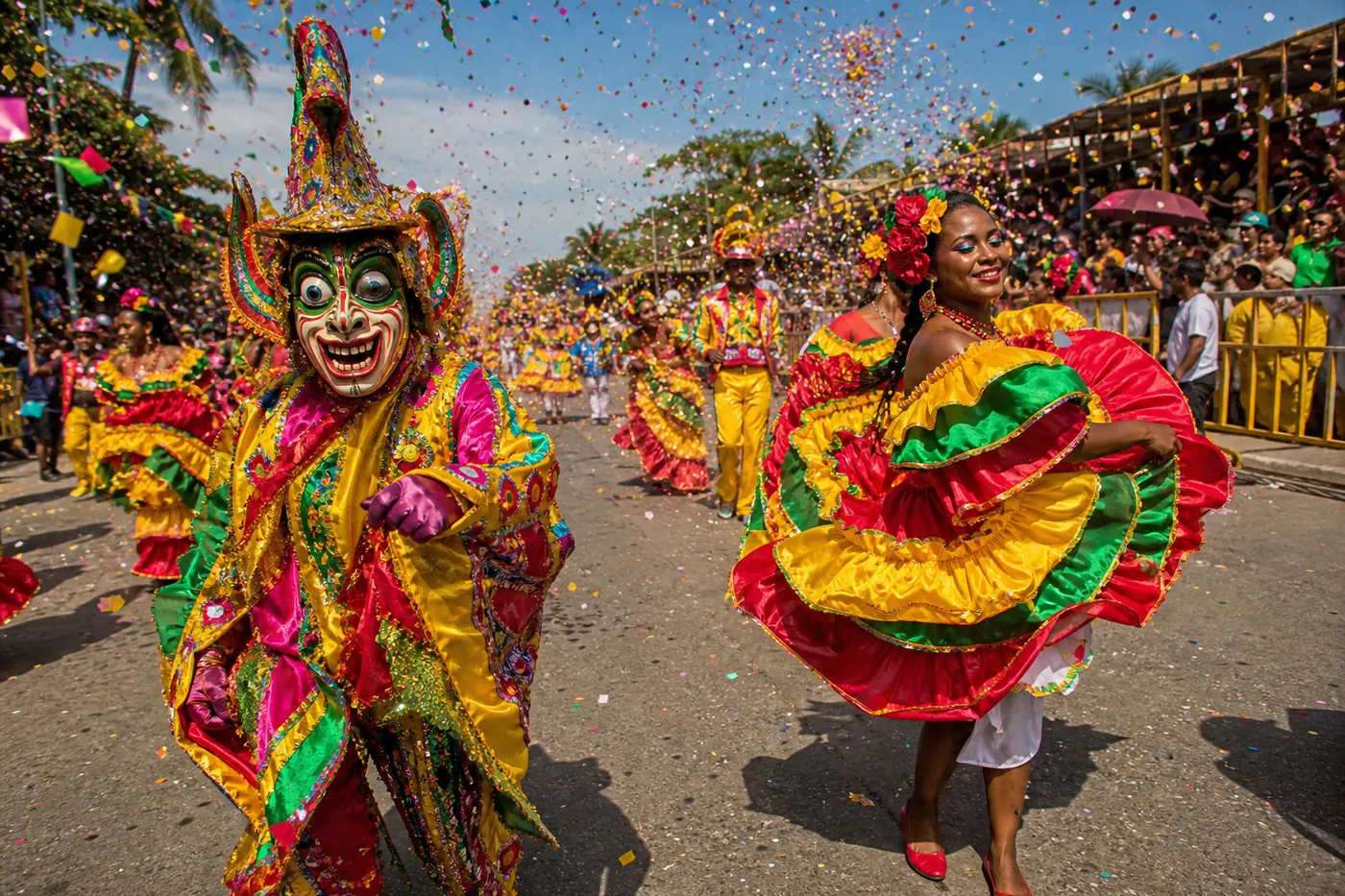
The first thing that hits you isn't the music — it's the color. Barranquilla in Carnival season looks like someone turned up a dial labeled "Colombia" past maximum. The city of 1.2 million adds several hundred thousand visitors for four days straight, and normal life basically stops.
Carnaval de Barranquilla is the second-largest carnival in the world by attendance, after Rio de Janeiro. UNESCO inscribed it on the Intangible Cultural Heritage list in 2003 — their way of saying this is too important to lose. Marimonda masks, cumbia dancers, competing vallenato from every speaker on every block, aguardiente, fried food, confetti. It's overwhelming in the best way. If you want to see real-world options right now, you can browse pets and supplies on Colombia Move — posting is completely free.
Here's the practical side: exact dates, what happens each of the four days, how to actually watch without getting lost or spending a fortune, what to wear, and how to plan your trip around it.
What to Know First
- Carnaval de Barranquilla runs the 4 days before Ash Wednesday — typically late January to early March
- 2027 dates: Saturday March 9 through Tuesday March 12
- Four official events: Batalla de Flores (Sat), Gran Parada (Sun), Gran Carnaval (Mon), Muerte de Joselito (Tue)
- Book accommodation 3–6 months ahead — the city fills up completely
- Bleacher tickets cost COP 150,000–400,000 per day; street watching is always free
What Is Carnaval de Barranquilla, Actually?
It's not a single parade. People unfamiliar with Barranquilla's carnival assume it's a weekend spectacle you can drop into like Medellín's Feria de las Flores. It isn't. It's four full days of official events, plus weeks of pre-carnival activities that begin long before visitors arrive. Barranquilleros don't wait until Saturday to start celebrating.
The carnival draws on three cultural roots: African rhythms brought to the Caribbean coast by enslaved peoples, Indigenous traditions from the Zenú and other groups, and Spanish colonial influences. The result sounds, looks, and feels unlike anything else in South America. Mapalé, cumbia, porro, vallenato — styles that developed in specific coastal towns converge here. The whole thing carries genuine weight for the people who live it.
If you go in treating it as a cultural institution rather than a tourist product, you'll get a lot more out of it. Locals have been rehearsing their comparsas and finishing their costumes for months by the time you arrive. The energy is real.
Carnival Dates and Annual Schedule
Carnival falls exactly four days before Ash Wednesday, which shifts each year based on the Easter calendar. Here's a quick reference for upcoming years:
| Year | Carnival Dates | Ash Wednesday |
|---|---|---|
| 2026 | Feb 14–17 | Feb 18 |
| 2027 | Mar 9–12 | Mar 13 |
| 2028 | Feb 26–Mar 1 | Mar 1 |
Pre-carnival events typically begin two to three weeks earlier: the Coronación de la Reina del Carnaval (the crowning of the Carnival Queen), neighborhood pre-carnavales, and the Noche de Gaitas. These are genuinely worth attending if you're arriving early — the Queen's coronation at the Metropolitano stadium is a spectacle in itself.
The Four Official Days (And What Actually Happens)
Each day of carnival has its own character. Understanding the structure makes it much easier to plan which events you actually want to attend.
Sábado — La Batalla de Flores
The opening parade along Vía 40, Barranquilla's main parade route near the Magdalena River. The Carnival Queen rides at the front, followed by floats, cumbia dance troupes, marimonda groups, and African-influenced ensembles. "Battle of Flowers" means exactly what it says — you get pelted with carnations and confetti. This is the most ticketed, most photographed event and the one to prioritize if you're only attending one day.
Domingo — Gran Parada de Tradición y Folclor
The folk and tradition parade. Slower and more rooted than Saturday — Indigenous groups, African diaspora dances, and coastal traditions going back centuries. Saturday is the spectacle; Sunday is the substance. If the cultural history interests you more than the party energy, Sunday is your day and the bleachers are slightly easier to book.
Lunes — Gran Carnaval
The biggest parade of the four. More floats, more dance groups, the city fully in motion. Monday is a national holiday, and the streets near the route turn into one continuous party zone that runs well into the night. This is also when neighborhood celebrations across the city hit full intensity — if you know any locals, this is the day to follow them rather than the official parade.
Martes — La Muerte de Joselito
The strangest and most memorable day. Joselito Carnaval — the mythological character who embodies the celebration — symbolically "dies" at the end, marking the transition to Lent. Groups carry a coffin through the streets while women cry dramatically in costume, the whole thing theatrical and oddly moving. It's the closing ceremony of something the city has been building toward for weeks, and even if you don't fully follow the tradition, the emotion in it is genuine.
How to Watch: Bleachers, Palcos, and the Street
You have three real options, and mixing them is the right move for most first-timers.
Viewing Options at a Glance
- Bleachers (graderías): COP 150,000–400,000/day — a real seat, a clear sightline, some shade. Book via Ticketmaster Colombia or the official Carnaval de Barranquilla website. Sell out months early.
- Palcos (private boxes): COP 500,000–2M+ per person per day. Premium views and sometimes food service. Usually requires early purchase or corporate connections. Not necessary for most visitors.
- Free street watching: Arrive by 6–7am for a workable spot along Vía 40. You'll stand for 5–6 hours packed in — but the energy is unlike anything bleacher seats deliver.
Best approach for first-timers: one bleacher day (Saturday or Monday) + one free street day.
Honestly, the bleacher experience is more comfortable but more passive. Street watching means you're inside it — confetti on your face, strangers offering you aguardiente, cumbia happening three feet away. The discomfort is part of the experience.
What to Wear (Or Buy When You Get There)
Barranquilla is coastal and hot — 32–35°C during Carnival with Caribbean humidity. Costume is optional but strongly encouraged. Showing up in plain clothes while everyone around you is in full regalia feels slightly wrong, and it's genuinely more fun when you lean in.
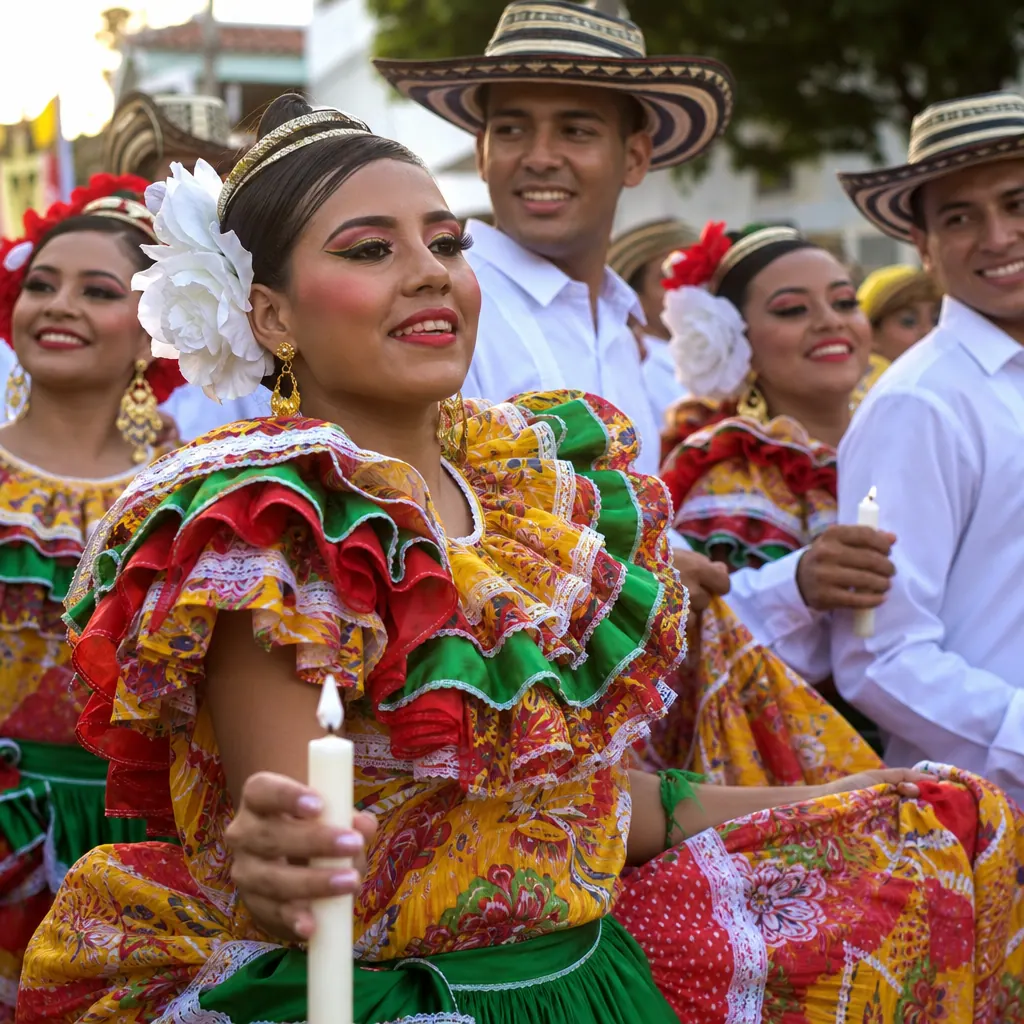
The most recognizable Barranquilla Carnival character is the marimonda: a mask with an exaggerated long nose and big floppy ears, worn with polka-dot overalls. It originated as a way for people to mock the wealthy and elites — which explains why it became so beloved. Masks and costumes sell from COP 30,000–80,000 at street vendors everywhere in the days leading up to the event. Other popular options: disfraz de cumbiera (the female cumbia dancer with layered skirts and white candles), Congo warrior ensembles, or just bright colors with a sombrero vueltiao.
Practicalities: closed-toe shoes (the streets get rough and wet), actual sunscreen you'll reapply, a small crossbody bag rather than a backpack, and cash. Most carnival street vendors don't take cards, and ATM lines get long.
Getting There, Staying, and Staying Safe
Flights to Barranquilla arrive at Ernesto Cortissoz Airport (BAQ), which has direct connections from Bogotá (under an hour), Medellín (55 minutes), and a few international routes. Avianca, Latam, and Wingo all serve it. Book at least two months out — prices spike badly in the week before Carnival and comfortable itineraries disappear fast.
Accommodation books out completely during Carnival week. This is not an exaggeration. The city doesn't have the hotel inventory of Cartagena or Bogotá, and Carnival is when everyone — the entire country plus international visitors — arrives at once. Book 3–6 months in advance. Airbnb works well for central stays; look in El Prado, Ciudad Jardín, or Buenavista for walkable options. Expect COP 250,000–600,000 per night during Carnival versus COP 80,000–150,000 the rest of the year.
For safety: Carnival brings the same rules any Colombian city requires, amplified. Keep your phone in a front pocket or zipped bag. The official parade zones along Vía 40 are well-policed. After midnight, stick to established party venues and use Uber or registered taxis rather than walking unfamiliar streets.
Travel insurance is worth having — you're in packed crowds in 35-degree heat, and medical costs can escalate fast in Colombia without coverage. SafetyWing's Nomad Insurance covers short-term travelers at a flat monthly rate and includes medical and emergency evacuation — it's one of the most cost-effective options for a trip like this.
If you're still deciding whether Barranquilla is worth the trip on its own, the city has more going on than most expat guides acknowledge. Rent is significantly lower than Medellín or Bogotá, the food is genuinely excellent, and the costeño pace of life is a different Colombia than the interior cities offer.
For a broader look at getting around the country to reach the Caribbean coast, check the domestic flights guide — useful for comparing what Wingo versus Avianca actually costs on the Bogotá–Barranquilla route, which fluctuates a lot.
Frequently Asked Questions
❓ When is Carnaval de Barranquilla?
The four days immediately before Ash Wednesday. In 2027, that's March 9–12; in 2028, approximately February 26 through March 1. The exact window shifts each year with the Easter calendar, so confirm dates around 6 months before the year you're planning to attend.
❓ Is Barranquilla Carnival safe for tourists?
Yes — it's one of the most-attended events in South America and the official parade zones are well-policed. Standard precautions apply: use a crossbody bag, don't display expensive cameras openly in dense crowds, and avoid unfamiliar streets after midnight. The same rules that apply in any large Colombian city apply here.
❓ Do I need tickets to go to Carnaval de Barranquilla?
No, not for street watching — the parade routes along Vía 40 are free to observe from the sidewalk. Bleacher seats (graderías) cost COP 150,000–400,000 per person per day and require advance purchase via Ticketmaster Colombia or the official carnival website. They sell out months before the event, so don't wait.
❓ How is Barranquilla Carnival different from Carnaval de Río?
Both are pre-Lent carnivals but the cultural roots are completely different. Barranquilla's is Caribbean — built on African, Indigenous, and Spanish coastal traditions — rather than Brazilian samba culture. Barranquilla is considerably more accessible: you can stand on the street for free, costs are lower, and the city feels more participatory than Rio's stadium-style sambódromo setup. It's also much easier logistically for travelers already in Colombia.
❓ Where can I get more specific advice about attending Carnival?
The Colombia Move community has people who've attended multiple times and can give current advice on tickets, accommodation, and neighborhoods. Ask your question there and you'll usually hear back from someone with firsthand experience.



Comments
Loading comments...
Checking sign-in status...