
Motorcycle Helmets and Riding Gear in Colombia: Mandatory Certifications and Safety Rules
What foreign riders need before a Colombian checkpoint: legal helmet standards, strap and visor rules, night reflective gear, the abolished plate-sticker rule, and what a C.24 fine means.
IDIOMA DEL ARTÍCULO
Showing original language
Picture a highway checkpoint on a holiday Sunday: a police officer waves you over, glances at your helmet, then at the sticker inside it. If you rode in from abroad on a vintage "look" helmet with no certification label, that glance can cost you a fine and your motorcycle. I'll walk through what Colombian law actually requires, what it doesn't, and where riders get caught out.
Quick answer: your helmet must carry a DOT (FMVSS 218), UN ECE 22.05/22.06 or Colombian NTC 4533 label, be fully on your head with the strap buckled under the jaw, and you need reflective gear between 18:00 and 06:00. You do not need your plate number on the helmet any more.
The legal framework in plain English
Two rules do most of the work. Resolución 20203040023385 from the Ministerio de Transporte sets the minimum conditions for how riders and passengers wear a helmet. According to the ANSV (ansv.gov.co), it applies to drivers and passengers of motorcycles, motocarros, mototriciclos and cuatrimotos, and it took effect on 23 January 2021. Resolución 1080 de 2019 is the technical regulation: it says which helmets can be imported and sold at all.
The penalties sit in Ley 769 de 2002, the national traffic code. Think of it this way: one rule covers how you wear the helmet, one covers what helmet you can buy, and the traffic code covers what happens when you break either.
The three helmet rules officers check
Resolution 20203040023385 boils down to three things:
- Full immersion: your head must be completely inside the helmet, not perched on top like a bowl.
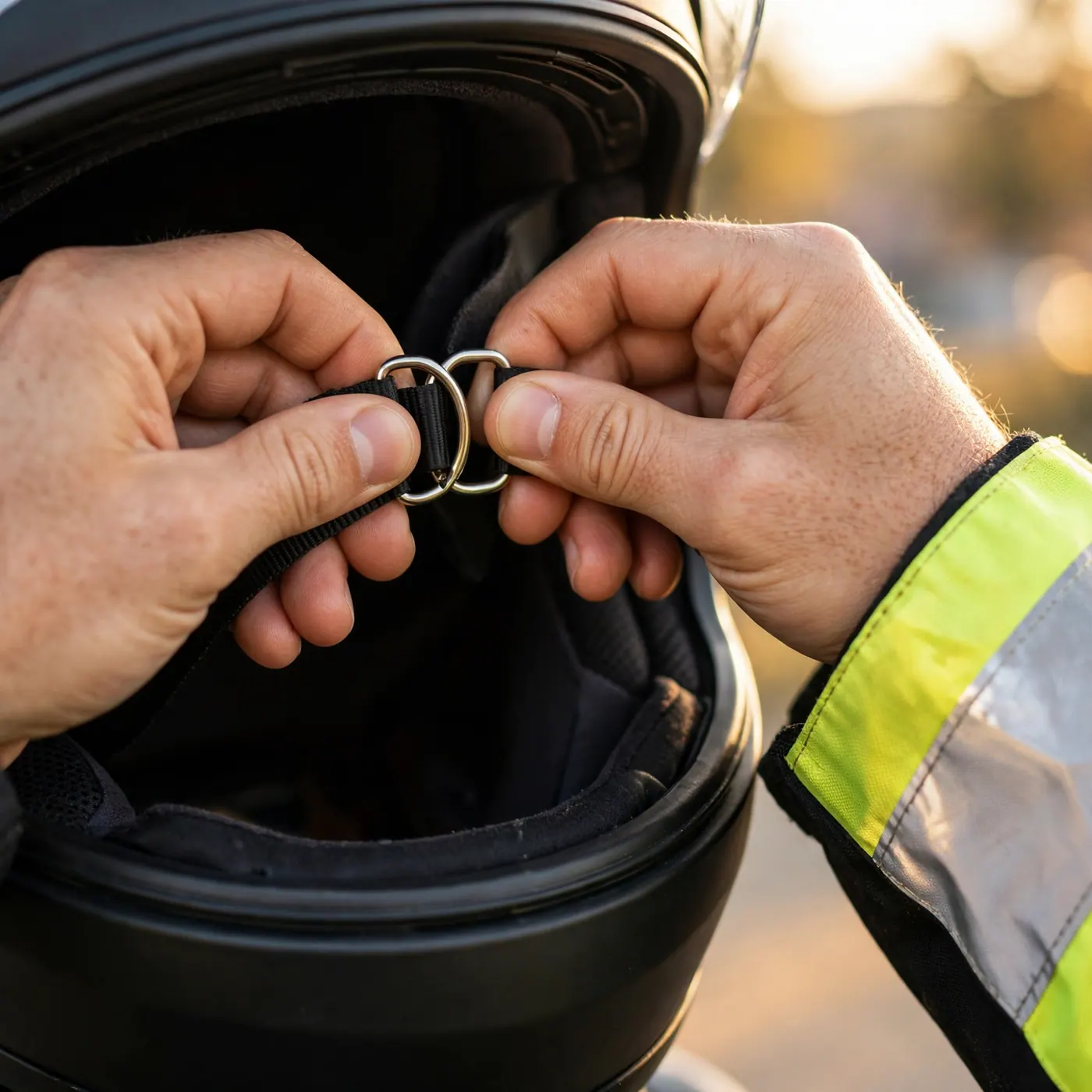
- Retention strap fastened beneath the lower jaw, with no damaged clasps or broken straps.
- Modular (flip-up) chin bars locked down while the bike is moving.
Flip-up helmets are legal. Riding with the chin bar raised is not. The same goes for open-face (jet) helmets: they are allowed if they carry a genuine DOT, ECE or NTC label, although a full-face lid protects far more of your jaw.
One more trap for people who ride with a navigation voice or music: wedging a handheld phone between your ear and the shell is an explicit violation. Bluetooth communicators and integrated intercoms are fine because they are hands-free.

Which certifications count (and how to spot fakes)
Resolution 1080 of 2019 recognizes helmets certified under US DOT (FMVSS 218), European UN ECE 22.05 or 22.06, or Colombian NTC 4533, and requires a permanent exterior compliance label. According to MinTransporte (mintransporte.gov.co, March 2023), a later amendment was issued so that helmets meeting the newer UN regulation could be sold in Colombia. In practice, a DOT or ECE helmet you bring from home is legal here without local re-testing.
| Standard | Where it comes from | Accepted in Colombia |
|---|---|---|
| DOT (FMVSS 218) | United States | Yes |
| ECE 22.05 / 22.06 | UN regulation, used in Europe | Yes |
| NTC 4533 | Colombian technical norm | Yes |
| Decorative "novelty" half-shell | None | No |
My blunt advice: skip any helmet without a stitched or permanently fixed label. A sticker that peels off with your thumbnail, a label with no approval number, or a price that is far too low are all red flags. Novelty skullcaps lack the labels and are not legal on public roads.
Reflective gear after dark
Between 18:00 and 06:00, and whenever visibility is poor (heavy rain, fog), both the rider and the passenger need reflective gear. A dedicated vest works. According to a MinTransporte legal opinion, a motorcycle jacket with integrated retroreflective elements also works. The law asks for retroreflective capability, not a specific color, so you do not need a yellow vest if your jacket has proper reflective panels.
Honest downside: many good touring jackets have only token reflective piping, and some officers will not be impressed. I carry a cheap packable vest in the top case so the argument never starts.
The license plate sticker myth
For years riders had to print the plate number on the helmet and vest. Ley 2251 de 2022 (Ley Julián Esteban) removed that obligation. Cali's Secretaría de Movilidad has also clarified that agents cannot demand plate lettering or cite you for lacking it. If someone at a checkpoint says otherwise, stay calm, cite the law politely, and do not pay anything on the roadside.
Fines and impoundment
Riding without an approved helmet or violating the helmet rules falls under infraction C.24 of Ley 769 de 2002: 15 salarios mínimos legales diarios vigentes (SMLDV), roughly COP 630,000 to 715,000 depending on the annual tariff liquidation. Treat that as an approximation and verify the current amount, since local surcharges vary. Article 94 also allows officers to impound (inmovilizar) the motorcycle when the driver or companion travels without a protective helmet.
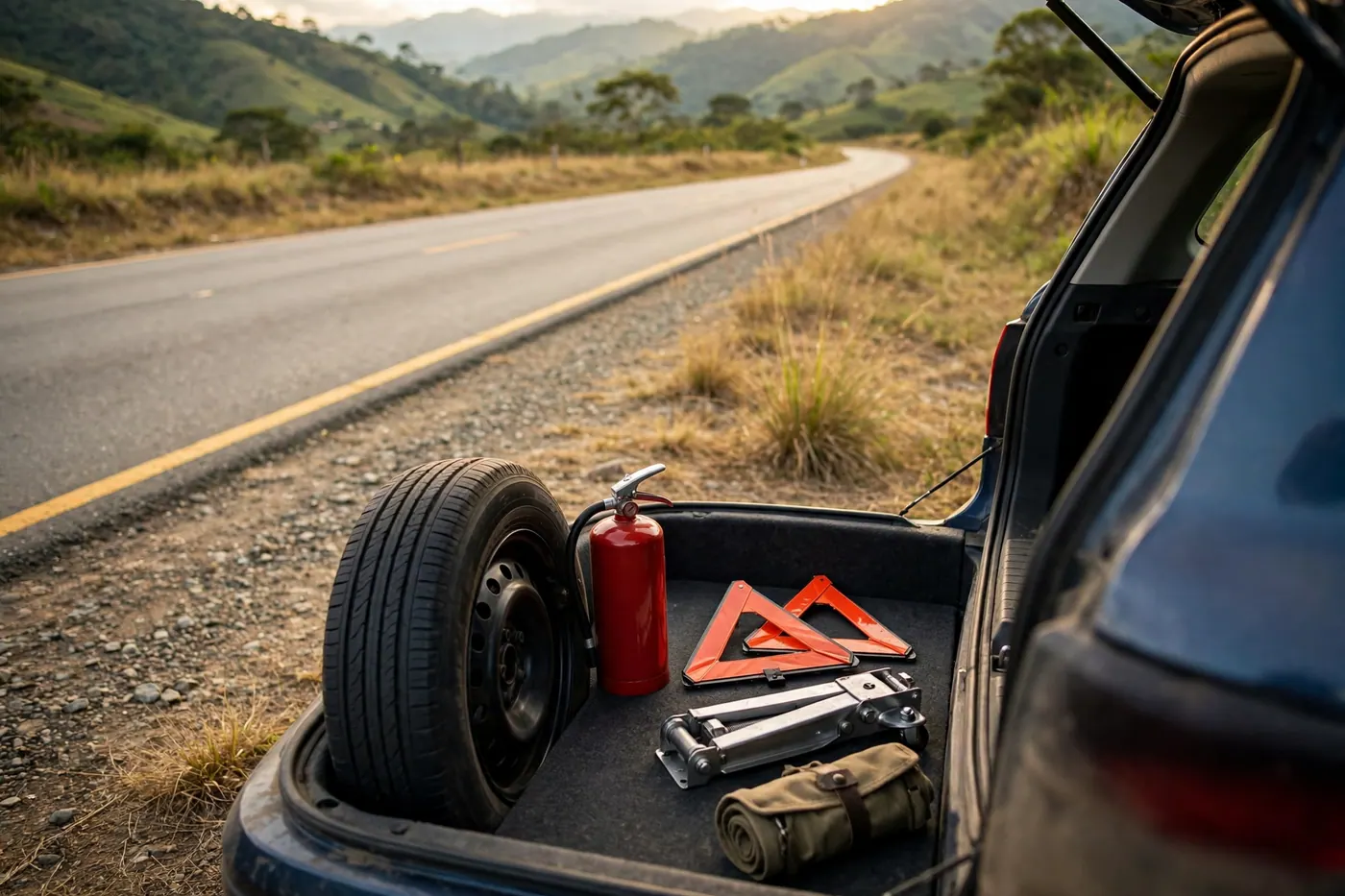
If you are still sorting out your paperwork, our guide to getting a Colombian driver's license covers licensing, and the car-oriented highway kit guide shows how similar roadside checks work for cars.
Wet weather, visors and holiday checkpoints
Andean rainy weather and long holiday weekends, such as the November All Saints' bridge, are when intercity corridors fill up. Highway police (DITRA) run heavier checkpoints on those weekends, and helmet labels and night gear are fair game.
Tinted or iridium visors are generally fine in clear daylight. After dark, a smoked visor impairs your vision and tends to draw scrutiny under general safety rules, so carry a clear visor or wear clear glasses. An anti-fog insert helps in rain, and fogged-up vision is the real danger here, not just the ticket.
Buying gear in Colombia
Bogotá, Medellín and Cali all have specialized motorcycle gear districts; in Bogotá, the Calle 63 area around Barrio 7 de Agosto is the known corridor, and in Medellín people look around Calle 33. I will not pin shop addresses, so check opening hours and stock before you go. Check labels in person. With second-hand gear, inspect the foam liner and shell carefully, because a helmet that has taken a hit can look perfect outside. Before buying a bike, our used motorcycle RUNT and SOAT guide explains what documents to check.
According to active listings on Colombia Move (October 2026), there are 9 active motorcycle listings, 7 of them recent, so the selection is still small and worth checking often.
Frequently Asked Questions
❓ Can I use a US DOT or European ECE helmet in Colombia?
Yes. Resolution 1080 of 2019 recognizes DOT (FMVSS 218), ECE 22.05 and 22.06, and Colombian NTC 4533. Keep the permanent label intact and visible, since officers may check for it. (verify with the official source, as accessed)
❓ Is it illegal to ride with a modular helmet open?
Yes, riding with the flip-up chin bar raised while moving is prohibited under Resolution 20203040023385. Modular helmets themselves are legal; just keep the chin bar fully closed and locked whenever the motorcycle is in motion. (verify with the official source, as accessed)
❓ Do I still need my plate number on my helmet?
No. Law 2251 of 2022 eliminated the requirement to print the plate number on helmets or reflective vests, and transit officers cannot fine you for its absence. If an agent insists, politely cite the law. (verify with the official source, as accessed)
❓ When is a reflective vest or jacket mandatory?
Between 18:00 and 06:00 and in poor visibility such as heavy rain or fog, for both rider and passenger. A vest or a jacket with integrated retroreflective panels meets the requirement; no specific color is mandated. (verify with the official source, as accessed)
❓ Are Bluetooth intercoms and helmet cameras legal?
Hands-free Bluetooth communicators and intercoms are permitted. What is illegal is wedging a handheld mobile phone between your ear and the helmet shell. Mount cameras securely so they do not compromise the helmet shell. (verify with the official source, as accessed)
❓ What happens if I ride without a certified helmet?
You risk infraction C.24 under Law 769 of 2002 and possible impoundment under Article 94. The fine is set at 15 SMLDV (roughly COP 630,000 to 715,000, approximate), and impoundment applies when no protective helmet is worn. (verify with the official source, as accessed)
❓ Are tinted or mirrored visors legal at night?
Dark or mirrored visors are generally fine in daylight, but riding with one after dark reduces visibility and commonly draws checkpoint scrutiny under general safety rules. Use a clear visor at night to avoid trouble. (verify with the official source, as accessed)
Sources
- ANSV - Resolución 20203040023385 and correct helmet use
- Resolución 1080 de 2019 - Ministerio de Transporte
- MinTransporte - updated helmet technical regulation (March 2023)
- Ley 769 de 2002 - Código Nacional de Tránsito
- Ley 2251 de 2022 (Ley Julián Esteban)
- Cali Movilidad - plate number no longer required on helmet and vest


Comments
Loading comments...
Checking sign-in status...