
How to File a Complaint for Recurrent Internet and Phone Failures with the SIC and Demand Compensation
Learn step-by-step how to file a formal PQR for continuous fixed internet failures in Colombia, demand compensation on your monthly bill under CRC Resolution 5111, and escalate to the SIC without paying early termination penalties.
IDIOMA DEL ARTÍCULO
Showing original language
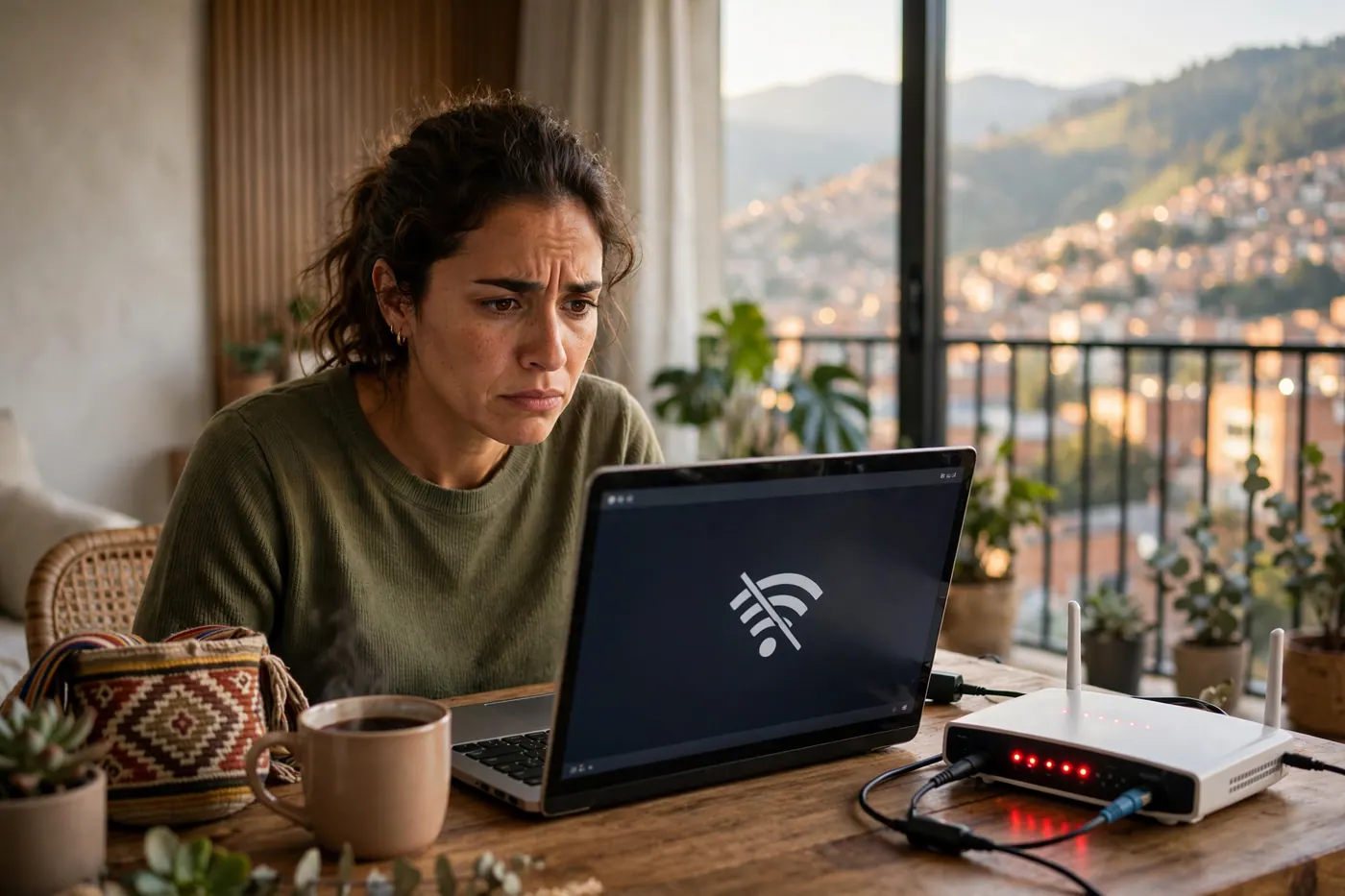
Few situations are as frustrating as sitting down to work, joining a work video call, or studying from home and discovering the modem light blinking red. In Colombia, dealing with home internet and landline outages with Claro, Movistar, Tigo, ETB, or WOM often means draining hours of calls to call centers and missed technical appointments.
However, there is a big difference between a random few-hour breakdown and a chronic or recurring failure. Colombian regulation strictly protects telecommunications users: you are not obligated to pay for a service you do not receive properly, you are entitled to automatic bill credits, and you can even terminate the contract without paying a single peso in early termination penalties if the company fails to perform.
To exercise these rights, the claim is not handled by venting over the phone with a random agent; it is processed with legal grounds before the operator and, in a second instance, before the Superintendency of Industry and Commerce (SIC).
Further reading: If your problems with utility providers involve energy, water, or natural gas, check our guide on how to dispute excessive utility charges with the Superservicios, where the deadlines and competent authorities differ from those for telecommunications. For mixed flows of payments and PQR (Petitions, Complaints, and Appeals) regarding electricity, water, gas, and internet, there is also how to pay and file complaints for public utilities in Colombia.
Your Rights under the CRC User Protection Regime
The regulatory framework governing telecommunications in Colombia is determined by the Communications Regulation Commission (CRC), mainly through CRC Resolution 5111 of 2017 (compiled in CRC Resolution 5050 of 2016). Unlike traditional public utilities (water, electricity, and gas, which are overseen by the Superservicios under Law 142 of 1994), telecommunications and fixed internet are governed by Law 1341 of 2009 and Law 1480 of 2011 (Consumer Statute), with direct oversight from the SIC.
Colombian regulations establish three fundamental guarantees regarding technical failures:
- Automatic compensation for unavailability: If the sum of internet or home landline outages exceeds two and a half hours (2.5 hours) accumulated within the same calendar month for reasons attributable to the company, the operator has a legal obligation to proportionally discount that time not provided from your billing statement.
- Unilateral contract termination without penalty: A telecommunications contract is bilateral; if the provider does not guarantee the availability, minimum speed, and continuity contracted on a sustained basis, it is in breach of contract. By law, the user is entitled to terminate the contract immediately, exempting themselves from any fee for early termination clauses.
- Right to the Unique Numeric Code (CUN) and mandatory response time: Every formal petition, complaint, or claim must be identified immediately with a unique identifier (CUN), and the company has a non-extendable deadline of 15 business days to resolve it and notify you of the decision.
Step 1: Build the Technical Evidence Log
One of the most common mistakes users make is filing a claim by simply saying: "my internet drops all the time". Before the SIC, claims without documentary support make it easy for the operator to close the case by alleging that their networks are operating normally. To secure your claim, gather evidence over at least one to two weeks of poor service:
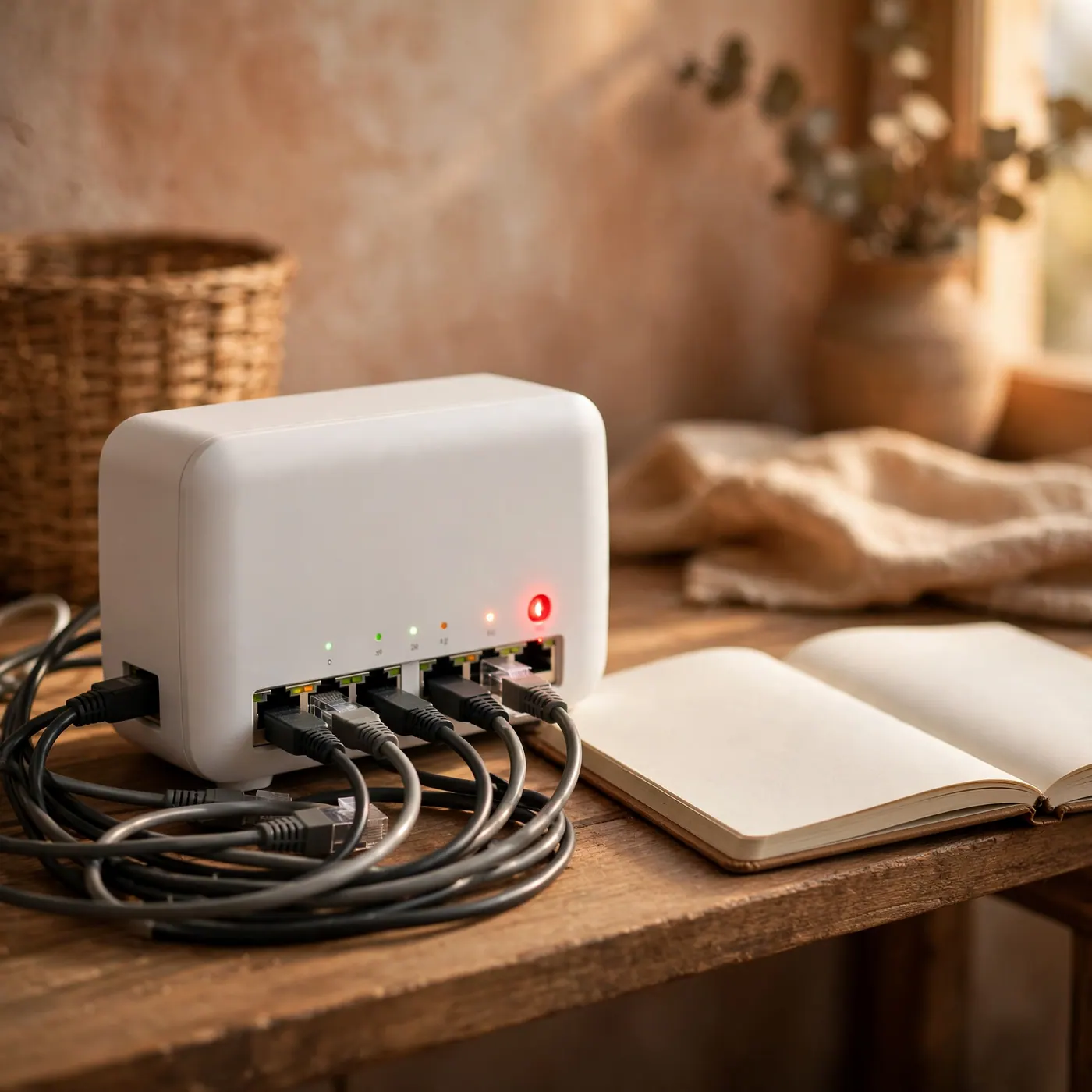
- Speed measurements connected by cable: Perform periodic speed tests by connecting a computer directly to the router via an Ethernet cable (RJ45). Save full screenshots showing the date, operating system time, latency (ping), and actual upload and download speeds compared to your contracted plan.
- Record of modem lights and status: Take photos or short videos of the home router when a disconnection occurs (for example, PON, LOS, or Internet indicator lights blinking red or turned off).
- Call history and support ticket logs: Each time you contact the support phone line or the company's virtual chat, demand the technical report number for the failure. Note the date, time, and the agent's name.
- Proof of missed technical visits: If a home visit was scheduled and the technician did not show up within the agreed time window, save screenshots of the text messages or emails that confirmed the appointment.
Step 2: File the Formal PQR and Demand the CUN
With your evidence ready, the next step is to submit a Petition, Complaint, or Appeal (PQR) formally to the operator. It is highly recommended to file it through the official web portals of Claro, Movistar, Tigo, ETB, or other providers.
When submitting the PQR, the operator is legally required to provide you immediately with the Unique Numeric Code (CUN) via text message or email. Keep this number: it is the official code used by the SIC to track the process on its platform.
Suggested template text to file your PQR
You can adapt the following basic text for the description of your claim:
ASUNTO: Petición de terminación contractual sin penalidad y compensación tarifaria por falla recurrente e indisponibilidad del servicio de internet fijo.

Yo, [Nombre completo], identificado con cédula de ciudadanía No. [Número], en calidad de titular de la cuenta/contrato No. [Número de contrato], asociado a la línea/servicio instalado en [Dirección completa del predio], presento formal PQR fundamentada en la Resolución CRC 5111 de 2017 y la Ley 1480 de 2011:

1. HECHOS: Desde el día [Fecha de inicio] el internet fijo presenta indisponibilidad que supera el umbral de 2,5 horas mensuales. A pesar de los reportes técnicos de los días [Listar fechas y radicados], el operador no restableció la continuidad pactada.

2. PRETENSIONES:
a) Aplicar de manera inmediata la compensación económica en la facturación vigente y sucesivas proporcional al tiempo total que el servicio ha estado indisponible, según lo estipulado por el Régimen de Protección al Usuario de la CRC.
b) Dar por terminado de forma inmediata y unilateral el contrato de prestación de servicios por incumplimiento de las condiciones de calidad y continuidad por parte del operador, sin que haya lugar al cobro de penalidades, multas o saldos asociados a la cláusula de permanencia mínima.
c) Expedir de inmediato el respectivo Código Único Numérico (CUN) de la presente solicitud.

Anexo: Bitácora de fallas, capturas de pantalla de velocidad y constancias de reportes técnicos previos.

Atentamente,
[Nombre y firma]
[Teléfono de contacto y correo electrónico para notificaciones]
Step 3: The Positive Administrative Silence (SAP)
Once the PQR is filed, the operator has exactly fifteen (15) business days to formally issue and notify their response to your authorized email or physical address. Keep in mind that Saturdays, Sundays, and holidays do not count toward this total.
If the 15 business days pass and the operator has not legally notified you of a substantive response, the legal figure of Positive Administrative Silence (SAP)takes effect. This means the law presumes the company has accepted all of your requests (the balance compensation and the termination of the contract without penalty).
Upon the occurrence of SAP, the law grants the company a maximum term of 72 business hours to effectively execute what you requested. If after those 72 hours the operator continues to charge you for the service or refuses to close the account, do not continue arguing with the call center: immediately file a formal complaint for failure to recognize the Positive Administrative Silence through the online portal of the Superintendency of Industry and Commerce (SIC) attaching a copy of the initial PQR with its CUN and the dated filing confirmation.
Step 4: Motion for Reconsideration and Appeal
If the operator responds within 15 business days but rejects your request (for example, claiming that "there are no mass technical failures in their system" or refusing to waive the early termination fee), you have the legal right to file a Motion for Reconsideration and Appeal in the alternative.
It is essential to respect two procedural formalities:
- Deadline: You have exactly ten (10) business days counted from the business day following the date on which you received notification of the unsatisfactory response.
- Joint filing: Both appeals must be submitted in a single document filed under the same CUN. The reconsideration appeal (recurso de reposición) is resolved by the same operator so they reconsider their decision. The appeal to a higher authority (recurso de apelación) is submitted as an alternative so that, in the event the operator insists on denying your request, they are obligated to send the complete file to the Superintendency of Industry and Commerce (SIC) so that a state delegate may reach a definitive resolution.
In your appeal, you must refute the operator's arguments by citing the technical evidence you collected (wiring tests, recorded service drops, and router photos). If the operator refuses again during the reconsideration, they must forward the entire file to the SIC to resolve the appeal.
Know your billing rights: Also check the rules regarding caps on reconnection fees for telecommunications services according to the CRC and Law 2485 if the operator arbitrarily suspended your line in the middle of your billing disputes.
Minimum Stay Clauses: How to Legally Defeat Them
Many users endure months of unstable internet for fear of the financial penalty associated with the minimum stay clause. In Colombia, the CRC completely prohibits stay clauses in mobile plans (postpaid cellular voice and data). For fixed home internet and home telephone services, companies may only impose a stay clause if they granted a verifiable discount on the installation cost or on the receiving equipment, itemizing the value to be amortized month by month.
However, the repeated doctrine of the SIC and the CRC is clear: the stay clause only binds the user if the operator complies with the contracted service. If the internet does not function according to the agreed standards or accumulates recurring outages, the company is the one failing in its essential contractual obligations. When the contractual balance is broken, the stay penalty becomes legally invalid and cannot be enforced against the user.
According to active listings on Colombia Move (September 2026), there are 8 computers and 5 technology accessories, with 672 and 325 views, respectively.
Frequently asked questions
❓ How many hours without internet must pass to be entitled to a bill compensation?
You are entitled to automatic financial compensation if the fixed internet or telephony service presents an accumulated unavailability of more than two and a half hours (2.5 hours) in the same calendar month. According to CRC Resolution 5111 of 2017, the company must apply a proportional discount on the fixed charge in the next billing cycle.
❓ How much time does Claro, Movistar, or Tigo have to respond to an internet PQR?
Operators have a mandatory legal deadline of fifteen (15) business days to formally resolve and notify the user of the decision. In this count, valid in 2026 according to the SIC, Saturdays, Sundays, and public holidays in Colombia are excluded.
❓ What can I do if the operator never responded to my claim within 15 business days?
The Positive Administrative Silence (SAP) is automatically triggered, meaning your request is legally understood to be approved in your favor. The company has 72 business hours to implement what was granted; if they fail to do so, report the breach of the SAP on the SIC portal (source consulted in September 2026).
❓ Can I cancel the contract without paying the stay clause if the internet fails constantly?
Yes, you can terminate the contract unilaterally without paying penalties if you prove the unavailability or repeated failure of the service. The CRC regime (CRC Resolution 5111 of 2017) and the Consumer Statute exempt the user from the stay clause when the operator fails to provide continuity and quality.
❓ What is the CUN and why is it mandatory when filing a complaint?
The CUN (Unique Numeric Code) is the official identifier regulated by the CRC that individualizes and authenticates your procedure before the company and the SIC. The representative or virtual channel is under a strict obligation to provide it to you instantly so you can track and escalate the case, according to CRC 5111 of 2017.
❓ What do I do if the operator replies that the failure was due to "force majeure" or third-party damage?
Even if the operator claims external causes or public order issues to mitigate regulatory sanctions, they cannot charge you for a service they did not provide. The compensation or discount on the bill for the downtime remains mandatory, in accordance with CRC Resolution 5111 of 2017.





Comments
Loading comments...
Checking sign-in status...