
How to Report Excessive or Abusive Water and Electricity Reconnection Fees to Superservicios
Discover how to stop improper water and energy reconnection charges in Colombia using Law 142 of 1994, Positive Administrative Silence, and the Te Resuelvo portal.
IDIOMA DEL ARTÍCULO
Showing original language
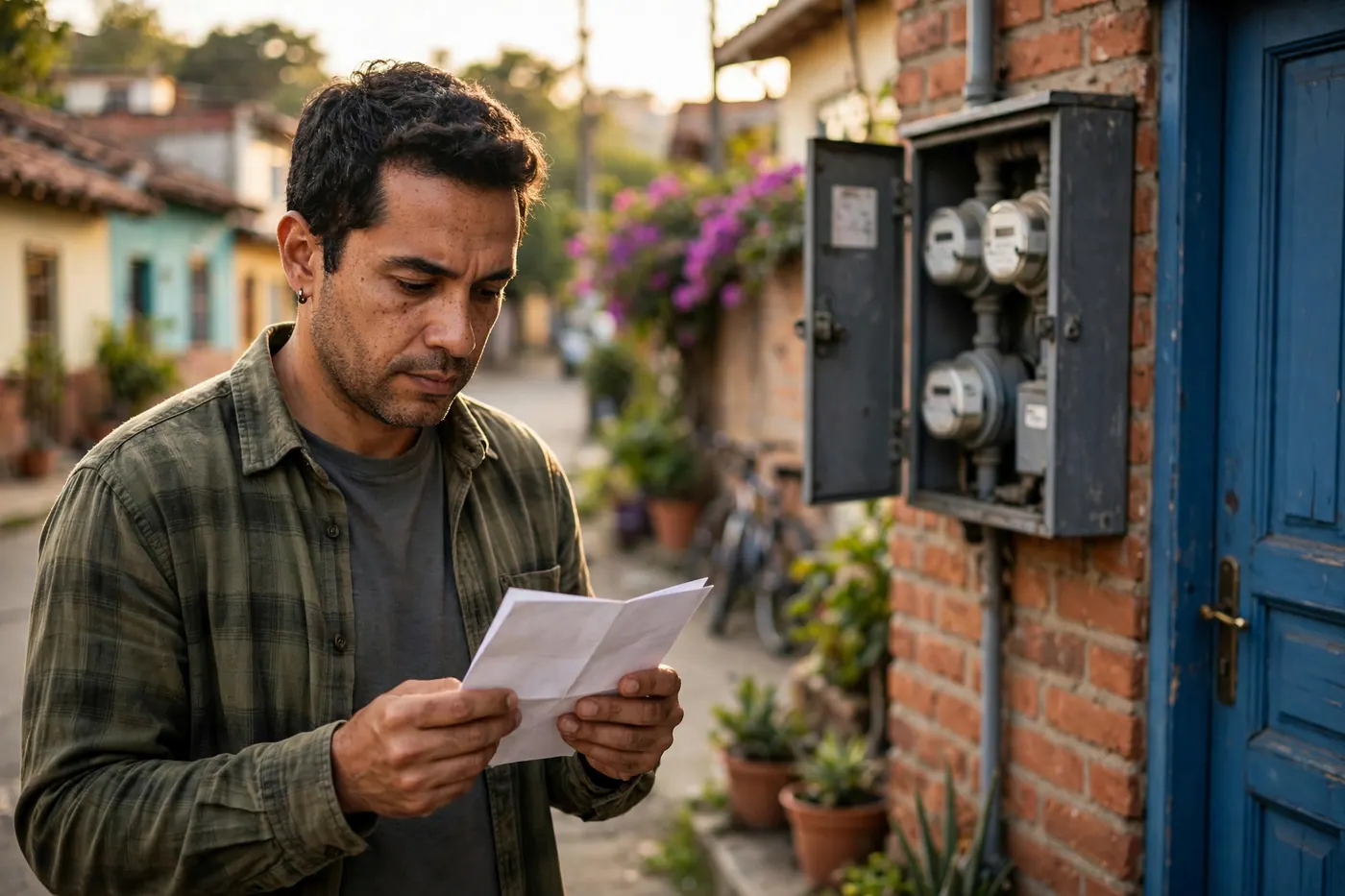
Few things are as frustrating in daily life in Colombia as paying a past-due water or electricity bill, verifying that the supply was never physically cut, and, the following month, finding a surprise reconnection or reinstallation charge. For thousands of households, tenants, and property owners, these amounts are not only disproportionate to the monthly bill but manifestly illegal.
There is a widespread belief that public utility companies have the final word and that it is useless to fight reconnection fees. However, the Colombian regulatory framework grants powerful legal tools to dismantle unjustified charges. In this guide, we explain when a reconnection fee violates the law, how to demand a breakdown of your bill to pay only your usual consumption without having your service suspended, and how to take the case to the Superintendence of Residential Public Services (Superservicios) through legal appeals and the declaration of Positive Administrative Silence.
When a water or electricity reconnection fee is illegal in Colombia
The starting point for any claim is Article 96 of Law 142 of 1994. This rule authorizes service providers to charge for reconnection or reinstallation only to compensate for real and efficient costs incurred by the entity to restore the service. The law is categorical: the reconnection fee is not a sanction, it is not a criminal fine, and it cannot generate commercial profit for the public utility company.
Under the regulations in effect in 2026, a water or energy reconnection charge is illegal under any of the following circumstances:
- Absence of material suspension: If you paid the outstanding balance before the technical crew physically intervened in the connection or the meter, the company cannot charge you for reconnection. The charge requires a work order executed in the field with a real seal or cut; it does not apply due to simple suspension notices in the commercial system.
- Payment channel failures or banking errors: If the payment did not arrive on time due to problems with the entity's web gateway or operational delays by the financial collector, the user cannot be penalized with reconnection costs.
- Charges exceeding the schedule of efficient costs: Companies cannot set arbitrary rates. The values must strictly correspond to the tariff regime regulated by the Potable Water and Basic Sanitation Regulatory Commission (CRA) and the Energy and Gas Regulatory Commission (CREG), reflecting real technical costs.
To know in detail the technical difference between preventive suspension and definitive cut, consult our guide on the reconnection fee rules according to the Superservicios.
Your right to challenge without having your service cut (Article 155)
The most recurring fear of users is that, when filing a claim for an unjustified reconnection charge, the company will proceed to cut the water or electricity supply due to default. Colombian legislation expressly provides for this situation to protect the citizen.
The Article 155 of Law 142 of 1994 establishes that no company can demand the prior payment of the sums under claim as a requirement to process a petition, complaint, or appeal. Furthermore, the operator cannot suspend the service based on the disputed amount, provided that the subscriber pays the non-disputed concepts or the average consumption of the last five billing periods on time.
In practice, if you receive a bill that includes a disputed reconnection charge, you should go to the entity's customer service channels or file a formal request to have a provisional payment coupon or slip issued for the non-objected consumption. The exact value of that charge depends on each provider's tariff schedule, not on a national cap in pesos. While the PQR and subsequent appeals are in progress, that disputed item enters a state of legal freeze and does not generate late interest or a cause for disconnection.

Step 1: Formal filing of the PQR with the service provider
It is not possible to go directly to the Superservicios without having exhausted the initial process with the corresponding public utility company. The law requires filing a formal Petition, Complaint, or Claim (PQR) with the provider entity.
When writing your document, gather the following supporting evidence:
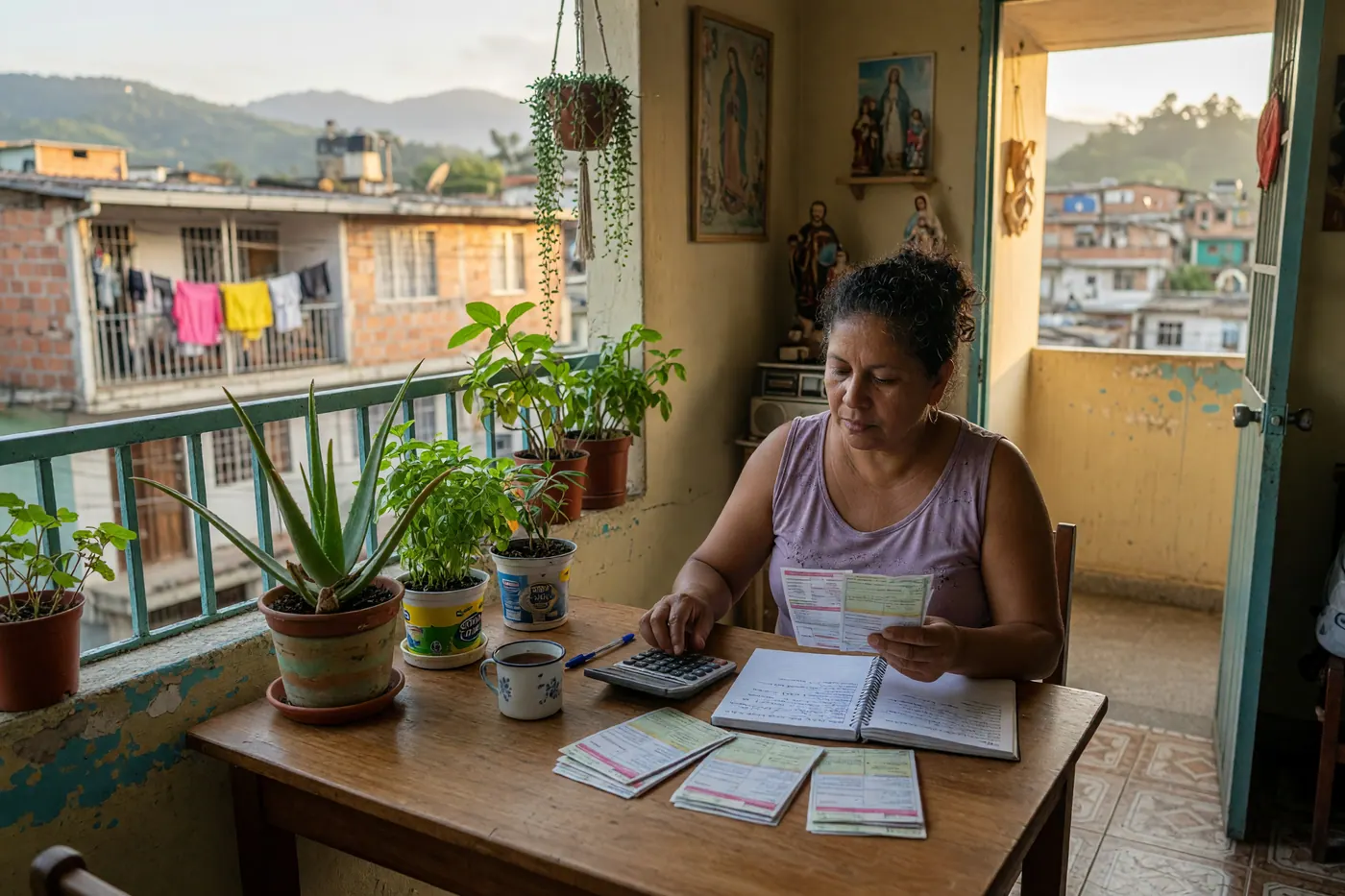
- A legible copy of the bill under dispute, clearly identifying the contract account number or subscriber code.
- Bank statement proving the exact date and time you paid the previous receipt.
- Dated and timestamped photographs of the meter or connection showing that the technical seal was not tampered with or that there was never a material disconnection of the network.
- Formal request for the technical crew's work order, demanding date, time, operator number, and visit report that justifies the alleged procedure in the field.
To facilitate this process, you can adapt the following basic draft:
Place and date: [Address of the property], [Current date in 2026]
To: [Name of the Public Utility Company]
Subject: Formal claim against improper reconnection charge (Art. 96 and 155, Law 142 of 1994)
Contract Account / Subscriber: [Account number]
I, [Your Full Name], identified with ID [Your Number], as a user of the property located at [Address], file a formal claim requesting the immediate exclusion of the charge for reconnection/reinstallation billed in the period [Month/Year] for the amount of $[Disputed Amount].
I state under oath that said charge is improper since the payment of the obligation was satisfied in a timely manner on [Payment date] and the company did not execute a material suspension of the service at the connection or the meter, as required by Article 96 of Law 142 of 1994. I request the immediate issuance of a payment slip for the undisputed value corresponding to habitual consumption (Art. 155), refraining from suspending the supply while this claim is being processed.
Notifications: [Email and phone number].
If in addition to the reconnection fee you identify distortions in the cubic meters or kilowatts billed, check the procedure to claim excessive consumption charges in public utilities.
Step 2: The 15-day deadline and the Positive Administrative Silence (SAP)
Once the PQR (Request, Complaint, and Appeal) is filed, the service provider has a mandatory term of 15 business days to provide a substantive response and notify you of the decision, in accordance with Article 158 of Law 142 of 1994. This countdown begins on the business day following the formal filing.
If 15 business days pass and the company has not provided legal notification of its response, a Positive Administrative Silence (SAP)is triggered by full right. This means that the law presumes your petition was granted in your favor in its entirety.
In such a scenario, the company loses the authority to collect the reconnection fee. However, companies rarely apply this benefit voluntarily. This is where you must turn to the Superservicios to demand that an investigation be opened and the Positive Administrative Silence be formally declared, ordering the forced removal of the debt from your credit history.
Step 3: Legal remedies if the company rejects your claim
If the company answers within the term but decides to deny your request, justifying that the charge is correct, do not give up. You have the right to file a Reposición (Replacement) and, in the alternative, an Apelación (Appeal) remedy, supported by Articles 154 and 159 of Law 142 of 1994.
Keep the following procedural rules in mind:
- 5-business-day term: You must file the written document within the five business days following the date you received the notification of the negative response. If you miss this deadline, the decision stands.
- Joint Replacement and Appeal: In a single document, you request that the company itself reconsider its decision (replacement) and, in the highly likely event that they maintain their refusal, you expressly order them to forward the complete file to the Superintendency of Public Utility Services (appeal) so that this entity may make a final decision.
- Complaint Remedy (Recurso de Queja): If the company irregularly denies the granting of the appeal remedy, you can directly file a complaint remedy (Recurso de Queja) with the Superservicios within the five business days following the refusal to compel the sending of the file.
How to process your complaint before the Superservicios on the Te Resuelvo portal
The Superintendency of Public Utility Services addresses user disputes nationwide in a completely digital manner through its official platform Te Resuelvo (teresuelvo.superservicios.gov.co).
To file a complaint, follow up on an appeal, or request a sanction for Positive Administrative Silence on the portal, follow these steps:
- Enter the institutional portal Te Resuelvo and select the option to file citizen procedures.
- Select the type of procedure: complaint remedy, request for declaration of Positive Administrative Silence, or report against providers.
- Upload supporting documents in PDF format: your identity document, a copy of the filed PQR with the seal or visible filing number, the company's negative response (or proof that the 15 business days passed without a pronouncement), and the latest bill.
- Provide notification details precisely: email address and personal mobile number.
Once the file is submitted, the Superservicios assigns a national registration number. The entity will verify if the company technically proved the existence of actual costs during the visit or if it violated tariff principles and due process. In the event of confirmed repeated malpractice, the Superintendency will not only order the deduction of the amount from the user's bill but may also initiate sanctioning investigations against the company for unauthorized charges.
According to the active listings on Colombia Move (September 2026), there are 48 active apartment listings and 18 room listings: those handovers and rental starts are frequently the setting for water and electricity debts and reconnection charges when handing over the keys. If the property is for rent, align your claim with the public utility guarantees in the lease contract.
Frequently Asked Questions
❓ Can they charge me for reconnection if I paid the bill before they came to cut off the service?
No, charging for reconnection is illegal if there was no effective material suspension. Article 96 of Law 142 of 1994, in force in 2026, only allows for the remuneration of actual costs of restoring service; if the technician did not interfere with the service connection or the meter, there is no chargeable operating cost.
❓ Do I have to pay the amount of the abusive reconnection charge to be able to file a claim?
No, under no circumstances. Article 155 of Law 142 of 1994, in force in 2026, prohibits requiring payment of the amount in dispute to admit the PQR. Request a coupon for the average of the non-disputed consumption and pay it on time to avoid disconnection.
❓ How much time does the water or energy company have to respond to my PQR?
The company has 15 business days from the day after the formal filing. Article 158 of Law 142 of 1994, in force in 2026, sets that term; a response notified later does not serve to dismiss your request.
❓ What happens if the water or electricity company does not respond to me within the 15 business days?
The Positive Administrative Silence applies in favor of the user. Law 142 of 1994, in force in 2026, presumes your petition is accepted and the company must remove the charge; request formal recognition before the Superservicios.
❓ Is it true that a new law fixed water and electricity reconnection at one thousand pesos or zero pesos?
No, that information is false. The caps in Law 2485, in force in 2026, apply only to telecommunications (CRC). In water, electricity, and gas, the charge follows the efficient costs of Law 142 of 1994, not a national cap of one thousand pesos.
❓ What do I do if the company improperly rejects my appeal to the Superservicios?
File a Complaint Remedy (Recurso de Queja) before the Superservicios in Te Resuelvo within the 5 business days following the rejection. Articles 154 and 159 of Law 142 of 1994, in force in 2026, allow the Superintendency to review the block and demand the submission of the file.





Comments
Loading comments...
Checking sign-in status...