
How to Dispute an Unfair Utility Bill with the Superservicios
Learn how to challenge excessive charges or significant deviations on your utility bills in Colombia without risking disconnection of service.
IDIOMA DEL ARTÍCULO
Showing original language
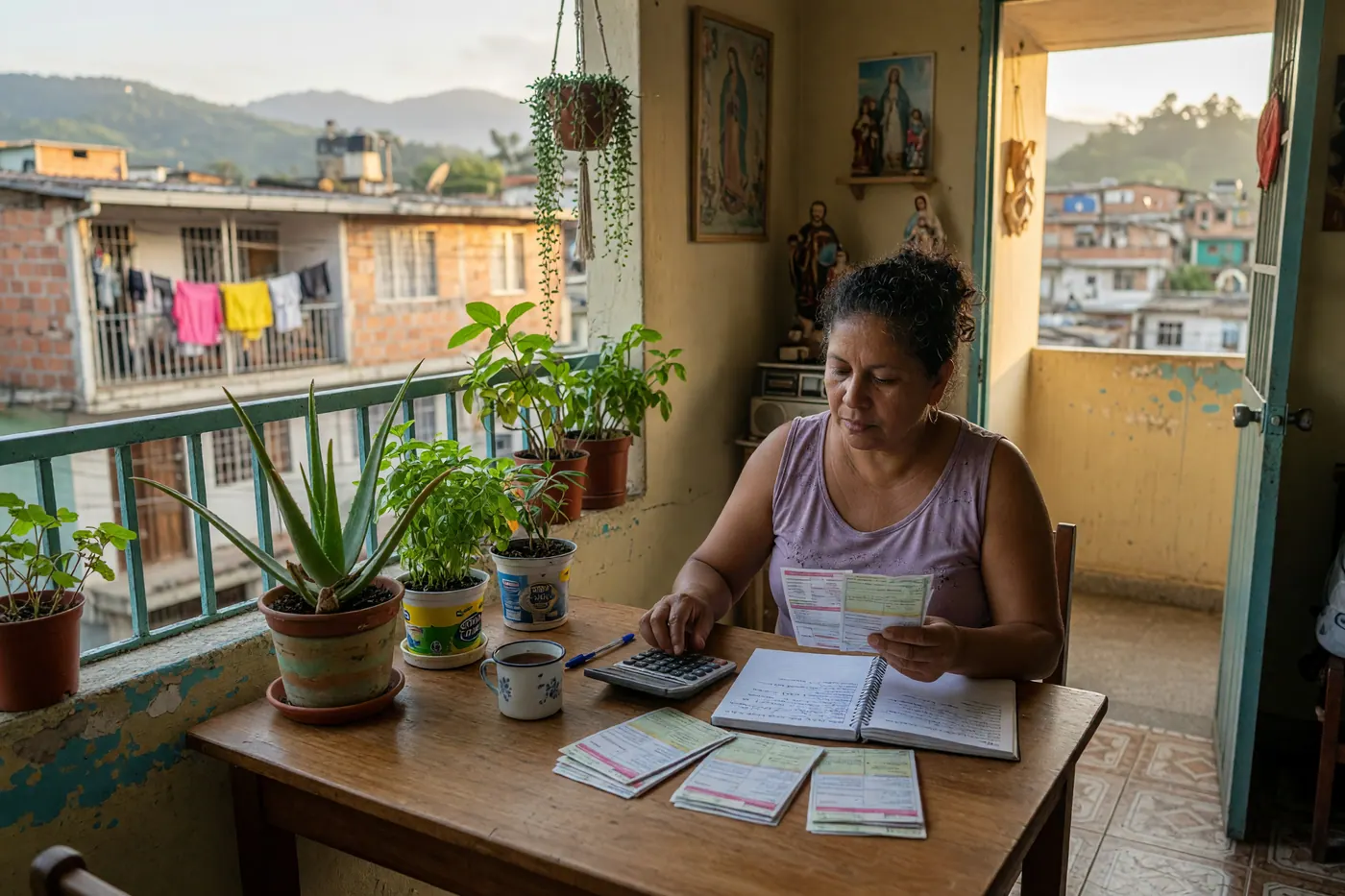
Receiving an aqueduct, electricity, or gas bill with a 200% increase for no apparent reason is a frustrating situation that thousands of households in Colombia experience every day. Faced with an excessive bill, the usual reaction is often split between paying with resignation to avoid disconnection or refusing to pay anything at all and risking a service cut. Neither of those two extremes is the right path. The Colombian public utilities regime has a secure procedure to defend users' pockets.
- Do not pay the disputed amount: You have the legal right not to pay the inflated charge while the process is resolved, but you must pay the average non-disputed historical consumption on time (Art. 155, Law 142 of 1994).
- Response deadline: The utility provider has 15 business days to resolve your formal PQR. If they fail to do so, the Positive Administrative Silence applies.
- Deadline for appeals: If the response is negative, you have 5 business days to file an appeal for reconsideration and, subsidiarily, an appeal to the utility provider (the SSPD reviews after the company refers it or via a complaint appeal if they deny the appeal).
1. Identifying the Cause: What Constitutes an Atypical or Excessive Charge?
Before filing a formal claim, it is essential to determine the nature of the charge. In Colombia, the relationship between public utility companies (ESP) and users is governed by Law 142 of 1994, which establishes that billing must primarily be based on the individual measurement of actual consumption (Art. 146).
The most frequent reasons for dispute correspond to three specific scenarios:
- Significant consumption deviation (Art. 149): Occurs when the billed volume differs drastically from the average of the last three periods in bimonthly billing or six months in monthly billing. The law prohibits charging this atypical amount immediately without first conducting a technical investigation into the causes of the increase.
- Untimely or late charges (Art. 150): Companies cannot charge for services provided more than five months late, unless fraud or bad faith on the part of the subscriber is proven.
- Unauthorized concepts or measurement failures: Charges for insurance, uncontracted home assistance, arithmetic errors in reading the meter, or incorrect application of the socioeconomic stratum. To verify if your base rate and subsidies correspond to your home, consult our guide on how to calculate the cost of public utilities by stratum in Colombia.
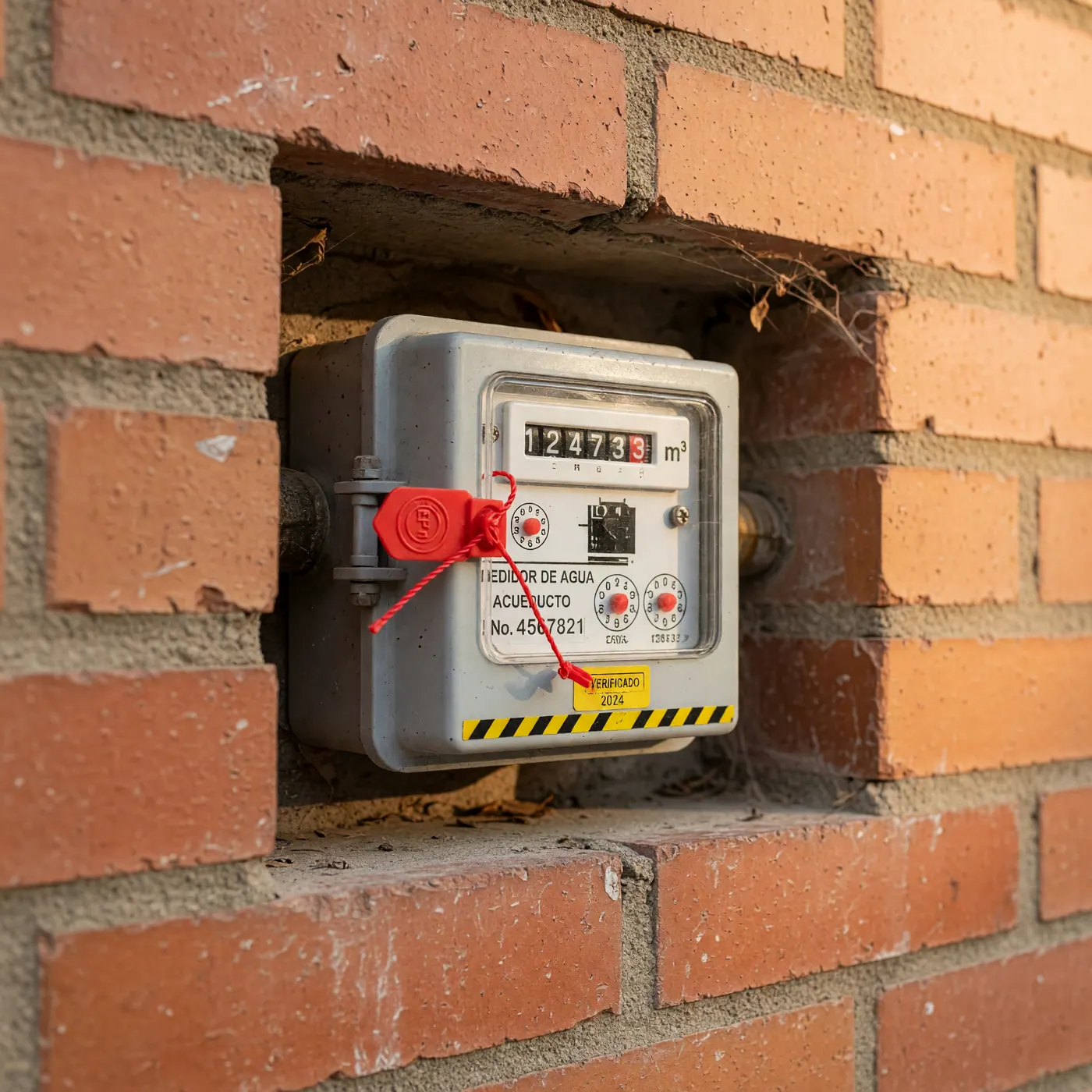
Watch out for internal leaks: if the meter registers consumption because there is a breakdown in the private installations of your house or apartment (broken pipes, defective toilet floats), the law attributes that loss to the user once the company verifies that the meter is operating within the permitted margin of error. In case of suspected invisible leaks, it is advisable to rely on maintenance professionals; in our guide for hiring home maintenance and repair services in Colombia we explain how to rule out structural damage before accepting the charge.
2. The Golden Rule: How to Avoid Disconnection by Paying the Non-Disputed Amount
The biggest fear when complaining is suffering a supply suspension. However, Article 155 of Law 142 of 1994 establishes categorical protection: no public utility company can demand prior payment of the sums under dispute to receive, process, or resolve the disagreement, nor can they suspend service for failing to pay the amounts in litigation.
To exercise this guarantee without falling into arrears, you must follow this procedure:
- Request a provisional bill or breakdown: Go to the virtual or physical customer service office of the provider and demand a partial payment bill that excludes the disputed amount.
- Pay the usual historical average: Pay the non-disputed concepts (legitimate fixed charges, garbage collection, non-disputed sewage, and the equivalent of the average of your normal historical consumption) by the usual deadline.
- Keep the receipt: By keeping non-disputed obligations up to date, the company is legally barred from ordering a cut-off.
If the company attempts to suspend the service arbitrarily while the claim is in formal process, it commits a sanctionable offense. Remember that if an irregular interruption should occur, the charges for restoration must adjust to the regulations we analyzed in our article on the rules of the Superservicios for reconnection charges.
3. Step by Step: Filing the Petition or PQR with the Company
The defense process consists of strict stages. You cannot go directly to the Superintendency of Public Utilities (SSPD) without having previously exhausted the claim with the utility company (EPM, Enel, Vanti, Acueducto de Bogotá, Triple A, Air-e, Afinia, etc.).
| Procedural Stage | Receiving Authority | Legal Deadline | Main Effect |
|---|---|---|---|
| 1. PQR / Petition | Utility company (ESP) | Up to 5 months after billing | Requires technical visit and consumption inspection. |
| 2. ESP Response | Utility company (ESP) | 15 business days (Art. 158) | If not notified within the deadline, Positive Administrative Silence applies. |
| 3. Reconsideration and Appeal | Utility company (ESP) | 5 business days from notification | The ESP reviews; if it denies, it must refer to the Superservicios. |
| 4. Final Decision | Superservicios (SSPD) | Legal second-instance term | Definitive ruling: recalculation, credit, or confirmation of the charge. |
To file a PQR (Petition, Complaint, or Claim), present a clear and respectful written document that contains:
- Full name of the subscriber or user, ID number, property address, and notification email.
- Account number, contract, or service registration number exactly as it appears on the bill.
- Precise explanation of the facts: for example, indicating that the average consumption for the last six months was 12 m³ of water or 140 kWh of energy, and that in the billed period, 48 m³ or 380 kWh were settled without any variation in the number of inhabitants or equipment in the property.
- Express request: that Article 149 of Law 142 of 1994 be applied, that the significant deviation be investigated through a technical visit with a meter check, and that the bill be recalculated, charging only the historical average while the assessment concludes.
- Documentary evidence: copy of the last three or four previous bills and a clear photograph of the meter taken on the same day of filing where the current reading is visible.
The Positive Administrative Silence (C3 and C4): In accordance with Article 158 of Law 142 of 1994 and Article 123 of Decree-Law 2150 of 1995, the company has exactly 15 business days to resolve and notify the decision. If this period expires without you having been formally notified, Positive Administrative Silence is established by law: the claim is understood to be resolved in your favor and the company is legally obligated to accept your demands within the following 72 hours.
4. What to Do if the Company Denies the Claim: Reposition and, in the Alternative, Appeal
In the event that the service provider responds negatively, claiming that the meter is functioning correctly or that the consumption is attributable to the property, do not be discouraged. The company's response is not the final word.
To continue the defense, you must present the following in a single document: Recurso de Reposición and in the Alternative, Appeal (Articles 154 and 159 of Law 142 of 1994; SSPD Concept 225 of 2025). Pay maximum attention to these critical points:
- The peremptory deadline is 5 business days: Counted from the business day following the date of notification of the response. If you let this time pass, the decision will become final and you will lose the opportunity for the Superservicios to review your case.
- A single document: In the same text, you request that the company itself reconsider its decision (reposition) and you add an express clause stating: «In the alternative to the above, in the event that this appeal for reconsideration is resolved unfavorably or partially negatively, I expressly request that the appeal be granted and that the entire administrative file be sent to the Superintendency of Household Public Services (Superservicios) for its final decision».
- Submission to the same company: The appeal must be filed through the service provider's channels, not directly at the Superservicios. It is the service provider who has the obligation to evaluate the reconsideration and, if they do not agree with you, formally send the records to the SSPD.
What happens if the company improperly refuses to grant the appeal, arguing untimeliness or other reasons? In that case, you have a period of 5 business days to file the following directly with the Superservicios: Recurso de Queja (Complaint Appeal), attaching proof of submission so that the oversight body orders the company to send the file.
5. How to File and Track the Process with the Superservicios
When the file reaches the Superintendency of Household Public Services, an interdisciplinary technical team examines whether the company respected due process, whether it complied with CREG or CRA deviation investigation protocols, and whether the charges comply with the regulated tariff framework.
Procedures before the Superservicios are completely free and do not require the hiring of lawyers or proxies. You can file supplementary procedures, track status, and submit complaints through their official channels:
- «Te Resuelvo» virtual platform: Through the single window on the official web portal (superservicios.gov.co).
- Official submission email: sspd@superservicios.gov.co.
- National toll-free service line: 01-8000-910305 (or in Bogotá at (601) 691-3006).
The decision of the Superservicios ends the administrative path. If the ruling favors the user, the company must re-invoice the period, credit the favorable balances in the following billing cycles, or reimburse the money wrongly charged.
6. Tenants and Owners: Responsibilities in Leases
Disproportionate charges frequently generate severe tensions in lease agreements. To avoid disputes between the parties, it is important to keep the following considerations in mind:
- Standing to claim: Both the property owner and the tenant (in their capacity as the direct user who enjoys the service and assumes payment) have the legal standing to file petitions, complaints, and appeals with the service provider.
- Guarantee clauses: When signing urban housing contracts under Law 820 of 2003, parties usually agree on deposits or public utility policies to safeguard outstanding debts after the property is returned. To structure these agreements legally, check out our guide on public utility guarantees in lease contracts in Colombia.
- Internal leaks or technical neglect: If an excessive increase is generated by the deterioration of hidden internal pipes not attributable to the tenant's daily use, the repair corresponds to the owner, while minor locative maintenance corresponds to the tenant.
According to active ads on Colombia Move (September 2026), the services section concentrates 48 active ads and nearly 4,900 visits in the last month — a sign of demand from owners looking to manage properties with greater documentary clarity and hire qualified technicians for preventive hydro-sanitary and electrical inspections.
Frequently Asked Questions
❓ Must I pay the full bill before filing a claim for excessive charges?
No, Colombian law prohibits requiring the payment of disputed amounts as a condition for processing a claim (Article 155 of Law 142 of 1994). However, it is mandatory to pay non-contested amounts and the habitual historical average of recent consumption on time to avoid the legal suspension of the service.
❓ How much time does the utility company have to respond to my claim?
The service provider has exactly 15 business days starting from the day following the formal filing of the petition or PQR. This peremptory term is set by Article 158 of Law 142 of 1994 and Article 123 of Decree-Law 2150 of 1995.
❓ What happens if the company does not reply within 15 business days?
Positive Administrative Silence is automatically established in favor of the user. This means the law assumes the company accepted all the demands of your claim, so it is obligated to re-liquidate the invoice and desist from the contested charges.
❓ How much time do I have to file for reconsideration and appeal if they reject my claim?
You have a strict deadline of 5 business days from the formal notification of the company's decision. You must present the reconsideration appeal and, subsidiarily, the appeal in the same document to the service provider; the SSPD reviews after referral or by complaint if they deny the appeal.
❓ Can I appeal directly to the Superservicios in the first instance?
No, the appeal must be submitted directly to the same utility company that issued the bill. The provider will evaluate the request for reconsideration, and if they decide to maintain the charge, they are legally obligated to forward the entire administrative file to the Superservicios.
❓ Is there any cost to file a claim with the Superservicios, or do I need a lawyer?
The process is completely free and does not require intermediaries or legal counsel. Any citizen can file their petitions and appeals directly through the virtual or physical platforms enabled by the Superintendency.





Comments
Loading comments...
Checking sign-in status...