
How to Offer Sewing, Tailoring, and Custom Clothing Services at Home in Colombia
If you already sew, alter clothes, or make garments to order, this guide explains how to classify your trade, when to register, how to set up your price list, and how to receive the client's garment without complications.
IDIOMA DEL ARTÍCULO
Showing original language
A client arrives with a canvas pair of pants that are too long for her, another needs a zipper changed before Friday, and a neighbor asks if you can "take up a hem" for him. If you already have a machine and good hands, the problem is almost never sewing. It's getting found, getting paid without giving the work away, and not getting tangled up with someone else's garment. Here is the practical route, with what is verified and no invented rates.
Quick answer: Classify your trade correctly (alterations or tailoring), register with the Chamber of Commerce once the work is professional, publish "from" prices rather than "standard" ones, receive each garment with photos and a written order, and offer the service in the services section, not as clothing sales.
What service you are offering: alterations or tailoring
It seems like a detail, but it changes your economic activity code. Altering means hemming, waistbands, taking in, letting out, changing closures, and darning. Tailoring means making the garment from fabric, to the client's measurements.
According to the DANE note on class 1410 of CIIU Rev. 4 A.C., made-to-measure tailoring goes under 1410, and garment alteration is excluded and goes to 9529. DIAN Resolution 000114 of 2020 uses those two codes. If you do both, the main activity is the one that brings in more income.
Note: DANE has already published CIIU Rev. 5 (Resolution 992 of 2026) and still maintains Rev. 4 documents. So the code you should enter is the one shown on the DIAN's current form on the day you do the procedure. Registering in the RUT has no cost, so be wary of anyone who charges you to "get your RUT".
When it goes from a favor to a trade
Hemming a neighbor's pants once does not make you a merchant. The Commercial Code (articles 10 and 11) refers to someone who professionally engages in a commercial activity, and clarifies that an occasional act does not confer that status. But if you advertise to the public, article 13 presumes you are engaged in commerce. And dressmaking is not a "liberal profession": articles 20 and 23 place manufacturing and services as commercial activity.
In practice: if you already have recurring clients, ads, or a public profile, the prudent step is to register. A natural person must request commercial registration within the month following the start of the activity, at the chamber of their domicile, and renew it every year between January 1 and March 31. The fee is calculated by the chamber according to your assets; ask there for the current rate, because old figures circulating online are not useful.
An honest warning: working from home does not exempt you from anything on its own. Before receiving clients in your apartment, confirm the land use with the city hall (alcaldía) and what your building or condominium regulations allow. If the administrator finds out about a line of clients at the elevator, it's better that you already asked first.
How to put together your price list and the trial
There is no official national rate for hem adjustments, basting, taking in, letting out, or changing closures. Each shop publishes its own. Some businesses show their menu with prices "valid from" a date and clarify that they are confirmed with the garment in hand; that is the logic worth copying, not their pesos. Another shop's prices are not your cost.
Build your list like this:
- A "from" price per type of alteration (hem, waistband, taking in, letting out, closure).
- What raises the price: lining, long or invisible zipper, delicate fabric like silk or lace, thick fabric like heavy denim, second fitting.
- Deposit for custom tailoring orders or for materials.
- Delivery time and number of fittings included.
- Who pays transport if you go to or pick up from the client's home, agreed upon at the time of the order.
My rule: I would never give a fixed price by chat without seeing a photo of the garment. A fabric that frays or a zipper welded to the lining can double the work, and it's better to say so before cutting.
If you also work at the client's home, the pattern is the same as other home-based trades, such as the one we explained in makeup and hairstyling services at home: a clear area, an agreed time, and a fitting before delivery.
How to receive the garment without complications
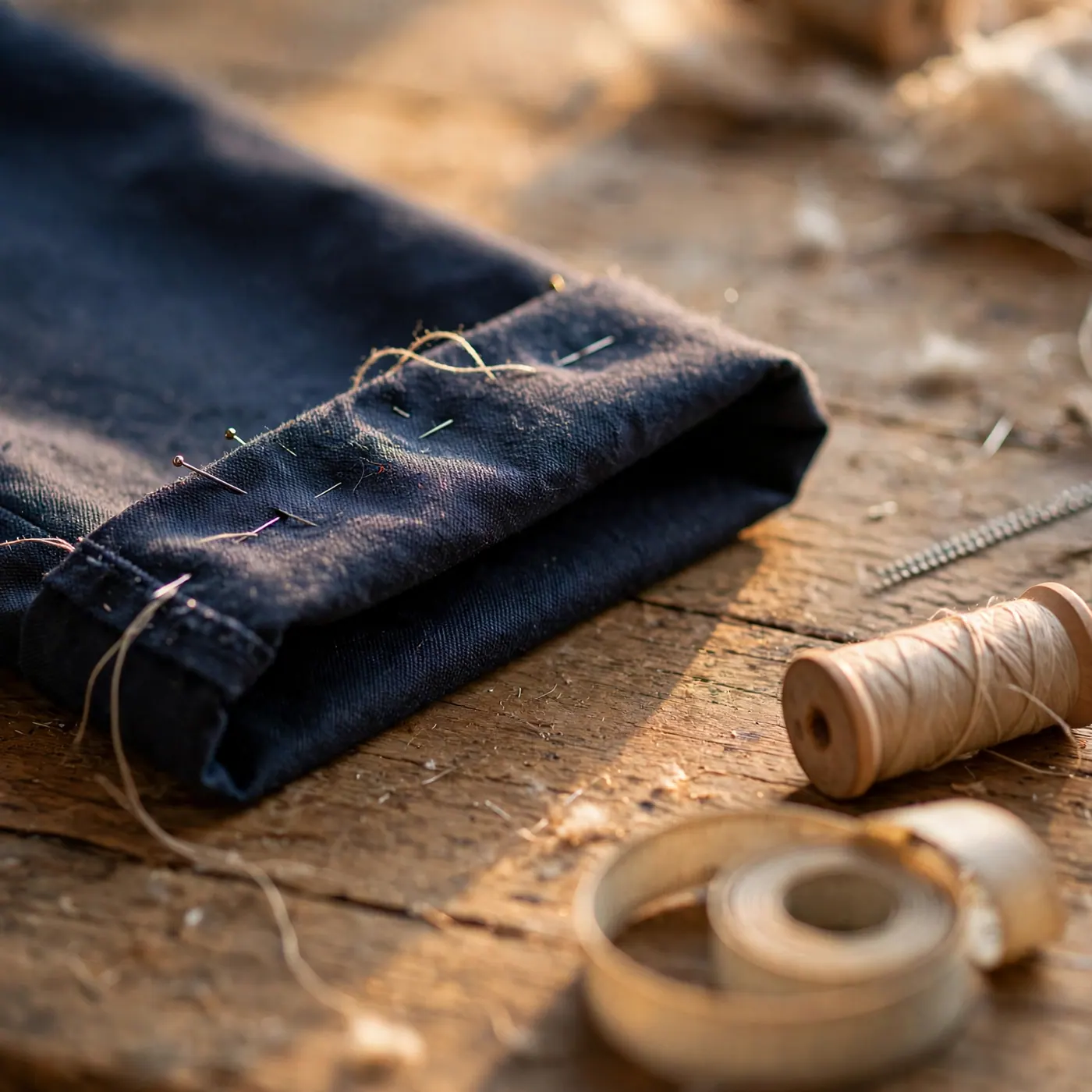
The garment belongs to the client and you are responsible for it. Make a simple written order: description of the garment, photos before cutting, measurements, delivery date, and a note on what happens if the fitting doesn't work out. Deliver against a receipt and, if you do home visits, cover only the area you can actually reach.
The most important thing legally is the warranty. According to Law 1480 of 2011 (article 8), a repair service in which you return the garment can be provided without a warranty only if the client accepts it in writing. If there is no such acceptance, the warranty is three months from delivery. The SIC clarifies that a loose phrase on the receipt, such as "no warranty," is not enough.
Since alteration is an obligation of means, the warranty is measured by the quality of what you did, not by a magical result. Even so, be clear about what you don't promise: a fabric that doesn't have the stretch won't stretch. If the client wants an impossible taking in, say so beforehand and put it in writing.
Social security and invoicing, briefly
If you work on your own account and not under a service provision contract, the UGPP explains that the contribution base income (IBC) is 40% of your monthly income minus costs. On that IBC, 12.5% is contributed to health and 16% to pension, paid the month after, through a PILA operator using a type I form. The occupational risk insurance (ARL) depends on the risk and, on that page, is voluntary for independents other than those under a service provision contract; the family compensation fund is also voluntary (between 0.6% and 2% depending on the package). For the peso amount, use the calculator of the UGPP.
About electronic invoicing: not every home workshop is required to do it from the start. If it applies to you, the DIAN asks for an updated RUT, the email registered in the RUT, a digital signature from an entity authorized by ONAC, and invoicing software. Confirm your case with an accountant.
And so there is no confusion: unlike other trades, there is no suitability exam before the Foreign Ministry here, as in the official translation. To organize your independent work in general, the logic of other trades that formalize on their own.
How to publish your listing to get better jobs
A good listing filters out the curious before they message you. Include:
- The area: write the neighborhoods where you do pickup and delivery, not "the whole city."
- "From" prices per type of alteration.
- Years of experience and what you do best (suits, children's clothing, uniforms, curtains).
- Photos of your work: seams, hems, finishes. No client faces.
- What you don't accept (leather, formal wear without time, same-day rush jobs).
The logic of describing area, price, and limits is the same as what we explained in how to publish cleaning and maintenance services.
There are alternatives for finding clients: neighborhood WhatsApp groups, Facebook Marketplace, or intermediary platforms that sometimes require minimum experience and keep a share. An own listing, on the other hand, lets you contact the client directly and doesn't get lost among messages. Your listing goes as a service, not as a garment. According to active listings on Colombia Move (October 2026), women's clothing has 3 listings, men's clothing 2, shoes 2, and fashion accessories 4. If you also sell finished clothing that you made, that goes in the clothing section.
Frequently asked questions
❓ Do altering clothes and making custom garments use the same code on the RUT?
No. Garment alteration is classified under class 9529 and made-to-measure tailoring under 1410 of CIIU Rev. 4 A.C. The main activity is the one that brings in the most income, and the code is confirmed on the DIAN's current form (verify at the official source).
❓ Do I have to register with the Chamber of Commerce if I sew at home?
If the trade is already professional or is advertised to the public, yes: registration is requested within the month following the start and renewed from January 1 to March 31. An occasional favor does not make you a merchant (verify at the official source).
❓ How much should I charge for a hem or a zipper change?
There is no official national rate. Publish a "from" price per type of garment and confirm the final amount when you see the fabric, the zipper, and the number of fittings. Copying another shop's list could leave you working at a loss (verify at the official source).
❓ What warranty should I give if the alteration turns out badly?
Without the client's written acceptance that there is no warranty, the law sets three months from the time you return the garment. A loose note on the receipt does not replace that clear, signed acceptance (verify at the official source).
❓ How do I avoid problems and scams with the client's garment?
Receive the garment with a description, photos, and a delivery date, and leave in writing what happens if the fitting doesn't match. For home visits, ask for a deposit on orders and deliver against a receipt, only in the area you actually cover (verify at the official source).
❓ How much do I contribute to health and pension if I work on my own?
The IBC is 40% of your income minus costs; on that, 12.5% is contributed to health and 16% to pension. The peso amount is calculated by the UGPP calculator according to your case (verify at the official source).
❓ Where do I publish an alteration and tailoring listing without mixing it with clothing sales?
In the services section, with the area you cover, prices from, and photos of your work. That way, someone looking for an alteration finds it by trade and not among used garments for sale (verify at the official source).





Comments
Loading comments...
Checking sign-in status...