
Wastewater Discharge Permit and Septic Tank for Country Houses: CAR Rules in Colombia
When a rural property needs a wastewater discharge permit, when the RURH is enough, what components the septic system must have, and how environmental paperwork protects a sale or rental.
IDIOMA DEL ARTÍCULO
Showing original language
Quick answer: If your country house is in a country subdivision, rural condominium, or is a recreational farm, you need a wastewater discharge permit from the environmental authority (the CAR of your jurisdiction). Only the dispersed rural dwelling, the isolated peasant home tied to farm work, is exempt from the permit, and even so it must have a technical system and be registered in the RURH.
A serious buyer looks at the deed, the certificate of title and, more and more, at what happens to the wastewater. A septic tank built by the local builder, without a grease trap or infiltration field, can stall a sales agreement. And I'm not only talking about the sale: a visit from the corporation can end in suspension of activities. Let's go step by step.
The legal framework in two regulations
Decree 1076 of 2015, the single decree for the environment sector, is the foundation. Its article 2.2.3.3.5.1 requires anyone who generates discharges into surface waters, marine waters or soil to apply for a permit with the competent authority. For discharges to soil, which is the case of a septic tank with infiltration, article 2.2.3.3.4.9 requires infiltration tests, the technical system design, an operation and maintenance manual, a plan with MAGNA-SIRGAS coordinates and a closure and abandonment plan.
The second regulation is Resolution 0699 of 2021 from the Ministry of Environment, which sets the parameters and maximum permissible limit values for discharges of treated domestic wastewater (ARD-T) to soil. In other words: it is not enough to "have a hole"; the treated water must meet technical limits.
The big dilemma: dispersed rural dwelling or country house
Here is the most costly confusion. Article 279 of Law 1955 of 2019 exempts the dispersed rural dwelling from the soil discharge permit, provided it has an individual sanitation solution according to the technical regulation (RAS) and is registered in the Water Resource User Registry (RURH).
But Decree 1232 of 2020 defines that dwelling as an isolated unit associated with farm work and distinguishes it from country subdivisions and rural residential complexes. The result:
- Dispersed peasant dwelling: technical system according to RAS + registration in the RURH.
- House in a subdivision, rural condominium or recreational farm (including one rented for rest or tourism): formal discharge permit from the CAR.
My advice, without beating around the bush: don't assume your farm is "dispersed" just because it is far from town. If you use it for recreation or rent it for weekends, it most likely isn't. If in doubt, ask your corporation in writing.
If you also subdivided the lot, first review the guide to subdivision licenses before the curaduría.
The four components of a legal septic system
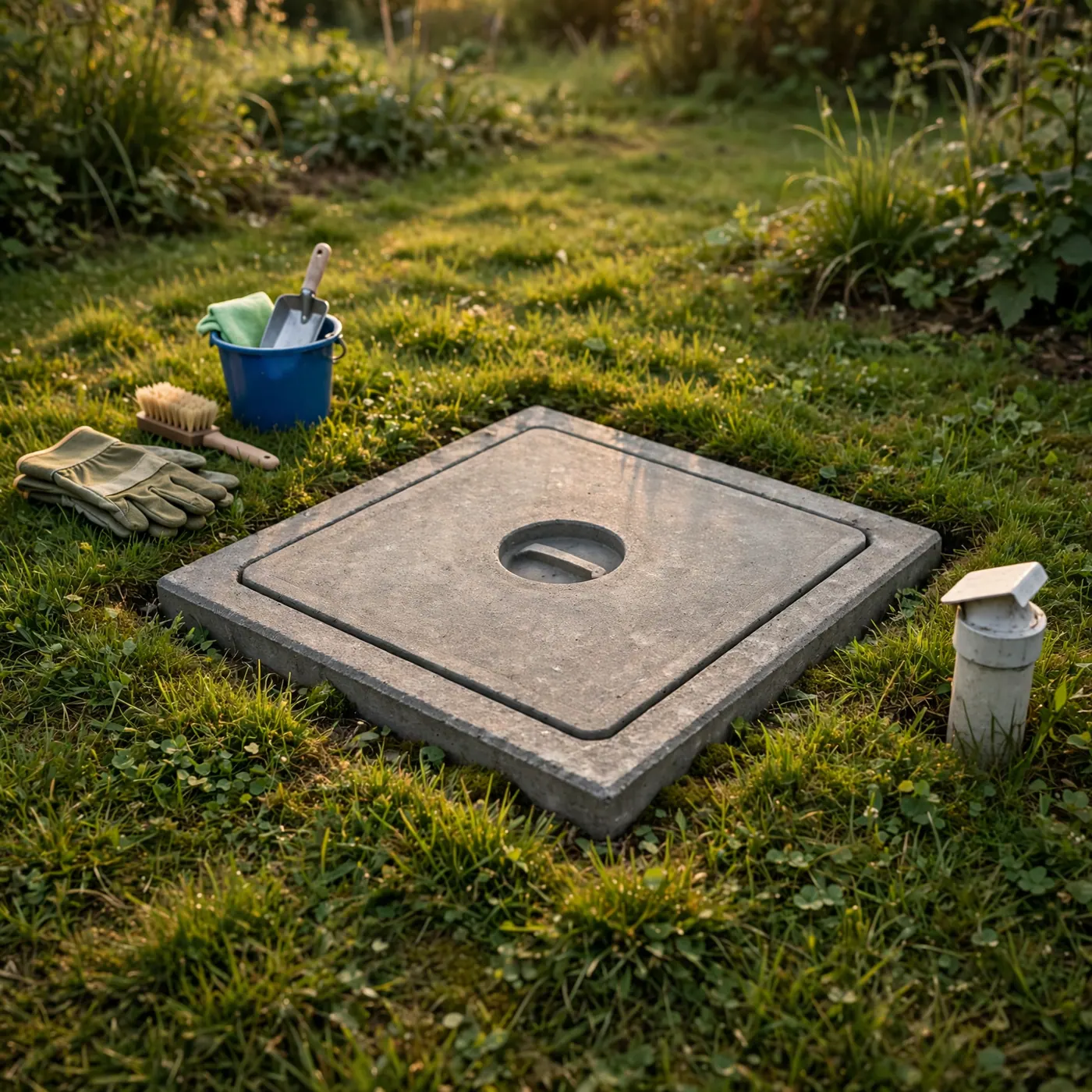
A serious domestic treatment train has, in this order:
- Grease trap: retains kitchen and laundry grease so it does not clog the rest of the system.
- Septic tank: primary anaerobic digestion of solids.
- Upflow anaerobic filter (FAFA): secondary treatment of the water leaving the tank.
- Infiltration field or percolation trench: disposes of the treated water into the soil, sized with an infiltration test.
The typical mistake of informal builders is to deliver only the tank and a pipe that runs to the creek or to a hole. That pollutes, can affect nearby water wells and is exactly what a technical visit detects first. If your property also has a water well, also check the groundwater concession.
Step by step to apply for or regularize the permit
Each CAR publishes its own procedure, but the basis is national. Based on what corporations such as CAR Cundinamarca require, the general flow is:
- Fill out the National Single Form for a soil discharge permit.
- Gather legal supporting documents, such as the certificate of title and freedom of the property.
- Submit the design and calculation memo, infiltration test results, operation and maintenance manual, georeferenced MAGNA-SIRGAS plan and closure and abandonment plan.
- Pay the settlement for the environmental evaluation service and receive the corporation's technical visit.
About cost: there is no flat fee in pesos. The corporation calculates the charge based on the estimated cost of the project and its current tariff table, so request the official settlement before budgeting (check the current figure on your CAR's website).
Watch out for the prohibition on discharging into aquifers or headwaters: if your lot is near one, the permit can be denied no matter how good the design is. It is my biggest frustration with this process: it is discovered late, after building.
What if you don't have it: sanctioning regime
Law 1333 of 2009, as amended by Law 2387 of 2024, presumes the fault or intent of the offender and allows the CARs to impose preventive measures, such as immediate suspension of activities, in addition to fines that can reach severe legal caps depending on the damage. It is also possible to order works to correct the contamination.
In practical terms: the burden of proving you did not contaminate falls on you. Having the permit, or at least the application filed and the system well documented, is your best defense. If your farm combines housing and production, also review the ICA sanitary guide for cattle.
The commercial advantage: selling or renting with sanitation in order
A certified system or one in regular process speeds up the closing and prevents the buyer from suspending the promise out of fear of sanctions or seals. Among the active listings on Colombia Move (October 2026) there are 33 farms, 17 country houses and 40 lots for sale, so your property competes with many others; a clear hydrosanitary document is a real differentiator, not decoration.
When you have photos, the plan or the permit resolution and the property details, publish it directly and receive contacts via WhatsApp with no real estate commission.
Keep reading: featured farms in the country market.
Frequently asked questions
❓ Does a country house in a rural condominium need a discharge permit?
Yes. Country subdivisions and condominiums are not dispersed rural dwellings, so they require a formal discharge permit from the CAR, unless they connect to an authorized collective system. Confirm your case with the corporation of your jurisdiction (verify with the official source).
❓ What is the difference between the discharge permit and the RURH registration?
The permit is an administrative act with a prior technical evaluation. The RURH is a mandatory registration for the dispersed rural dwelling exempt from the permit, which must also have an individual sanitation solution under the RAS (verify with the official source).
❓ What does the CAR require to authorize infiltration into the soil?
It requires an infiltration test, the technical design of the system and a MAGNA-SIRGAS plan. It also asks for an operation and maintenance manual and a closure and abandonment plan, according to article 2.2.3.3.4.9 of Decree 1076. The design includes a grease trap, septic tank and infiltration system (verify with the official source).
❓ How much does the discharge permit procedure before the CAR cost?
There is no single fee. The corporation calculates the evaluation service based on the estimated cost of the project and its current tariff table. Request the official settlement from your CAR before budgeting, and add separately the cost of design and construction (verify with the official source).
❓ What penalty applies for an illegal septic tank?
The CAR can order immediate suspension of the activity and apply fines depending on the severity of the damage. This is allowed by Law 1333 of 2009, as amended by Law 2387 of 2024, which presumes the fault or intent of the offender (verify with the official source).
❓ How do I sell my farm safely and avoid scams?
Show verifiable documents, such as the certificate of title and proof of the septic system, and accept payments only through formal channels. Be wary of anyone who asks for advances without seeing the property, and always close before a notary. Having sanitation in order keeps the buyer from backing out out of fear of sanctions (verify with the official source).
❓ Where can I publish my farm or country house for sale or rent?
You can publish it in the farms category of Colombia Move, where listings are free, include photos and location, and contact with interested buyers is direct via WhatsApp, with no intermediaries or commission.

Comments
Loading comments...
Checking sign-in status...