
How to Rent Your Vacation Home for Weekends in Colombia While Complying with Regulations
Learn how to monetize your vacation home on weekends and holidays in Colombia. Discover the RNT legal requirements, how to protect your assets, and how to rent directly without paying commissions.
IDIOMA DEL ARTÍCULO
Showing original language
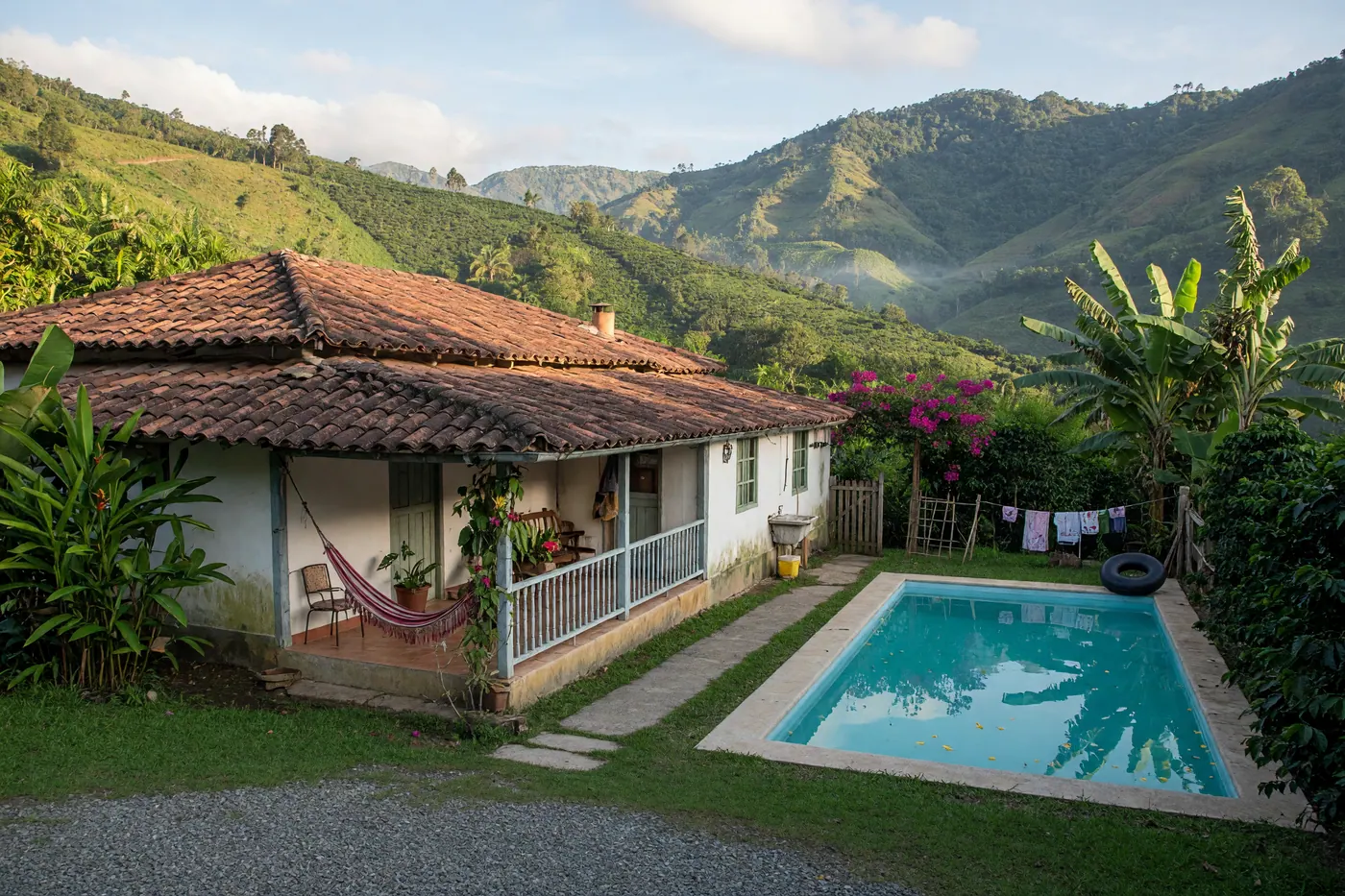
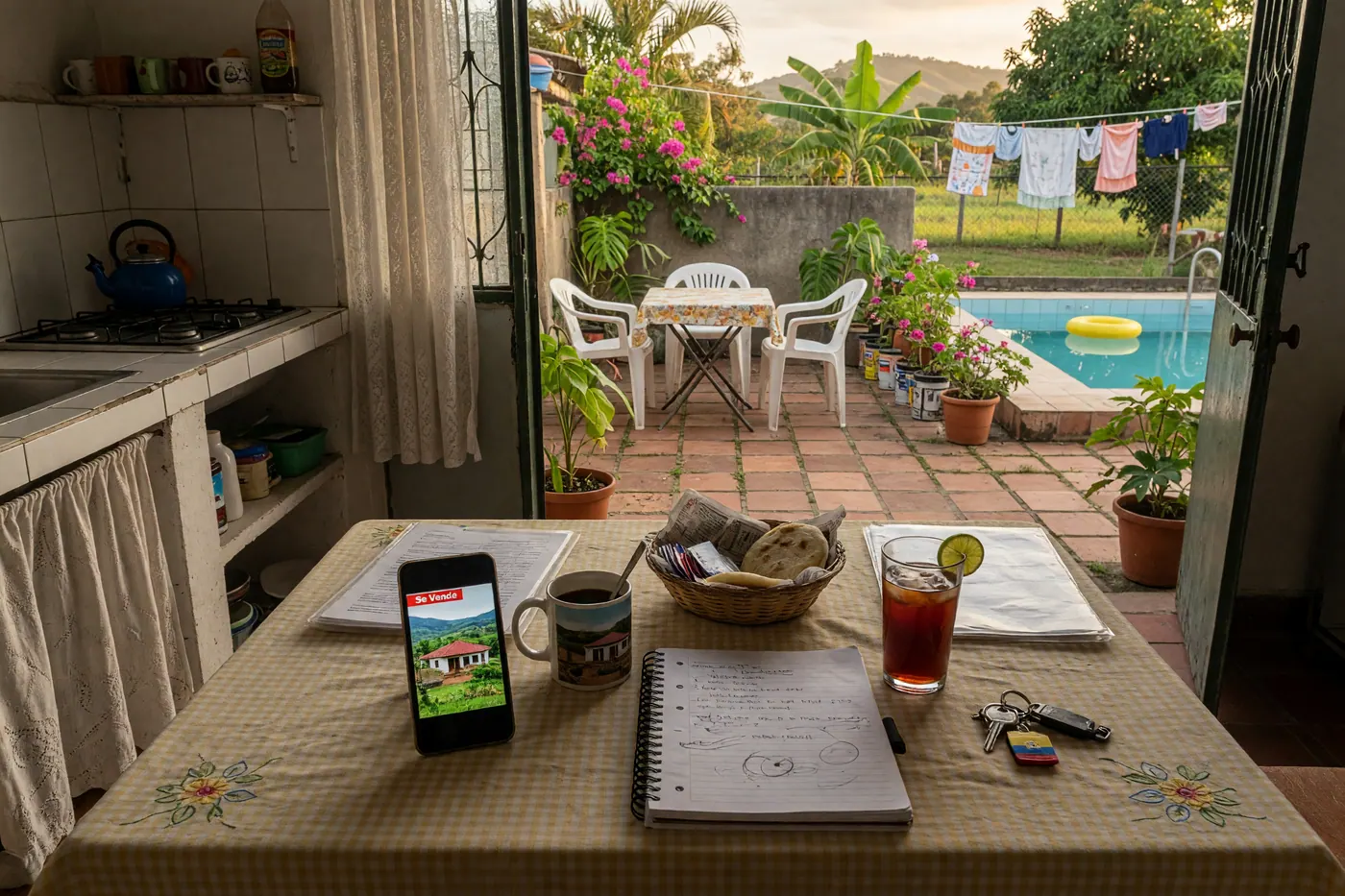
Owning a vacation property in areas such as the Oriente Antioqueño, the Sabana de Bogotá, Anapoima, Carmen de Apicalá, or the Coffee Axis is a valuable asset that generates fixed costs for maintenance, stewardship, and utilities. Taking advantage of weekends and holiday long weekends to rent it out by the day to families and trusted groups is an excellent income strategy. However, to do so safely and profitably in 2026, it is essential to know Colombian tourism regulations and avoid paying high intermediation commissions.
Many owners are unaware that offering a country home for daily tourist accommodation is regulated by Law 2068 of 2020 and Decree 1836 of 2021. Complying with these guidelines not only avoids sanctions from local authorities but also provides peace of mind regarding property damage, noise disturbances, or guest issues. If you want to see real options right now, you can view farms and lots available on Colombia Move — posting is completely free.
Quick Answer: What do you need to rent your vacation home by the day legally?
- National Tourism Registry (RNT): It is mandatory for the tourist housing category, 100% free, and processed virtually.
- Civil Liability Insurance Policy: Required by law to cover unforeseen events, accidents, or bodily injury to guests.
- Guest Registration (TRA and SIRE): You must fill out the Accommodation Registration Card (TRA) and report foreigners on the Migración Colombia SIRE portal.
- Clear rules and security deposit: Define coexistence rules, maximum capacity, and a refundable security deposit.
1. Mandatory legal framework for tourist vacation homes in Colombia
Short-term vacation rentals for days or weekends are not governed by the traditional urban housing rental law (Law 820 of 2003), but under the framework of lodging and tourism services. If you want to learn more about long-term contracts, you can consult our guide for renting vacation homes in Colombia, but for short weekend stays, the rules are specific.
Registration and renewal of the National Tourism Registry (RNT)
To rent your vacation home to tourists, the first legal step is to obtain the RNT under the "Tourist Housing" or "Tourist Vacation Home" category. The process is carried out directly on the Confecámaras virtual portal (rnt.confecamaras.co). It is a completely free procedure that requires no intermediaries or payment of registration taxes.
Take into account these key points about the RNT:
- Annual renewal: It must be done mandatorily between January 1 and March 31 of each year virtually.
- Suspension and reactivation: If you do not renew on time, your registry will be automatically suspended starting April 1. To reactivate a suspended RNT, the regulation requires paying a fine of 1 current monthly legal minimum wage (SMMLV) to FONTUR (which for 2026 corresponds to $1,750,905 COP).
- ESCNNA Code of Conduct: When registering, you must adhere to the declaration of prevention against the sexual exploitation and abuse of children and adolescents.
Extracontractual civil liability insurance policy
The General Tourism Law (Law 2068 of 2020, art. 32) establishes that all tourist accommodation service providers must have an extracontractual civil liability insurance policy. This policy protects visitors against potential accidents, slips in the pool area, or medical emergencies within the property during their stay.

2. Operational obligations during guest check-in
Once you have the active RNT and the insurance policy contracted, each weekend's operation requires complying with the proper registration of the people entering the property.
According to active listings on Colombia Move (August 2026), there are 13 active listings in the vacation home category. To maintain operational order, you must comply with two official platforms:
- Accommodation Registration Card (TRA): System of the Ministry of Commerce, Industry and Tourism where you must record identification data, arrival date, and departure date of all adult guests.
- Reporting in the SIRE of Migración Colombia: If you host foreign citizens, it is mandatory to register them on the SIRE platform within the first 24 hours after their arrival to comply with immigration regulations.
- Tourism parafiscal contribution: As a tourism service provider, you must pay the parafiscal contribution administered by FONTUR quarterly, equivalent to 2.5 per thousand (0.25%) of your operating income from rentals.
3. Property protection: security deposits and internal rules
One of the greatest fears of an owner is that the property will be used for uncontrolled parties that cause damage to the facilities, the pool, or the neighborhood's peace. Protecting your assets depends on a good initial filter and establishing strict contractual conditions.
Temporary rental contract and security deposit
Never hand over the keys to your property without a signed document. A temporary weekend rental contract must specify the names of those responsible, check-in and check-out dates, the rent amount, and the limit of allowed guests. Likewise, it is advisable to agree upon a refundable value to cover potential broken glass, stains on linens, or damage to pool pumps. If you want to learn more about the legal frameworks for these guarantees, you can review our analysis on security deposits and rental deposits in Colombia.
Indisputable rules of coexistence
Establish visible rules on the property and send them in writing before the booking payment. Include points such as:
- Music schedules: Volume limits and a strict time for turning off outdoor speakers to respect rural tranquility.
- Maximum capacity: Explicit prohibition of bringing additional visitors not registered in the contract.
- Use of pool and wet areas: Hygiene standards, prohibition of glass containers near the water, and constant supervision of minors.
4. How to rent directly without paying abusive commissions
Intermediation fees can increase the final price for Colombian families or reduce your profit margin.
Many owners prefer to manage direct temporary rentals with the owner. To achieve this successfully, create a PDF catalog or a web link with high-quality real photos, a detailed description of the state of the access road, a kitchen inventory, the number of beds, and included services (Internet, jacuzzi, grill, court, etc.).
To maximize your visibility in sectors such as housing and country properties, you can advertise your property on local direct channels without intermediation.
Recommended reading: If you are also considering selling a rural or urban property without paying brokerage fees, discover our detailed guide on how to sell your property without a real estate agency in Colombia.
Frequently Asked Questions
❓ Is it mandatory to obtain the RNT to rent out a vacation home for weekends?
As of August 2026, yes, every property offered for daily tourist accommodation in Colombia must have an active National Tourism Registry (RNT). The applicable category is tourist housing.
❓ How much does it cost to obtain or renew the National Tourism Registry for my property?
As of August 2026, the RNT registration and renewal are free and done online. Confecámaras does not require intermediaries or state registration taxes.
❓ What happens if I don't renew the RNT before March 31st?
As of August 2026, the RNT is automatically suspended on April 1st if you do not renew it between January 1st and March 31st. According to Confecámaras and FONTUR, consulted in August 2026, reactivating it requires paying 1 SMMLV.
❓ How do I collect a security deposit from guests to protect the property?
As of August 2026, you can agree on a refundable deposit in the temporary rental contract. Define in writing when it is provided and return it after checking the inventory and the condition of the property at check-out.
❓ Should I require an insurance policy from guests who rent the property?
As of August 2026, the law requires the host to have an active extra-contractual civil liability policy. It must cover bodily injury, accidents, or health contingencies of guests during their stay.
❓ Where can I list my property for weekend rental without paying a commission?
As of August 2026, you can list your property directly on classifieds portals in Colombia such as Colombia Move, connecting directly with tenants via WhatsApp or phone without paying percentages on each booking made.

Comments
Loading comments...
Checking sign-in status...