
Groundwater and Deep Well Concessions for Farms in Colombia: A Guide to the CAR Application Process
Securing a legal groundwater supply for a rural property requires complying with CAR regulations. Learn the process for legalizing a well and protecting your farm.
IDIOMA DEL ARTÍCULO
Showing original language
Having reliable access to clean water is the heart of any farm, country lot, or agricultural property in Colombia. However, many owners and buyers mistakenly assume that because they own the land, they have unrestricted rights to drill into the earth and extract groundwater. The legal reality is very different: in Colombia, groundwater is a public utility, and its use is strictly regulated by the Autonomous Regional Corporations (CARs).
Drilling a deep well or extracting water without the corresponding environmental authorization not only puts the sustainability of the aquifer at risk but also exposes the owner to severe administrative and economic sanctions. Furthermore, an illegal well represents a serious legal defect when selling or leasing the property. In this guide, we explain how the groundwater concession process before the CARs works, what documents you need, and how this permit protects your farm investment.
Legal Framework for Groundwater in Colombia
The regulatory regime for groundwater use in Colombia is primarily compiled in the Single Regulatory Decree 1076 of 2015 (Environment and Sustainable Development Sector). Under this regulatory framework, water extraction through deep wells or cisterns requires two distinct administrative authorizations issued by the CAR with jurisdiction (such as CAR Cundinamarca, Corantioquia, Cornare, CVC, or Corpoboyacá):
- Prospecting and Exploration Permit: Authorizes the interested party to carry out test drilling, geophysical studies, and pumping tests to verify the presence, quantity, and quality of groundwater. This permit is granted for a maximum term of one (1) year.
- Groundwater Concession: This is the formal administrative act through which the environmental authority grants the right to use and extract a specific flow (expressed in liters per second) for specific purposes such as human consumption, irrigation, or watering livestock.
When can you request a direct concession without an exploration permit?
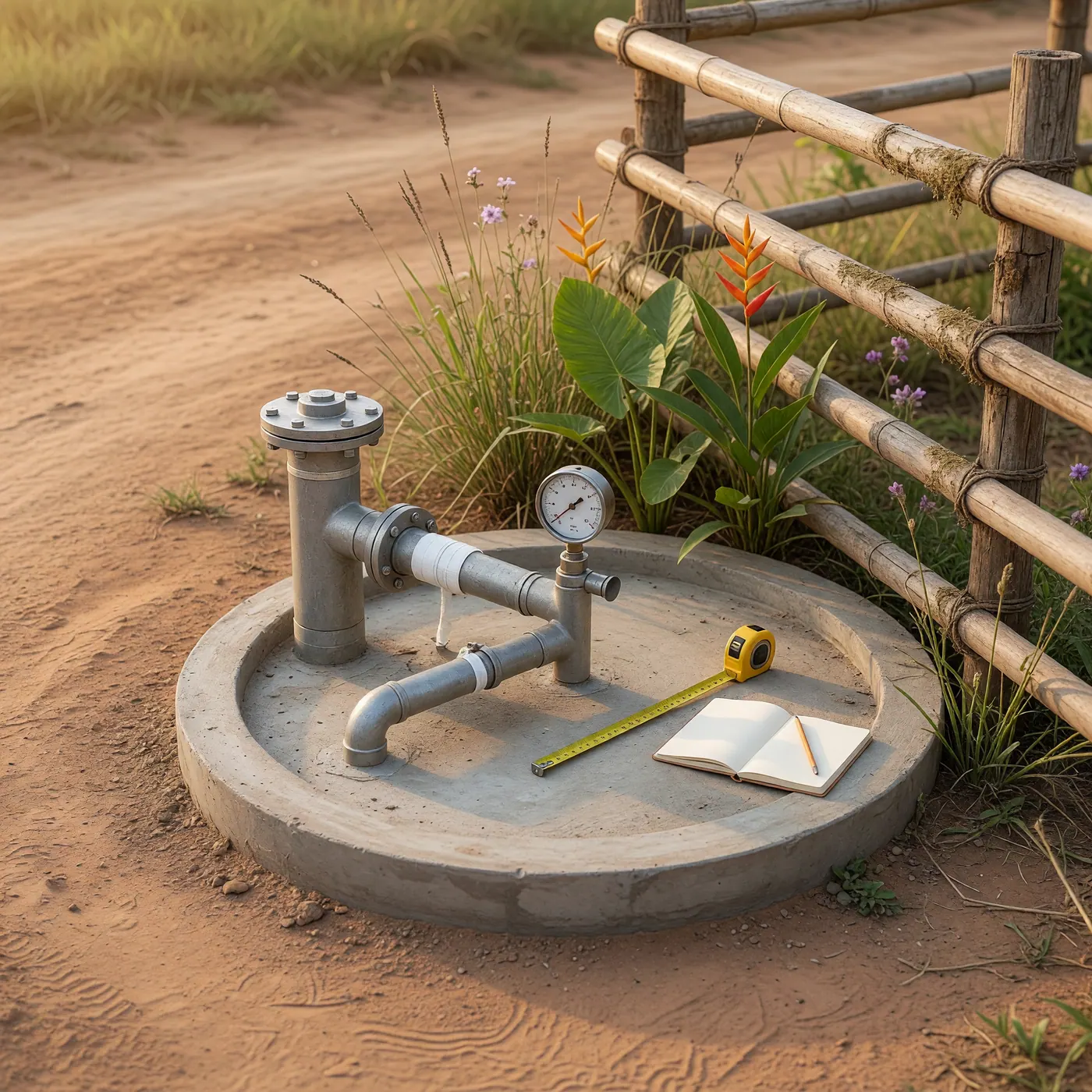
There is an important exception within the regulatory process. According to Article 2.2.3.2.16.15 of Decree 1076 of 2015, if the well or project is in an underground basin already known by the competent environmental authority, the CAR may waive the permit and exploration process. This is not an automatic exception; it can only be requested or submitted for direct concession if the authority formally accepts the waiver.
Before starting any technical work, it is essential to check with the CAR office or their geoportal to see if the property is in a declared and regulated hydrogeological zone.
Step-by-step process before the CAR
To process a groundwater concession, the owner, holder, or regular possessor of the rural property must meet a series of legal and technical requirements before the corresponding environmental authority:
Documentary and Technical Requirements
- Single National Form (FUN): Completion of the official water concession application, indicating the property details and the required flow rate.
- Proof of ownership or possession: Certificate of Tradition and Freedom of the property issued no more than three (3) months prior, or documents proving regular possession or status as a titleholder.
- Hydrogeological study and well design: Technical report including the lithological column, the structural design of the drilling, the results of the pumping test (to determine design flow and water table drawdown), and physical-chemical and bacteriological water analysis.
- Efficient Water Use and Saving Plan (PUEAA): A mandatory management instrument in Colombia regulated by Law 373 of 1997, where the user details goals, low-consumption technologies, and reuse strategies to prevent resource waste.
Once the complete documentation has been submitted and the evaluation fees—calculated individually by each CAR based on the requested flow and project complexity—are paid, the environmental authority schedules a technical inspection visit to the property. If the evaluation is favorable, a reasoned resolution is issued approving the concession for a fixed period, subject to renewal in accordance with the environmental authority's resolution.
Priority in water use and sanctions for illegal wells
Decree 1076 of 2015 establishes a clear order of priority for granting water concessions in Colombia. First place is always given to human consumption and domestic needs, followed by agricultural use, energy generation, industrial use, and, finally, recreational or aesthetic activities. If there is water scarcity in an area, the CAR will prioritize the water supply for housing.
Ignoring this process and operating a deep well clandestinely carries serious legal consequences. Under the sanctioning environmental procedure of Law 1333 of 2009, the CARs are empowered to impose:
- Preventive measures such as confiscation of drilling or pumping equipment.
- Immediate sealing and closure of the well.
- Daily fines that can reach up to 5,000 Current Legal Monthly Minimum Wages (SMMLV).
- Orders to render useless, plug, or demolish the well at the expense of the property owner.
Impact of water legality on the commercial value of the farm
From the perspective of the rural real estate market in Colombia, the legal availability of water is an asset that adds value to a farm or country lot. Informed buyers and investors verify the legality of water sources before closing a sale. A property with an active water concession before the CAR not only offers legal peace of mind but also reduces the risk that agricultural or residential activities will suffer from sanction-related shutdowns.
According to active listings on Colombia Move (August 2026), there are 13 farms, 10 lots, and 7 country houses published; clearly indicating if the well and concession are up to date helps differentiate a rural property within that offer.
If you are also planning to develop a lodging or rural tourism project, check the registration in the National Tourism Registry (RNT). Likewise, proper land planning should align with land use regulations and the municipal POT (Land Use Plan), especially when considering rules for renting vacation farms.
Frequently Asked Questions
❓ Can I drill a deep well on my farm without asking for permission from the CAR?
No, drilling or extracting groundwater without prior authorization is prohibited in Colombia under Decree 1076 of 2015. Anyone who drills without a permit is subject to immediate sanctions from the CAR, including suspension of work, seizure of machinery, and financial fines under Law 1333 of 2009.
❓ What is the difference between a prospecting permit and a groundwater concession?
The prospecting and exploration permit authorizes test drilling and hydrogeological studies for a maximum period of one year, while the concession grants the legal right to use and extract water for consumption, irrigation, or other specific uses.
❓ When can the exploration permit be skipped in favor of applying for a direct concession?
According to Article 2.2.3.2.16.15 of Decree 1076 of 2015, the CAR may exempt the permit and exploration process if the groundwater basin is already known to the authority. The direct concession can only be requested or filed if the authority formally accepts the exemption; it is not automatic.
❓ What documents are needed to apply for a groundwater concession with the CAR?
You need the completed Single National Form (FUN), an identity document or RUT, a Certificate of Tradition and Freedom issued within the last 3 months, a georeferenced map, the technical design of the well with a pumping test, and an Efficient Water Use and Conservation Plan (PUEAA).
❓ What sanctions exist in Colombia for having an illegal water well on a farm?
Law 1333 of 2009 establishes preventive measures such as the suspension of activity and the sealing of the well, in addition to sanctioning processes with fines of up to 5,000 SMMLV and orders for demolition or plugging at the property owner's expense.
❓ How long does a groundwater concession last and how is it renewed?
The concession is granted for a fixed period determined in the CAR resolution, not permanently. The holder must review that resolution and apply for renewal with the same authority within the timeframe specified therein.
❓ How does the CAR water concession influence the sale or leasing of a farm?
Having a valid concession with the CAR provides legal security to the buyer and reduces the risk of disputes or sanctioning interruptions. It also allows you to document that the water supply for housing or agricultural production is authorized.

Comments
Loading comments...
Checking sign-in status...