
How to Buy a Farm in Colombia: A Beginner's Guide
Deeds, property taxes, rural utilities, real prices by area — everything you need to know before buying a farm in Colombia.
IDIOMA DEL ARTÍCULO
Showing original language
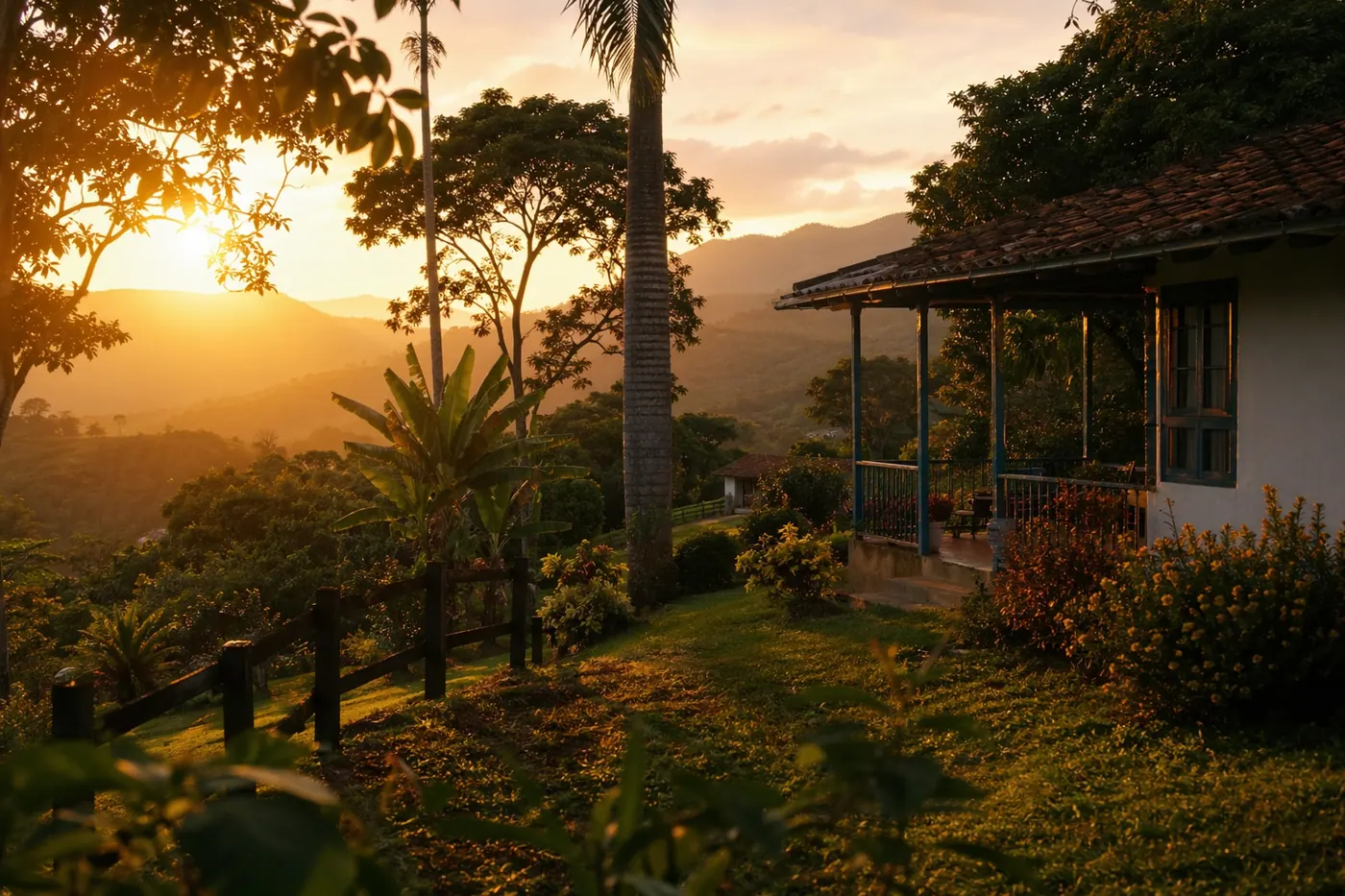
The first time I stepped onto a farm in the Oriente Antioqueño, I understood why so many people dream of owning one. Clean air, a mountain view, real silence — the kind of silence that doesn't exist in El Poblado or Chapinero. What I didn't understand until months later was everything that buying one entails: deeds, title searches, property taxes, local water systems, and a series of bureaucratic procedures that can be daunting if you don't know where to turn.
This guide is what I wish I had read before starting. I'm not going to tell you that buying a farm is easy, because it isn't. But it’s not a mysterious process either, and if you do the due diligence correctly, it’s one of the most rewarding investments you can make in Colombia. Prices are still accessible compared to Europe or North America, and the supply of rural properties is huge. If you want to start looking at real options, you can explore the farms and plots available on Colombia Move and filter by area, size, and price before committing to a visit.
Here are the real steps, no beating around the bush.
What type of farm are you looking for?
Before looking at listings, clearly define what you want. There are two main categories and the difference matters from the start:
Recreational farm: For relaxation, weekend getaways, or Airbnb-style tourism investment. They tend to be smaller (less than 5 hectares), well-located near known municipalities like Guatapé, El Retiro, or Salento. These are the most sought-after and also the most expensive per square meter. The logic behind the purchase is similar to buying a vacation cabin.
Productive farm: Coffee, cattle, avocado, sugar cane. These require more work and agricultural knowledge, but are cheaper per hectare. If you are going to produce, you need to understand the business or hire someone who does — an abandoned productive farm deteriorates quickly. This also affects the type of bank loan you can obtain.
Where to buy? The most popular municipalities
Antioquia is the most active department in the rural farm market. The most popular areas among local and foreign buyers:
Guatapé and El Peñol: The most touristy in the department, and the most expensive. A small recreational farm can start from $400 million COP (≈ USD 95,000). If the goal is tourism investment, this is where people go — high Airbnb occupancy, reservoir views, year-round tourism. The downside: prices have risen a lot in the last five years.
El Retiro, La Ceja, and Rionegro: The Oriente Antioqueño is the historical favorite for people from Medellín for a weekend farm. Temperate-cold climate, paved road access, near the José María Córdova airport. You can find farms between $250M and $800M COP depending on size and finishes. Demand is stable and the market is more liquid than in remote areas.
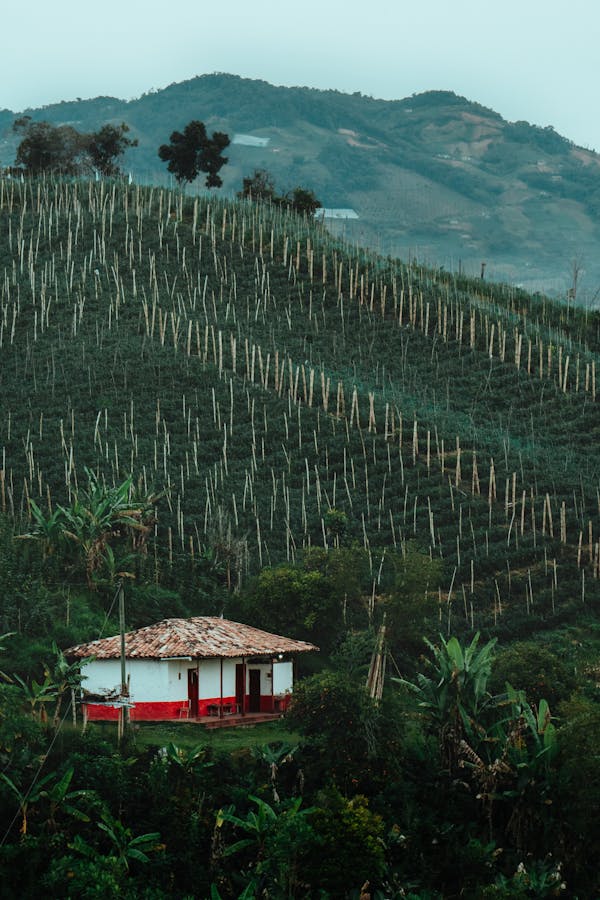
Santa Bárbara, Andes, and Ciudad Bolívar: The Suroeste antioqueño. A traditional coffee zone, more economical, with productive farms starting from $150M COP. The drive from Medellín takes 2-3 hours, making it less ideal for weekend recreation but excellent for living or producing. Some of the most beautiful landscapes in Colombia.
Coffee Region (Quindío, Risaralda, Caldas): Salento and its surroundings are booming due to tourism. Prices near the town have skyrocketed. In Quimbaya, Montenegro, or Filandia you can still find coffee farms at reasonable prices. The Coffee Region also has frequent flights to Bogotá and Medellín, making it attractive for tourism investment.
Cundinamarca (near Bogotá): Villeta, La Mesa, Anapoima, and Apulo. People from Bogotá escape to the heat. Distances of 1 to 2 hours, warm climate, more accessible prices than Antioquia. A good option if you already live in Bogotá and are looking for a weekend farm without a long toll-road journey.
How much does a farm in Colombia cost?
| Type | Zone | Estimated Price |
|---|---|---|
| Small recreational farm (<1 ha) | Guatapé / El Retiro | $400M – $900M COP |
| Medium recreational farm (1–3 ha) | Oriente Antioqueño | $250M – $600M COP |
| Productive farm (5–15 ha) | Suroeste / Eje Cafetero | $150M – $500M COP |
| Large farm (>50 ha) | Interior of the country | $500M – $2,000M COP |
In dollars, most recreational farms popular among foreigners are between USD $50,000 and USD $200,000. Productive farms can be cheaper per hectare but require investment in operations, machinery, and infrastructure.
💡 If you are transferring money from abroad, use Remitly to convert currency — it usually has a better exchange rate than Colombian banks.
The legal process: what you must do before signing
This is where people make the most serious mistakes. Skipping steps in due diligence for rural real estate can cost you dearly — there are cases of people who bought properties with undisclosed mortgages, or with boundaries that didn't match reality. The process has four mandatory stages:
1. Title search
Hire a lawyer to review the property's legal history over the last 10 to 20 years. The study verifies that the seller is the legitimate owner, that there are no active mortgages or liens, and that the boundaries match the registered documents. Typical cost: between $500,000 and $1,500,000 COP. Don't skip this.
2. Public deed at the notary
If the title search comes back clean, the public deed is signed before a notary. Both parties must be present or represented by a notarized power of attorney. The notary attests to the act of sale. Notary fees: approximately 0.3% to 0.4% of the property value, split between buyer and seller.
3. Registration at the Public Instruments Registry Office
The deed is registered at the ORIP (Public Instruments Registry Office) corresponding to the municipality where the property is located. This is the step that actually makes you the legal owner. Without registration, you are not the owner under the law. Registration tax: approximately 1.67% of the declared property value.
4. Cadastral update
After registration, the new owner must update the property to their name with the IGAC or the municipality's Cadastral Unit. This ensures that future property tax bills arrive in your name and that the cadastre reflects the current owner.
Property tax: much less than you imagine
This is one of the positive surprises of owning a farm in Colombia. The rural property tax is extremely low compared to what people pay in cities — and especially low if you come from Europe or North America.
For a 1 to 2 hectare recreational farm in the Oriente Antioqueño, the property tax can be between $300,000 and $800,000 COP per year. For larger farms or those in municipalities with higher tourist demand, it can reach $2-3 million COP annually. Rarely more.
The reason: the cadastral value — upon which the tax is calculated — is usually outdated and well below the real market value. That works in your favor. That said, many municipalities offer a 10% to 15% discount for on-time payment before May, so mark your calendar.

Rural utilities: the reality that no one tells you
Before you fall in love with a view, ask about utilities. This is where many beautiful fincas hide their real problems:
Electricity: Generally, it exists, even in remote rural areas. EPM covers almost all of Antioquia. In other regions, coverage varies. Verify it has its own meter and legal connection — some old fincas have informal connections that later cause problems with the utility company.
Water: The critical point. Options are municipal aqueduct (water via community piping — the most convenient), a private source on the finca itself (creek or spring water, requires system maintenance), or a well (common in drier areas). Ask about flow rates during the dry season, not just in winter.
Internet: Honestly, in most fincas, the internet is bad or non-existent. If you work remotely, this can be a serious problem. Ask before you visit. In some areas, there is a Claro or Movistar signal using a directional antenna; in more remote zones, the only option is satellite internet. Starlink already operates in Colombia and has changed this for the better, but it adds between $120,000 and $180,000 COP per month.
Gas and roads: Gas in cylinders — forget about natural gas grids in rural areas. And regarding access roads: does a paved road reach the entrance, or is there 20 minutes of dirt road? During the rainy season, many tertiary roads get complicated. Visit the finca in winter if you can, not just in summer.
🏡 Looking for a finca in Colombia?
Find fincas for sale and rent posted by direct owners on Colombia Move — free classifieds across the country.
See available fincas →Can foreigners buy a finca in Colombia?
Yes, without restrictions. Foreigners have exactly the same property rights as Colombians. You can buy with your passport, in your personal name, without needing a visa, foreigner ID (cédula de extranjería), or residency.
Some people prefer to buy through a SAS (Simplified Joint Stock Company), which can have tax advantages and facilitates managing multiple owners. If that is your case, this guide on how to create a SAS in Colombia explains the entire process.
One important thing: if you are going to negotiate directly with the owner, the same anti-gringo-pricing principles apply here. This guide on how to avoid gringo pricing on rentals has tips that work just as well for rural real estate.
Where to find fincas for sale
Colombia Move has free classifieds for fincas across the country, posted by direct owners and agents: colombiamove.com/categoria/finca. You can also search on Finca Raíz and MercadoLibre, which have more volume but more intermediaries.
Local networks remain important in the rural market. Many fincas are sold by word of mouth before reaching any platform. Talk to people in the municipality, route drivers, and those who work the land. The best prices are usually there.
Rural real estate agents exist in every municipality and know the market better than any digital platform. They charge a 3% to 5% commission, but on a $300 million peso purchase, having someone who knows what they are doing can be worth more than their fee.
Frequently Asked Questions
❓ How much does a finca cost in Colombia?
It depends heavily on the area and type. A small recreational finca near Guatapé or Eastern Antioquia can cost between $300M and $900M COP (USD $70,000 – $220,000). In more distant areas or for productive use, there are options from $100M COP (≈ USD 24,000). The most exclusive fincas with a view of the reservoir or in tourist zones can exceed $1,500M COP.
❓ Can foreigners buy a finca in Colombia?
Yes. Foreigners have exactly the same property rights as Colombians. You can buy with a passport, in your personal name, or through a Colombian company. No visa or residency is needed to buy. The legal process is identical to that of a Colombian buyer.
❓ What is the property tax (impuesto predial) of a finca?
It is the annual tax paid to the municipality for owning the property. In rural areas, it is very low — between $300,000 and $2,000,000 COP per year for most medium-sized recreational fincas. It is calculated based on the cadastral appraisal, which is generally below the actual commercial value. Many municipalities offer a discount for payment before May.
❓ How long does the purchase process take?
If everything is in order, between 2 and 6 weeks. The title study takes 1 to 2 weeks. The public deed and registration take approximately another week. The most common problem that delays the process is outdated documents, inconsistencies in property boundaries, or sellers who do not have the previous deed in order.
❓ What are the additional costs to the purchase price?
Budget an additional 2.5% to 3.5% over the purchase price for closing costs: title study ($500k–$1.5M COP), notary fees (~0.4% of the value), registration tax (~1.67% of the value), and attorney fees if you use one. It is much less than in most countries, but it must be calculated.
Are you looking for a finca in Colombia or have you already started the process? Let me know in the comments which area calls to you most — I'll gladly share more details or answer specific questions. And if this guide was useful, pass it along to someone who is in the same search.
Comments
Loading comments...
Checking sign-in status...