
How to Rent Out Your Room and Earn Extra Money in Colombia
Everything you need to know about renting out a spare room in your home: real prices by city, where to post your listing, how to screen tenants, and what to include in the contract.

IDIOMA DEL ARTÍCULO
Showing original language
The extra room was always 'the mess room' in my house. Boxes, clothes I no longer wore, the bicycle I promised to start using again. One day I did the math and realized: that twelve-square-meter room was costing me more in lost potential than anything else. I rented it to a university student, and with what he paid the first month I covered the internet, part of the water bill, and a trip to the market.
Renting out a room is one of the most accessible extra income options that exists in Colombia. You don't need investment capital or a full property available. The demand is constant: university students, people who just moved to the city, workers on rotation, nomads between contracts. In Medellín, Bogotá, Cali, and any university city in the country, there is always someone looking for a furnished room at a reasonable price. If you want to see real options right now, you can browse apartments and houses on Colombia Move — posting is completely free.
But renting out badly has real consequences: tenants who don't pay, conflicts over living together, rooms left in poor condition. This guide covers what most people don't explain — the real price, where to post, how to screen before opening the door, what to put in the contract, and how to keep living together from becoming a problem.

How Much Is Your Room Worth? Real Prices in Colombia
The most common mistake when renting out a room is pricing it based on what you saw in a Facebook group without context. Values vary enormously depending on city, neighborhood, which utilities are included, and whether it has a private or shared bathroom.
A realistic reference for 2026 in the main cities:
In Medellín: a basic room without utilities included and a shared bathroom runs about $450,000–$700,000 COP/month. Furnished with utilities: $700,000–$1,100,000. With a private bathroom in El Poblado or Laureles: $1,000,000–$1,600,000. In Bogotá the ranges are slightly higher: basic between $500,000 and $800,000, furnished with utilities between $850,000 and $1,300,000, and in Chapinero/Usaquén with a private bathroom you can reach $2,000,000. In Cali prices are somewhat lower: basic $400,000–$650,000, furnished with utilities $600,000–$950,000.
'Utilities included' generally means water, electricity, gas, and WiFi. If you include all of that, you can charge between $150,000 and $250,000 COP more than the base price, and many tenants prefer to pay more in exchange for certainty about their monthly cost. The property's estrato also matters: in estrato 4 or 5, a furnished room with a private bathroom can reach $1,400,000 without anyone questioning it.
Renting out a room? Post my room
Preparing the Room Before Posting
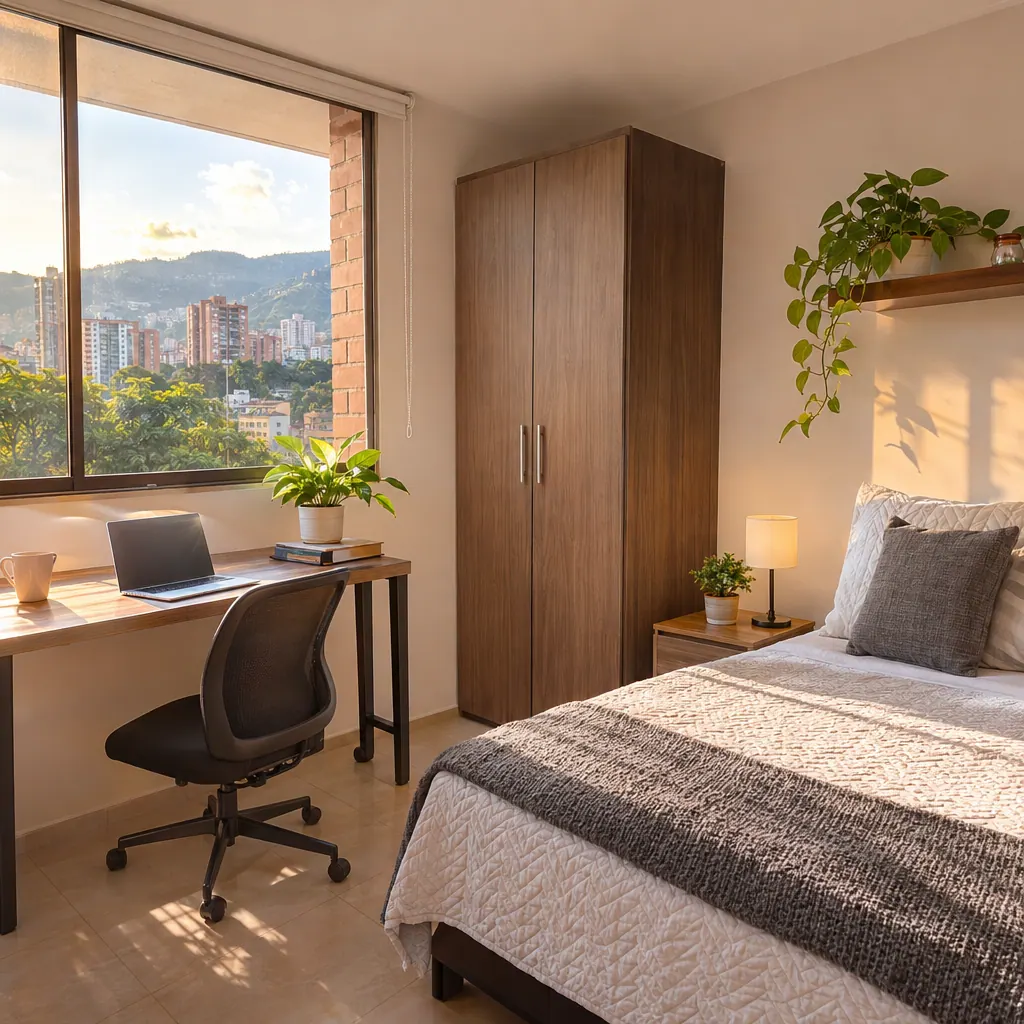
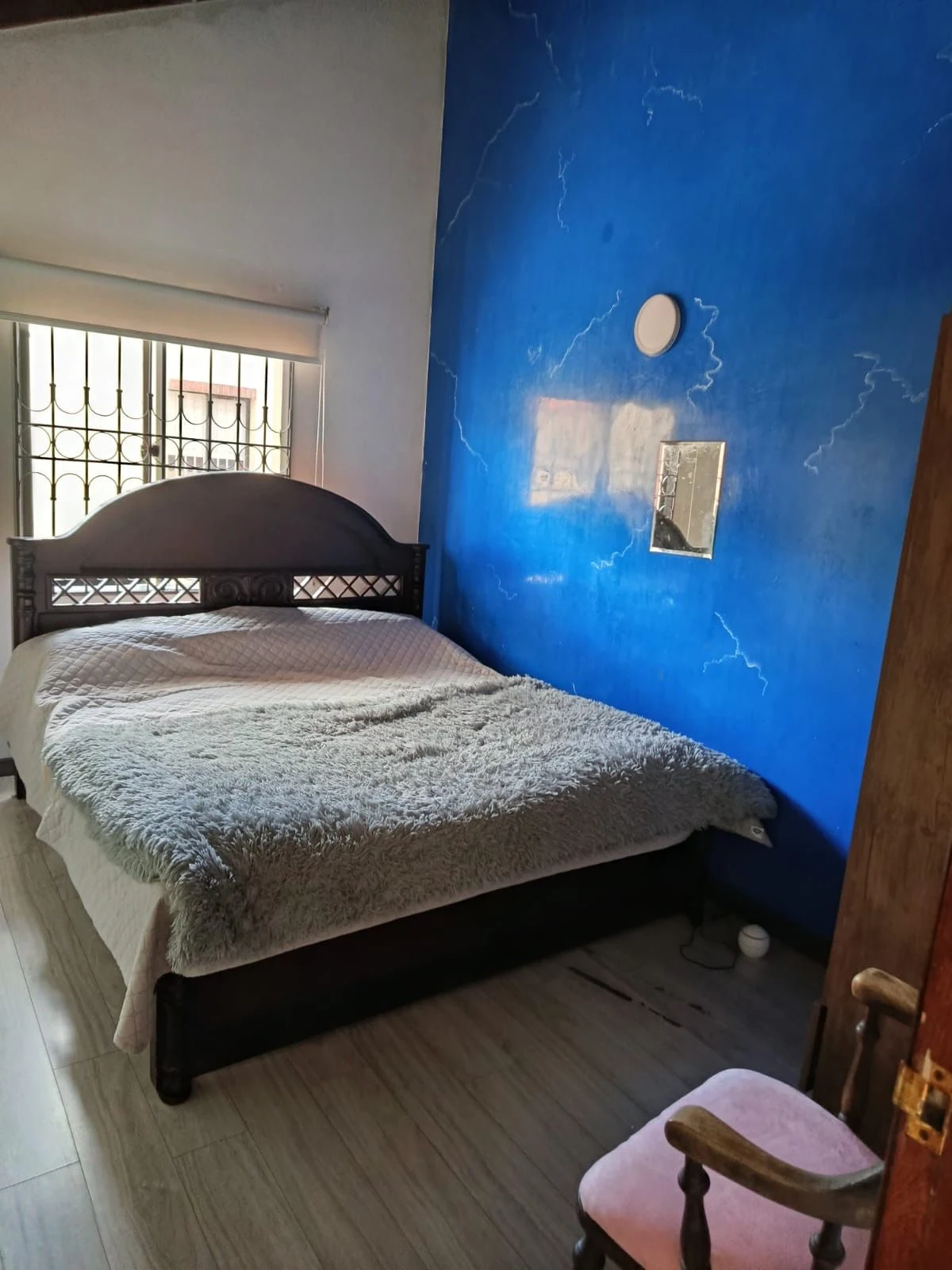
Photos are everything. A tidy room with good natural light rents out twice as fast as an identical one with dark photos and clutter in the background.
The minimum before taking photos: a bed and mattress in good condition (it doesn't have to be new, but it can't look worn out — a simple $300,000 COP mattress is the fastest investment you can make), a functional wardrobe or closet, a small table or desk (many tenants work or study from their room), WiFi with a real signal in the room, and decent ventilation — in hot cities like Cali or Barranquilla, without ventilation it's hard to rent above base prices.
For photos: take them during the day with natural light. The widest corner of the room, shot from the door. One photo of the bed, one of the closet, one of the window. Four clear photos are better than eight dark, blurry ones. Don't cheat with filters that distort the size — it creates expectations the room can't meet, and that results in inquiries that don't convert.
Where to Post Your Listing to Attract Serious Tenants
Most people only post in one Facebook group and wait. It works, but reach is limited. It's worth diversifying:
Colombia Move (colombiamove.com) is the bilingual, free platform for posting rooms, apartments, and services in Colombia. Posting costs nothing and there is no commission. It's especially useful if you're looking for international tenants — exchange students, remote workers, professionals arriving from another city.
Facebook groups segmented by neighborhood or city are the most effective for local volume. Search for 'Arriendos Medellín sin inmobiliaria', 'Habitaciones Bogotá amobladas', or groups specific to your neighborhood. General groups are full of mass posters; segmented ones have better contact quality.
Fincaraíz has a rooms section and reaches people who are already actively searching. OLX and Trovit also work, although their filter for contact quality tends to be lower. For initial volume, it's worth posting on both.
Word of mouth is the most underrated channel. Tell the building doorman, the complex administration, neighbors. The best tenant often arrives recommended by someone you already know. Refresh your listing on portals every week — the algorithms prioritize recent posts.
📖 Keep Reading
Looking to rent out a full apartment without paying a real estate agency commission?
How to Rent an Apartment in Medellín Without a Real Estate Agency →How to Screen Tenants Without Making Mistakes
This is the step most people skip and where most problems begin. Renting to the first person who writes because they offer the full price is the classic mistake.
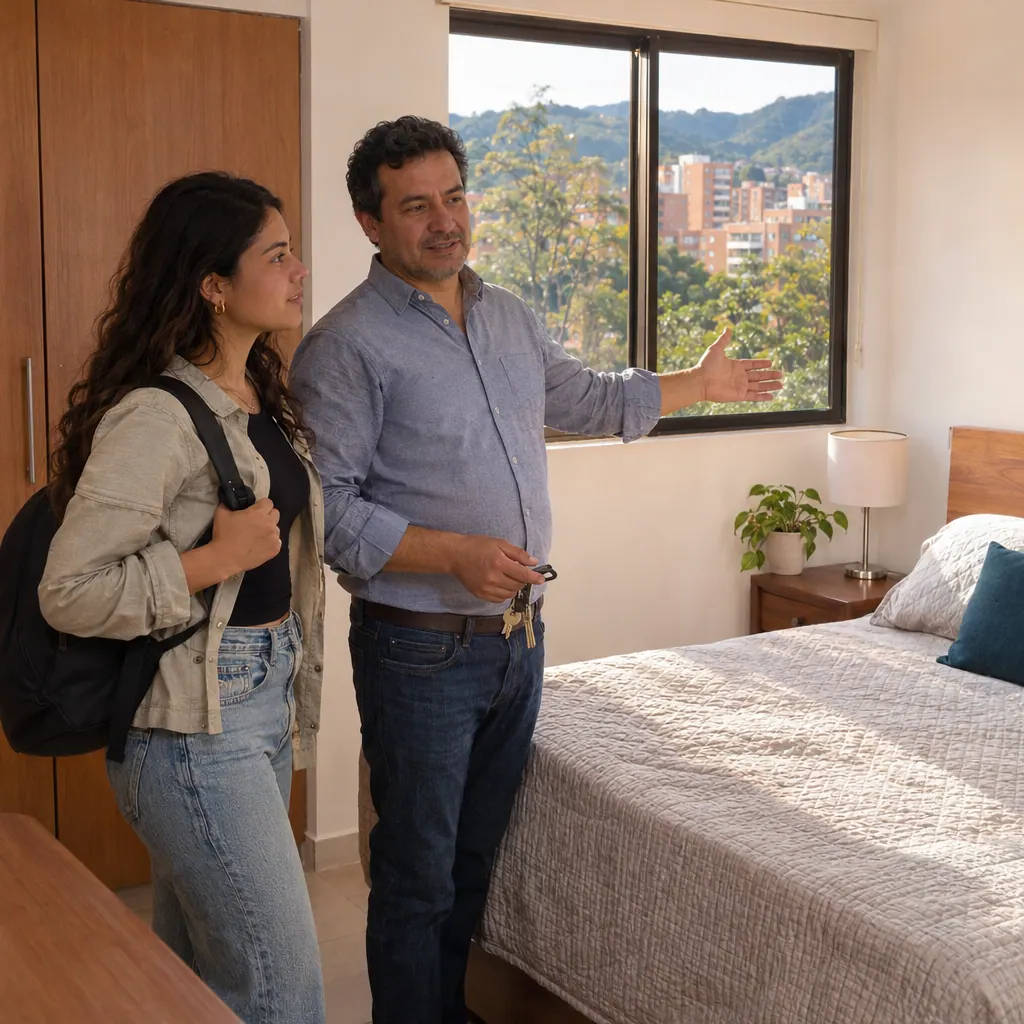
The basic filter that works well: first, a short phone or video call before showing the room. Ten minutes of conversation says more than any paperwork. Ask where they work or study, why they're moving, what schedule they keep, how often they receive visitors. It's not an interrogation — it's a normal conversation that clarifies expectations on both sides.
Ask for a reference from their previous rental. If they have rented before, the contact of the previous landlord is valuable information. Not everyone will respond, but the willingness to provide it says something. Verify job or academic stability — it's not discrimination, it's financial logic. A student with a scholarship or an employee with a fixed contract is more predictable in paying than someone in an uncertain situation.
Pay attention to whether what they say matches what they project. If someone says they lead a quiet life but shows up to the visit at 9pm with three friends without warning, you already have information. And never, under any circumstances, accept money before showing the room in person — there are scams in both directions.
The Contract: Without This, Don't Rent
A verbal agreement doesn't protect you. In Colombia, renting out a room falls under the same housing rental law (Ley 820 de 2003), and having a written contract — even a simple one — makes a difference if something goes wrong.
It doesn't have to be notarized or drafted by a lawyer. A signed document with the details of both parties and the main terms is sufficient. The essentials: name and ID of landlord and tenant, description of the space, monthly rent and payment date, which utilities are included, the amount of the security deposit (usually one month's rent), notice period to end the contract (minimum 30 days for both parties), and basic house rules.
The deposit is essential — don't negotiate it. Document the condition of the room with photos on the day the tenant moves in and keep those photos. They are your backup if there are disputes about damages at the end of the contract. A room rental contract template can be found for free online; adapt it to your specific conditions and sign it in two copies.
📖 Keep Reading
Looking to rent in Bogotá without a guarantor or co-signer? We explain all the legal alternatives.
Renting in Bogotá Without a Guarantor or Co-Signer: A Real Guide →Living Together: The Rules That Save the Relationship
Most conflicts between landlord and room tenant aren't about money — they're about different expectations that were never put on the table. The most common points of friction: use and cleaning of the kitchen, shared bathroom schedules, visitors (can a partner stay over?), night noise, and WiFi usage.
The solution isn't a list of 20 rules stuck to the fridge. It's a direct conversation before the tenant moves in. Something as simple as: 'I work from home, so from 8am to 6pm I prefer quiet in the common areas. I use the kitchen in the mornings and evenings — we can coordinate. Visitors are welcome, but for the first 30 days while we get to know each other, I'd prefer they don't stay overnight.'
Nothing formal. Just clarity. What is said beforehand doesn't create conflict afterward. And if something gets complicated — late payments, breaking agreed rules — address it directly and quickly. A ten-minute uncomfortable conversation is infinitely better than three months of silent tension building up.
💬 Have Questions About Renting?
Ask the community at colombiamove.com/comunidad — there are landlords and tenants with real experience who can guide you.
Go to the Community →Frequently Asked Questions
❓ Do I need a special permit to rent out a room in my home?
If you are the owner, you can rent out rooms freely. If you are a tenant, check your contract — many prohibit subletting without the landlord's written permission. Violating that clause can jeopardize your own rental.
❓ How much security deposit should I ask for?
The equivalent of one month's rent is the standard in Colombia. Document the condition of the room with photos on the day the tenant moves in — those photos are your backup if there are disputes about damages at the end of the contract.
❓ What happens if the tenant doesn't pay?
With a written contract you have a legal basis to start a restitution process. Without a contract, recovering the space is harder, though not impossible. The most practical approach is to include a clause in the contract setting a deadline of 5 business days to pay before termination grounds apply.
❓ Do I have to declare income from renting out a room?
If you file an income tax return in Colombia, yes, rental income counts. In 2026, the threshold for individuals required to file is gross annual income above $64,805,000 COP or net worth above $190,853,000 COP. Consult an accountant if you are close to those limits.
❓ What should the listing include to attract better tenants?
Monthly price, which utilities are included, neighborhood (you don't need to give the exact address until the visit), room features (dimensions, shared or private bathroom, furnished or unfurnished), and who you prefer to rent to. Being clear about restrictions saves time for both of you — it filters for only those who fit what you're looking for.
Renting out a room well isn't complicated, but renting without judgment does have consequences that are felt quickly. A good screening process at the start is worth more than any contract clause after the fact. If you have questions about the fair price for your area, how to draft the contract, or what to do in a specific situation, stop by colombiamove.com/comunidad — there are landlords and tenants with real experience ready to guide you.


Comments
Loading comments...
Checking sign-in status...