
Country house in Copacabana, Antioquia: 3,000 m², pool and land minutes from Medellín
A modern country house in Copacabana —3,000 m² lot, new pool, gym and jacuzzi, no HOA— and an honest guide to the north of the Aburrá Valley: climate, connectivity, prices and who it's right for.
IDIOMA DEL ARTÍCULO
Showing original language
Every week we highlight a real property published by its owner on Colombia Move. This time it's a country house in Copacabana, Antioquia: 3,000 m² lot, new pool, gym and jacuzzi, just minutes from Medellín. But more than an ad, it's a good excuse to understand an area that many buyers still view with suspicion: the north of the Aburrá Valley.
Here's what we always do in our spotlights: the property with verifiable data, and around it an honest reading of the area—climate, connectivity, prices and who it serves—so you can decide with a clear head and not just a pretty pool photo.
Quick summary
- Where: Copacabana, north of the Aburrá Valley — Medellín metropolitan area, ~18 km and 20–40 min from downtown.
- The property: country house with 3,000 m² lot y 300 m² built, 4 bedrooms with bathroom, new pool, gym and jacuzzi, no HOA fees.
- Price: COP 2.3 billion (≈ USD 630k at May 2026 rates). Below the municipal country house average.
- Connectivity: ~10 minutes from Puerta del Norte (in Bello), across from Niquía Metro terminal.
- For whom: weekend getaway, second home, event/weekend rental or investment near the city.
Where Copacabana is and why people are looking north
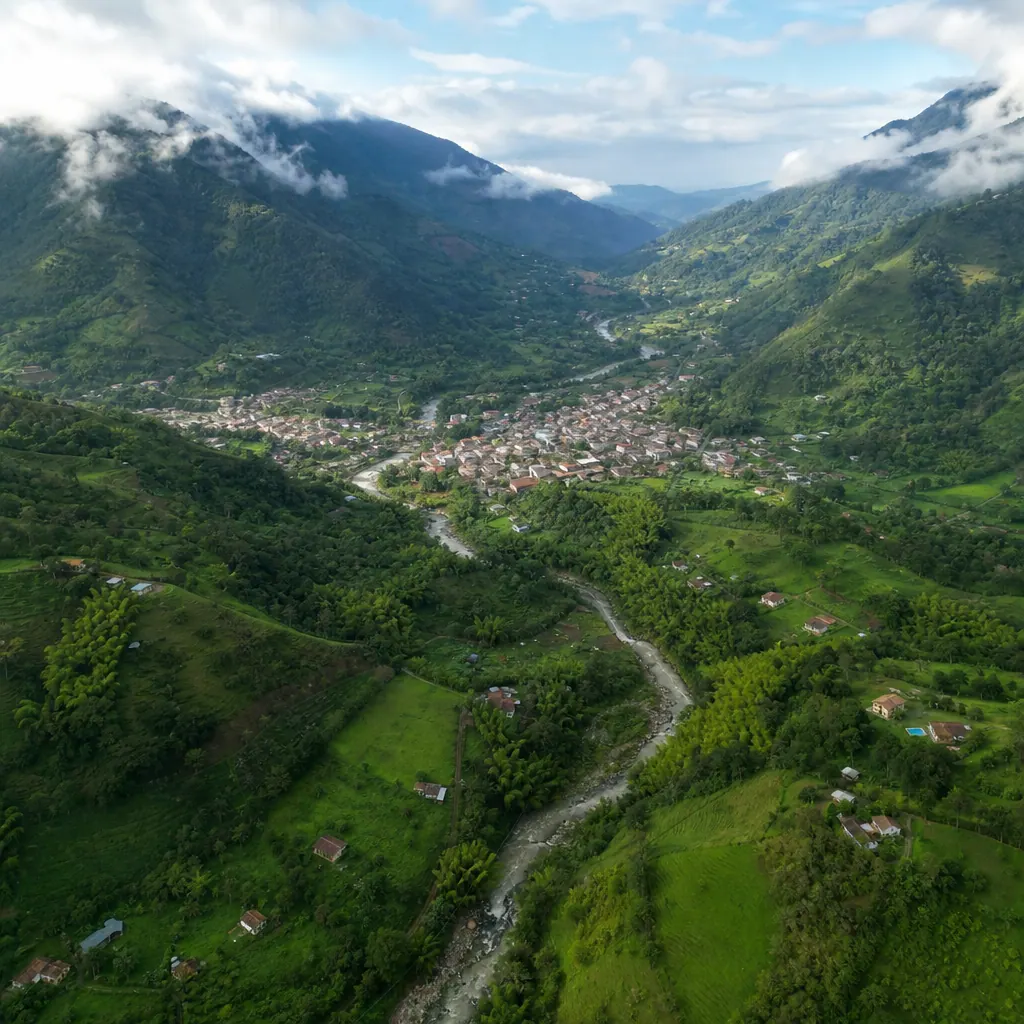
Copacabana is one of ten municipalities in the Aburrá Valley and part of the Medellín Metropolitan Area. It's north of the city, following the Aburrá River, about 18 km from downtown —between 20 and 40 minutes by car depending on traffic—via the Northern Highway. It borders Bello, Girardota, San Pedro de los Milagros, Medellín and Guarne.
The town center sits at about 1,454 meters above sea level, with temperate climate. The valley floor in the north is one of the warmest sectors of the metropolitan area, and that—let's be honest—is exactly the appeal of a country house: pool and BBQ weather year-round, warmer than the El Poblado hillside. The rural areas climb the mountain and it cools down there.
On connectivity there's a fact worth clarifying, because the ad says "10 minutes from Puerta del Norte": that shopping center—the major commerce and services hub of the north— is in Bello, not Copacabana, right across from Niquía station, the northern terminal of the Metro (Line A). In other words: Copacabana doesn't have its own Metro station, but it's just minutes from the network. People living here reach the Metro on integrated/feeder buses to Niquía or Madera, or by car. For country house living, a car is a given.
In the background, the municipality is well connected: the Medellín–Bogotá Highway to the east and the dual carriageway toward El Hatillo (Route to the Sea) to the west. The international José María Córdova airport (Rionegro) is about 35–45 minutes away via the Eastern Tunnel. And looking ahead, the Tren del Río project (Antioquia Railway) contemplates in its first phase Bello–Barbosa a station in Copacabana integrated with the Metro—a medium-term appreciation factor if it moves forward.
Why the north of the Aburrá Valley (and not El Poblado)
The north play is simple: the south of the Valley—El Poblado, Envigado, Sabaneta—is the most expensive and most sought by foreigners, which keeps prices up. The north offers more land for the same money, more green, less noise and, often, zero HOA. For a country house, where what you're buying is space and peace, that equation works.
In price per square meter the difference is real:
Reference values 2025–2026, approximate and variable by sector (sources: real estate portals). Useful for comparing orders of magnitude, not as appraisals.
Copacabana can be up to ~40% cheaper than the city per square meter, and the north is far from standing still: Bello alone sold over 2,600 new homes in the first quarter of 2025 (surpassing Medellín), Antioquia grew 31.7% in new home sales in 2025 and Medellín's m² rose 10.3% in the year, the country's largest increase. Typical appreciation in the area runs 5–10% annually. Translation: the north is where your money still goes further, with demand pushing it.
The featured property: 3,000 m² country house in Copacabana
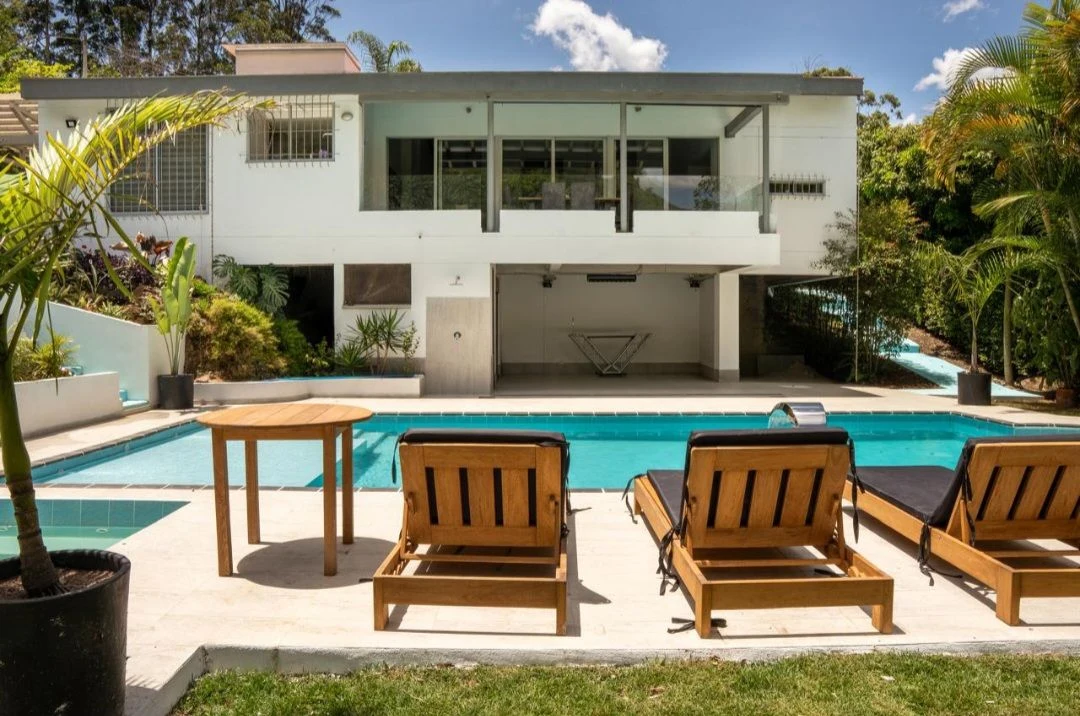
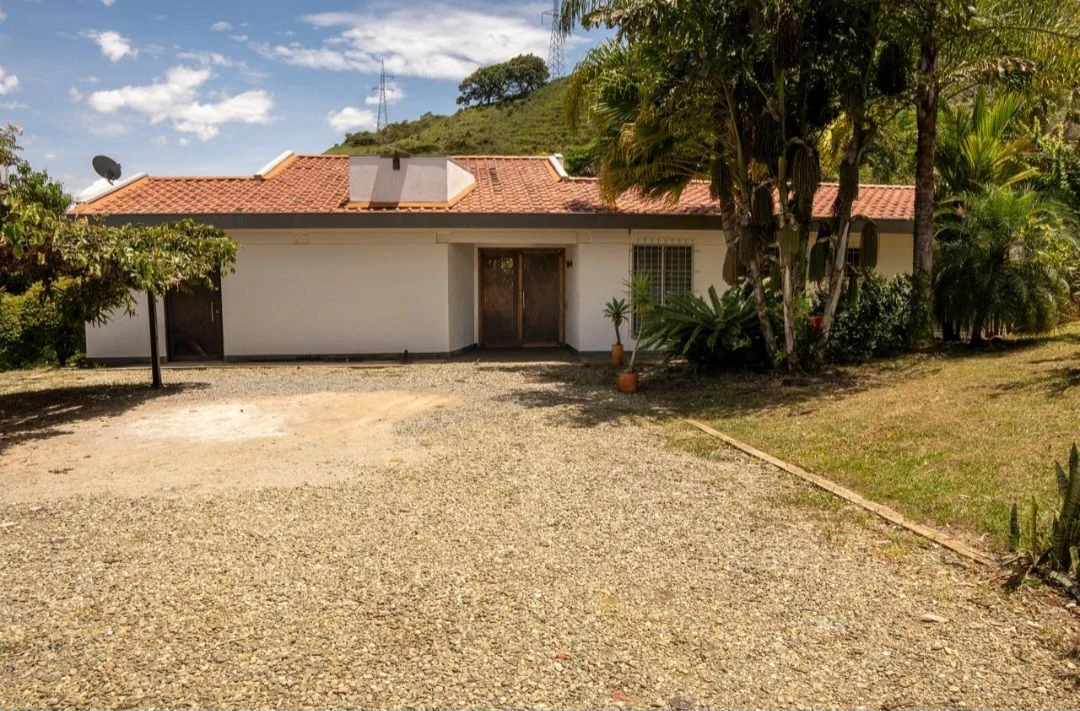
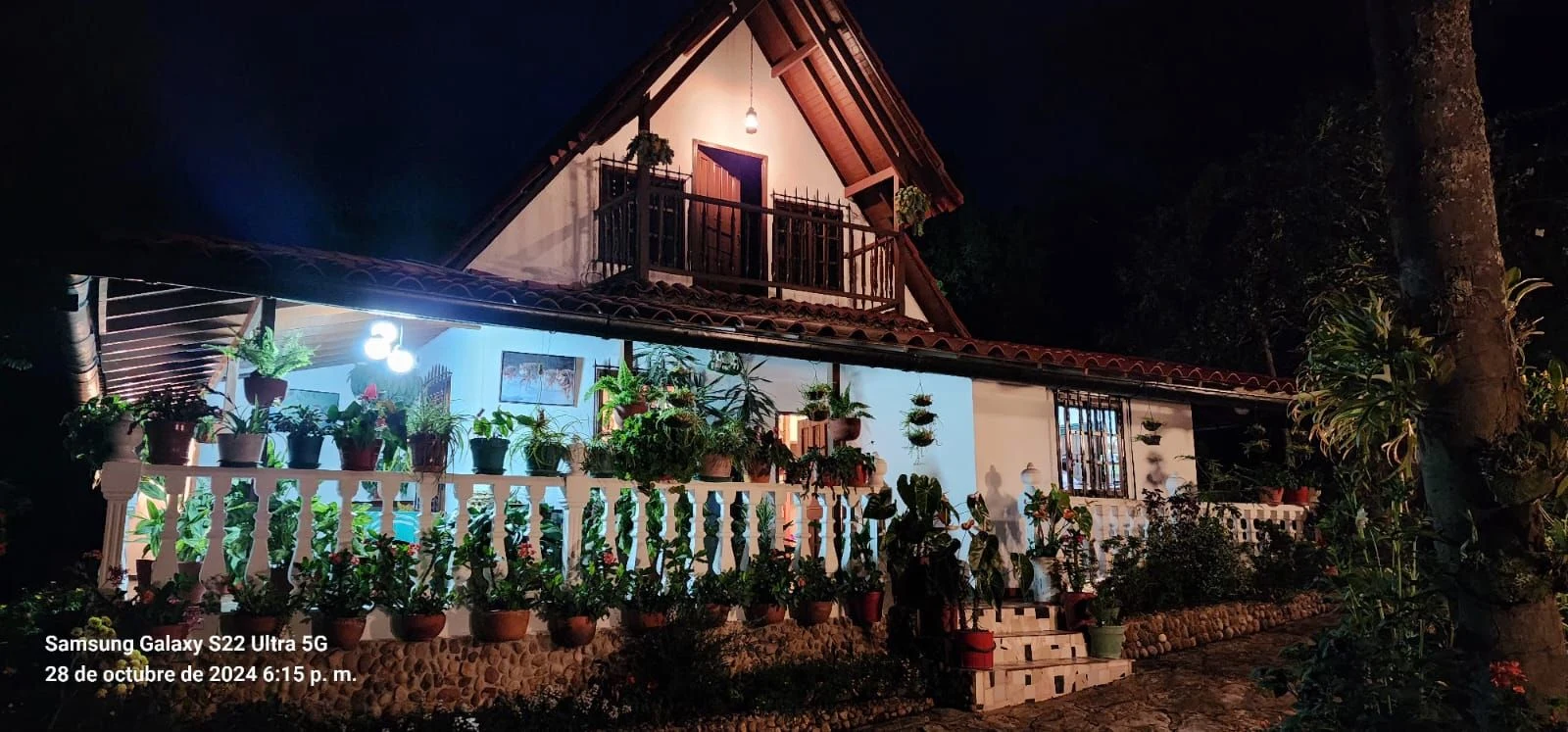
The first thing you notice is that it's not just any country house. It's a modern two-story construction, clean lines, high wooden and guadua ceilings, large windows and constant connection with the green outside. 300 m² built well distributed over a 3,000 m² lot.
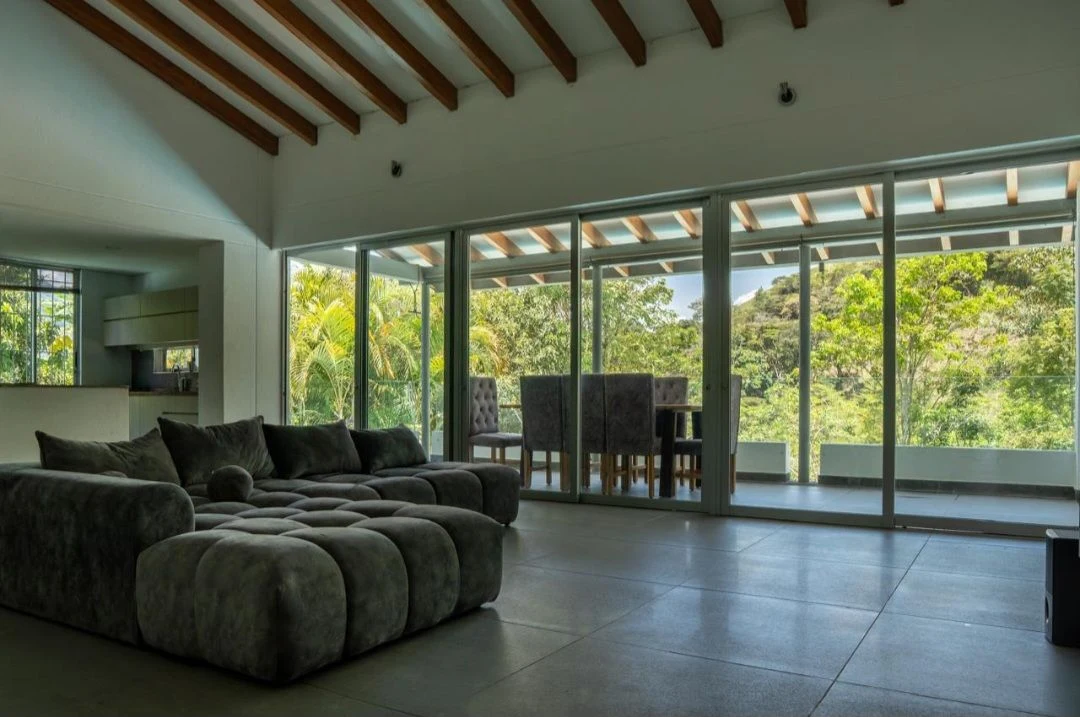
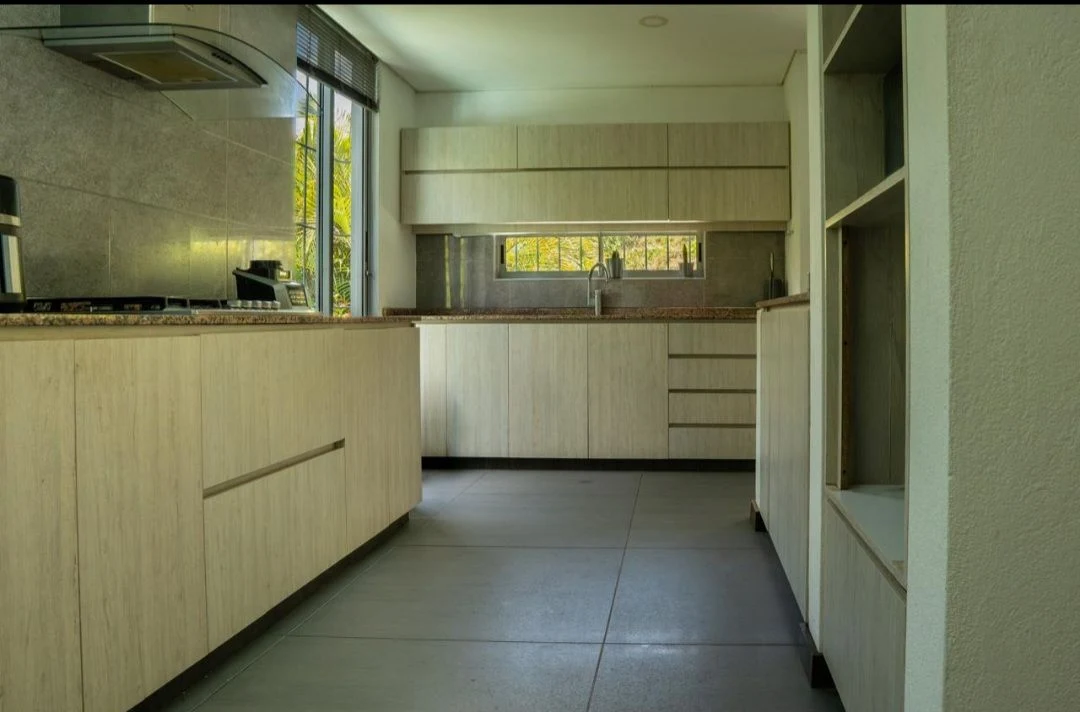
The social area is the heart of the house: double height, exposed wooden beams and a window that blurs the line between the living room and the forest. It's the kind of space that feels cool, spacious and bright, designed to gather people. The full kitchen opens to the dining room and there's a study and walk-in closet among the private spaces.
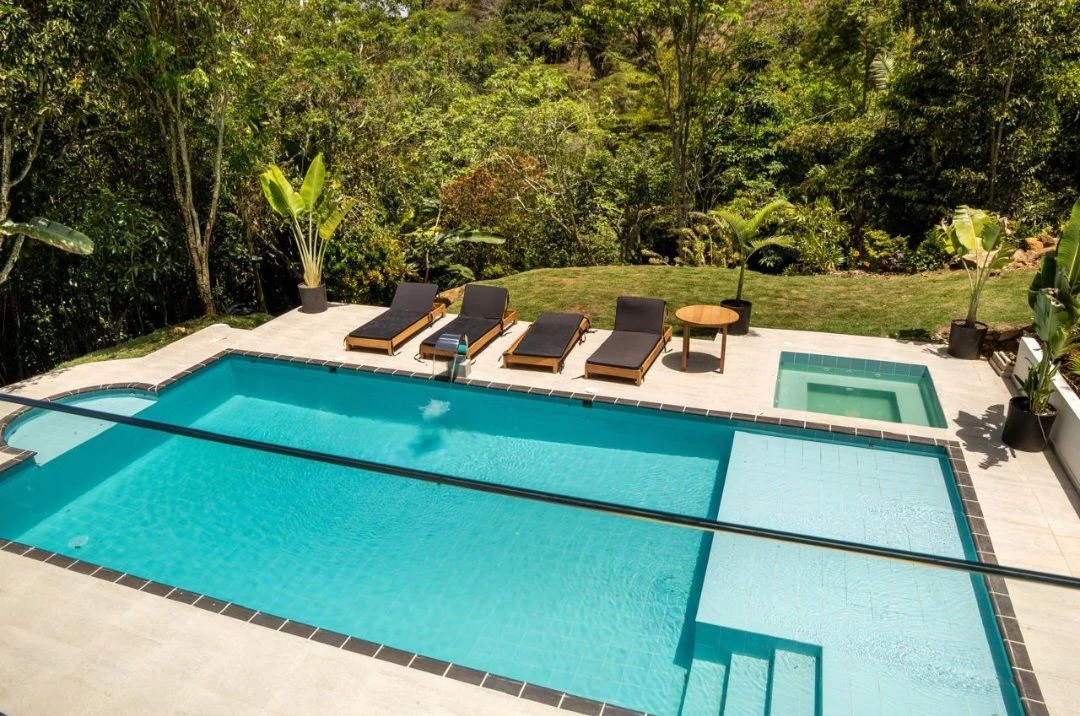
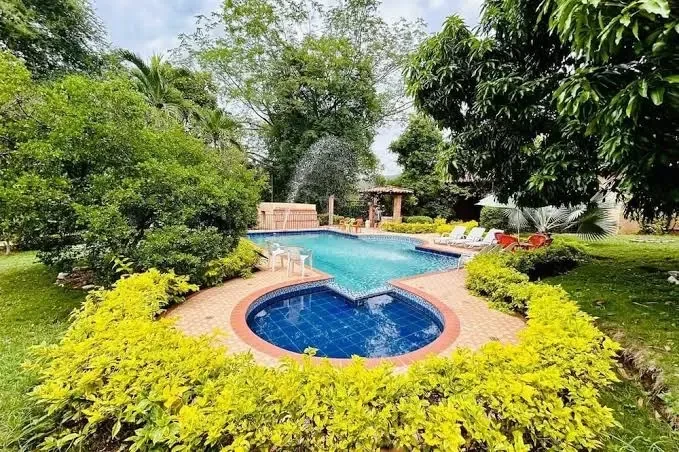
Outside is the real trump card of the property for warm weather: new pool with jacuzzi, spacious deck, BBQ area and garden. It's the exact combination of a paisa weekend: sancocho, pool and rest.
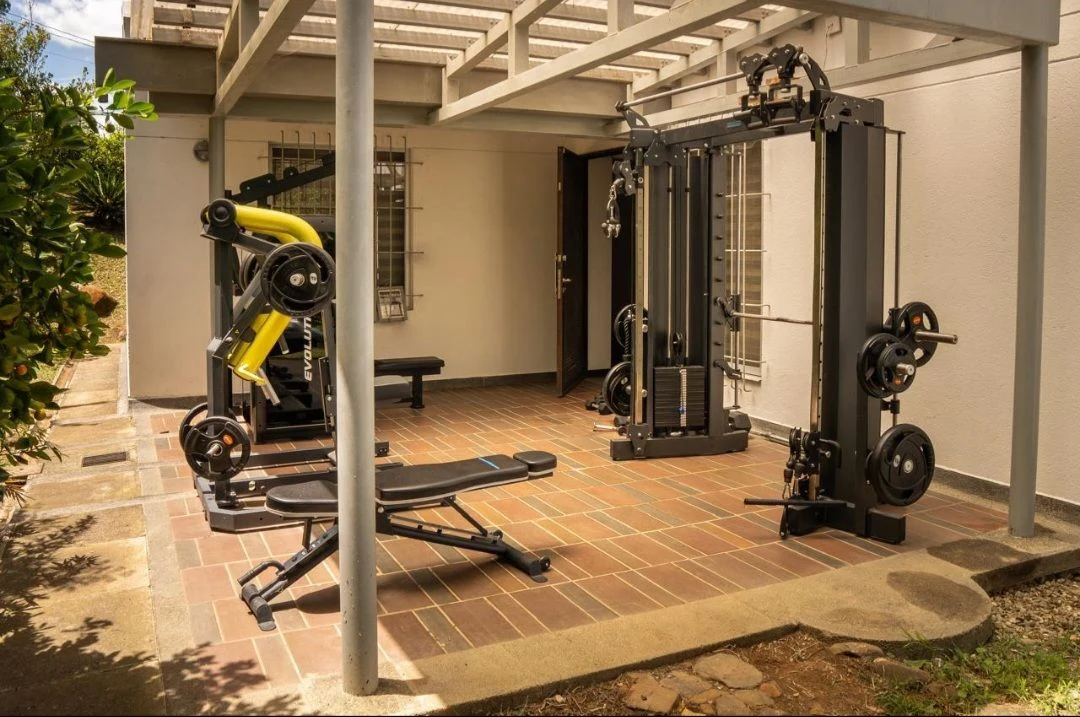
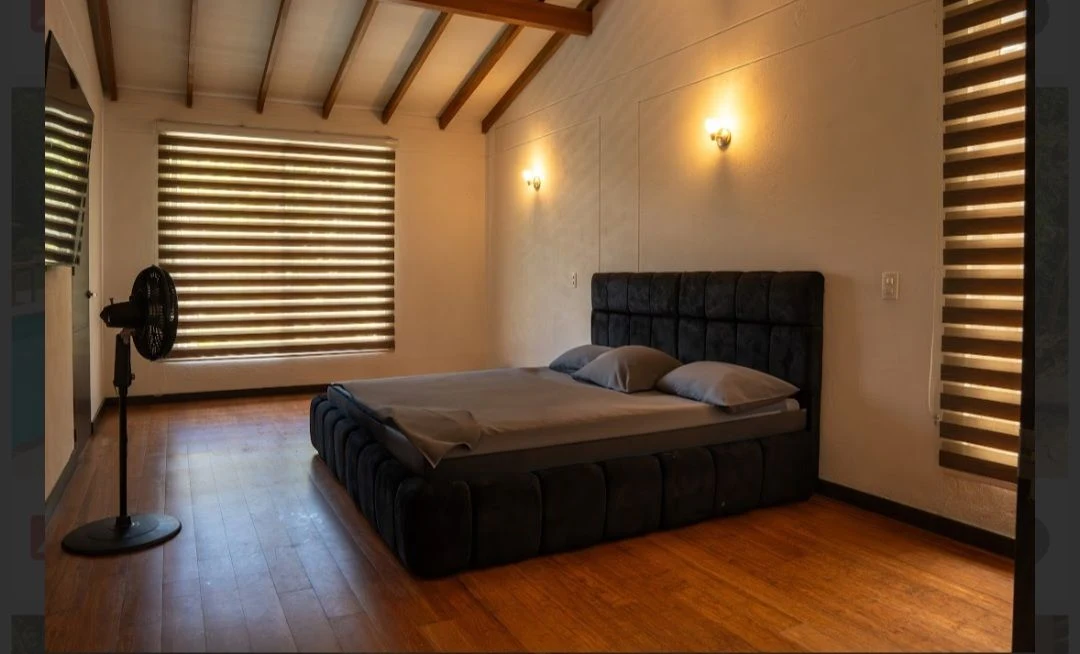
And there are extras that matter: an equipped private gym (unusual in this category), spacious parking, and the 4 bedrooms, each with private bathroom. That last combination—private bathrooms per bedroom, pool, jacuzzi and BBQ—is no accident: it's exactly what both a large family and someone thinking of renting the property for events or weekends are looking for.
Is it a good price? Honest reading
COP 2.300 million is a market price for this category. It falls below the average for a country estate in the municipality (close to COP 3.400 million) and well below comparable properties that are almost identical —there are 3.000 m² country estates with 4 bedrooms listed for up to COP 4.500 million—, although above more basic country homes (COP 1.600–1.950 million).
What supports the value: new swimming pool, private gym and jacuzzi, 4 bedrooms with private bathroom and, key to the cost of ownership, that does not pay administration fees (unlike many country subdivisions). At the TRM rate of May 2026 (~COP 3.650 per dollar), it's around USD 630.000.
In summary: a complete country estate, with modern and well-executed construction, in a sensible price range for what it offers. As always, the final price is negotiable with the owner and the visit is what matters.
Featured this week
Country estate in Copacabana — 3.000 m², new swimming pool, no administration fees
View all the photos from the listing and contact the owner directly. On Colombia Move contact is direct, with no commission or intermediaries.
View the full listing →Write on WhatsAppWho is this country estate for?
A property like this usually fits four profiles that almost always mix. The most common is the family that wants weekend rest close to the city —arriving in half an hour, not three—. Then there's whoever is looking for a second home or asset protection. A third, increasingly frequent, is the short-term rental investor: sunny days, weekends and events. And a minority would use it as a permanent residence, living outside the urban center but connected.
On the latter, here's a concrete fact: renting country estates for events and weekends near Medellín is an active market —specialized platforms operate in the north (Copacabana, Girardota, Barbosa) with rates ranging from ~COP 700.000 to over COP 1.800.000 per night depending on capacity. In Colombia, short-term rentals yield between 25% and 40% more than traditional rent. If that's the idea, keep in mind that for rentals of less than 30 days, a National Tourism Registry (RNT) is required and it's worth confirming that land use permits it.
Living in Copacabana: climate, culture and what to do
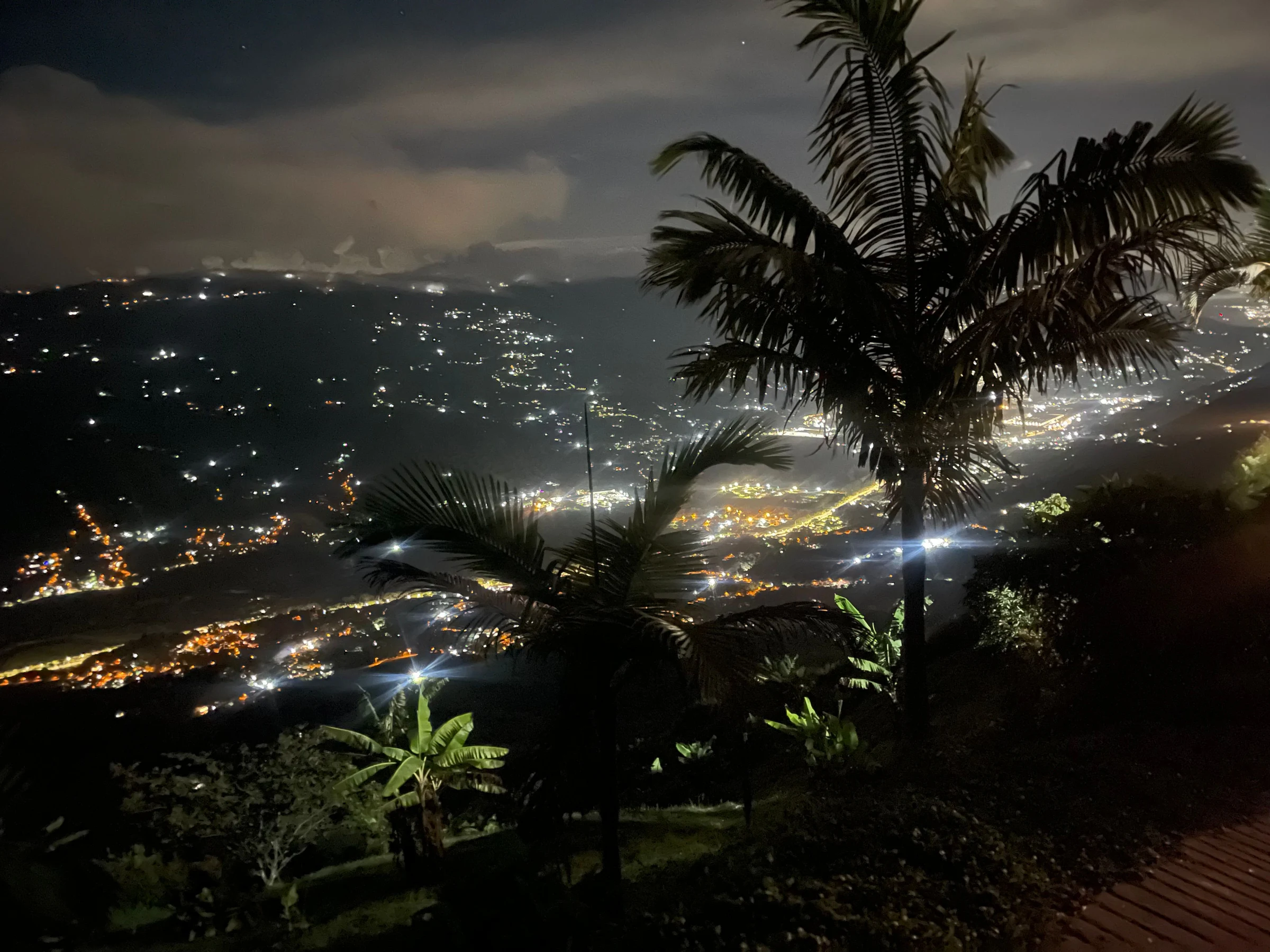
A fact that almost nobody knows: Copacabana is not named after the beach in Rio de Janeiro. The name comes from the Virgin of Copacabana, the one from Lake Titicaca in Bolivia. History tells that when the miners from the old Tasajera were relocated, a priest guided them carrying an altarpiece of that Bolivian Virgin, and the town took her name. The Quechua/Aymara root means, more or less, "high place, serene and with beautiful views". It fits well.
There's plenty of history: the first mass of the Aburrá Valley was celebrated here on September 8, 1541. The main Simón Bolívar park and the Nuestra Señora de la Asunción parish anchor the life of the town. And although it may sound contradictory, Copacabana is both green and industrial: it's home to Haceb Industries and a historic cluster of tanneries, with hundreds of companies. It's not a postcard-like tourist town; it's a municipality that works.
For outdoor activities, the icon is Cerro Quitasol, a pyramidal mountain of almost 2.800 m, considered sacred, with petroglyphs and panoramic views of the valley (a demanding climb of several hours). There's also Alto de la Cruz, with its viewpoints, trails to Piedras Blancas and family recreational parks by Comfama. And the culture of the country house: the classic paisa weekend of swimming pool and wood-fired stew.
The flagship festival is the Orange Festival (orange was a historic crop of the area), with its stew festival, classic car parades and concerts. And around the corner there's more: Girardota and its Sanctuary of the Fallen Lord, the Hatillo district, Barbosa and the tourist train of the Antioquia Railroad. In summary, quiet town life with the city 30 minutes away.
Before buying a country estate in Antioquia
Buying a country estate is not like buying an apartment. There are rural variables that a pretty listing doesn't show and that are worth checking before you fall in love. Not to scare you: so you negotiate with information and don't get surprises after signing.
Before signing: the minimum checklist for a country estate
- Certificate of title and freedom up to date (Supernotariado): check owners, liens, false title and annotations.
- Property tax clearance and valuation clearance, and current property tax of the property.
- Land use in the POT: confirm that the property is suitable for country housing (and for short-term rental, if that's your idea).
- Water and services: rural aqueduct or water concession, energy and wastewater management (septic tank). Having water is not the same as having the legal right to use it.
- Boundaries and easements: compare the area with the cadastre (a surveyor helps) and verify access easements.
If the country estate is on your radar, it's worth reading how property tax is by city in Colombia, and how to search for country estates for sale without getting lost in WhatsApp groups. If you're a foreigner, the good news is that you have the same property rights as a Colombian and a passport is enough to buy; the key step is channeling the money through the foreign exchange market and registering the foreign investment with the Bank of the Republic, which protects repatriation when you sell.
Frequently asked questions
❓ Where exactly is Copacabana located?
In the north of the Aburrá Valley, within the metropolitan area of Medellín, about 18 km and 20–40 minutes from downtown via the Northern Highway. It borders Bello, Girardota, San Pedro de los Milagros, Medellín and Guarne.
❓ How much does a country estate cost in Copacabana?
It depends a lot on the lot, what's built and the amenities. Country homes usually start from ~COP 1.200 million, and estates with more land or better finishes exceed COP 3.000–4.500 million. The featured property, with 3.000 m², new swimming pool and gym, is at COP 2.300 million —below the average for a country estate in the municipality.
❓ Does Copacabana have a Metro station?
No. The Metro (Line A) ends to the north at Niquía, in Bello, right in front of Puerta del Norte. From Copacabana you can get there by integrated buses or by car. In the future, the Río Train project contemplates a station in the municipality.
❓ Is "country estate" the same as estate or country home?
They're used almost as synonyms, but there are nuances. A traditional finca is productive (coffee, livestock). A country house is a dwelling in a rural area, for recreation. "Casa finca" is exactly that: a recreational house with land, without the need for agricultural exploitation. This property is that type: countryside and house, not a working finca.
❓ Can a foreigner buy a casa finca in Colombia?
Yes. Foreigners have the same property rights as Colombians and can buy with their passport, without a visa. What's important is to channel the funds through the foreign exchange market and register the foreign investment with the Banco de la República to ensure repatriation when selling.
❓ How do I contact the owner of this casa finca?
Directly, without intermediaries. Open the listing on Colombia Move to see all the photos and message the owner on WhatsApp. On Colombia Move contact is direct and posting is free, with no commission.
Did you like this casa finca? View the full listing here. And if you have a similar property, post it for free on Colombia Move — that's how this one ended up here.
Comments
Loading comments...
Checking sign-in status...