
Barichara, Colombia: The Complete Travel Guide
Colombia's most beautiful village — built from sandstone, frozen in the 18th century, and almost impossible to leave after your first evening there. Here's everything you need to visit Barichara.
IDIOMA DEL ARTÍCULO
Showing original language
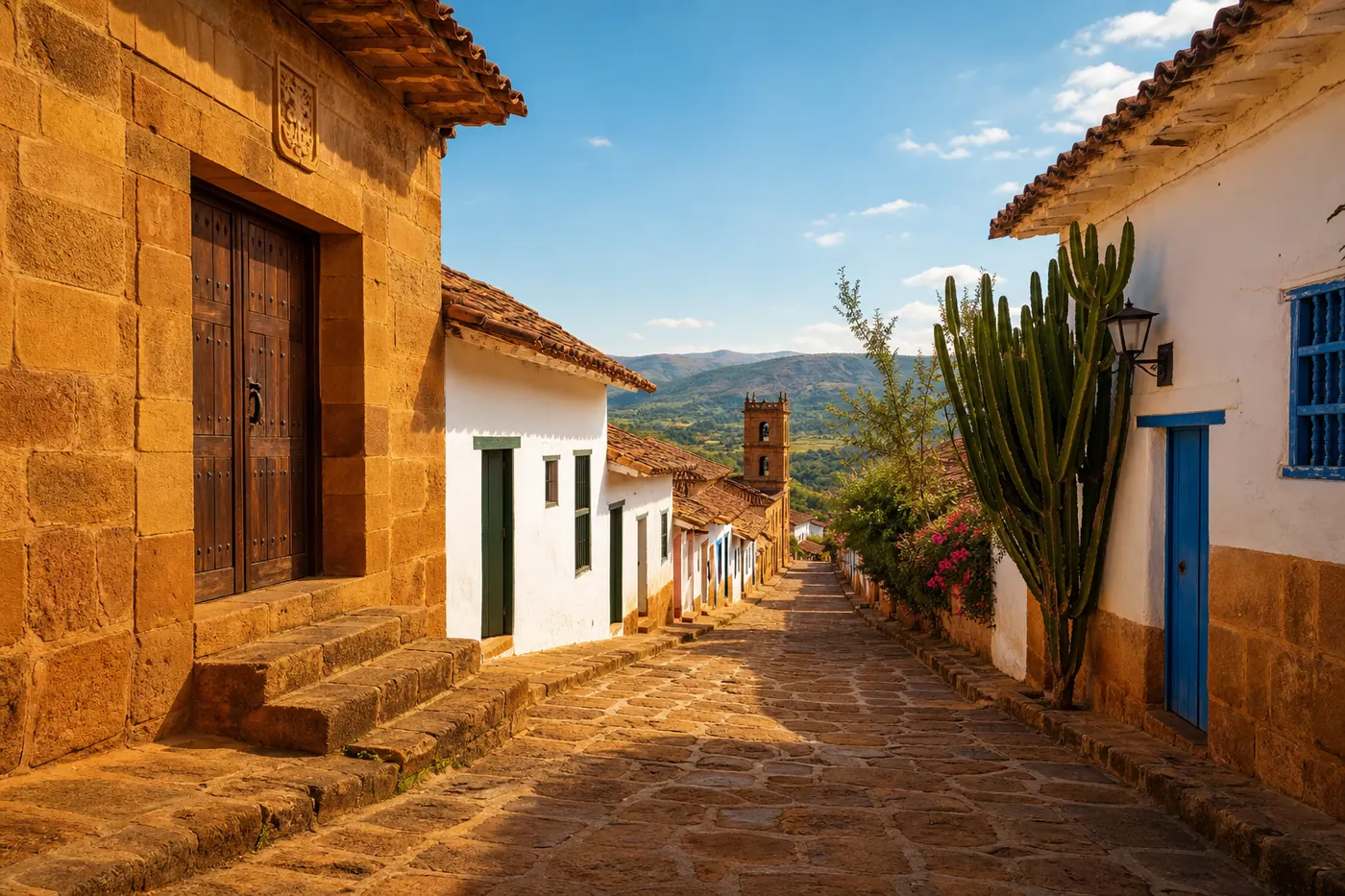
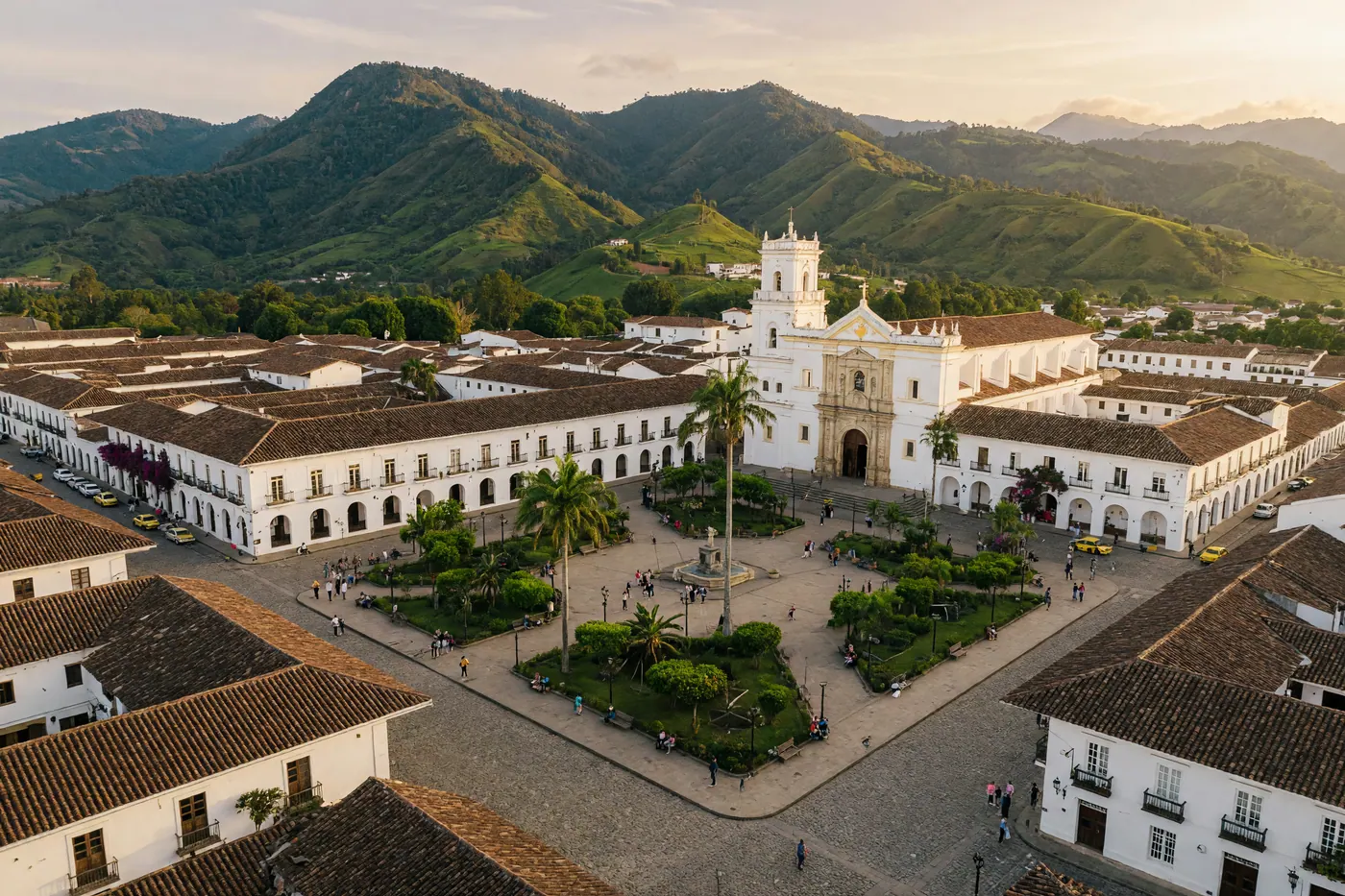
The Spanish word for 'beautiful' doesn't quite cover it. Barichara sits on a mesa 1,300 meters above sea level in Santander department, carved from stone so orange it looks like it's been soaking in sunset for three centuries. Every building — from the cathedral to the corner tienda — is constructed from sillar, a soft local sandstone that masons quarry by hand from nearby hills. The streets are paved with the same flat stone. The whole town has been a National Monument since 1978, which means nothing new gets built and nothing old gets knocked down.
It gets called 'Colombia's most beautiful village' so often the phrase barely lands anymore. But having walked similar colonial towns across Boyacá, Antioquia, and the Eje Cafetero, I'll say Barichara earns it. The scale feels right. The materials are coherent — everything built from the same stone in the same warm tones. The light at 5pm, when the sillar walls go from beige to deep gold, is the kind of thing you don't really forget. If you want to see real-world options right now, you can browse apartments and houses on Colombia Move — posting is completely free.
Most people treat it as a half-day detour on the way to San Gil or the Chicamocha Canyon. Walk the Camino Real to Guane, have lunch, and leave before the light gets interesting. That version works. But the town doesn't fully reveal itself until the last tour bus pulls out around 4pm.
⚡ Quick Answer: Barichara Essentials
- Getting there: ~4.5h from Bogotá via San Gil bus; ~1.5h from Bucaramanga
- Don't miss: The Camino Real to Guane (9km, 2–3h walk)
- Best season: November–February (dry season)
- Accommodation: 60,000–250,000 COP/night
- Bring cash: ATMs exist but can run dry on busy weekends
- Budget for 2 days: ~250,000–400,000 COP all-in
Getting to Barichara
The practical route from most Colombian cities runs through San Gil, the adventure sports hub about 20km away. From San Gil, shared taxis (collectivos) and local buses depart for Barichara every 30–60 minutes, taking 20–30 minutes and costing 6,000–9,000 COP per person. That last leg is often the overlooked part of trip planning — account for it.
From Bogotá: Several bus companies — Bolivariano and Copetran are the most reliable — run directly from the Terminal de Transporte to San Gil. The trip takes 4.5–5.5 hours and costs 55,000–75,000 COP. From San Gil, connect to Barichara. Total door-to-door from central Bogotá is around 5.5–6.5 hours depending on traffic and connections.
From Bucaramanga: About 2 hours to San Gil by bus, then the standard 20-minute connection to Barichara. Bucaramanga's Palonegro airport (BGA) receives daily flights from Bogotá and Medellín — if you're flying in specifically to visit this area, landing in Bucaramanga and renting a car or taking buses onward is the fastest approach.
From Medellín: This takes some commitment — figure 7–9 hours total by bus, routing through either Bogotá or directly through the mountains. Most Medellín-based travelers treat Barichara as part of a longer Santander trip, not a stand-alone day trip. If that's you, plan at least three nights in the region to make the journey worthwhile.
For bus booking details and what to expect at Colombia's bus terminals, the Colombia bus travel guide covers the practical logistics.
Where to Stay in Barichara
The town is small — roughly ten by ten blocks — so location matters less than you'd think. Staying anywhere in the historic center puts you within walking distance of everything. The tradeoffs between properties are about comfort level and budget, not proximity.
Budget (under 80,000 COP/night): Several hostels operate near the main plaza and along the streets toward the artisan workshops. Expect shared rooms, simple but clean. Hostel owners here tend to be genuinely knowledgeable about the Camino Real timing, local guides, and which restaurants are actually worth it.
Mid-range (100,000–220,000 COP/night): This is where Barichara shines. Colonial posadas and small boutique hotels occupy old stone houses with interior courtyard gardens, high beamed ceilings, and hammocks. Many have direct views over the canyon ridgeline. For the quality, prices are a fraction of what equivalent stays cost in El Poblado or Chapinero.
Higher end: A handful of properties have pushed into the 250,000–500,000 COP range with modern amenities inside historic shells. Worth it if you're celebrating something or want a place that handles every detail.
One important caveat: Barichara fills completely on holiday weekends and Semana Santa. Book at least a week ahead during December, January, any puente festivo, or Easter week. Walking in without a reservation on a Saturday in high season is not fun.
The Camino Real to Guane
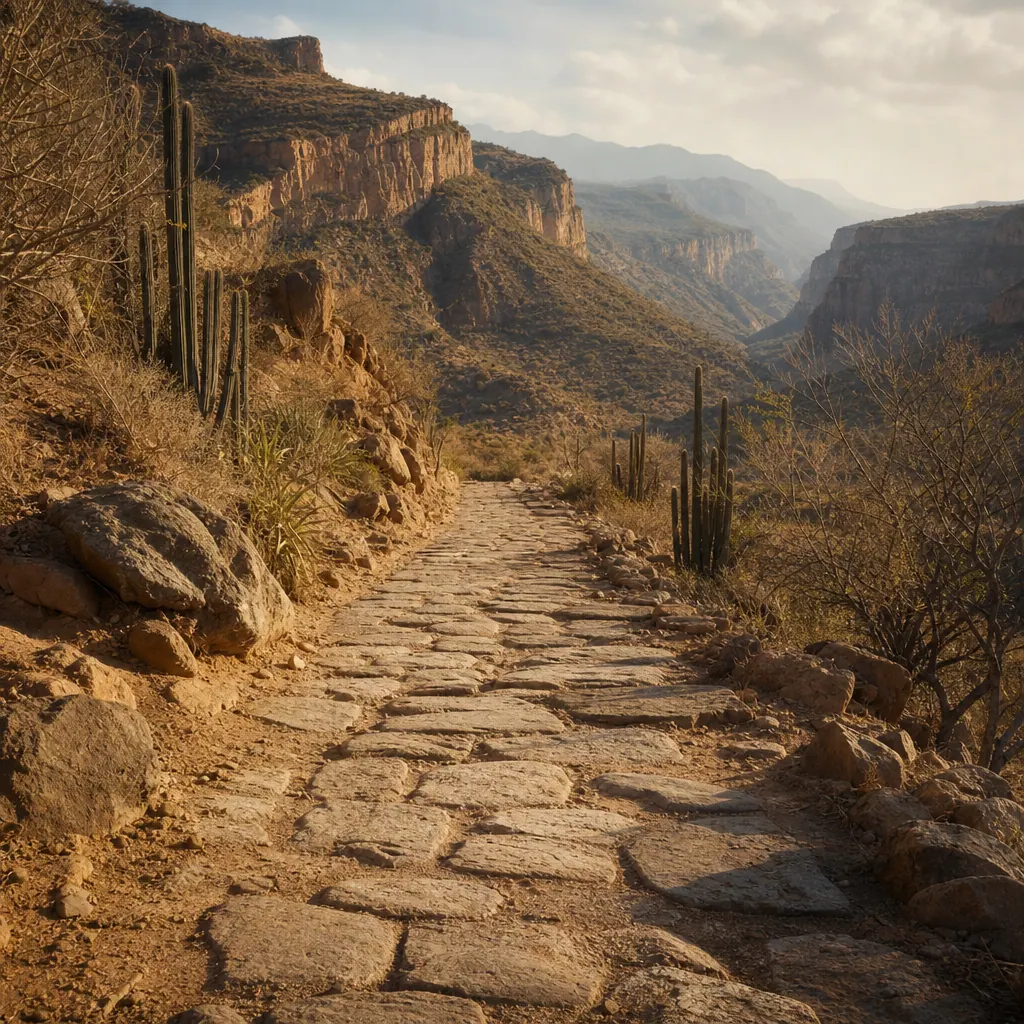
The Camino Real is a 9-kilometer stone path that predates the Spanish conquest by centuries, connecting Barichara to the tiny village of Guane. The Spaniards repaved it in the 18th century using local flat stone; in sections, you can still see the original Guane-Lache indigenous road underneath. It's one of the better-preserved pre-colonial paths in Colombia, and it doesn't feel like a tourist creation — it feels used, which it still is.
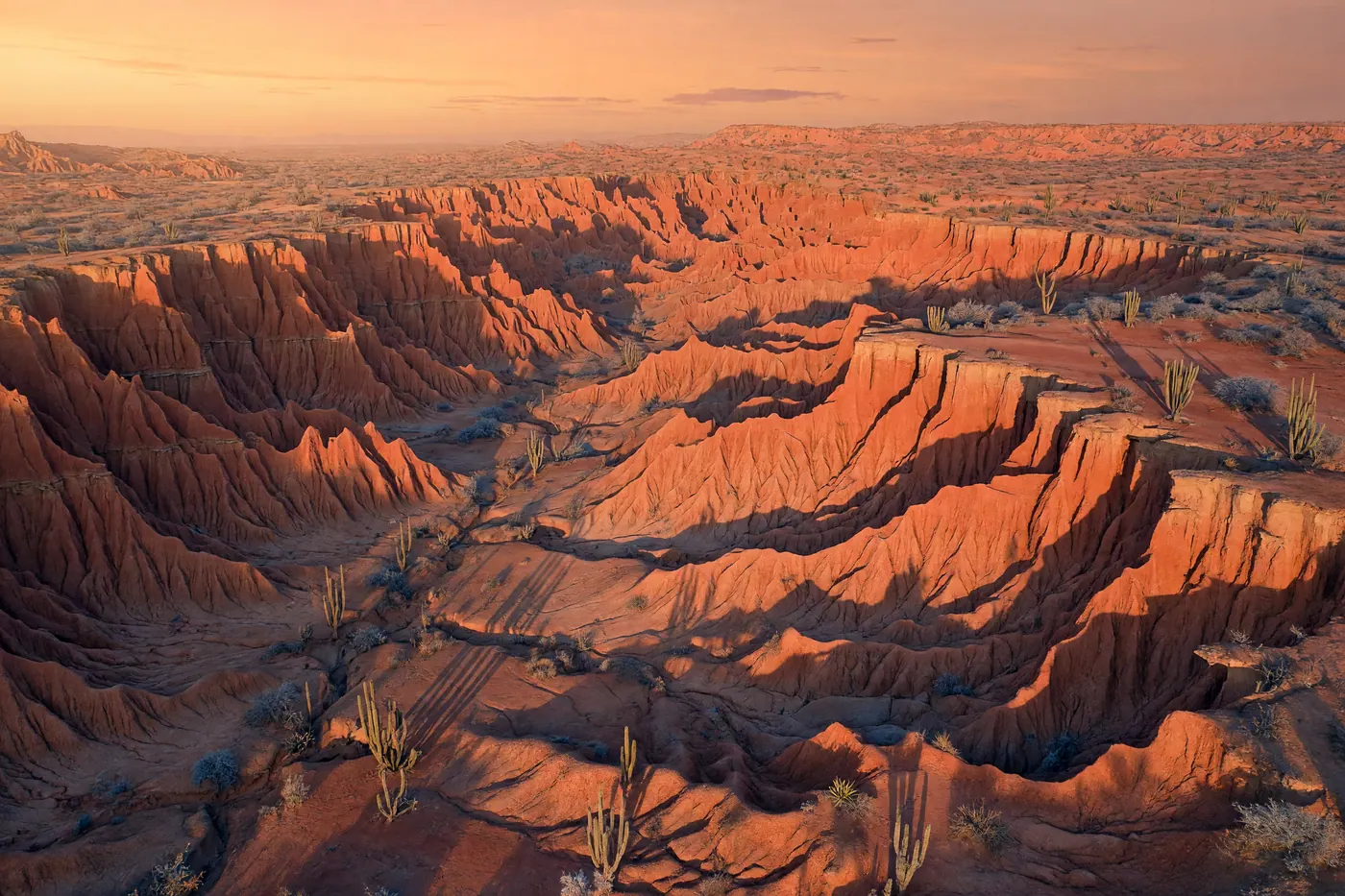
Walking end-to-end takes 2–3 hours depending on pace. The first half descends through semi-arid canyon landscape — cactus, dry bramble, exposed rock faces, the Suárez River canyon opening below you. The views into the canyon are dramatic. In late afternoon, the rock turns copper. Most people start early (7–8am) to avoid both the heat and the sun glaring directly in their eyes on the downward stretch.
Guane itself is worth the walk: a village of a few hundred people with a small paleontology and ethnography museum that has an impressive collection of marine fossils (this whole canyon was underwater millions of years ago) and Guane-era indigenous artifacts. Entry runs about 5,000 COP. The village church, cemetery, and the single plaza make for a quiet 20-minute wander before you head back.
Return options from Guane: shared taxis and buses run back to Barichara every 30–60 minutes. The ride is about 5km and takes 10–15 minutes, costing 3,000–5,000 COP. Service becomes infrequent after 4:30pm — don't leave Guane too late, especially if you don't want to retrace the whole path on foot.
✓ Camino Real Checklist
- Start by 8am to beat the midday heat
- Bring 1.5–2 liters of water — no sources on the path
- Download offline maps before you leave (Maps.me or Google offline)
- Sunscreen and a hat: the middle section is fully exposed
- Small amount of cash for Guane museum + return taxi
- Arrive in Guane by 3pm to catch reliable return transport
What to See in Town
Barichara doesn't have a list of paid attractions the way a bigger city does. The point is walking the streets. But a few specific places are worth finding:
The Cathedral of the Immaculate Conception — built between 1803 and 1878, almost entirely from sillar. The facade is austere in the best way. Up close, you can see exactly how the stone is cut and fitted: enormous flat blocks, many sections joined without mortar, held together by weight and precision. The interior is quieter than you'd expect, which is part of why it works.
The Cemetery — three blocks from the main plaza and genuinely beautiful. Elaborate family tombs in stone, whitewashed with blue accents, arranged on a hillside with views of the canyon below. Less morbid than it sounds; it reads more like a formal garden with very specific occupants. Late afternoon light makes it worth going back twice.
Artisan workshops — Barichara has a strong tradition of paper-making using the fique plant (the same agave-like plant used for rope and bags across Santander). Several workshops near the main plaza offer short tours and sell handmade paper products. Stone sculptors also work in the blocks east of the plaza. The quality of craft here is noticeably higher than typical tourist souvenir shops.
The mirador — a couple of overlook points give views down into the Suárez River canyon and across to the facing mesa. The hour before sunset, when the canyon shadows deepen and the sillar turns gold, is the best time to be there. It doesn't require any planning — just walk toward the edge of town until you can see the canyon.
Where to Eat in Barichara
The food scene here punches above the town's size. Barichara has developed a quiet culinary reputation within Santander, partly because the same visitors who come for the architecture tend to spend money on dinners with canyon views.
The regional specialty you can't skip is hormiga culona — big-bottomed queen ants, harvested once a year in March and April when they emerge from the ground, then toasted and salted. The flavor is mild and nutty, the crunch is unexpectedly satisfying, and the experience of eating them is what you're going to describe to people back home. Sold in small bags at local shops and as an appetizer at most restaurants.
Carne oreada is the other Santander classic: dried, salted beef, typically eaten cold with arepa de chócolo and chicha de maíz. Textures are all over the place in the best way. Look for it on lunch menus rather than dinner menus — it's a lunchtime dish.
For budget eating: the fixed-menu almuerzo (corriente or menú del día) near the plaza runs 18,000–25,000 COP and gets you soup, a main, rice, salad, and juice. Local lunch culture is alive in Barichara in a way it isn't in more touristy towns. For dinner, several terrace restaurants have developed menus around regional ingredients at prices well below Bogotá or Medellín equivalents. Get a table with a canyon view if you can.
Practical Tips
ATMs: There's a Bancolombia branch with ATMs near the main plaza. It works most of the time, but on busy holiday weekends it has been known to run out of cash. Come in with at least 200,000 COP already on you — withdraw before leaving San Gil or Bucaramanga.
Best time to visit: November through February is the dry season. Stone paths stay dry, the canyon haze clears, and the temperature sits at 23–27°C during the day. April and May have the most rain. The Camino Real becomes slippery in heavy rain and loses most of its appeal. Avoid the absolute peak of holiday weekends (December 24–January 5, Semana Santa) if you want the town at half-capacity.
Weather: At 1,300 meters, Barichara is noticeably cooler than the coast or the valley cities. Evenings drop to 14–17°C — bring a light jacket for after sunset. Days are warm and usually clear in dry season.
Internet: Coverage is solid in town. On the Camino Real and in lower canyon sections, signal becomes patchy — download offline maps before heading out. The hike itself doesn't require connectivity, but if you want navigation backup, set it up before you leave.
🏗 Traveling Without Health Coverage Yet?
If you're moving through Colombia before sorting out an EPS or private plan, SafetyWing Nomad Insurance covers medical emergencies for around $1.50/day. Worth having for active trips — especially anything involving hiking or outdoor activities.
📚 Keep Reading
Barichara pairs naturally with the rest of Santander. The Santander & Chicamocha Canyon guide covers San Gil's adventure sports — rafting, paragliding, bungee jumping — and the Chicamocha cable car, which is worth building into the same trip.
Frequently Asked Questions
❓ How long should I spend in Barichara?
At least two nights. The Camino Real hike takes a full morning, leaving the afternoon for the town itself. The real reason to stay two nights is what happens after 4pm — when the day visitors leave, the streets go quiet and the light gets extraordinary. One night is enough to tick the boxes; two nights is enough to actually be there.
❓ How hard is the Camino Real hike?
Moderate. The path descends about 300 meters over 9 kilometers on mostly flat stone. The main challenge is heat and sun exposure in the middle section — the path offers very little shade. Most people in reasonable physical condition complete the full walk to Guane in 2.5–3 hours. Trekking poles help on a few steeper stone sections but aren't necessary.
❓ Is Barichara safe for tourists?
Yes — it's one of the safer small towns in Colombia for visitors. The usual common-sense precautions apply: don't flash expensive camera equipment on the more remote stretches of the Camino Real, and keep your phone in your pocket in town. The actual security risk in Barichara is minimal compared to most Colombian cities. Heat exhaustion on the hike is a more realistic concern.
❓ What is the nearest city to Barichara?
San Gil is 20 kilometers away — about 20–30 minutes by shared taxi. It's the practical base for this area if you're combining Barichara with adventure sports. Bucaramanga is 112 kilometers, about 2–2.5 hours by car. See the day trips from Bogotá guide if you're routing through the capital.
❓ Are there ATMs in Barichara?
Yes — there's a Bancolombia ATM near the main plaza. It functions normally most of the time, but it can run out of cash during high-traffic holiday weekends. The practical move is to withdraw enough before you arrive, in San Gil or Bucaramanga, and treat the Barichara ATM as a backup rather than a plan.
Comments
Loading comments...
Checking sign-in status...