
Best eSIM & SIM Cards for Rural Colombia: Coverage Guide for Fincas and Road Trips (2026)
Heading outside Colombia's major cities to a rural finca or mountain road trip? Here is how to choose between international eSIMs and local SIMs, conquer mountain dead zones, and avoid the 20-day IMEI block.
IDIOMA DEL ARTÍCULO
Showing original language
A common mistake when arriving in Colombia is assuming that reliable 5G reception in Medellín's El Poblado or Bogotá's Chapinero means smooth sailing on a countryside road trip. You pack your laptop, rent a car or catch an intermunicipal bus toward a remote coffee finca in Antioquia, Santander, or the Coffee Cultural Landscape (Eje Cafetero), only to watch your signal bars vanish behind the first mountain ridge.
Colombia's dramatic Andean geography creates severe connectivity challenges once you venture outside departmental capitals. Whether you are driving secondary mountain roads or working remotely from a secluded mountain chalet, staying connected requires an intentional cellular strategy.
Quick Answer: The Best Setup for Countryside Coverage
For any travel off the beaten track or extended finca stays in rural Colombia, Claro is the undisputed essential network operator. While competitors provide excellent speeds in metropolitan centers, Claro controls the vast majority of rural cell towers along secondary mountain corridors. For short trips under three weeks where you only require data, an international travel eSIM (like Airalo or Nomad) provides instant connectivity without regulatory friction. However, for road trips, rural deliveries, communication with finca caretakers (mayordomos), or stays exceeding 20 days, purchasing a local physical prepaid Claro SIM card is by far the most reliable, cost-effective choice.
Carrier Coverage Reality: Claro vs. Movistar vs. Tigo in Rural Areas
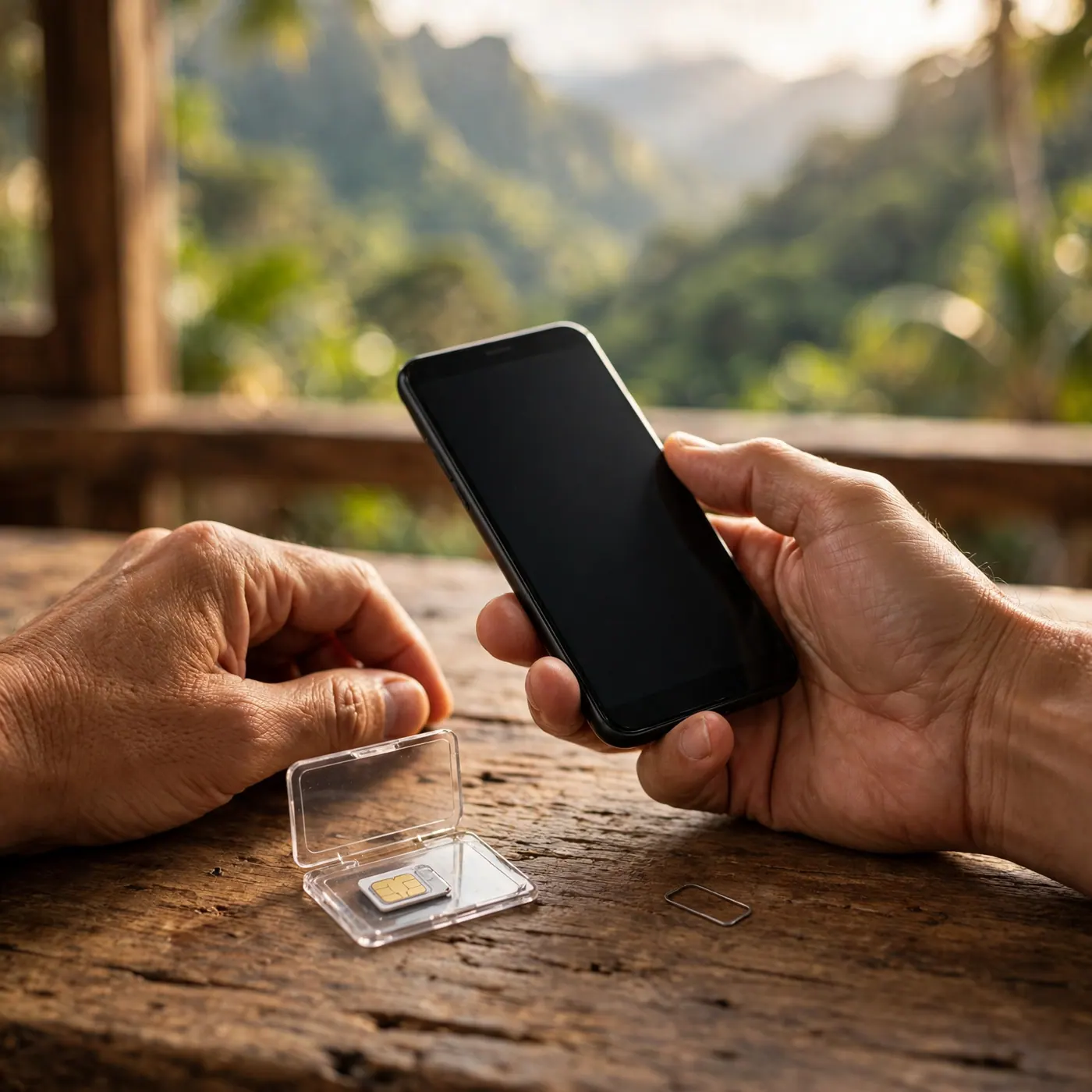
In Colombia's major metropolitan areas, carrier competition is fierce. If you are comparing basic metropolitan data options in our guide to internet and cell phone plans in Colombia, operators like Tigo and Movistar deliver competitive 4G and 5G performance at attractive price points. However, the dynamic changes drastically once you leave the municipal ring roads. City-first travelers can also start with the Colombia SIM card guide for foreigners before switching to a rural Claro chip.
- Claro (América Móvil): The undisputed market leader in geographic reach. Claro operates the highest density of rural cell towers in Colombia. Along interdepartmental highways, unpaved agricultural tracks (veredas), and isolated valleys across Antioquia, Cundinamarca, and Santander, Claro is frequently the sole carrier with any usable signal.
- Movistar: Excellent high-speed 4G coverage in major cities and along primary national toll highways. Once you branch onto winding secondary mountain roads or head down into deep river valleys, signal drops off rapidly.
- Tigo: Boasts impressive speeds in urban Antioquia and urban centers nationwide. In deeply rural areas, however, its tower density cannot match Claro's rural footprint.
- WOM & MVNOs (Virgin Mobile, Móvil Éxito): While urban options like WOM offer budget-friendly data packages, they rely heavily on national roaming agreements outside major metropolitan corridors. On rural roads, this often translates to high latency, throttled data, or complete connection blackouts.
eSIM vs. Physical SIM: Which Should You Choose?
Travelers heading to the Colombian countryside generally choose between an international travel eSIM or a local physical prepaid SIM chip.
Option 1: International Travel eSIMs (Airalo, Nomad, Holafly)
International travel eSIMs offer unparalleled convenience. You install the profile before boarding your flight, land at El Dorado or José María Córdova, and connect immediately to local partner networks.
- The Advantages: Zero physical SIM swapping, no waiting in line at airport kiosks, and no domestic regulatory hurdles. Because these profiles operate via international roaming agreements, they bypass Colombia's mandatory 20-day handset registration clock entirely.
- The Trade-offs: They are significantly more expensive per gigabyte than domestic plans. Crucially, almost all travel eSIMs are data-only. You will not have a local Colombian (+57) mobile number, preventing you from receiving calls or SMS from local delivery services, bank verification prompts, or countryside property caretakers who do not use international calling.
Option 2: Local Physical Prepaid SIM (Claro Prepago)
If you plan to explore rural areas for more than a few days, buying a domestic physical SIM card is usually the superior route.
- The Advantages: Inexpensive data bundles, a native Colombian (+57) mobile number, and uncapped access to Claro's expansive rural cellular infrastructure.
- The Trade-offs: You must purchase the chip in person with your original passport and manually complete the mandatory IMEI device registration within 20 calendar days to avoid having your phone blocked.
Why Domestic eSIMs Are Difficult for Tourists
While Colombian carriers do offer prepaid eSIMs directly, activating one as an international visitor is often a headache. The automated online self-service portals maintained by Claro and Movistar routinely require a Colombian national identification card (Cédula de Ciudadanía). To activate a domestic prepaid eSIM using a foreign passport, you generally have to visit a major corporate customer service center (Centro de Atención y Ventas or CAV) in person, where wait times can be lengthy.
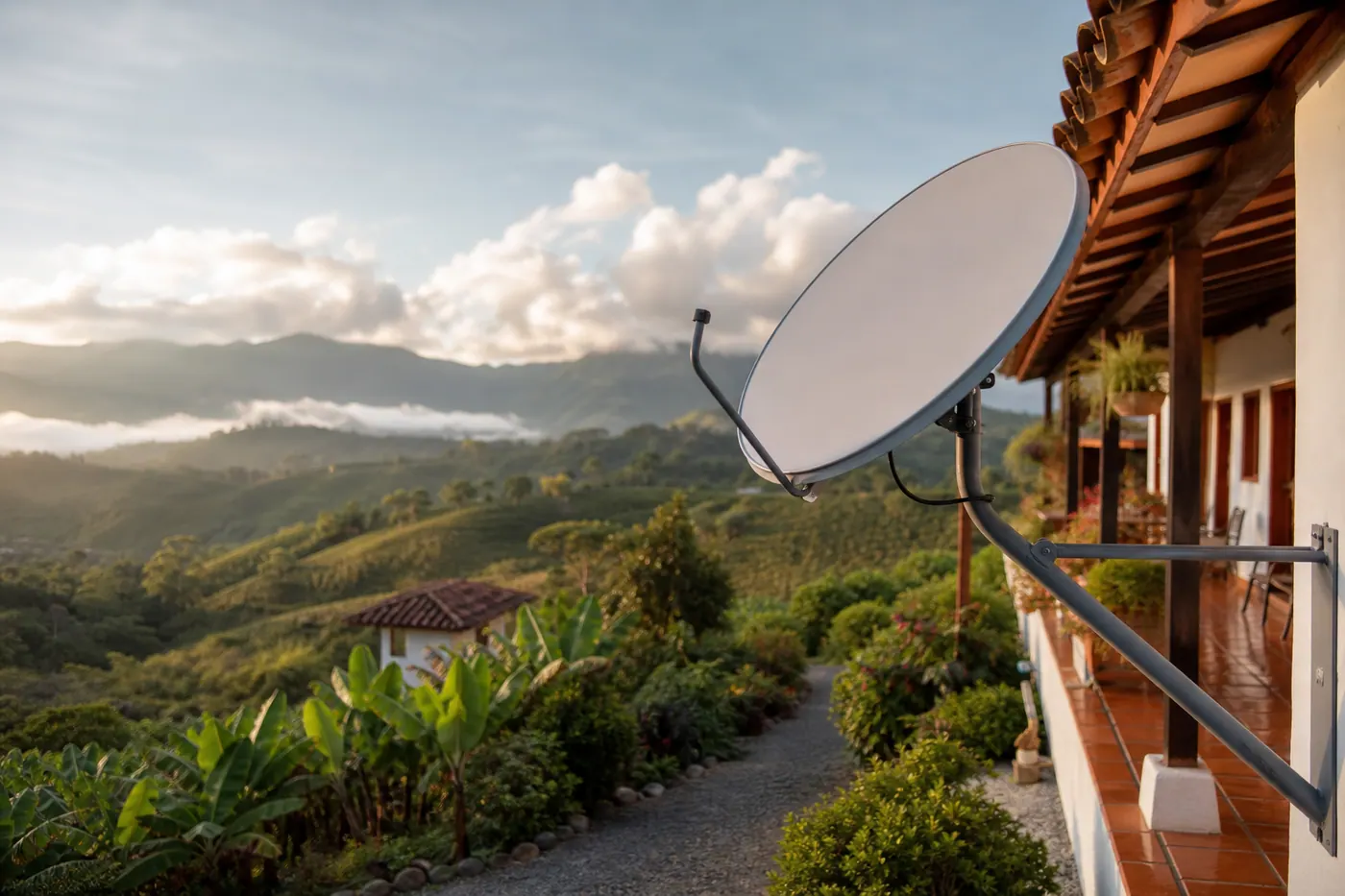
Scouting property in the countryside? See our guide to setting up Starlink internet for rural fincas and casas campestres for high-bandwidth remote work architectures.
Cost Comparison: What You Actually Pay
Prepaid telecommunications in Colombia are remarkably affordable compared to North American or European rates:
| Provider Option | Initial Cost | Data Package Price | Local Phone Number | IMEI Registration Needed? |
|---|---|---|---|---|
| Claro Physical SIM | 5,000–10,000 COP (~$1.60–$3.25 USD) | 30,000–50,000 COP for 10–25 GB (30 days) | Yes (+57) | Yes (within 20 days) |
| International Travel eSIM | $0 (free digital download) | Typically higher per GB than local packs (30 days) | No (Data only) | No (Exempt as roaming) |
| Tigo Physical SIM | 5,000–10,000 COP (~$1.60–$3.25 USD) | 30,000–45,000 COP for 10–20 GB (30 days) | Yes (+57) | Yes (within 20 days) |
The Mandatory 20-Day CRC IMEI Registration Rule
If you insert a local Colombian SIM card into your foreign smartphone, you enter a strict regulatory countdown enforced by the Comisión de Regulación de Comunicaciones (CRC) to combat handset theft.
By law, whenever a new SIM connects to a Colombian cellular network, the carrier logs the device's unique 15-digit International Mobile Equipment Identity (IMEI) number. You have 20 calendar days from the moment of activation (with a final grace window extending up to 30 days) to register that IMEI under your identity. If you fail to complete this registration, the CRC places the phone on the national blacklist (Base de Datos Negativa), blocking it from connecting to all cellular networks nationwide.
How to Register Your Phone and Avoid the Block
- Retrieve your IMEI number: Open your smartphone's dialer keypad and enter *#06#. Your 15-digit IMEI will appear instantly on screen. Take a screenshot or write it down. (Dual-SIM phones will show two IMEIs; record both).
- Keep proof of purchase handy: In some registration flows, the carrier may ask for an original sales invoice or receipt proving legal ownership of the handset.
- Complete the registration: You can register the device at an official carrier service center (CAV) when purchasing your SIM, through the carrier's automated web portal, or via the operator's official WhatsApp automated customer line. You will submit your full name, passport number, nationality, and the 15-digit IMEI.
Note: If your phone does get blocked due to missing the 20-day window, your device is not permanently ruined. The block applies only to Colombian networks, and it can be unblocked by presenting your passport and proof of phone purchase at an official carrier CAV.
Road Trips and Fincas: Setting Up a Reliable Remote Work Fallback
Working from a rural finca or vacation rental in Oriente Antioqueño, Suroeste Antioqueño, or the hills of Cundinamarca requires practical redundancy. Colombia's rugged topography means deep valleys, dense hillside vegetation, and corrugated metal finca roofs can easily degrade your connection.
1. Use a Dual-SIM Strategy
The most flexible setup is keeping your home carrier's eSIM active for two-factor authentication and emergency banking alerts while setting a local physical Claro SIM as your primary cellular data line.
2. Overcome Mountain Dead Zones
Signal strength often changes dramatically within a 50-meter radius in the Andes. If cellular reception inside the finca is unstable:
- Move your workstation to an open veranda or upper-floor balcony with clear line-of-sight across the valley.
- Enable Wi-Fi Calling in your phone's cellular settings if the property has a fixed satellite or DSL connection, routing voice calls over the local router.
- Carry a dedicated portable 4G LTE mobile Wi-Fi hotspot (such as an unlocked Huawei or Netgear pocket router) equipped with an external antenna. You can place the hotspot where the signal is strongest and work comfortably from the living area.
3. Rural Market Connectivity Realities
According to the active listings on Colombia Move (September 2026), there are 24 finca ads, 17 lotes, and 15 casas campestres — 56 countryside housing listings in total — and finca listings alone show about 5,980 demand views. Reliable digital access has become a foundational requirement for buyers and renters exploring homes in the vivienda section outside the urban core.
Where and How to Buy Your Local SIM Card
To avoid overpaying or ending up with unregistered chips, purchase your local physical SIM through one of these channels:
- Official Carrier Stores (CAVs): Locate an official Claro Customer Care Center (Centro de Atención y Ventas) inside a shopping mall in your arrival city. Bring your original physical passport. The representative can register your passport and IMEI immediately at the counter.
- Major Supermarket Chains: Supermarket chains such as Éxito, Carulla, and Jumbo sell official Claro prepaid starter packs at standard retail prices (5,000–10,000 COP) at customer service desks or dedicated electronics counters.
- Skip Unauthorized Street Kiosks: Avoid unverified street stalls offering pre-activated chips. These lines are often registered under unknown national ID numbers and risk sudden disconnection without warning.
Frequently Asked Questions
❓ Which mobile carrier has the best cell signal in rural Colombia?
Claro is the undisputed leader in rural Colombian mobile coverage, maintaining the most extensive network of cellular towers across small towns, secondary mountain roads, and rural veredas.
❓ Do I need to register my foreign phone when using a Colombian SIM card?
Yes. CRC rules (2026) require IMEI registration within 20 calendar days of using a local SIM. Carriers may extend a grace window up to 30 days before the device is listed on the national blacklist.
❓ Will an international travel eSIM (like Airalo or Holafly) get blocked in Colombia?
No, international travel eSIM profiles connect via global roaming agreements rather than domestic carrier subscriptions, meaning they do not trigger the CRC 20-day domestic IMEI registration clock.
❓ Can I get a local Colombian phone number with an eSIM?
Most international travel eSIMs provide data access only, without a local Colombian (+57) mobile number for domestic phone calls or standard cellular SMS messages.
❓ How much does a prepaid data plan cost in Colombia?
As of 2026, a physical prepaid SIM chip costs 5,000 to 10,000 COP, and a 30-day "Todo Incluido" pack with 10 to 25 GB typically costs 30,000 to 50,000 COP. Confirm the current Claro prepago board before you pay, because packs rotate.
❓ Why does cell signal disappear suddenly at mountain fincas?
Colombia's steep Andean mountain ridges and deep valleys frequently block direct line-of-sight to cellular towers, creating localized dead zones behind hillsides even within areas shown as covered on carrier maps.
❓ What documents do I need to buy a SIM card in Colombia?
Foreign visitors only need to present an original, valid physical passport at an authorized carrier store or official supermarket electronics counter to purchase and register a prepaid SIM card.


Comments
Loading comments...
Checking sign-in status...