
Colombia SIM Card Guide: Best Mobile Plans for Foreigners
Getting connected in Colombia is easier than you think. Here's how to pick the right carrier, buy a SIM card, and avoid overpaying for data.
IDIOMA DEL ARTÍCULO
Showing original language
I landed at El Dorado Airport with a dead phone battery, a backpack, and zero plan for getting connected. A friend had texted 'just get Claro, trust me' before I boarded — which turned out to be solid advice, but didn't explain where to buy it, what to pay, or whether any other carriers were worth considering.
Colombian mobile plans are genuinely good value. For around $30,000 COP (about $7 USD), you can get 10–15GB of data that lasts a full month. City coverage is excellent. The frustrating part is navigating three major carriers, deciding between prepaid and contract, and knowing what the actual buying process looks like when you walk into a store for the first time. If you want to see real-world options right now, you can post your services for free on Colombia Move — posting is completely free.
This guide covers everything: which carriers are worth your money, what plans actually cost, how to buy a SIM without fumbling, and whether sorting an eSIM before you fly even makes sense.
📱 What to know first
- Claro has the best national coverage — essential if you travel outside major cities
- Prepaid plans cost $30,000–$55,000 COP/month (~$7–$13 USD) for 10–25GB
- Buy a SIM at any carrier store, Éxito, Jumbo, or Carulla — just bring your passport
- No Colombian ID, local address, or bank account required for prepaid
- eSIM options (like Saily) work in Colombia and are convenient for arrival day
What You Need to Buy a SIM Card in Colombia
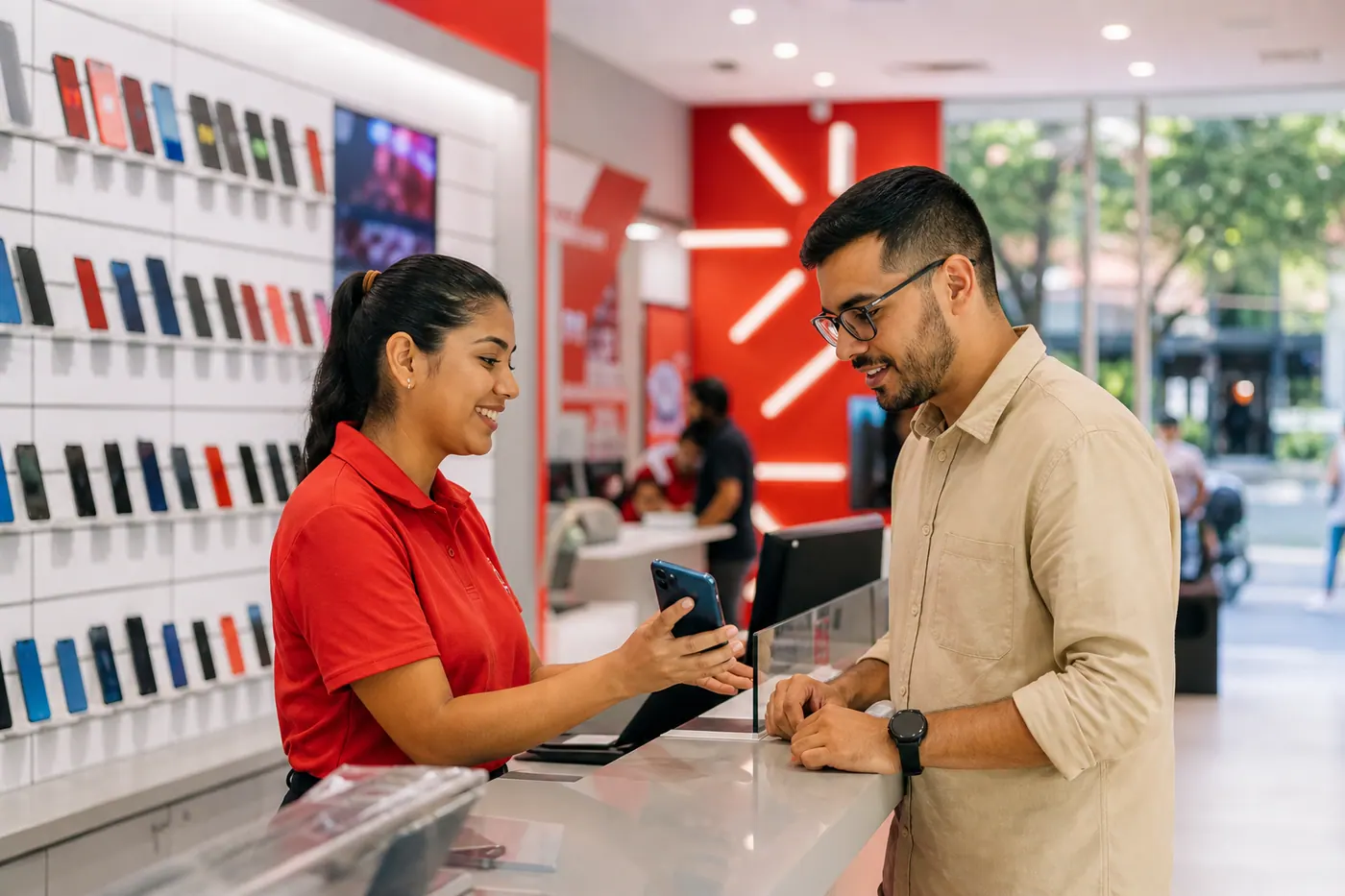
Walk in with your passport and you're covered. Colombian law requires ID verification for SIM purchases, but for prepaid plans, foreigners only need their passport — no Colombian tax ID (NIT), no local address, no bank account. The SIM chip itself is usually free or costs $2,000–$5,000 COP. Staff will typically insert it and confirm it's working before you leave. Budget 15 minutes.
Best places to buy:
- Claro, Movistar, or Tigo brand stores — in any mall or main commercial street
- Éxito, Jumbo, or Carulla supermarkets — look for the phone and electronics aisle
- Airport kiosks at El Dorado (Bogotá) or José María Córdova (Medellín) — convenient on arrival, slightly pricier
- Small local phone shops (tiendas de celulares) — quick and no-fuss for grabbing a SIM fast
One thing worth knowing upfront: airport kiosks often bundle a SIM with a data plan at a 20–30% markup over what you'd pay in the city. If you're not in a rush — and if you've got hotel WiFi for the first night — skip the airport kiosk and buy at a carrier store once you've settled.
The Three Main Carriers — Which One to Choose
| Carrier | Best for | Prepaid cost/month | Rural coverage |
|---|---|---|---|
| Claro | Travelers, full-country coverage | $30,000–$55,000 COP | ⭐⭐⭐⭐⭐ Excellent |
| Movistar | City dwellers, budget-conscious | $25,000–$45,000 COP | ⭐⭐⭐ Moderate |
| Tigo | Urban users, social media bundles | $25,000–$50,000 COP | ⭐⭐⭐ Moderate |
| WOM | Budget users in Bogotá/Medellín only | $15,000–$35,000 COP | ⭐⭐ Limited |
Claro: The Default Recommendation
Claro is by far the most widely used carrier in Colombia, and its infrastructure shows. Coverage in small towns, along the Pacific coast, in the Andes, and throughout rural departments is stronger than any competitor. If you're planning to move around — weekend trips to the coffee region, time in Cartagena, hiking in the Sierra Nevada — Claro keeps you connected in places where the others drop out.
Prepaid bundles typically run $30,000–$55,000 COP/month for 10–25GB. Top up via the Claro app, through Baloto terminals at corner stores, or at Éxito. One small annoyance: Claro's app can be clunky to navigate. The network quality more than makes up for it.
Movistar: Good in Cities, Weaker Beyond
Movistar (Telefónica) has solid urban coverage and often runs slightly cheaper plans than Claro. Movistar Go packages frequently bundle zero-rated apps — WhatsApp and Instagram don't eat into your data cap. If you're mostly living in Bogotá, Medellín, or Cali and rarely travel to smaller towns, Movistar is a legitimate alternative. The weakness shows the moment you leave a major city: signal drops noticeably on regional buses and in smaller towns.
Tigo and WOM: Worth Considering for City Stays
Tigo is a solid third option with competitive urban pricing and frequent promotions bundling unlimited social media data with regular plans. Its urban coverage in Bogotá, Medellín, and Cali is good. Outside those cities it starts to thin. WOM is the newest major entrant — aggressively priced, primarily useful in the two biggest cities, and still building out its regional network. Honestly, I wouldn't rely on WOM for anything beyond central Bogotá or Medellín.
Prepaid vs. Postpaid — Which Makes Sense for You
For most foreigners, prepaid is the obvious choice. No contract, no local credit history required, no bank account needed. You pay for what you use, top up when needed, and can switch carriers anytime if the coverage isn't working for you.
Postpaid plans (contrato) offer better pricing at higher tiers — around 40–60GB/month for $60,000–$90,000 COP ($14–$21 USD) — but require a Colombian cédula or cédula de extranjería, a credit check, and usually a local bank account. Unless you're settling in Colombia long-term and already have that paperwork sorted, prepaid is the path of least resistance.
One thing people get wrong: prepaid SIMs in Colombia expire if inactive. A line with zero calls, texts, or data usage for 90 consecutive days gets deactivated and the number gets reassigned. If you're leaving Colombia for a couple months but want to keep your number, send one WhatsApp message or recharge 1,000 COP before you leave — that resets the 90-day clock.
How to Top Up (Recargar) Your Plan
Recharging is straightforward once you've done it once. Your options:
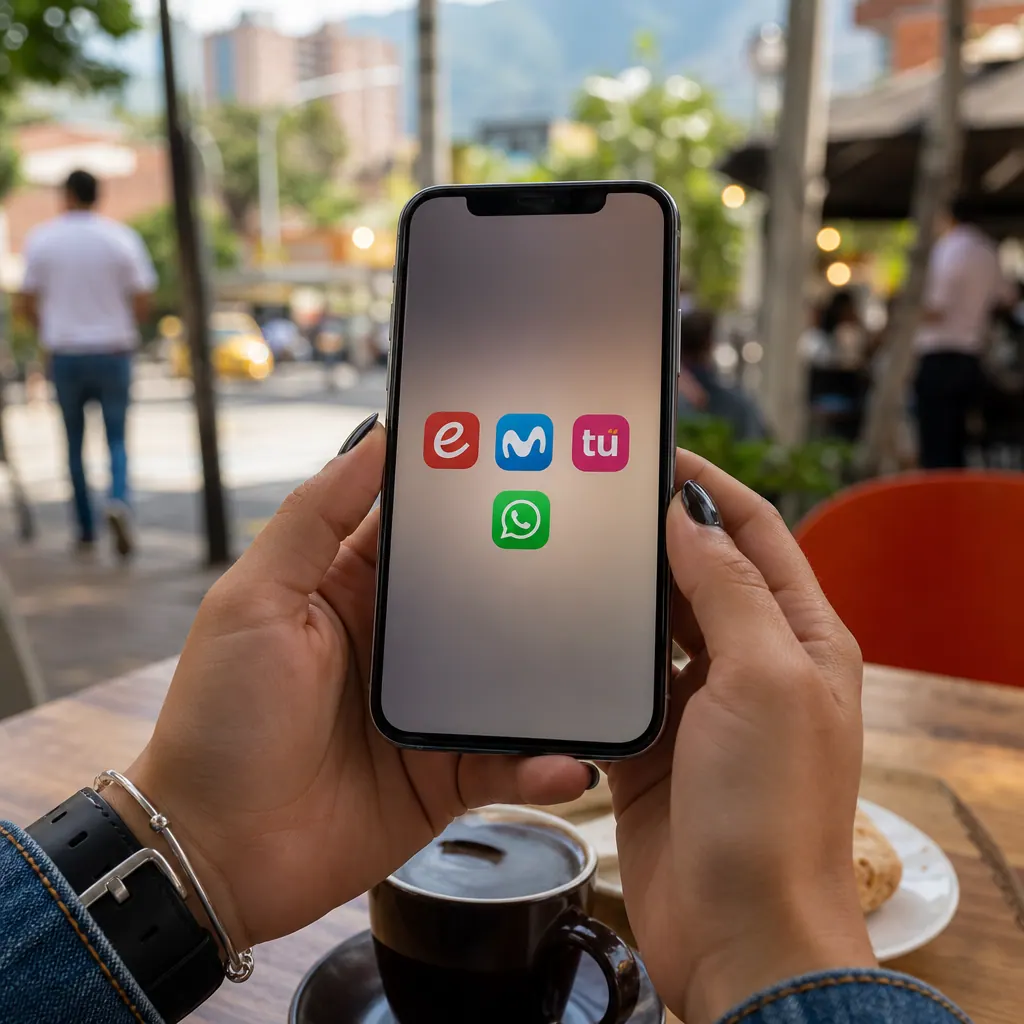
- Carrier app (Claro, Movistar, Tigo) — pay directly with a foreign Visa or Mastercard; Claro's app accepts international cards reliably
- Baloto terminals — found in small shops, pharmacies, and corner stores everywhere; tell the cashier your carrier and number, pay cash, done in 60 seconds
- Éxito, Jumbo, or Carulla — buy a physical recharge card at the register; scratch the code and activate via the carrier's USSD code or app
- Nequi or Daviplata — if you've set up a Colombian digital wallet, you can top up directly from there
Most recharges work like this: top up → receive a confirmation SMS → activate a data bundle by dialing a code or tapping a button in the app. Rappi also lets you recharge your own or a friend's line directly in the app under its 'Services' section — useful when you're low on data and can't easily reach a Baloto.
eSIM Options — Sort Connectivity Before You Land
If you want to step off the plane already connected, an eSIM is the cleanest option. Saily has Colombia plans you can buy and activate before boarding — typically 1GB for around $3 or 3GB for $7, valid for 30 days. Airalo is another solid option with similar pricing.
The trade-off: eSIM data from international providers costs more per GB than a local prepaid plan. Think of it as convenience pricing for the first week or two while you're sorting your local SIM — not a long-term solution. One GB sounds like enough but goes fast if you're navigating maps, using WhatsApp voice calls, and loading maps constantly.
Compatibility note: most recent iPhones, Pixels, and Samsung Galaxy phones support eSIM — but check your specific model. If you bought your phone from a US carrier on a payment plan, the eSIM slot may be locked for 30–90 days after purchase. Confirm it's unlocked before you rely on it at arrival.
Your Colombian Number and WhatsApp
Getting a +57 number matters more here than you might expect. Colombia runs almost entirely on WhatsApp — landlords contact you on it, plumbers confirm schedules via voice notes, ride apps, marketplace sellers, even most businesses communicate through it. A foreign number with international roaming technically works, but it signals 'tourist' in a way that can affect how sellers and service providers engage with you.
If you switch to a local number and want to migrate your WhatsApp account, follow the in-app process under Settings → Account → Change Number. Your chats, contacts, and groups transfer cleanly. On dual-SIM phones — which covers most mid-range and flagship Androids sold in Colombia — you can run both your foreign and Colombian numbers at once.
📺 Keep Reading
Once your data is sorted, you'll probably want to set up your streaming situation. Our guide to Netflix, sports, and VPNs in Colombia covers exactly what works and what doesn't.
Frequently Asked Questions
❓ Do I need a Colombian ID to buy a SIM card?
No. For prepaid plans, your passport is enough. You don't need a Colombian tax ID (NIT), cédula, local address, or bank account. Walk in, show your passport, and you'll have an active SIM in about 15 minutes.
❓ Which carrier has the best rural coverage in Colombia?
Claro, by a clear margin. If you're traveling to small towns, Pacific coast areas, or national parks outside major cities, Claro stays connected where Movistar and Tigo lose signal. If you travel around Colombia at all, it's not a close comparison.
❓ Can I use an eSIM in Colombia?
Yes — all three major carriers support eSIM on compatible devices, and international eSIM services like Saily and Airalo both cover Colombia. Check that your phone is unlocked and eSIM-capable before relying on this, especially if you bought your device on a carrier payment plan.
❓ How much does a mobile data plan cost in Colombia?
Prepaid plans run $25,000–$55,000 COP/month ($6–$13 USD) for 10–25GB, depending on the carrier and specific bundle. Postpaid contracts offer more data per peso at higher tiers but require Colombian ID and a credit check.
❓ How do I keep my Colombian SIM active when I leave the country?
Send one WhatsApp message or make a minimal recharge (even 1,000 COP) before you go. Prepaid lines are deactivated after 90 days of zero activity, so any usage resets the timer. The Claro app lets you recharge remotely with an international card, which is the easiest way to maintain the number while abroad.
💬 Questions about getting connected?
Mobile plans and carrier coverage change regularly. If you have a specific situation — unusual phone model, specific region, or a carrier deal you've spotted — ask the Colombia Move community.
Ask the community →


Comments
Loading comments...
Checking sign-in status...