
Renting Commercial Office Space in Bogotá: Lease Rules, Costs & Business Locations
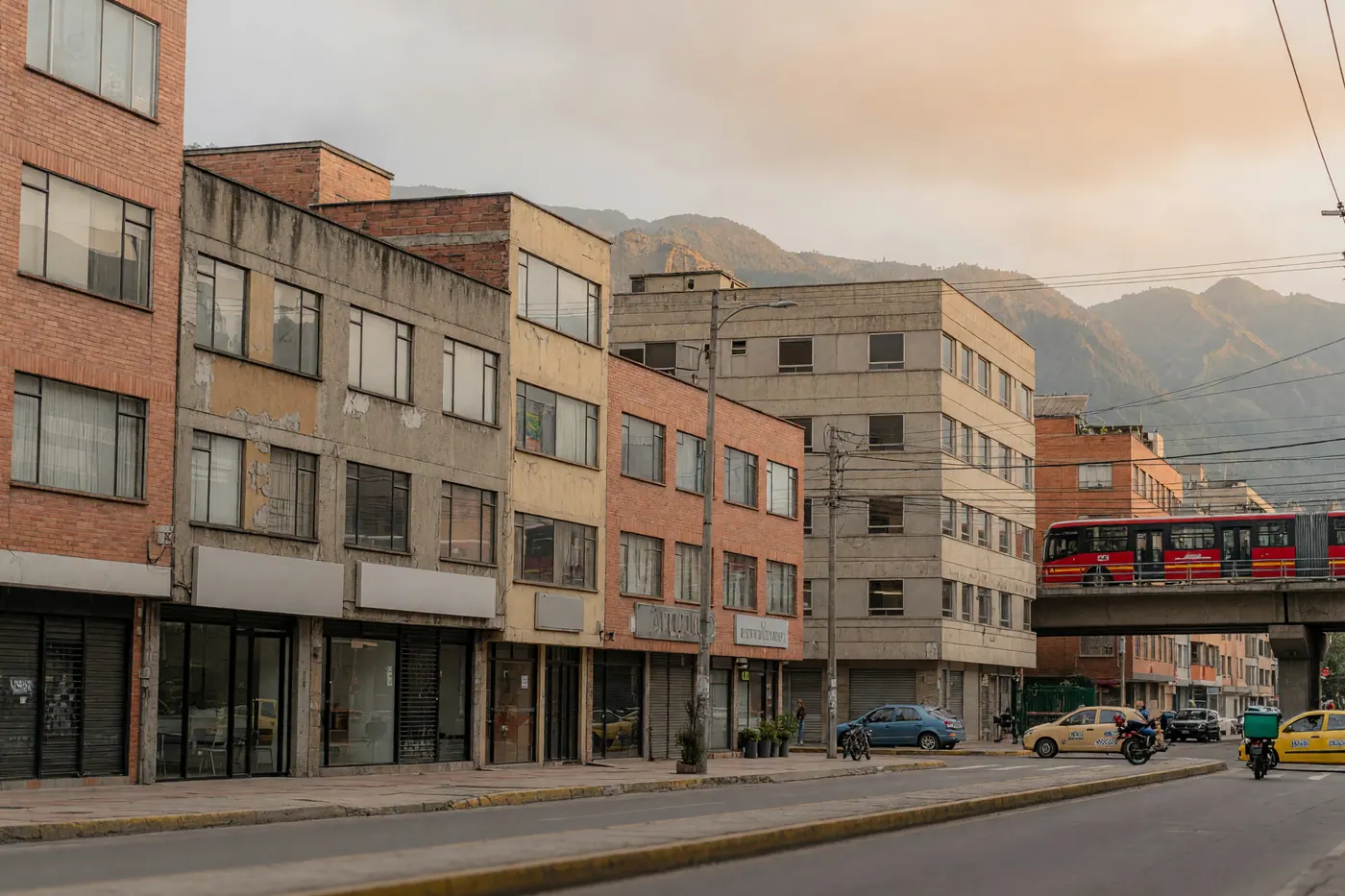
Leasing an office or commercial storefront in Bogotá operates under completely different legal rules than residential apartments.
IDIOMA DEL ARTÍCULO
Showing original language
If you have ever rented an apartment in Bogotá, you might assume you know how Colombian leasing works: a standard contract, strict annual rent increase caps tied to the previous year's consumer price index (IPC), and statutory tenant protections defined under residential housing legislation. That assumption is an expensive trap.
When you set out to lease an office, a physical storefront (local comercial), or a small headquarters in the capital, you step into a different legal realm. Commercial leases operate under the Colombian Commercial Code (Código de Comercio, Decreto 410 de 1971). Housing-tenant habits that expats and new founders bring from apartments do not apply here. This article reflects the statutes as compiled in September 2026; confirm the live article and a current quote before you sign.
Commercial Premises vs. Housing: The Legal Difference You Must Know
The foundational distinction every business operator must recognize is statutory jurisdiction. Residential leasing in Colombia is governed by Ley 820 de 2003, whose explicit legal title and purpose is the regulation of urban housing leases (arrendamiento de vivienda urbana). Ley 820 sets strict rules regarding deposit prohibitions, subtenancy bans, and residential inflation caps. For an exploration of how strictly that law treats personal dwellings, take a look at our analysis of subletting and roommate housing rules in Colombia.
Commercial spaces—including corporate office suites, shared consultorios, and retail shopfronts—are exempt from Ley 820. Instead, they fall under the general contract rules and the specific commercial premises chapter of the Código de Comercio (starting around Article 518). In commercial real estate, contractual freedom between commercial parties carries significantly more weight. Landlords can negotiate financial guarantees, security deposits, and specific operational clauses that would be deemed irregular or unenforceable in a residential lease.
Disclaimer: This guide is prepared for informational and practical planning purposes only and does not constitute legal or tax advice. You should always have an independent commercial attorney registered in Colombia review your specific draft lease (minuta de arrendamiento) before signing or advancing financial commitments.
Understanding What You Are Leasing: Office vs. Storefront vs. Coworking
Before touring properties, ensure you are pursuing the right physical and legal asset class for your Bogotá operation:
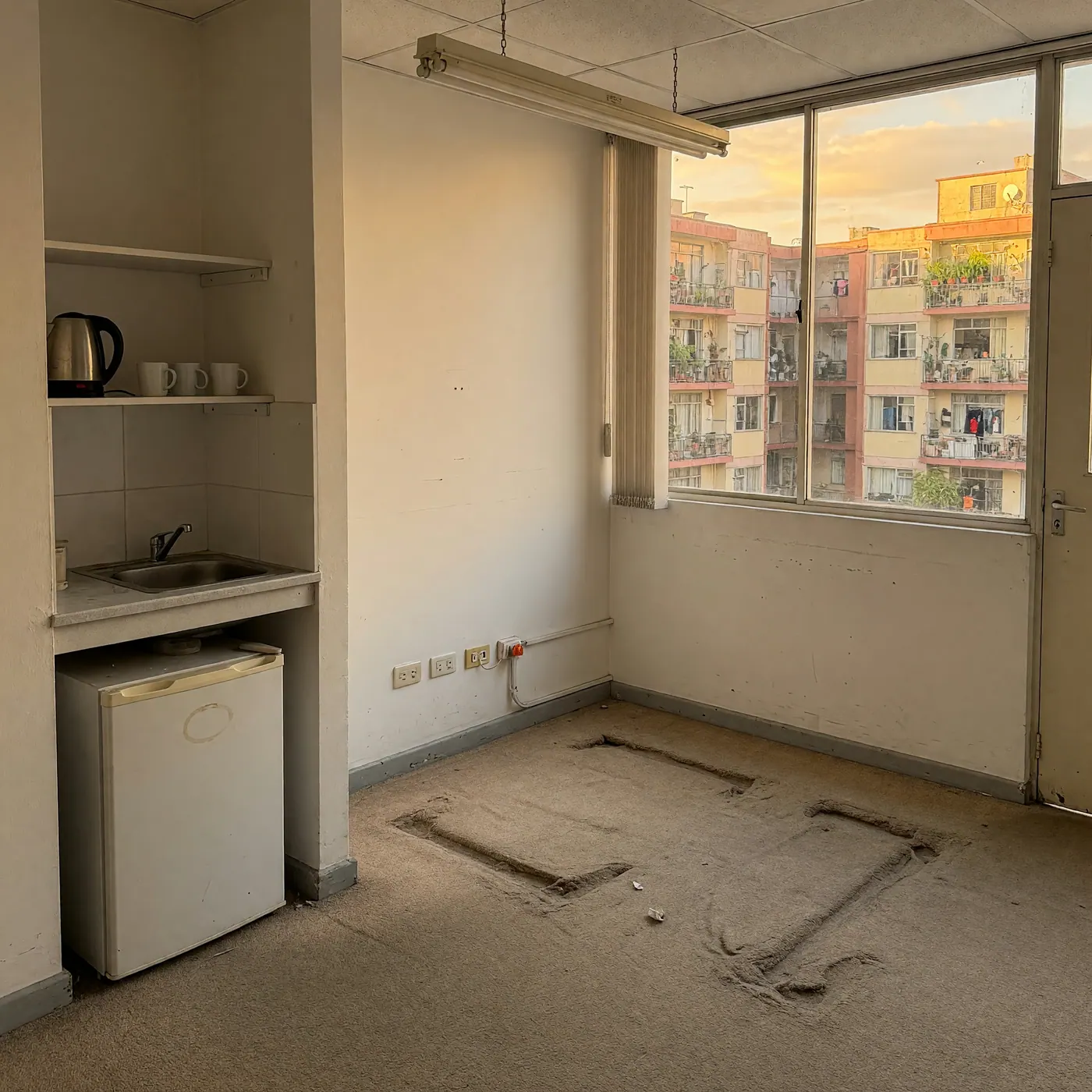
- Oficina tradicional (Building Office): A dedicated unit inside an office tower or multi-tenant corporate building. It requires its own commercial lease, adherence to horizontal property (PH) internal bylaws, and a direct breakdown of building operating contributions.
- Local comercial a la calle (Street-front Commercial Unit): A street-facing retail or commercial space. These often carry direct public access requirements, distinct utility tariffs, signage licensing considerations, and heavier regulatory scrutiny regarding foot traffic and permitted zoning. Shopfront inventory also appears in Colombia Move’s comercial category when you are comparing street-facing locals rather than tower offices.
- Coworking or Serviced Office Space: A flexible desk or private team room rented inside a shared facility. Legally, coworking agreements are almost universally classified as commercial service agreements or membership licenses—not a formal lease of real commercial property. While they offer speed and low upfront friction, they generally do not confer statutory tenant protections associated with a registered commercial premises lease under the Commercial Code. Read the membership contract; Código de Comercio local-comercial protections may not apply.
The Real Cost Stack: What Sits on Top of the Base Canon
In Bogotá commercial real estate, quoting only the headline rent (the canon) tells half the story. Unlike residential leases where many fees are bundled or capped, a commercial lease divides financial obligations across multiple distinct operational ledgers. When setting your monthly budget, ensure your term sheet explicitly addresses each of the following categories:
| Cost Item | Typical Contract Treatment | What to Verify Before Signing |
|---|---|---|
| Base Canon | Negotiated monthly fee for the use of the square meters. | Check annual escalation formulas (e.g., IPC vs. fixed contractual increases). |
| Cuota de Administración | Monthly building maintenance and security contribution. | Verify whether the quoted canon includes or excludes administración, and confirm annual building assembly adjustments. |
| Value Added Tax (IVA) | Tax on commercial leasing transactions. | Whether the canon is billed with IVA depends on the landlord's tax regime; request a pro-forma or sample factura from the owner or property manager. |
| Utilities (Servicios) | Water, electricity, commercial waste, and high-speed internet. | Check whether the unit has dedicated individual meters or shares sub-meter allocations with common areas. |
| Parking Bays (Parqueaderos) | Private assigned spaces or visitor parking access. | Confirm if assigned stalls are deeded with the unit, billed separately, or managed via independent monthly fees. |
| Fit-Out & Adecuaciones | Internal partitioning, cabling, ceiling tiles, and repainting. | Determine whether the unit is delivered in grey obra gris or fully fitted out, and who owns the improvements when vacating. |
According to active listings across Bogotá on Colombia Move (September 2026), there are currently only 6 active office listings and 6 commercial local listings, illustrating a tight supply environment where verified corporate spaces with transparent pricing face strong tenant demand.
Commercial Code Protections: Renewal Rights, Ground Rules & Subletting
One of the most consequential chapters of Colombia's Commercial Code relates to commercial establishments and the rental of commercial premises (arrendamiento de locales comerciales). The law recognizes that an entrepreneur invests capital, builds goodwill, and attracts foot traffic to a specific location over time.
The live Secretaría del Senado compilation of Decreto 410 de 1971 (accessed September 2026) states, in Article 518: “El empresario que a título de arrendamiento haya ocupado no menos de dos años consecutivos un inmueble con un mismo establecimiento de comercio, tendrá derecho a la renovación del contrato al vencimiento del mismo,” except in the three cases that same article lists: (1) the tenant has breached the contract; (2) the owner needs the premises for their own use (para sí), or for their own establishment dedicated to a substantially different business; and (3) the building must be reconstructed, repaired with works that cannot be done without vacancy, demolished for ruin, or replaced with a new work. Do not treat a one-year coworking membership as a substitute for those facts, and do not treat this summary as a substitute for the signed term plus Articles 518 and following.
Notice, opposition to renewal, and related mechanisms sit in the same chapter and in your minuta—not in casual verbal side deals borrowed from housing tenancy. On assignment and sublease, Article 523 of that compilation provides that the tenant “no podrá, sin la autorización expresa o tácita del arrendador, subarrendar totalmente los locales o inmuebles,” with a limited rule on partial sublease and assignment only when the landlord authorizes it or it follows a sale of the establishment. Always have your legal counsel verify the exact statutory clauses applied to your lease draft.
Key Bogotá Business Corridors and Zoning Verifications
Choosing where to place an office in Bogotá requires balancing team commutes, client prestige, and municipal zoning permits:
- El Chicó & North Chapinero: A long-standing corporate hub characterized by leafy residential streets transitioning into dense commercial mid-rises. It offers abundant financial branch offices, dining, and diplomatic presence, making it popular for multinational agencies and executive consultancies.
- Calle 100 & Santa Bárbara: A northern corporate belt along major arterial roadways. The sector offers substantial Class A and B office inventory and high commercial density. Confirm how you will actually reach the building from Calle 100 rather than assuming a walking time from a named tower.
- Ciudad Salitre & Calle 26: The west corridor linking downtown government centers with the city’s main air-travel gateway. Favored by logistics firms, international service hubs, and regional operations that need easy access for flying executives.
Regardless of the corridor, never execute a lease without verifying the land-use compatibility (uso de suelo or norma urbana) directly through the tools of the Secretaría Distrital de Planeación (SDP) or via the building's administrative management. Certain properties may prohibit high-traffic customer visits, specific healthcare activities, or specialized retail operations under their horizontal property bylaws or municipal zoning classifications.
Corporate Formalization, Guarantees, and Landlord Requirements
Securing a commercial lease in Bogotá as a foreign entity or newcomer involves clearing standard administrative and financial vetting. In Colombia, established commercial landlords routinely demand substantial documentation to demonstrate solvency:
- Matrícula Mercantil & Legal Existence: Operating a formal enterprise in the capital typically requires company registration with the Cámara de Comercio de Bogotá (CCB). Landlords will ask for your current Certificado de Existencia y Representación Legal along with your company Tax Identification Number (RUT / NIT) issued by DIAN. That registration path is how companies operate in Bogotá; the Commercial Code does not say you must have an SAS before you can rent.
- Individual vs. Corporate Signatures: Foreigners often sign through a local SAS/NIT or as a persona natural with ID the landlord accepts. If your Colombian legal entity (such as an SAS) is newly formed without years of filed tax declarations, landlords may request personal guarantees from the founders, corporate bank statements, or proof of foreign capitalization.
- Underwriting via afianzadoras: Most professional office landlords in Bogotá do not underwrite tenants directly. Instead, they outsource screening to a bonding agency. You will submit tax returns, banking statements, and financial balance sheets for vetting.
- Codeudores & Commercial Guarantees: If your financial profile does not meet standard local underwriting ratios, you may be asked to provide a local solvent co-signer (codeudor con finca raíz), an escrow cash deposit, or a commercial bank guarantee (garantía bancaria). Every point here is a matter of commercial negotiation rather than an unchangeable government tariff.
Inspecting the Space and Listing Hygiene
Classifieds in Colombia include genuine units and also listings that do not match the building. When scouting potential offices, keep the process boring and documented:
- Physical On-Site Verification: Never advance deposits or application fees prior to physically walking the premises with an authorized building representative or documented broker. Off-platform deposit requests prior to viewing should stop the deal. Meet at the building and match the matrícula inmobiliaria or owner ID to the contract.
- Title and Ownership Check: Ensure that the person or commercial entity executing the contract matches the registered property title (matrícula inmobiliaria) or holds an authentic, notarized power of attorney.
- Building Rules Check: Review the horizontal property's internal regulations. Note visitor check-in protocols, elevator load limits for heavy moving, permitted hours for weekend access, and heating or cooling system maintenance guidelines.
Are you an owner or property manager holding commercial real estate in the city? If you are planning to list your unit directly to serious corporate tenants, review our dedicated seller breakdown on how to publish commercial offices and storefronts in Colombia.
Keep Exploring Commercial Real Estate
- Comparing markets across regions? Read our nationwide overview on finding office and commercial space in Colombia.
- Prefer a bilingual, multi-market perspective? Check out our Spanish commercial guide on leasing commercial locals and offices in Bogotá and Medellín.
Frequently Asked Questions
❓ Does Ley 820 apply if I rent an office in Bogotá?
No; Ley 820 is urban housing (Función Pública text, September 2026). Commercial premises follow the Código de Comercio, so housing rent caps and housing deposit restrictions do not apply. Have a lawyer read the minuta before you treat any housing habit as a commercial right.
❓ Do I get an automatic right to stay after two years?
Only if the Commercial Code article you are relying on, as published, actually grants it for your facts. Article 518 of the Senado compilation (September 2026) ties renewal to two consecutive years with the same establishment and lists exceptions; do not treat blog summaries as a substitute for Arts. 518+ and the signed term.
❓ Is coworking the same as leasing an office?
Usually no; it is typically a membership or services contract (September 2026 practice). Código de Comercio protections for locales comerciales may not apply, so read the membership terms instead of assuming a premises lease.
❓ How much does a Bogotá office cost per month?
There is no official city tariff; asking prices depend on class, size, administración, and parking. Compare live listings as of September 2026 and ask for a written quote rather than relying on an invented citywide average.
❓ Can a foreigner sign an office lease without a SAS?
Landlords set their own ID and guarantee rules; many accept a local company NIT or a Colombian codeudor. CCB registration matters if you will operate a company, not because the Code names a SAS as a lease condition (September 2026 practice).
❓ What extra fees should I budget besides the canon?
Administración, parking, utilities, and fit-out are often separate, as of September 2026 listing practice. Confirm IVA on the factura with the landlord or an accountant; whether the canon is billed with IVA depends on the landlord’s tax regime.
❓ How do I avoid a fake office listing?
Do not wire a deposit before you have visited and matched owner or building documents to the contract. Prefer documented owners and listings with photos, m², and a clear location, as of September 2026 classifieds practice.




Comments
Loading comments...
Checking sign-in status...