
Guatapé, Colombia: The Honest Visitor's Guide
Guatapé is 90 minutes from Medellín and looks like someone painted an entire town for a children's book. The rock has 649 steps and views worth every one. Here's what you need to know.
IDIOMA DEL ARTÍCULO
Showing original language
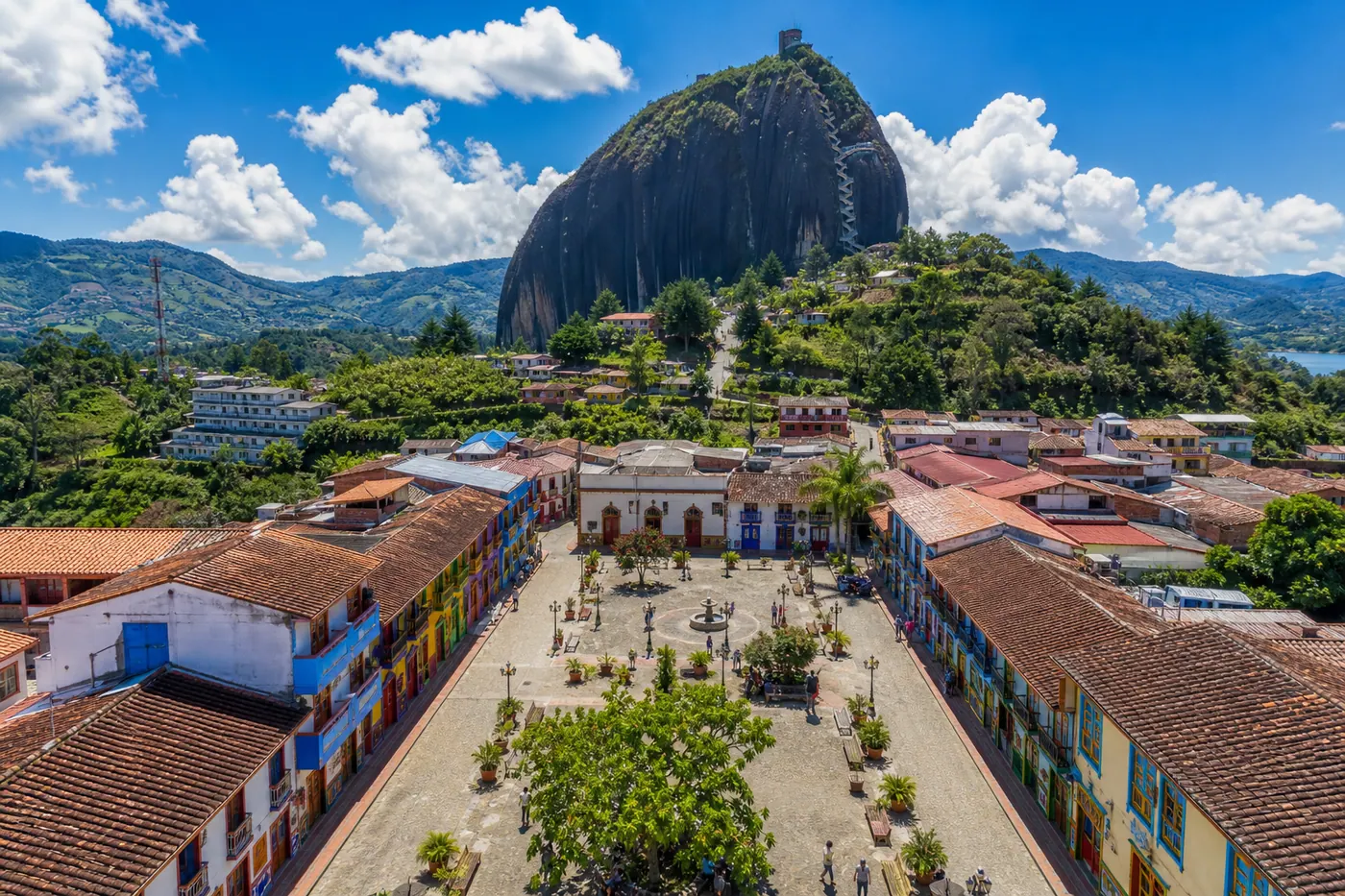
The first thing that hits you in Guatapé isn't the rock. It's the town itself. The lower panels of every building — called zócalos — are painted with miniature scenes: corn cobs, rivers, birds, geometric patterns, family crests. Walking the main streets feels like reading a picture book where every page is a different house. You stop. You photograph it. You realize you've been standing in front of a panadería for five minutes and nobody has told you to move.
Guatapé sits about 90 kilometers east of Medellín, on the edge of the Embalse Guatapé — a reservoir created in the 1970s when the original village of El Peñol and surrounding farms were deliberately flooded to power a hydroelectric dam. The water spreads out in every direction in a maze of inlets and small green peninsulas. Rising 200 meters above all of it is El Peñón de Guatapé, a single enormous granite rock you can climb via 649 steps cut directly into a crack in its face. Si quieres ver opciones reales en este momento, puedes ver apartamentos y casas en Colombia Move — publicar es completamente gratis.
I'd put it in the top three day trips from Medellín, alongside Jardín and Santa Fe de Antioquia. The difference is that Guatapé also works as an overnight — the town has enough good restaurants, cheap hostels, and things to do on the water that one night gives you a completely different experience from the day-trip version. Both are worth it.
What to Know Before You Go
- El Peñón de Guatapé is 649 steps and takes 20–30 minutes to climb. Entry: ~25,000 COP (~$6 USD).
- Buses from Medellín's Terminal del Norte run every 30–45 minutes. Journey: 1h 45min–2h 30min. Cost: 15,000–20,000 COP each way.
- The town and rock make a solid day trip, but one night lets you hit the reservoir at sunset and avoid the midday crowd at the staircase.
- Arrive before 9am or after 3pm on weekends — the staircase gets very crowded mid-morning to mid-afternoon.
- Day trip budget including entry, lunch, and boat tour: 95,000–130,000 COP (~$24–33 USD).
Getting to Guatapé from Medellín
The bus from Terminal del Norte is the standard option. Buses depart every 30–45 minutes and cost 15,000–20,000 COP per person each way. On a weekday with decent traffic, you're there in about 1h 45min. On a Friday afternoon or holiday weekend, add 30–45 minutes.
Buses drop you at Guatapé's small terminal on the edge of town. From there it's a 10-minute walk or a quick mototaxi ride (5,000–8,000 COP) to the main plaza. The rock is a separate 5–10 minutes from the plaza, reachable on foot or by mototaxi for about 5,000 COP. Check the return bus schedule at the terminal when you arrive — the last departures to Medellín are typically around 5:30–7pm, and on Sundays they fill up.
If you're driving, the route via the Autopista Medellín–Bogotá then south through the El Peñol municipality takes about 1h 30min. Parking near the rock base runs 15,000–20,000 COP. The road along the western reservoir edge on the way back is one of the better scenic drives in Antioquia — worth taking if you're not in a hurry.
One minor thing worth knowing: El Peñón rock technically sits in the municipality of El Peñol, not Guatapé. The two towns have bickered about this for decades. There's even a giant unfinished 'G' painted partway up the rock face — El Peñol residents painted over the rest of the word one night years ago. The tourist infrastructure is in Guatapé town, which is where you should eat, sleep, and base yourself.
El Peñón de Guatapé: Climbing the 649 Steps
Entry costs about 25,000 COP (~$6 USD) and the climb takes 20–30 minutes at a steady pace — not difficult, but enough that you'll want water before you start. The staircase runs through a crack in the granite face with railings on both sides and small landings every 50 steps or so. You can see the whole route from the base, which either motivates you or makes you pause.
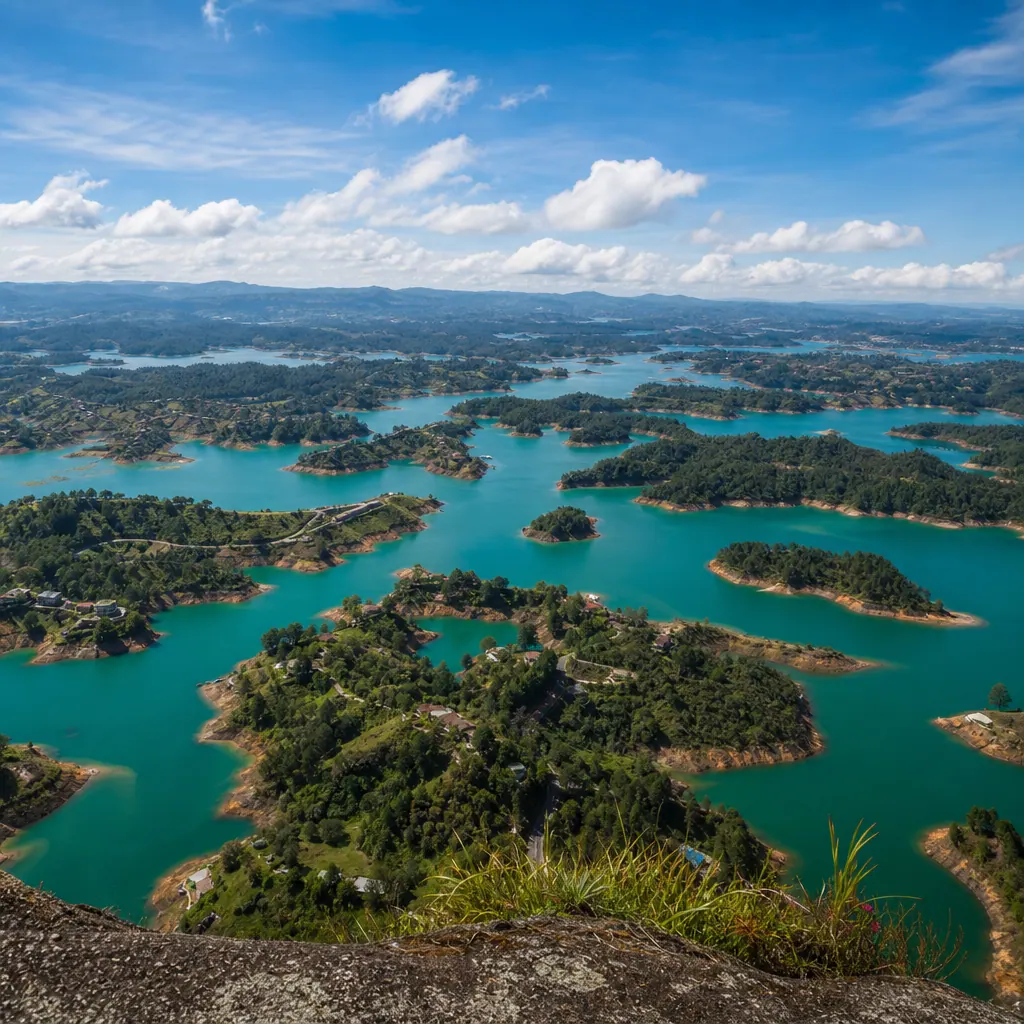
The view at the top is what the trip is for. The reservoir spreads out below in a maze of green peninsulas and inlets — on a clear day, you can see mountains for 30 or 40 kilometers. I've been up in early morning mist and in full afternoon sun. Both were worth it, though the lighting at around 8am is genuinely exceptional.
At the summit there's a commercial strip with snacks and a restaurant. Skip the restaurant — overpriced and average. Eat in town before or after; you'll have a better meal for half the money.
Timing is the biggest variable in your Guatapé experience. On weekends from about 10am to 3pm, the staircase slows to a queue. Arriving before 9am gives you the rock to yourself and better photos. Going at 4pm on a Saturday also works — the late afternoon light over the reservoir is genuinely beautiful, and the post-lunch crowd has thinned out. Weekdays are forgiving at any hour.
The Town: Zócalos, Food, and the Main Plaza
The zócalos are the reason to walk around rather than just going straight to the rock and leaving. Every building has raised decorative panels on the lower 60–80 cm of the facade, painted by individual homeowners with whatever they chose: animals, geometric patterns, rivers, coffee plants, family histories. Walk slowly and you notice details you'd miss from a bus window.
Calle del Recuerdo is the most-photographed street — a few well-maintained blocks with a consistent color palette. Worth the detour despite the other tourists. The main plaza (Parque Principal) is the town anchor, ringed with restaurants and ringed by the kind of shaded benches that make you want to order another tinto and stay.
For food: bandeja paisa at plaza restaurants runs 25,000–35,000 COP. Fresh mojarra or trucha from the reservoir is on most menus for 35,000–50,000 COP, and the sancocho is reliable. The obvious tourist-trap spots immediately adjacent to the rock entrance have worse food at higher prices — walk a couple of blocks back toward the plaza and you'll eat better for less.
The town takes about 20 minutes to walk end-to-end. Evenings are low-key: a handful of bars, tiendas with cumbia on the street, the kind of plaza where people actually sit. Not a nightlife destination, but quietly pleasant if you're there for a night.
The Reservoir: Boat Tours and Water Activities
The embalse is one of the most scenic inland bodies of water in Colombia, and getting on it is easy. Boat tour operators near the waterfront run group tours of 30–60 minutes for 10,000–20,000 COP per person. The tours weave through inlets and past the half-submerged remains of old El Peñol — there's a church tower still visible above the waterline that marks where the original town was flooded in the 1970s. Quietly striking.
Kayaks and paddleboards are available from several operators near the main dock at 20,000–30,000 COP per hour. Small speedboats can be hired for private tours if you want more flexibility. A couple of floating restaurants operate on the water — more of an experience than a food destination, but sunset from a platform floating on the embalse, with the rock visible in the distance, is a fine way to end the afternoon.
For the best reservoir views, accommodation on the lake edge beats the town side. If you're staying overnight, look for places that face the water rather than the road.
Where to Stay
Day trippers don't need to worry — just confirm the last bus back to Medellín at the terminal when you arrive.
For overnight budget stays, hostels around the main plaza have dorm beds from 35,000–60,000 COP and private rooms at 100,000–180,000 COP. Most are fine. Small family-run posadas a few blocks from the plaza often offer better quiet and sometimes breakfast at similar prices — worth asking around.
For something more distinctive, fincas and small hotels on the reservoir edge run 200,000–400,000 COP for a double room with water views. These book out on holiday weekends; reserve a few days in advance. Some lakeside fincas offer multi-bed rooms that work well for groups.
Day Trip Cost Breakdown
| Bus from Medellín (round trip) | 30,000–40,000 COP |
| El Peñón entry | 25,000 COP |
| Lunch at the main plaza | 25,000–35,000 COP |
| Group boat tour | 10,000–20,000 COP |
| Mototaxi around town | 5,000–10,000 COP |
| Total | ~95,000–130,000 COP (~$24–33) |
Staying overnight? Add 35,000–60,000 COP for a hostel dorm or 200,000–400,000 COP for a lakeside finca room.
When to Go and What to Skip
The best window is a weekday visit in March–May or September–November — drier shoulder periods in Antioquia with fewer crowds. The holiday rush (December, Semana Santa, July–August) is manageable if you're strategic about timing the rock climb, but don't expect solitude on the staircase at noon.
What to skip: La Vieja Barca floating bar gets mentioned in every travel guide and is reliably average — overpriced drinks, mediocre food, paying for the photo. Go once if the concept interests you, but don't make it a priority. The zip lines near the rock have mixed reviews on both safety and views — the top of the rock is better on both counts.
Guatapé vs. Salento: Which Should You Do First?
Both come up when people ask about weekend trips from Medellín, and they're genuinely different experiences.
Guatapé is more concentrated and visually dramatic — the rock, the colored buildings, the reservoir, all in a small area. The main event takes half a day. It rewards one night but delivers a complete day trip.
Salento is slower and more spread out — coffee farms, the Cocora Valley wax palms, a main street with better nightlife for a small town. It earns two nights more naturally.
If you can only do one: do Guatapé first. The logistics from Medellín are simpler, the experience is more concentrated, and the rock climb is the kind of thing people still reference trips later. Go to Salento when you have more time.
One practical note: if you're not traveling with medical coverage, it's worth sorting before you head out. SafetyWing covers travel medical needs across Colombia for under $50/month — useful if you're doing more physical activities like the rock climb or reservoir kayaking.
If Guatapé hooks you and you're thinking about staying longer in Colombia, the Colombia Digital Nomad Visa guide covers your options for making it official. The safety tips guide for foreigners is also worth a read before your first few trips outside Medellín.
Frequently Asked Questions
❓ Is Guatapé safe for tourists?
Yes. Guatapé is one of the more relaxed destinations in Colombia — the tourist economy is established, police presence around the rock and town is consistent, and petty crime runs low by Colombian standards. Standard precautions apply: don't leave bags unattended at the rock base, don't flash expensive gear on boats, and stay aware after dark. The town feels genuinely safe for solo travelers, including solo women.
❓ How long should I spend in Guatapé?
A full day covers the rock, the town, and a boat tour comfortably. Add one night if you want the reservoir at sunset, a proper meal without rushing the last bus, and the town after the day-trippers leave. Two nights is probably one too many unless you have specific plans — extended boating, renting a lakeside finca with a group, or doing a longer hike in the area.
❓ Can I visit Guatapé without a car?
Completely. Buses from Medellín's Terminal del Norte run throughout the day and are how most visitors — including most Colombians making the trip — arrive. Mototaxis handle everything once you're in town. A car adds flexibility for the reservoir roads but is not necessary for the standard visit.
❓ What's the best time of day to climb El Peñón?
Before 9am or after 3pm on weekends. The staircase fills up between roughly 10am and 3pm when tour groups converge. Early morning gives better light for photos and the rock mostly to yourself. On weekdays, timing matters less — midday on a Tuesday is fine.
❓ Are there good restaurants in Guatapé?
Yes, particularly around the main plaza. Fresh fish from the reservoir (mojarra, trucha) is worth ordering — usually 35,000–50,000 COP. Bandeja paisa at local spots runs 25,000–35,000 COP and is reliably filling. Avoid the tourist-trap spots right at the rock entrance; walk a couple of blocks toward the plaza and the quality jumps noticeably.


Comments
Loading comments...
Checking sign-in status...