
How to File a Complaint with the Superservicios for Unjustified Suspension of Water, Electricity, or Gas
Coming home to find your meter sealed despite being up to date on your bills is a frequent nightmare in Colombia. Know your rights under Law 142 of 1994, the legal deadlines for free reconnection, and the formal route to escalate your case to the Superservicios.
IDIOMA DEL ARTÍCULO
Showing original language
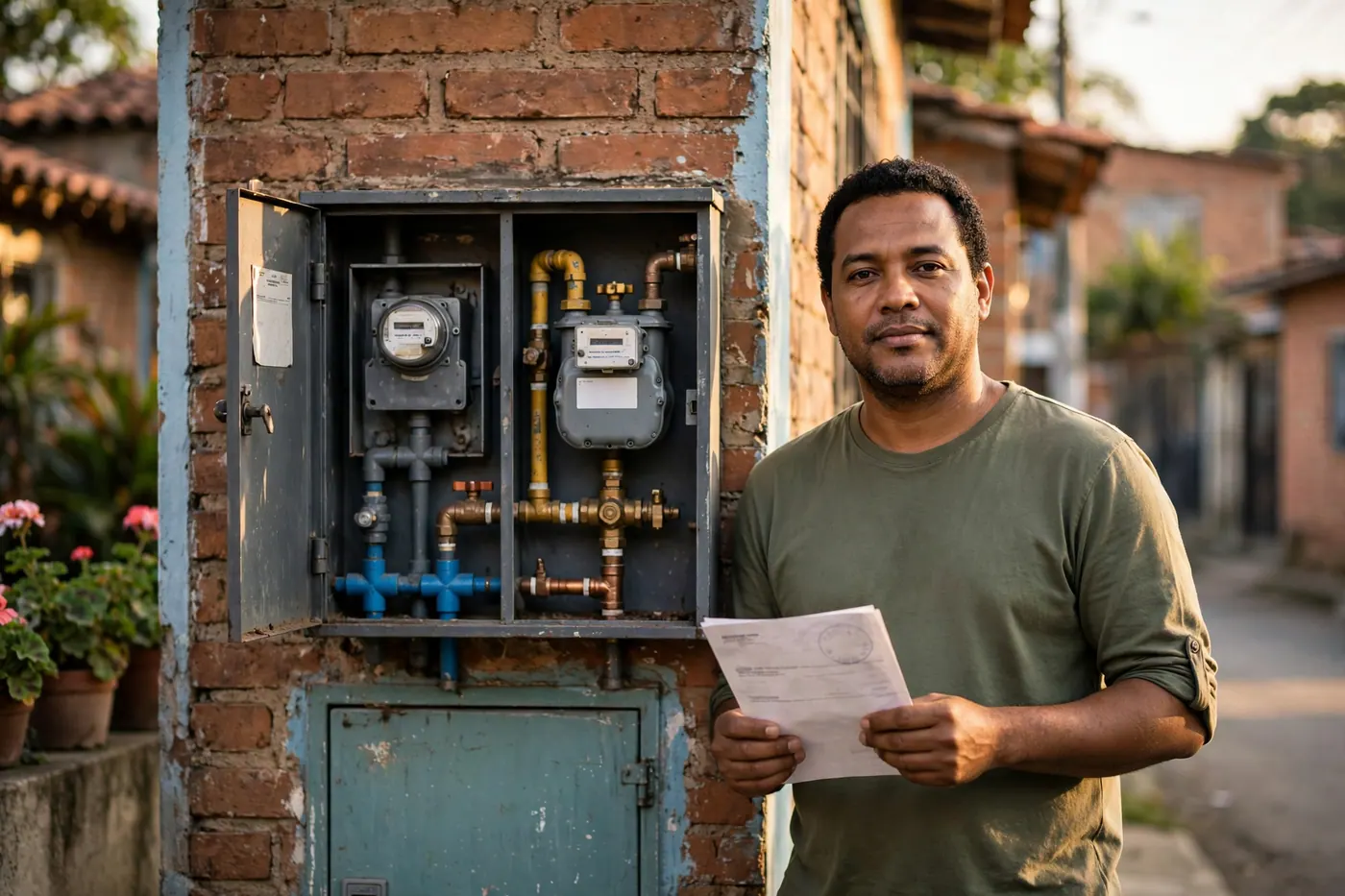
Arriving home after a workday and finding the meter with a plastic seal or the valve closed is one of the most frustrating experiences you can have in Colombia. The situation becomes infuriating when you check your bank account or physical receipts and confirm that the bills are completely up to date, or that you had an active formal claim that legally prevented the suspension.
In the country, erroneous suspensions occur more frequently than operators of water, energy, and gas services admit. Between delays in bank payment clearing, confusion in meter banks in buildings, and technical crews executing outdated orders, thousands of users are arbitrarily left without essential services. Faced with this abuse, Colombian law gives you powerful tools to demand the immediate restoration of service without paying a single peso for reconnection.
- Zero reconnection cost: If the cutoff occurred due to a company error (paid bill, property error, or active claim), the reconnection fee is 100% illegal under Article 96 of Law 142 of 1994.
- Peremptory restoration deadline: Once the fault is clarified, the company must restore water within a maximum of 24 hours (Decree Law 019 of 2012) and electricity or gas within a regulatory period of up to 3 business days.
- Mandatory legal route: File a formal claim (PQR) with the service provider. If they do not respond within 15 business days, Positive Administrative Silence applies; if they respond negatively, you have 5 business days to file an appeal for reconsideration and, in the alternative, an appeal with the Superservicios.
What constitutes an unjustified suspension according to Law 142 of 1994?
The public utilities regime in Colombia is regulated by Law 142 of 1994. Its Article 140 empowers companies to suspend service only under specific causes, the main one being failure to pay during the term agreed upon in the uniform contract conditions (generally two consecutive billing periods). Any cutoff that occurs outside these strict causes constitutes a failure in service provision according to Article 141 of said law.
There are three common scenarios where a cutoff is legally unjustified:
- Bills paid on time: When you paid the bill before the deadline through electronic channels (such as PSE or digital wallets) or bank correspondents, but the information took time to reconcile in the provider's commercial software before the technical crew was dispatched.
- Violation of Article 155 (Active claim in progress): The law strictly prohibits suspending supply if the user filed a timely claim regarding disputed amounts, provided they have paid the undisputed amounts or the average historical consumption. Disconnecting the service while the response period is running is a direct violation of due process.
- Connection or meter error (Crossed cutoff): In gated communities, buildings, or subdivided houses, it is common for the technician to mistakenly seal the meter of a compliant neighbor instead of the delinquent property.
A frequent rumor attributes a reconnection cap for any public utility to Law 2485 of 2025. That applies to telecommunications (CRC), not water, electricity, or gas. For household utilities, Law 142 of 1994 prevails: reconnection at zero cost if the cutoff was improper; if there was actual delinquency, the company can only charge efficient operating costs, not an arbitrary fine.
Your immediate rights: Reconnection deadlines and free of charge
When you suffer an improper suspension, the company is not doing you a favor by restoring the service: it is remedying a contractual breach. According to Concepts 40 and 199 of 2025 from the Superintendence of Public Household Utilities (SSPD), if the suspension was not due to the subscriber's fault, the provider cannot demand any payment for installation or technical reconnection.
Additionally, the legal response times are not at the operator's discretion. The Colombian regulatory framework includes the following maximum periods for the supply to be active again in your home once the misunderstanding has been cleared up or proof of payment has been presented:
- Aqueduct (Potable water): Maximum 24 hours starting from the filing or disappearance of the alleged cause, in accordance with Article 42 of Decree Law 019 of 2012 (Anti-Red Tape Decree) and the framework of the Drinking Water and Basic Sanitation Regulation Commission (CRA 943 of 2021).
- Electric energy and combustible gas: Up to a maximum regulatory deadline of 3 business days in urban sectors, according to the general provisions of the Energy and Gas Regulation Commission (CREG, Resolution 108 of 1997).
Step by step: How to act in the face of a service cutoff
If you arrive at your home and have no supply, don't just complain on social media or hire private individuals to break the meter seals. Physical alteration of connections can lead to accusations of fluid theft. Follow this formal protocol:
Step 1: Immediate documentation of the incident
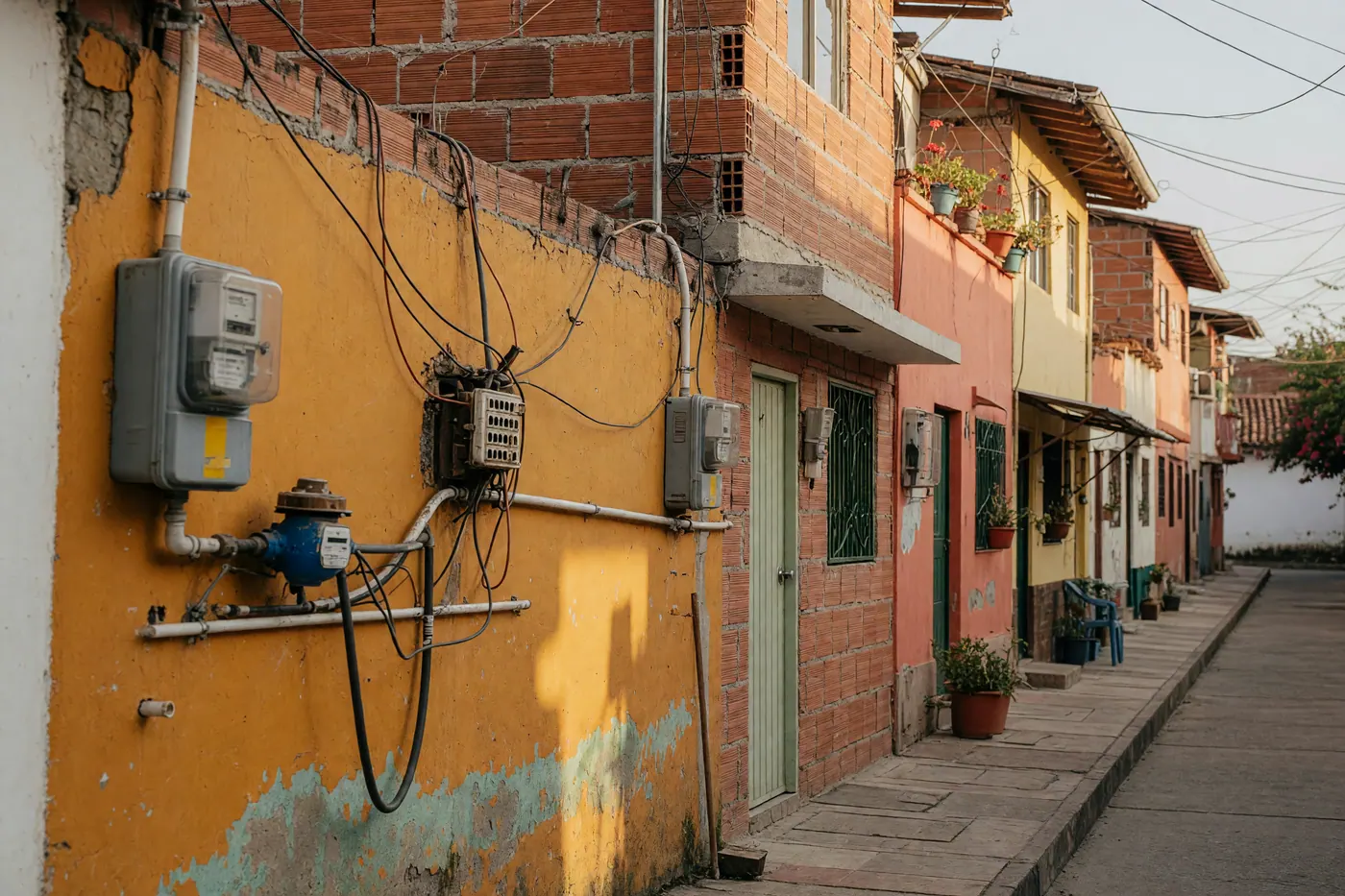
Take clear photographs of the meter evidencing the seal or plug installed, the current meter reading, and the equipment serial number. Immediately download bank statements or stamped payment receipts proving that the account was settled before the technical intervention.
Step 2: Communication with the technical support line
Call the emergency telephone line of the provider entity (Codensa/Enel, EPM, Vanti, Aqueduct, Celsia, etc.). Provide the account number or NIC, inform them that you are up to date, and demand the immediate opening of a reconnection order for improper suspension. Rigorously note the date, exact time, and the tracking number of the phone report.
Step 3: Filing the Petition for Service Failure
If the company does not show up within the legal deadlines or insists that you must pay for a reconnection, immediately file a formal claim or right of petition through digital or in-person channels. You can use the guide on public utility reconnection fees to substantiate the illegality of the fees when there was no attributable delinquency.
If the conflict is an inflated bill and not a physical cutoff, also consult how to dispute an excessive utility charge. When you have already been charged an improper reconnection fee, check how to report abusive water and electricity reconnection charges.
You may be interested in: Consult our complementary guide on how to file a request for reconsideration and an appeal with public utilities to strengthen your legal arguments.
Formal claim template for unjustified disconnection
Below, we provide a template adapted to current regulations that you can file through the service provider's web portal or at their physical customer service offices:
Subject: Claim for unjustified suspension and immediate restoration at no cost. Account [Number]. Address [Property]. I, [Name], ID [Number], [owner/tenant], state:
1. On [Date], service for [water/electricity/gas] was suspended at the property.
2. The property is up to date: I paid the [Month] period on [Date] for $[Amount] via [channel], as attached.
3. Arts. 140 and 141 of Law 142 of 1994: disconnection without just cause = failure attributable to the provider.
4. Art. 96 and SSPD doctrine: reconnection or reinstallation fees do not apply.
Requests: restore within the legal deadline (24 hours for aqueduct, Decree 019 of 2012; CREG term for electricity/gas); waive reconnection; remove the charge if already billed. Notifications: [email] / [mobile].
How to escalate to the Superservicios if the company does not respond
When the service provider delays the solution, Law 142 of 1994 establishes a regulated procedure with strict deadlines that you must monitor meticulously:
1. The 15-business-day term and Positive Administrative Silence
Once your formal claim is filed, the service provider has a maximum and non-extendable term of fifteen (15) business days to resolve and notify the final decision (Article 158 of Law 142 of 1994). If the company remains silent or the deadlines pass without duly notifying you, the Positive Administrative Silence (SAP)occurs. This means the law assumes your petition was granted in your favor in its entirety. To learn more about the formalization process of this right, check our guide on positive administrative silence in public utilities.
2. The Motion for Reconsideration and Subsidiary Appeal
If the company replies within the term but rejects your request, falsely claiming the disconnection was legitimate, you must act immediately. You have exactly five (5) business days following notification of the denial to file the Motion for Reconsideration and Subsidiary Appeal. Both appeals are presented in the same document to the service provider: the reconsideration for the entity to re-evaluate its stance, and the subsidiary appeal so that, if they uphold the rejection, they must compulsorily forward the file to the Superintendence of Residential Public Services (SSPD).
3. Official Superservicios channels
To follow up, report unjustified delays, or request administrative investigations for mass disconnections, the Superservicios has the following updated official channels:
- TeResuelvo Platform and Digital One-Stop Shop: web process centralized on the official portal www.superservicios.gov.co, including the request for declaration of Positive Administrative Silence.
- Free national telephone channel: 01-8000-910305 available nationwide.
- Bogotá service line: (601) 691-3006.
- In-person assistance: the digital one-stop shop has a reference office in Bogotá; to file documents in person, confirm the hours at your local Superintendence branch and avoid third-party agents who charge for a free service.
Protection for tenants and owners
Conflicts over utility disconnections are especially complex in lease agreements. Frequently, a new tenant moves into a property and suffers water or electricity suspension due to bills left unpaid by the previous tenant. In this scenario, Article 130 of Law 142 of 1994 (modified by Law 689 of 2001) establishes clear rules on the break of solidarity.
According to active listings on Colombia Move (September 2026), the housing section has 170 active listings and 77 recent ones, with 33,452 demand views: it is wise to request a utility clearance certificate before signing or handing over a property.
If the public utility company allowed a user to accumulate more than two periods of arrears without suspending service in a timely manner, the company loses solidarity over the property toward the new occupant or owner. When renting a property or handing it over at the end of a contract, it is essential to verify the operational clearance of the meters to avoid unexpected disconnections or disagreements over the maintenance and good condition of the installations.
Frequently asked questions
❓ What should I do if my water, electricity, or gas was cut off even though my bills are up to date?
Call the company immediately with payment proof and ask for reconnection due to improper suspension. If they do not act within 2026 deadlines (Decree 019 of 2012 and CREG 108 of 1997), file a claim for service failure (Law 142 of 1994).
❓ Can the utility company charge me for reconnection if the cut-off was their mistake?
No: if the cut-off was the company's error, reconnection costs $0. Article 96 of Law 142 of 1994 and SSPD Concepts 40 and 199 of 2025 only allow charging for reconnection when there is default attributable to the user.
❓ What is the maximum legal deadline to reconnect service after an improper cut-off?
Water service must return within a maximum of 24 hours. That deadline comes from Decree Law 019 of 2012 and CRA 943 of 2021; energy and gas have up to 3 business days under CREG Resolution 108 of 1997, effective in 2026.
❓ Can they cut off my service if I have a billing claim in progress?
No: Article 155 of Law 142 of 1994 prohibits disconnection due to amounts under dispute. Protection, effective in 2026, requires having paid the undisputed amount or the historical average of consumption.
❓ How and when does the Superservicios intervene in an unjustified cut-off?
It intervenes on appeal if the company denies the claim. It also acts if 15 business days pass without a response (Art. 158 of Law 142 of 1994, 2026) to request the Positive Administrative Silence on TeResuelvo.
❓ What do I do if the service provider refuses to receive or process my appeal?
File a complaint motion within five business days. SSPD Concept 225 of 2025 and TeResuelvo allow filing it before the Superservicios with proof that the company rejected the appeal.


Comments
Loading comments...
Checking sign-in status...