
Colombia Utility Deposits and First Bills: A Guide for New Renters
General security deposits are illegal in Colombia, but utility guarantees are a common exception. Learn how to handle your first bills and avoid paying for a previous tenant's usage.
IDIOMA DEL ARTÍCULO
Showing original language
Moving into your first Colombian apartment is an exciting milestone, but the financial transition can quickly become a source of culture shock. Many expats arrive expecting to pay a standard “first, last, and security” deposit, only to find that Colombian rental law operates on a completely different set of rules. Between figuring out what a landlord can legally demand upfront and deciphering an un-prorated first-month utility bill, new renters often find themselves confused and out of pocket.
Quick answer: General security deposits for property damage or rent defaults are strictly illegal in Colombia under Ley 820 de 2003. Landlords can, however, legally request a “utility guarantee” capped at two consecutive billing periods. When you move in, utility companies will not prorate your first bill — you have to work out your share with the landlord using the meter readings from your move-in day.
The Security Deposit Myth vs. Colombian Law (Ley 820 de 2003)
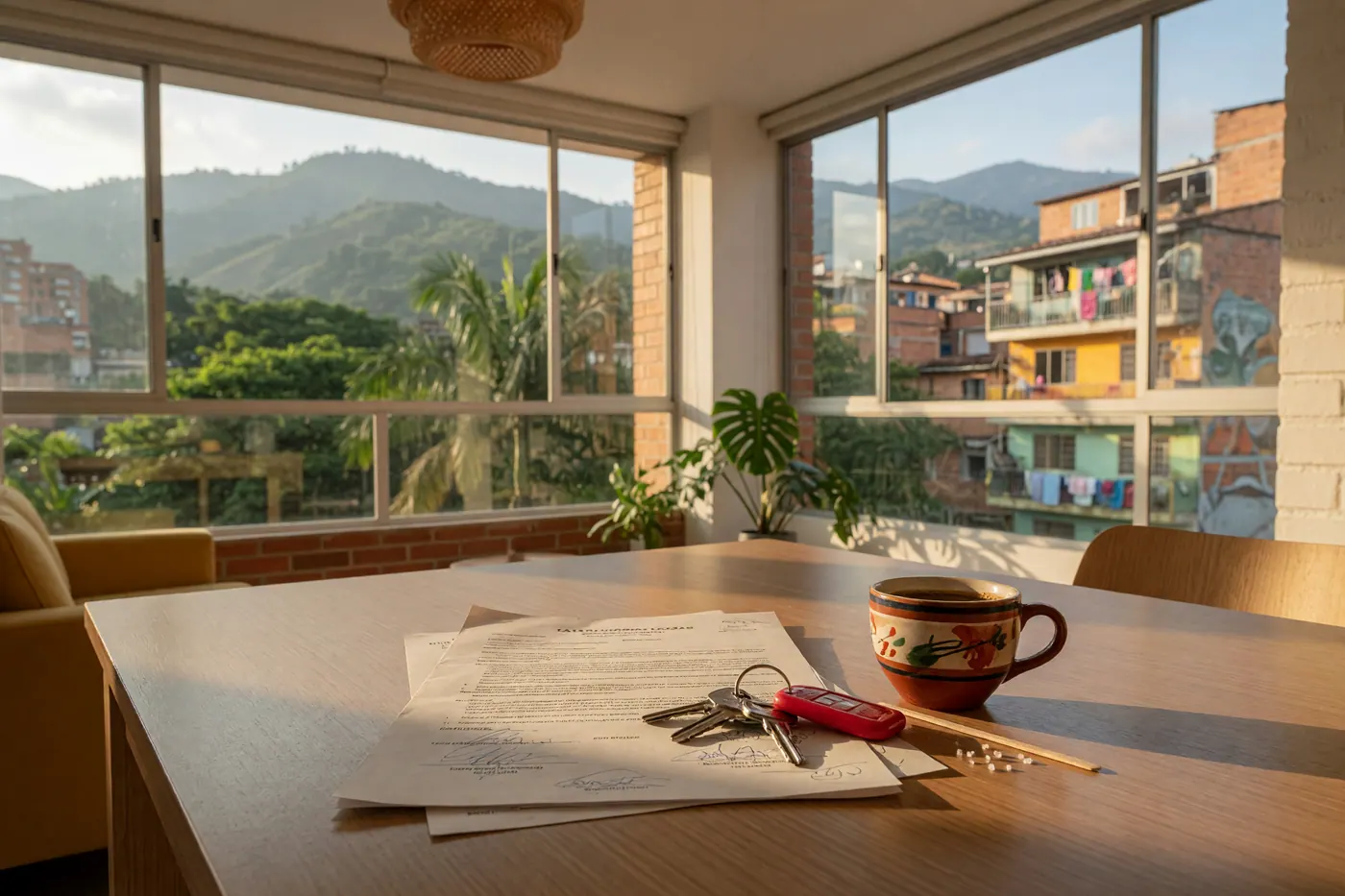
One of the most common misunderstandings for foreigners renting in Colombia is the concept of a security deposit. In many countries, handing over a month's rent to cover potential damages is standard practice. In Colombia, it is explicitly prohibited for residential leases.
According to Article 16 of Ley 820 de 2003, landlords cannot demand general cash deposits or guarantees to cover property damage or contract defaults. If a landlord asks you for a “mes de depósito” for damages, they are violating Colombian housing regulations. This is a crucial detail to remember when reviewing building rules and signing a new lease.
However, there is one legal exception: the utility guarantee. Under Article 15 of the same law, a landlord can demand a specific guarantee to protect themselves against unpaid domiciliary services (water, electricity, and gas). This utility guarantee is strictly capped at the cost of two consecutive billing periods of consumption and fixed charges. It is not a blank check for damages, and it should technically be filed with the utility providers, though in practice, many landlords hold it in escrow.
Looking for a landlord who plays by the rules? Browse verified, commission-free apartments and rooms directly in Colombia Move's housing section.
The First Utility Bill: Why It Doesn't Match Your Move-In Date
According to recent questions on colombiamove.com/comunidad (July 2026), one of the most common disputes for new renters is receiving a full 30-day utility bill just days after moving in. This happens because utility companies like EPM or Enel bill on fixed monthly municipal cycles, completely ignoring your lease start date.
Your first bill will almost certainly cover days or weeks before you lived in the property. Because the utility company will not prorate the charges for you, the responsibility falls on you and your landlord to calculate your exact share. This makes the acta de entrega (the formal handover inventory document) absolutely critical — our step-by-step guide to setting up utilities in Colombia walks through what to record on day one.
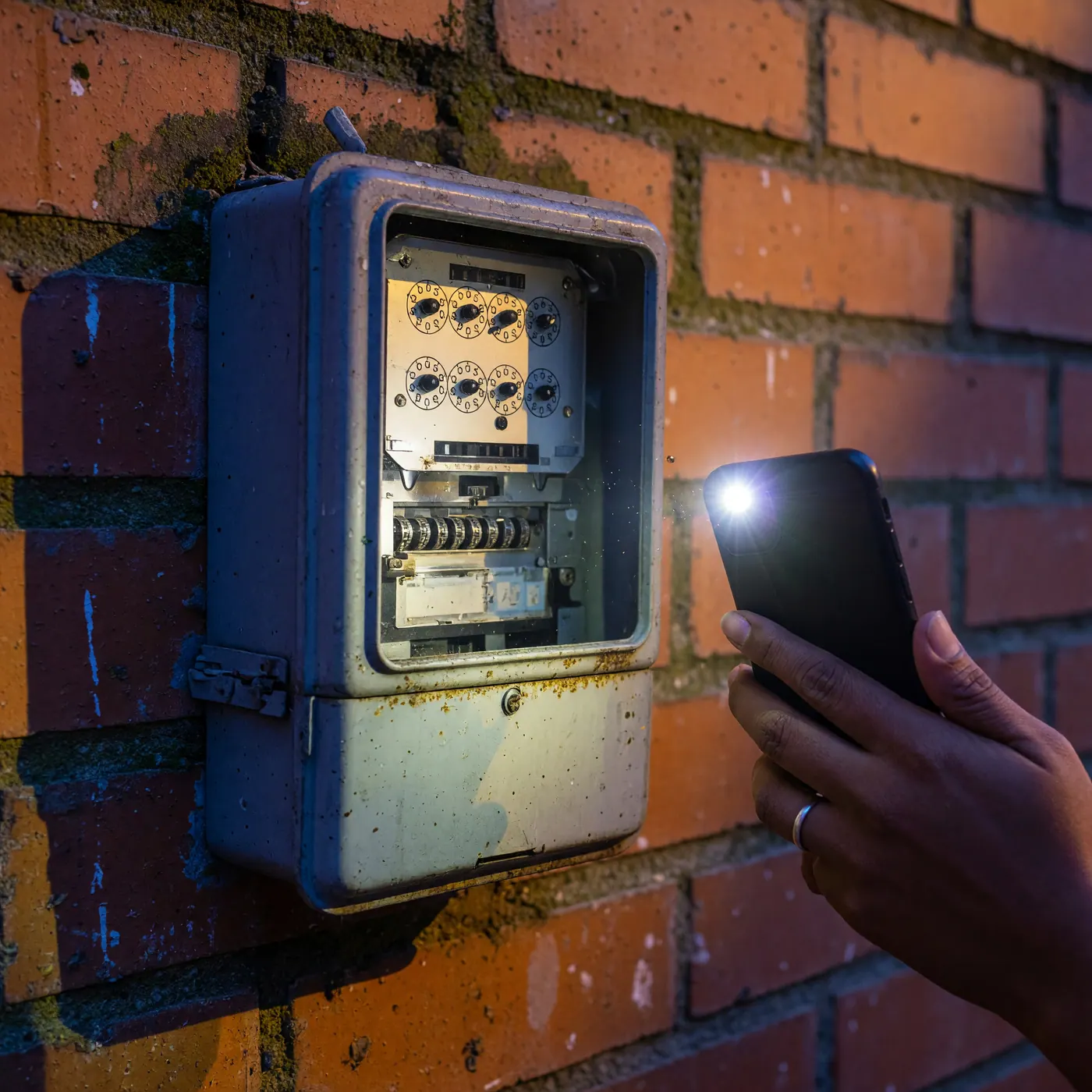
On day one, you must physically record the exact numbers on your water, gas, and electricity meters and include them in the acta de entrega. When that first bill arrives, you can calculate your exact consumption from that baseline and pay your portion via PSE while the landlord covers the previous tenant's usage — and if a charge looks wrong, our guide to paying and disputing utility bills covers how to file a PQR.
Estimated Billing: The Risk of Inaccessible Meters
If your physical utility meter is locked behind a gate, inside an apartment complex without portero access, or otherwise inaccessible to the meter reader, companies like Enel or EPM will not simply skip your bill. Instead, they will issue an estimated bill based on the property's historical average consumption.
This creates a significant risk for new renters. If your actual usage is higher than the historical average — for example, if you work from home with the air conditioning running, while the previous tenant traveled constantly — you will eventually face a massive “corrective” bill once a real physical reading is finally taken. Always make sure utility workers have clear access to your meters every month.
Reconnection Fees and the New 2026 Caps
If a utility bill goes unpaid, the service will be suspended, and you will be charged a reconnection fee to turn it back on. For renters setting up home internet and utilities, it is important to know that the rules around these fees have recently changed.
Effective July 17, 2026, the Comisión de Regulación de Comunicaciones (CRC) has capped telecom reconnection fees. Major fixed-line internet and phone operators can now charge a maximum of just $1,232 COP for reconnection, while mobile operators are capped at $285 COP.
Don't assume this applies to all your bills, though. Domiciliary utilities — water, electricity, and gas — do not fall under this new telecom cap. They are still governed by Ley 142 de 1994 and will continue to charge standard, much higher reconnection fees if your service is suspended for non-payment.
The Estrato Factor on Your First Bill
Finally, when reviewing your first utility bill, check the estrato (socioeconomic stratum) of your property. Colombia uses a stratified billing system to subsidize utilities for lower-income neighborhoods.
If you are renting an apartment in Estrato 5 or 6 (common in popular expat neighborhoods like El Poblado in Medellín or Chapinero Alto in Bogotá), you are required by law to pay a mandatory 20% surcharge on top of your actual consumption. This surcharge directly funds the subsidies for Estratos 1, 2, and 3. Factoring this 20% premium into your monthly budget is essential before signing a lease.
Who's Liable If the Bill Goes Unpaid? Joint Responsibility Under Ley 142
Here's a legal wrinkle most first-time renters never hear about: under Article 130 of Ley 142 de 1994, the landlord and tenant are jointly liable (“solidarios”) for unpaid utility bills on a property. That means a utility company can legally chase either party for a debt, regardless of who actually ran up the consumption. A landlord can break this joint liability, but only by formally registering the lease and the utility guarantee with the water, gas, and electricity providers — something surprisingly few landlords actually bother to do.
The bigger practical risk is that utility debt is tied to the property, not the person who created it. If the previous tenant skipped town owing three months of electricity, that debt doesn't disappear when you sign your lease — you can be the one facing a suspended connection over it. Before you sign, ask the landlord for a “paz y salvo” (a debt-free certificate) from each utility provider, and cross-check it against the meter readings you record in the acta de entrega. It only takes a few minutes and it's the difference between inheriting someone else's problem and starting clean. For the full breakdown of what the landlord covers versus what lands on you month to month, see our guide to Colombia apartment administration fees.
Keep Reading: Understanding your lease terms? Check out our guide on Colombia Rent Increase Rules for Renters to see how much your landlord can legally raise your rent this year.
Frequently Asked Questions
❓ Is a landlord allowed to ask for a security deposit in Colombia?
No, general security deposits for property damage or rent defaults are strictly illegal under Article 16 of Ley 820 de 2003. However, landlords are legally allowed to request a specific utility guarantee capped at two billing periods.
❓ How is the first utility bill split if I move in mid-month?
The utility company will not prorate your bill; you must manually calculate your share with the landlord based on the meter readings recorded in your acta de entrega (handover document) on your move-in day.
❓ What happens if the utility company cannot read my meter?
They will issue an estimated bill based on historical averages. If your actual usage is higher, you will face a massive “corrective” bill once a physical reading is finally performed.
❓ Are utility reconnection fees capped in Colombia?
Yes, but only for telecom services (internet and phone), which are strictly capped starting July 17, 2026, under CRC regulations. Standard reconnection fees still apply to water, electricity, and gas.
❓ Why are utility bills so much higher in Estrato 5 and 6?
Properties in Estratos 5 and 6 are subject to a mandatory 20% surcharge on top of their actual consumption to subsidize utility costs for lower-income neighborhoods (Estratos 1, 2, and 3).
❓ Why do Colombian landlords still ask for illegal security deposits?
Because the law is rarely enforced and foreign tenants without a local codeudor look risky to them. In practice, many landlords ask anyway to cover potential damage. Instead of paying a cash deposit, negotiate a rental insurance policy (fianza/seguro de arrendamiento), a codeudor, or a written contract addendum instead — all of which are legal and give the landlord real protection.
❓ Who pays the utility bills — the landlord or the tenant?
The tenant covers consumption-based utilities (water, electricity, gas, internet) for the whole lease, while the landlord is responsible for property tax (predial) and building administration fees unless your contract says otherwise. Because utility debt is tied to the property, always request a paz y salvo certificate from the providers before you sign, so you don't inherit a previous tenant's unpaid balance.


Comments
Loading comments...
Checking sign-in status...