
Bringing Personal Medication to Colombia: Invima Rules, Customs & Pharmacy Tips
Arriving in Colombia with essential prescriptions? Here is how to navigate DIAN customs limits, Invima regulations, controlled substance documentation, and local pharmacy refills without hassle.
IDIOMA DEL ARTÍCULO
Showing original language
Stepping off an international flight into Colombia with a bag full of essential prescription drugs can trigger quiet anxiety. Whether you depend on daily blood pressure medicine, insulin, or controlled medications for ADHD, nobody wants to watch a customs officer sift through personal belongings and confiscate a vital supply.
The good news: Colombian customs law is remarkably pragmatic for tourists, digital nomads, and relocating expats. You can bring personal medication into Colombia safely and legally, provided you observe clear regulatory boundaries set by the Colombian tax and customs authority (DIAN) and the national health surveillance agency (INVIMA). Here is your step-by-step operational guide to entering Colombia with medication, avoiding common parcel traps, and managing refills locally.
Quick Summary: Carry a maximum 90-day personal supply in your carry-on luggage, keep everything in original manufacturer packaging with visible patient labels, and carry a doctor’s letter detailing active compounds. Never ship prescription refills by international courier like DHL or FedEx—they will almost certainly be impounded.
The Golden Rules of Packing Medication for Colombia
Under Colombian customs framework (governed primarily under Decreto 1165 de 2019), travelers entering through international gateways may import personal effects without paying duties or taxes. Personal medications needed for the duration of your trip fall directly under non-commercial personal luggage.
To avoid triggering commercial scrutiny, adhere strictly to three baseline practices:
- Keep to the 90-day personal-use ceiling: DIAN officers evaluate luggage based on commercial character. Bringing more than a 90-day supply—or packing large identical boxes exceeding 10 units—often leads inspectors to suspect unauthorized commercial resale, putting your supply at risk of formal seizure.
- Never pack critical medication in checked baggage: Luggage delays, extreme cargo temperatures, and rough handling can spoil temperature-sensitive medications like biologics or insulin. Always carry your entire personal medicine regimen inside your cabin carry-on.
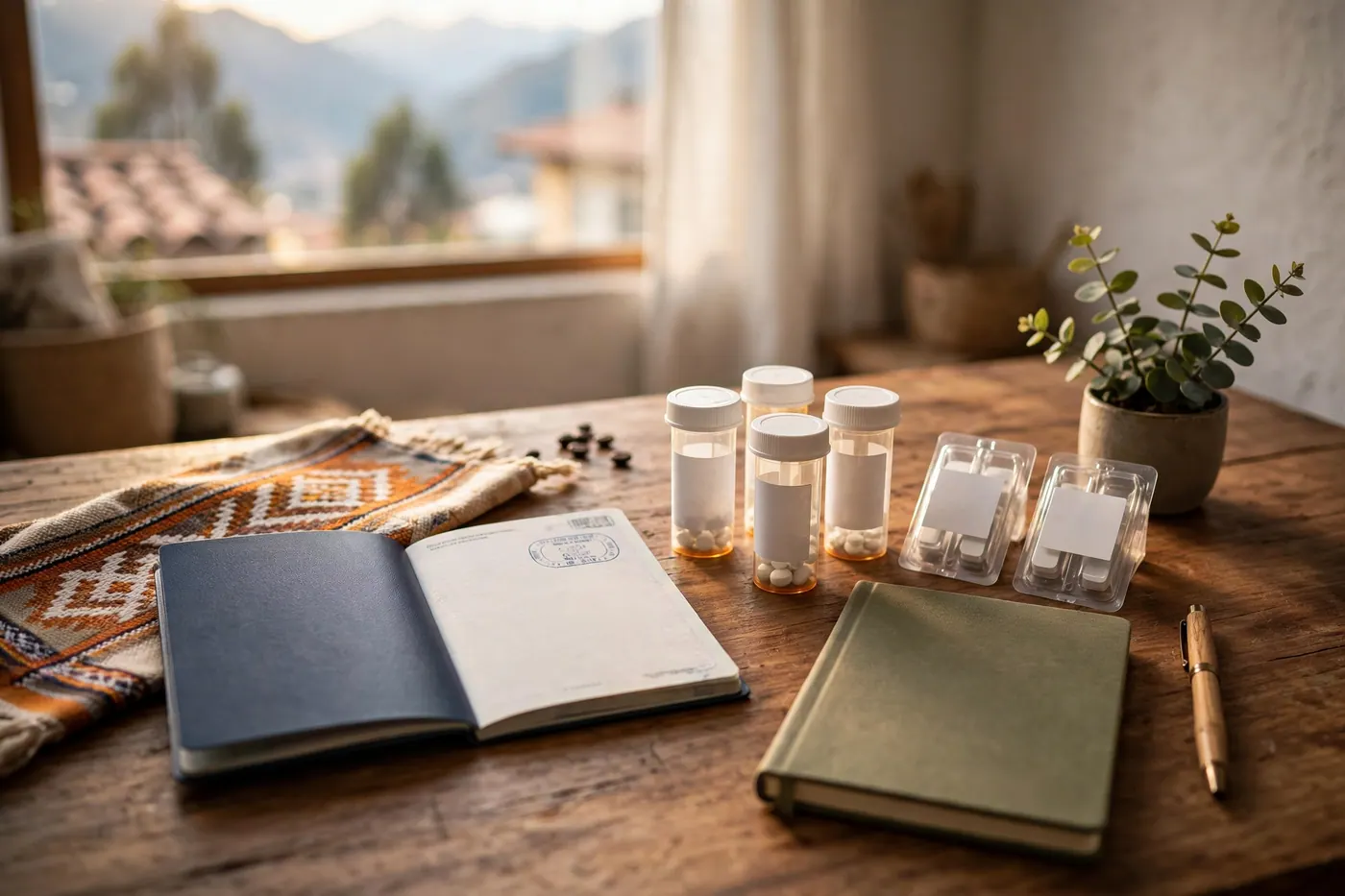
- Leave everything in original pharmacy containers: Resist the temptation to dump loose pills into weekly plastic pill-organizer boxes. Every medication should sit in its original carton or prescription bottle displaying your full legal name, the prescribing clinic or pharmacy details, the dosage, and the expiration date.
Documentation Checklist for DIAN Customs & INVIMA
Most arriving passengers walk straight through green-channel customs without physical inspection. However, random baggage scans and dog alerts happen routinely. If flagged for an inspection, having organized paperwork prevents stressful misunderstandings.
Before leaving home, prepare a folder containing the following documents:
- Official Physician’s Travel Letter: Printed on formal medical letterhead, signed and stamped by your licensed healthcare provider. The letter should state your full legal name (matching your passport), specific medical diagnoses, each drug's brand name, and crucially, its generic compound name.
- Active Generic Names (INN / DCI): In Latin America, pharmaceutical tracking relies on the International Nonproprietary Name (Denominación Común Internacional or DCI). If your bottle says "Adderall" or "Wellbutrin", your doctor's note must explicitly list "Amphetamine mixed salts" or "Bupropion hydrochloride".
- Spanish Translation: While many customs officers at major ports of entry speak functional English, a simple, accurate Spanish translation of your physician’s note prevents misinterpretation during secondary screening.
- Customs Baggage Declaration (Formulario 530): You do not need to make an advance declaration for routine maintenance medications. However, if your medical equipment or total supplies approach border thresholds, disclose them transparently if prompted on the official declaration form.
Controlled Substances: Navigating "Franja Violeta" & FNE Oversight
Things become stricter when traveling with psychoactive, narcotic, or stimulant medications. In Colombia, specialized pharmaceuticals fall under the regulatory control of the Fondo Nacional de Estupefacientes (FNE), a specialized division of the Ministry of Health operating under Law 30 of 1986 and updated under Resolución 116 de 2026.
Common controlled medications that expat travelers frequently take include:
- ADHD stimulants: Methylphenidate (Ritalin, Concerta). Mixed amphetamine salts (Adderall) are controlled at the border, so personal documentation is even more critical.
- Benzodiazepines: Clonazepam (Klonopin), Alprazolam (Xanax), and Lorazepam (Ativan).
- Opioid analgesics: Oxycodone, Morphine, Codeine, Tramadol, and Fentanyl patches.
In Colombian dispensaries, these medications are designated as Medicamentos de Control Especial (MCE) and carry a prominent purple band on the box, known colloquially as Franja Violeta. Bringing personal quantities through customs is legal for travelers, provided the quantity precisely matches the duration stated in your doctor's travel letter. Never bring extra "cushion" supplies of controlled drugs.
A crucial warning regarding medical cannabis: Even though Colombia possesses a legal domestic framework for pharmaceutical cannabis cultivation and local prescription dispensing, transporting foreign medical marijuana, THC gummies, or CBD vape cartridges across international borders remains illegal under federal border regulations. Leave all cannabis products at home and obtain legal domestic formulations after arrival if needed.
The Courier Trap: Why You Should Never Ship Medication via FedEx or DHL
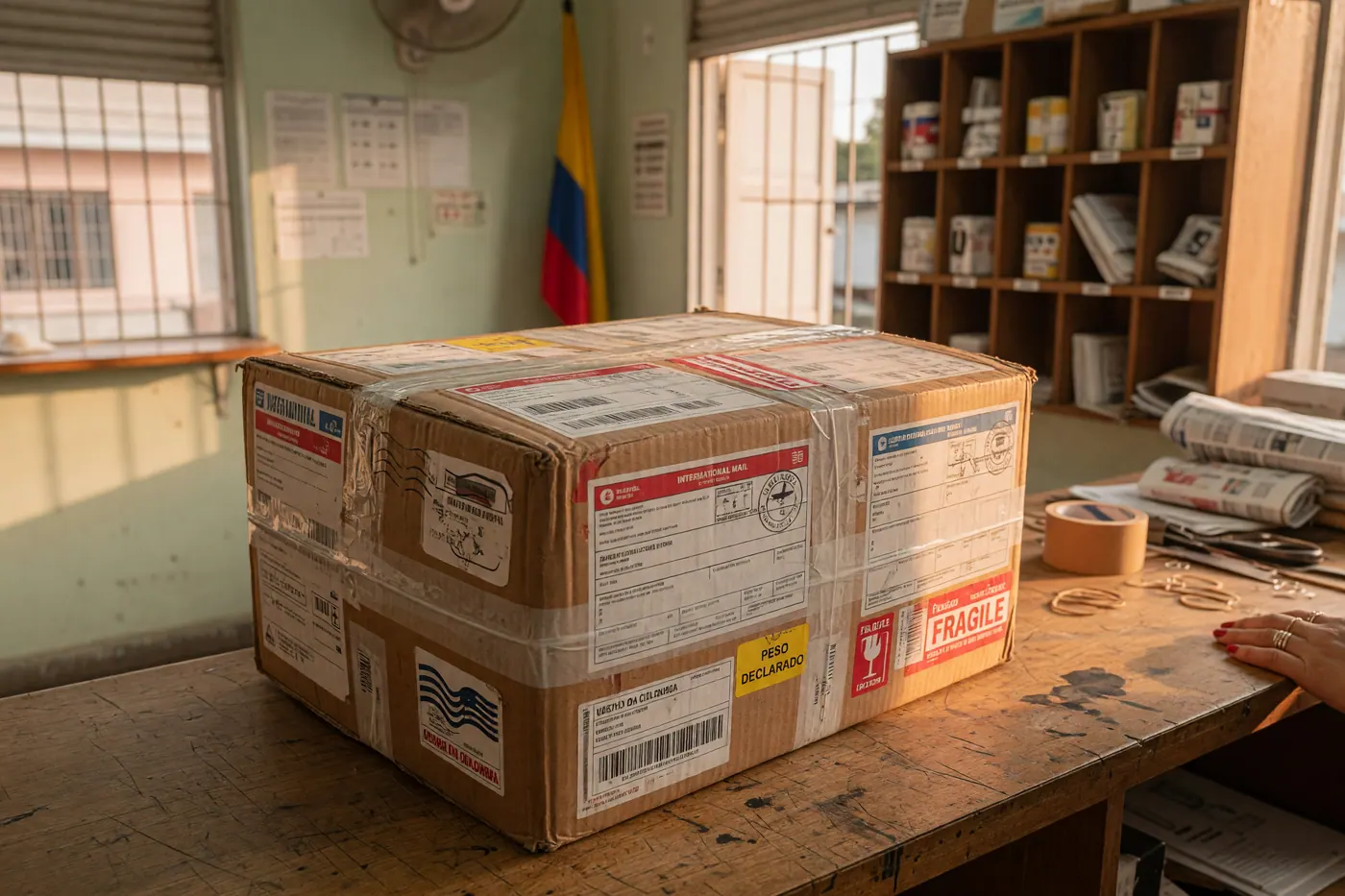
One of the most frequent disasters we see among incoming remote workers and new residents is having a friend or family member ship a "forgotten" prescription box from home via international postal couriers (DHL, FedEx, UPS, or 4-72).
Under INVIMA regulations and customs enforcement, the postal importation of finished pharmaceutical products by private individuals is strictly prohibited without prior sanitary authorization or a formalized Decreto 481 de 2004 clearance for vital unavailable medications. When a parcel containing prescription pills lands at El Dorado's international courier facility, DIAN agents routinely detain it immediately.
Retrieving detained medication from customs requires complex regulatory paperwork and licensed customs broker intervention. In most instances, foreign medicine parcels are declared abandoned and destroyed. If you need a refill while living in Colombia, do not rely on postal shipments: consult a local doctor instead. If a vital medicine is already gone when you land, a private clinic is the practical first stop — see our guide to medical emergencies and private clinics in Colombia.
How to Refill Prescriptions in Colombia
Foreign paper or digital prescriptions from the United States, Canada, the UK, or the EU are legally invalid for direct dispensing at commercial pharmacies in Colombia. You cannot walk up to a drugstore counter in Colombia and hand the pharmacist an American prescription sheet.
Fortunately, accessing healthcare and obtaining a Colombian medical formula (fórmula médica) is affordable, fast, and straightforward:
| Step | Action | Key Details |
|---|---|---|
| 1. Identify Generic Name | Look up the DCI / Principio Activo | Colombian pharmacists categorize stock by chemical active ingredient rather than foreign commercial trademarks. |
| 2. Book Private Doctor | Schedule a general or specialist consult | Private walk-in consultations typically cost between 120,000 COP and 300,000 COP. Bring your existing medical records. |
| 3. Receive Local Formula | Get a signed Colombian prescription | For standard drugs, a regular digital or paper formula suffices. For Franja Violeta drugs, doctors issue official tracked numbered scripts. |
| 4. Purchase at Dispensary | Buy over the counter or via app | National chains like Cruz Verde, Farmatodo, Drogas La Rebaja, and Pasteur stock extensive brand and generic inventories. |
To learn more about purchasing over-the-counter and prescription products once you have landed, read our in-depth guide to buying prescription medication in Colombian pharmacies. If you prefer doorstep delivery for everyday health products and maintenance refills, check out our breakdown of ordering medication through Colombian pharmacy apps.
A private consult is a real line in a move budget. See how much money you need to move to Colombia, including healthcare, and save the Colombia emergency numbers guide before you travel.
If you are staying long enough to need a local address, Colombia Move showed 2 active short-stay housing listings in the temporal category and 428 listing views as of September 25, 2026.
Frequently Asked Questions
❓ Can I bring a 6-month or 1-year supply of prescription medication to Colombia?
No, you should strictly limit your entry medication to a maximum 90-day personal supply. Bringing large quantities beyond three months routinely leads DIAN customs officers to classify your baggage as commercial cargo, which requires formal import licensing. That ceiling follows DIAN rules checked in September 2026.
❓ Will Colombian pharmacies honor a paper prescription from my US or European doctor?
No, Colombian retail pharmacies cannot legally dispense prescription medications against foreign medical slips. You must schedule a private consultation with a Colombian-licensed physician who will review your foreign medical history and issue an official Colombian medical prescription (fórmula médica). That rule was still in force in September 2026.
❓ Can I bring Adderall or other ADHD stimulant medication to Colombia?
Yes, but you must carry airtight documentation including your original labeled pharmacy containers and a signed physician letter with a Spanish translation. Stimulants like methylphenidate and amphetamine salts are regulated as controlled substances (Medicamentos de Control Especial) under the Fondo Nacional de Estupefacientes. Carry only the quantity written on your own physician’s travel letter, and keep that amount within a 90-day personal supply. September 2026 is only the date the FNE control position was last checked.
❓ What happens if I mail my prescription refills from abroad via DHL or FedEx?
Your parcel will almost certainly be intercepted and detained by DIAN customs at the courier warehouse. Under INVIMA regulations, individuals cannot import prescription pharmaceuticals via postal courier without a formal sanitary import permit, and stranded parcels are generally abandoned or destroyed. DIAN and INVIMA still applied that bar in September 2026.
❓ Can I travel with medical marijuana or CBD oils prescribed in my home country?
No, you should never transport medical cannabis flower, concentrates, or foreign CBD oils across international borders into Colombia. While domestic medical cannabis exists within Colombia under specialized medical frameworks, border officers enforce strict border prohibitions against foreign cannabis imports. Leave those products at home under the September 2026 border rules.
❓ How do I ask for my medication at a Colombian pharmacy if I only know the American brand name?
Provide the pharmacist with the International Nonproprietary Name (INN / Principio Activo) and the precise milligram dosage. Colombian pharmacies organize stock primarily by generic active compound rather than North American commercial brand names, allowing them to locate equivalent domestic brands or generics quickly.

Comments
Loading comments...
Checking sign-in status...