
Roommate Agreements & Subletting Rules in Colombia: Ley 820 Compliance
Treat a Colombian lease like a U.S. sublet and you can lose the apartment. Ley 820 requires written landlord consent, and joint leases make you liable for the full rent.
IDIOMA DEL ARTÍCULO
Showing original language
Quick answer: Under Article 17 of Ley 820 de 2003, you cannot sublet a Colombian residential lease, or assign it, without express written landlord authorization. Paying roommates with no owner paper can trigger unilateral termination under Article 22, numeral 3.
A WhatsApp blast in Laureles last month offered a furnished room in a three-bedroom on Circular 4. The person posting already held the lease. They wanted cash on Saturday and an English “roommate contract.” That setup can work. It can also get everyone evicted if the owner never signed off.
I lived a sloppier version in El Poblado: I signed as the only tenant, then a friend moved into the second bedroom “just until they found something.” Portería asked for their cédula on week two. Administration knew before the landlord did. Skip the verbal handshake unless you enjoy rewriting your life around an eviction letter.
Room hunting is loud. According to active listings on Colombia Move (September 2026), the habitación category had 14 live room ads that had already pulled 3,798 views, while site search still logs zero-result queries like “habitacion / compartir en Laureles, Medellín.” The legal structure you pick matters more than the furniture photos.
If you still need a furnished landing pad in Laureles or El Poblado before anyone co-signs, start with temporary and month-to-month apartment rentals in Medellín, then come back here before you add a roommate.
What Ley 820 actually says about subletting
Colombia’s urban residential lease statute is Ley 820 de 2003. In 2026 it is still the rule. U.S. or European “reasonable sublet” habits do not travel with your passport.
Article 17 is blunt: a tenant has no statutory right to sublet the unit, sublet a room, or assign the lease unless the landlord grants express written authorization. Put it in the lease or a signed addendum. A WhatsApp “sí, dale” is not that authorization.
Ignore it and Article 17 plus Article 22, numeral 3, let the landlord terminate unilaterally and demand the property back. The paying roommate who never signed with the owner has no possessory right against that owner. Your private PDF does not rewrite the master lease.
Article 16 is the other surprise. Residential landlords cannot demand cash security deposits or real financial pledges. If a Chapinero listing wants two months in an envelope “for damages,” that is the kind of illegal lease clause under Colombian law the statute already forbids. Roommates can still keep a private utility float among themselves.
Article 18 caps the monthly canon at 1% of the property’s commercial value. That is a statutory ceiling, not a price list for rooms in Laureles, El Poblado, Chapinero, or Usaquén. Rates still swing with estrato, a private bathroom, and furnishings.
Three legal ways to share an apartment in Colombia
Article 4 of Ley 820 de 2003 names four urban residential lease types: Individual, Mancomunado, Compartido, and De pensión. For expats sharing a flat, three of those plus a written sublease rider on an Individual lease are the real menu. De pensión is a temporary room rental under one year with basic services, closer to a pensión than a long-term share.
Contrato Mancomunado: everyone is on the hook
All signed roommates are joint tenants bound solidariamente. The landlord can demand 100% of unpaid rent or utility damages from any one co-tenant, even if your group chat split the bill 50/50. If roommate A disappears, roommate B still owes the full canon. I would only sign this with someone I would actually take to conciliation.
Contrato Compartido: each room has its own lease
Each roommate holds an independent contract with the landlord for a bedroom while sharing kitchen, living room, and bathrooms. If your roommate stops paying, the owner pursues that contract, not automatically yours. This is the structure I prefer when the owner is willing, especially in Laureles and Chapinero.
Individual lease plus a written sublease rider
One tenant signs the master lease. Anyone else paying to stay is a subtenant, and that is legal only with express written landlord authorization. A private roommate agreement does not bind the landlord unless it is folded into that addendum. It is still a civil contract between roommates for expense splits, notice, and reimbursement. Use both papers.
| Structure | Who signs with the owner | If one person stops paying | Best when |
|---|---|---|---|
| Mancomunado | All roommates, jointly and severally | Any signer can be billed 100% | You trust each other and the owner wants one file |
| Compartido | Each roommate, for their room | Owner pursues that room’s contract | You want independent exits |
| Individual + written sublease rider | Primary tenant; others only with written consent | Primary tenant still owes the owner | You already hold the lease and the owner agrees in writing |
Portería, fobs, and Ley 675 building rules
Most towers in El Poblado, Laureles, Chapinero, and Usaquén run under Ley 675 de 2001 (propiedad horizontal). Administrations routinely require front-desk registration of long-term occupants, ID copies, and guest logs. Unregistered roommates can trigger fines against the owner or the named tenant if they blow quiet hours or skip security protocols.
Portería cannot invent an unlawful lockout of a recognized occupant. They can refuse a fob until the person is registered. I have watched a roommate stand in the lobby with groceries because nobody sent a passport scan. Do the paperwork the same week they move in, and ask for the reglamento before you sign.
For flexible shared housing already set up as coliving rather than a DIY sublet, see the coliving and room rentals guide for Medellín.
The roommate agreement that actually binds anyone
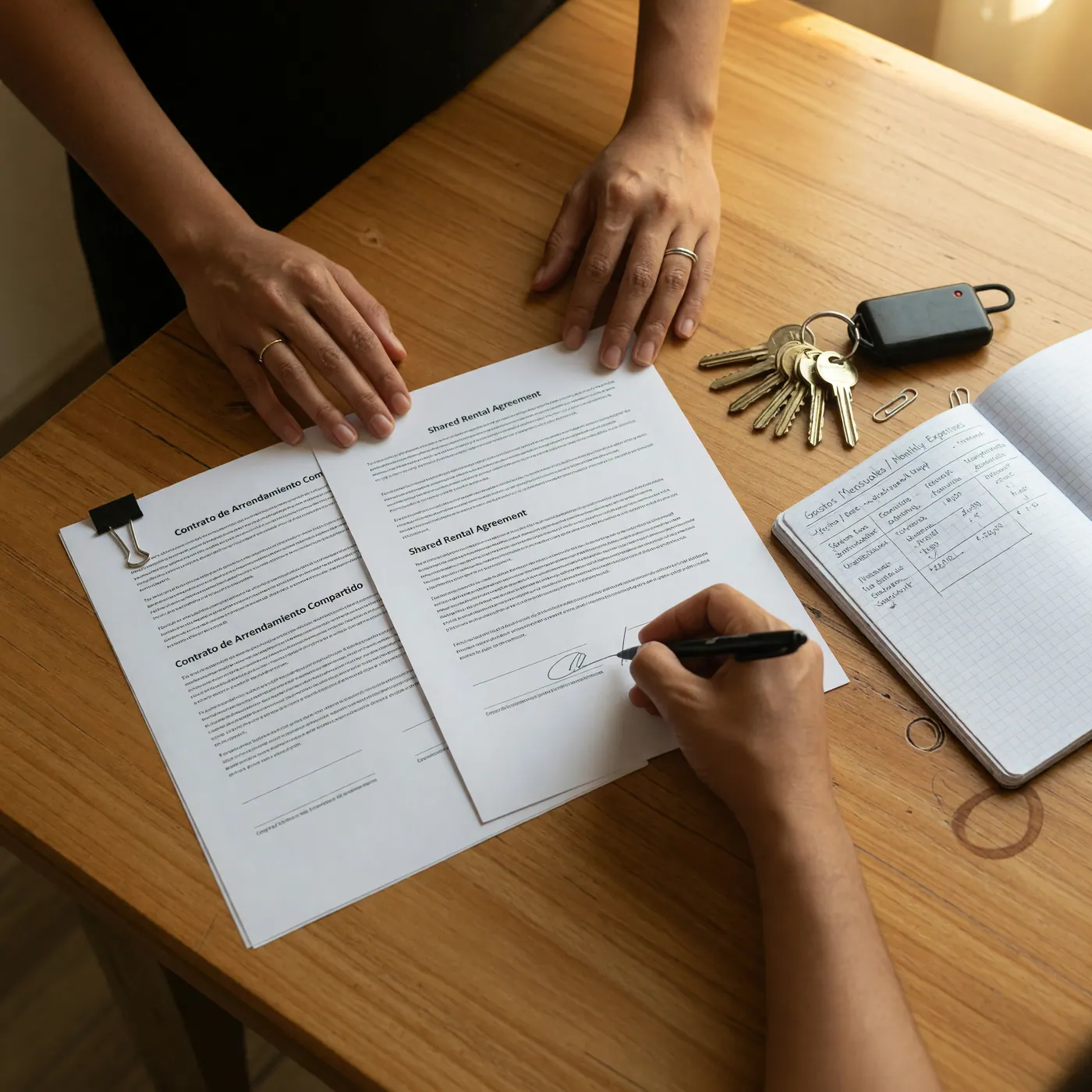
Write the acuerdo de convivencia in Spanish and English, sign it, and keep a PDF. It will not save you from the landlord if the master lease is illegal. It will give you something to take to a conciliation center when someone ghosts the utility bill.
- Rent calendar: who pays the owner, by which date, in which account, and who keeps the receipt.
- Share of canon: exact pesos per person, not “whoever uses the bigger room.”
- Servicios públicos: water, power, gas, internet, and administración. Invoices run in arrears, so set a monthly reserve, then true-up on meter photos when someone leaves. See legal utility guarantees under Ley 820.
- Notice: 30 to 60 days in writing, plus a replacement-tenant protocol the owner has already approved if you are on a sublease rider.
- Guests, quiet hours, cleaning, pets, keys: match the building reglamento; no unilateral lock changes; extra fobs registered at portería.
- Inventory: photos of furniture and walls on day one.
Housing inventory also sits in the broader vivienda section if you are comparing a full apartment against a single room.
When a roommate stops paying, or you need out
Under a Contrato Mancomunado, remaining tenants must pay 100% of the rent to the landlord to keep the lease alive. You then enforce the signed roommate agreement against the person who left, in civil court or at a conciliation center. Do not skip the owner’s payment while you wait for a transfer. The eviction clock does not care about your group chat.
Under Compartido, you are not automatically the collections department for the other room. If you are the primary tenant with a written sublease rider, you still owe the owner; the subtenant owes you. Informal lockouts and cutting the internet are how small disputes become police reports.
Vet before you sign: video call, proof of funds, references, and a walk-through with portería so the building has their ID. I skip anyone who refuses to meet the owner or the administrador.
Frequently Asked Questions
❓ Can I sublet a room in my Colombian apartment without telling my landlord?
No. Article 17 of Ley 820 de 2003 (Función Pública text, verified 2026) bans subletting or assignment without express written landlord authorization. Unauthorized paying roommates also trigger Article 22, numeral 3, so the owner can terminate and demand the unit back. A private roommate PDF does not replace that signature.
❓ What is the difference between a Contrato Mancomunado and a Contrato Compartido in Colombia?
Mancomunado makes every signer jointly liable for the full rent; Compartido is a separate room lease with the same landlord. Article 4 of Ley 820 de 2003 draws that line. In Mancomunado the owner can collect 100% from any co-tenant. In Compartido, common areas are shared, but each bedroom is its own contract.
❓ Can a landlord in Colombia ask for a cash security deposit for a room rental?
No. Article 16 of Ley 820 de 2003 (still in force in 2026) prohibits cash deposits and real pledges on urban residential leases. Roommates may still hold a private utility reserve among themselves. Treat a listing that demands months of cash “for damages” as a banned clause, not a custom you have to accept.
❓ What happens if a roommate moves out early without paying their share of the rent?
On a Contrato Mancomunado, remaining tenants still owe the owner 100% of the rent under Ley 820 de 2003. You can then enforce the signed roommate agreement in civil court or conciliation. On Compartido, the owner pursues that roommate’s own contract. Keep bank receipts; WhatsApp IOUs are a weak exhibit.
❓ Does a building administration (Propiedad Horizontal) have the right to prevent a roommate from entering?
Not as an unlawful lockout of a recognized occupant under Ley 675 de 2001. Administrations can require ID registration and bylaw compliance before issuing fobs. Unregistered long-term guests can draw fines. Register the person at portería the week they arrive.
❓ How should roommates split utility bills (servicios públicos) given billing cycle delays in Colombia?
Set a monthly reserve or average, then settle against the invoice, because Colombian utilities bill in arrears on prior consumption cycles. Photograph meters when someone moves out. Name who pays each provider and by which date, so late fees do not land only on whoever still lives there.



Comments
Loading comments...
Checking sign-in status...