
Palomino, Colombia: The Laid-Back Caribbean Beach Town You'll Want to Stay In
Palomino is the Caribbean beach town that happens before you're ready for it — a place people mean to visit for 3 days and end up staying for two weeks. Here's what you actually need to know.
IDIOMA DEL ARTÍCULO
Showing original language
Most people first hear about Palomino as a footnote in their Santa Marta planning: 'there's a beach town 90 minutes east, supposed to be chill.' Then they go, tube down the river, eat fish on the beach for a few days — and rebook their return bus two weeks later.
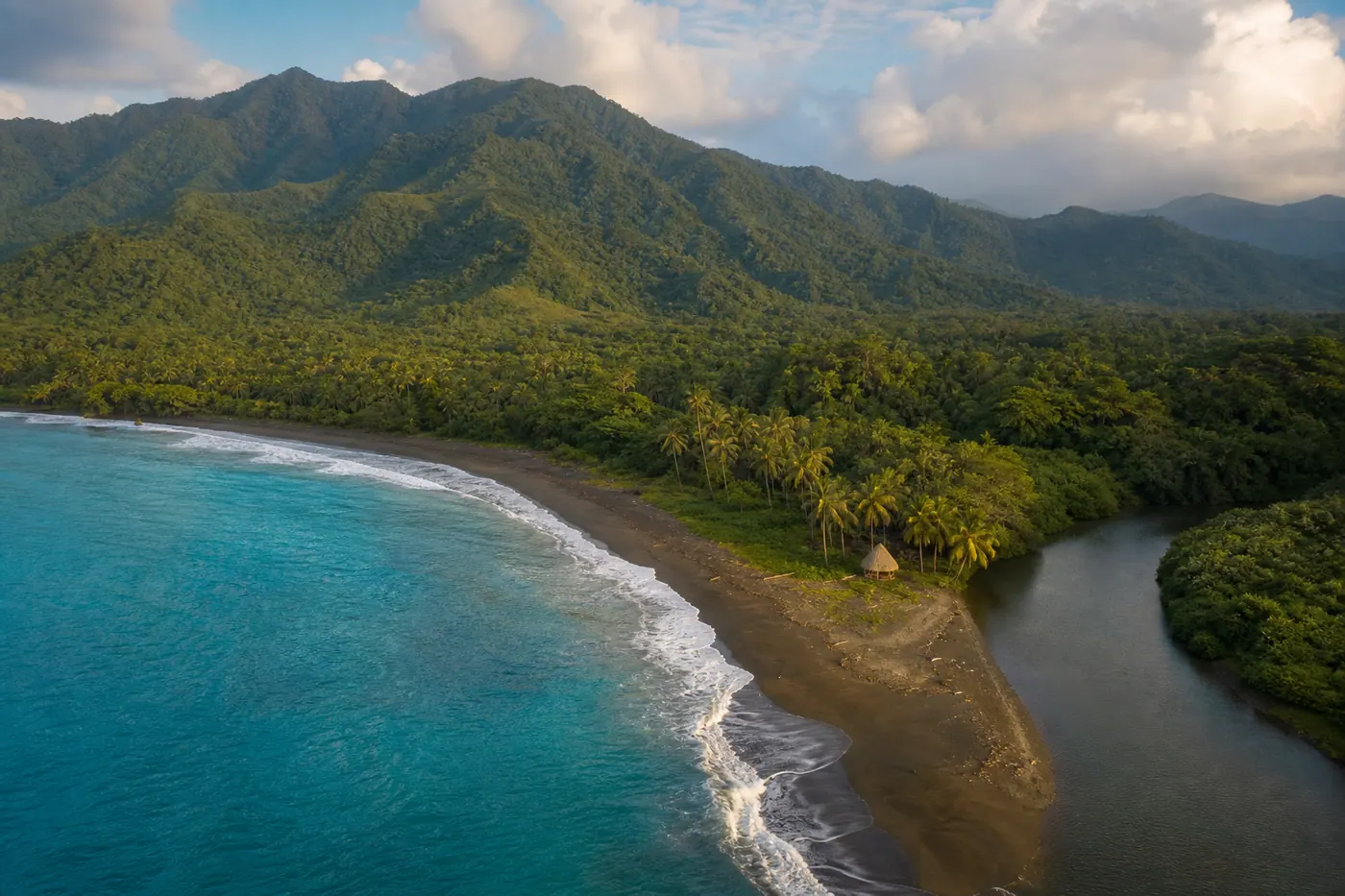
That pattern repeats enough that it tells you something real about the place. Palomino sits where the Sierra Nevada de Santa Marta meets the Caribbean Sea in the La Guajira department, and the geography is genuinely unusual: you can swim in the ocean in the morning, float down a cool mountain river by noon, and watch the jungle light up green behind you at sunset. It's not polished. It's not Cartagena. That's exactly why it works.
A decade ago this was three hostels and a dirt road. Today there are quality eco-lodges, proper restaurants, a surf school or two, and a small but real community of long-termers who arrived for a week and found it hard to leave. If you're planning a Colombian coastal stop and you're not considering Palomino, you're probably missing the best option on the list.
What to Know Before You Go
- Where: La Guajira department, ~90 min east of Santa Marta on the Troncal del Caribe highway
- Best for: Backpackers, surfers, beach-and-jungle seekers, hybrid remote workers
- Budget: ~$25–45/day; ~$600–1,100/month for a longer stay
- Best time: December–April (dry season, calm seas)
- WiFi: Improving but patchy — only Starlink-equipped guesthouses offer reliable remote work
- Cash only: No ATMs in the village — bring enough from Santa Marta
Getting to Palomino
Palomino doesn't have an airport. You fly into Santa Marta (Simón Bolívar Airport, SMR) from Bogotá or Medellín — Avianca, Latam, and Wingo all serve the route — and then take a bus or shared taxi east along the Troncal del Caribe highway.
From Santa Marta's city center, shared taxis (carros de línea) and minibuses to Palomino leave from the area near the main market. Cost: 10,000–18,000 COP per person (around $2.50–4.50 USD), and the trip takes 75–90 minutes depending on traffic. Buses fill up fast on weekends — go early or expect a wait.
Alternatively, hop on any Riohacha-bound bus from Santa Marta or Barranquilla and ask to be dropped at Palomino. Once you're in the village, everything is walkable or a short mototaxi ride (2,000–4,000 COP).
What Palomino Is Actually Like
The town is a strip: the highway runs through the middle, and a 15-minute walk west takes you down to the beach. The beach itself is dark Caribbean sand — up here it's not the white-powder postcard variety — with the Sierra Nevada mountains rising dramatically behind. The Río Palomino empties into the sea at the southern end, and this river-meets-ocean confluence is where almost everyone congregates.
The vibe leans hippie-surf rather than party town. Yoga sessions happen at sunrise in several guesthouses. Hammocks are actual furniture, not decoration. The crowd is a genuine mix: Colombian families from Barranquilla on long weekends, European and North American backpackers, and some expats who arrived for a 'quick stop' and then took a month off the calendar.
Honest infrastructure note: Palomino has electricity and running water, but both can be inconsistent at cheaper accommodation. Cell service from Claro and Movistar covers the beach and main road — you'll have 4G signal at the waterfront but lose it heading up into the jungle toward the Sierra. WiFi is the real limitation, and I'll cover that specifically in the remote work section.

Things to Do in Palomino
Tubing Down the Río Palomino
This is the activity that defines the place, and it's earned. You rent an inner tube (5,000–10,000 COP), mototaxi or hike 20–30 minutes upriver into the jungle, and float back down through the mountains to the beach. Simple, perfect. The river runs noticeably cooler than the Caribbean, which matters when the beach is 32°C. Several operators along the main road organize full tube packages including upriver transport — negotiate the combined rate rather than renting the tube separately.
Surfing and Kitesurfing
Palomino gets consistent waves year-round, with the strongest swells from November through March. It's not a world-class break, but it's uncrowded and good for learning. Surf schools on the beach charge 60,000–90,000 COP per session including board rental; standalone board rentals run 30,000–50,000 COP per hour. Kitesurfing is also possible when conditions cooperate — ask at the larger guesthouses for current instructor contacts.
Sierra Nevada Hikes
The jungle behind town leads into the foothills of the Sierra Nevada, one of the most biodiverse mountain ranges on the planet. Short guided day hikes (2–3 hours, 40,000–80,000 COP with a local guide) take you into cloud forest where you'll see birds, bromeliads, and views back toward the Caribbean. Longer multi-day treks to Ciudad Perdida depart from Santa Marta, but the day hike options from Palomino are genuinely worth it.
Beach Days and Day Trips
The river mouth on weekdays is remarkably quiet for somewhere this scenic — fresh coconuts, a few food stalls, hammocks strung between palms. On Colombian holiday weekends it fills up with domestic tourists, which is either charming or annoying depending on your tolerance. Day trips toward La Guajira's more arid, dramatic desert landscape run 80,000–150,000 COP per person from Palomino or nearby Santa Marta.
Keep Reading
Planning to base yourself on the Caribbean coast? Living in Santa Marta: An Honest Expat Guide covers neighborhoods, costs, and the remote-work reality of Colombia's oldest city — a natural complement to Palomino weekends.
Where to Stay in Palomino
The accommodation range is wider than the town's size suggests — and the quality gap between budget and mid-range is real here.
Budget (under $20/night): Several hostels cluster along the road to the beach. Dorm beds run 25,000–50,000 COP (~$6–12 USD). Private rooms in the same hostels: 80,000–140,000 COP. Basics — fan, shared bathroom, hammock area — done adequately. Expect backpacker energy.
Mid-range ($25–60/night): This is where Palomino genuinely shines. Eco-lodge-style guesthouses with private bungalows, hammock common areas, small pools or direct river access. Prices: 100,000–220,000 COP per night. If WiFi matters at all, only book places that explicitly advertise Starlink — 'WiFi available' at the budget end often means a hotspot that works in good conditions only.
Upper end ($70+/night): A handful of boutique finca-style properties opened in the last few years — private plunge pools, properly designed rooms, restaurant-quality food on site. These book fast over Colombian holiday weekends and Easter, so reserve well ahead if your dates fall then.
Long-term stays: Monthly rates for a private room or small cabin start around 800,000–1,500,000 COP ($200–375 USD). Nothing is listed on Finca Raíz at this scale — ask locally or post in Facebook groups for the Santa Marta / Caribbean coast expat community.
Where to Eat and Drink
Palomino is not a restaurant destination — it's a 'good fish on a plastic table with your feet near the sand' destination, which is different and arguably better.
Along the beach track, fondas and small restaurants serve arroz con pollo, pescado frito, patacones, and the almuerzo del día for 12,000–18,000 COP. Fresh jugo natural costs 3,000–5,000 COP; coconut water on the beach runs 2,000–5,000 COP. Better guesthouses have their own kitchens with more variety — quality varies, and some overcharge tourists. The reliable rule: walk 10 minutes from the main backpacker strip and prices drop noticeably.
There are no supermarkets in Palomino. A few tiendas carry water, snacks, and basic toiletries. Stock up in Santa Marta if you have specific dietary requirements.
Cost of Visiting and Living in Palomino
Palomino is one of the cheapest coastal spots in Colombia — significantly cheaper than Santa Marta and dramatically cheaper than Cartagena.
| Category | Budget Traveler | Comfortable | Monthly (Nomad) |
|---|---|---|---|
| Accommodation | $6–15/night (dorm/basic) | $30–60/night (bungalow) | $250–500/mo |
| Food | $8–12/day | $15–25/day | $200–400/mo |
| Activities | $5–10/day | $15–30/day | $100–200/mo |
| Transport | $3–5/day | $5–10/day | Included |
| Total per day | $22–42 | $65–125 | ~$600–1,100/mo |
The main cost surprise is that activities are genuinely cheap here — tubing, beach days, and most hiking involve minimal spend. Where costs creep up is accommodation: the best eco-lodges for remote work (Starlink, good infrastructure) run mid-range pricing. Budget for that if it matters to you.
Palomino for Remote Workers and Digital Nomads
Honest answer: Palomino is not a remote work hub. It's a 'come for a week or two, turn off your laptop, and remember why you moved to Colombia in the first place' destination.
That said, the situation is improving. Several guesthouses have installed Starlink and advertise it explicitly — if work is part of your plan, only shortlist accommodation that specifically mentions Starlink or dedicated fiber. Mobile data from Claro 4G covers most beach and village areas and provides workable backup (10–30 Mbps in good conditions). For a month of hybrid work with vetted accommodation, it's manageable. As a full-time remote base with daily video calls, Santa Marta is more practical — you can take the bus to Palomino for weekends without issue.
For reliable connectivity while bouncing around the Caribbean coast, a travel eSIM with a Colombian data plan gives you solid 4G backup without depending on guesthouse WiFi for everything.
Keep Reading
Comparing coastal options? See our full breakdown in Best Beach Towns in Colombia for Expats & Digital Nomads — covering Taganga, Santa Marta, San Andrés, and more.
Best Time to Visit Palomino
December through April is the dry season on the Caribbean coast and the best time to visit: calm seas, clear skies, and the Río Palomino running at ideal tubing depth. December through January coincides with Colombian holiday season — expect more domestic tourists and marginally higher prices, but the weather is outstanding.
May through November is the rainy season. Fewer crowds, lower prices, and the jungle looks extraordinary after the rains. The trade-offs are real though: afternoon storms are frequent, waves get rougher for surfing, and the river can run too fast or too high for tubing after heavy rainfall. If budget matters and you don't mind wet afternoons, this is a legitimate option — just check river conditions before committing to a tubing day.
Easter week and Colombian school holidays in July bring domestic tourism peaks. Busiest, most expensive periods. Worth avoiding if quiet beaches are the goal.
💬 Have a question about Palomino, or tips to share from your own trip?
Ask or answer in the Colombia Move Community — travelers and expats answer fast.
Frequently Asked Questions
❓ How do I get from Santa Marta to Palomino?
Shared taxis (carros de línea) from Santa Marta's main market area run throughout the day for 10,000–18,000 COP per person. Alternatively, take any Riohacha-bound bus and ask to be dropped at Palomino. The trip takes 75–90 minutes. On busy weekends, go early — these fill up fast.
❓ Is Palomino safe for tourists?
Yes — by Colombian standards it's quite safe. The town is small and laid-back, and the main risks are no different from anywhere: don't leave valuables visible on the beach unattended, watch your footing on slippery river rocks when tubing, and take the Caribbean sun seriously (SPF 50, not SPF 30). The biggest safety issue most visitors encounter is a sunburn.
❓ Can you surf at Palomino?
Yes. The beach gets consistent waves year-round, best November through March. Multiple surf schools offer lessons starting at 60,000–90,000 COP per session with board included. The break suits beginners and intermediate surfers well; experienced surfers looking for challenging conditions usually prefer Nuquí or the Pacific coast.
❓ Is Palomino good for digital nomads?
For short trips with carefully vetted Starlink accommodation, yes. As a permanent remote work base, no — Santa Marta is more practical for reliable daily video calls. The best use of Palomino for nomads is as a decompression destination: arrive Friday, work from a hammock a few hours if needed, and have a reset ready when Monday rolls back around.
❓ What payment methods work in Palomino?
Cash is essential. There are no ATMs in the village — bring enough COP from Santa Marta before you arrive. Some guesthouses and restaurants accept Nequi transfers, but don't count on card payments outside of the nicer boutique properties. Budget travelers should carry at least 150,000–200,000 COP per day to be safe.


Comments
Loading comments...
Checking sign-in status...