
How to Hire Moving Help, Delivery, or a Driver in Colombia
Movers, couriers, or a driver in Colombia: apartment building rules, elevator reservations, Ley 675 legal rights, and how to find and book local help.
IDIOMA DEL ARTÍCULO
Showing original language
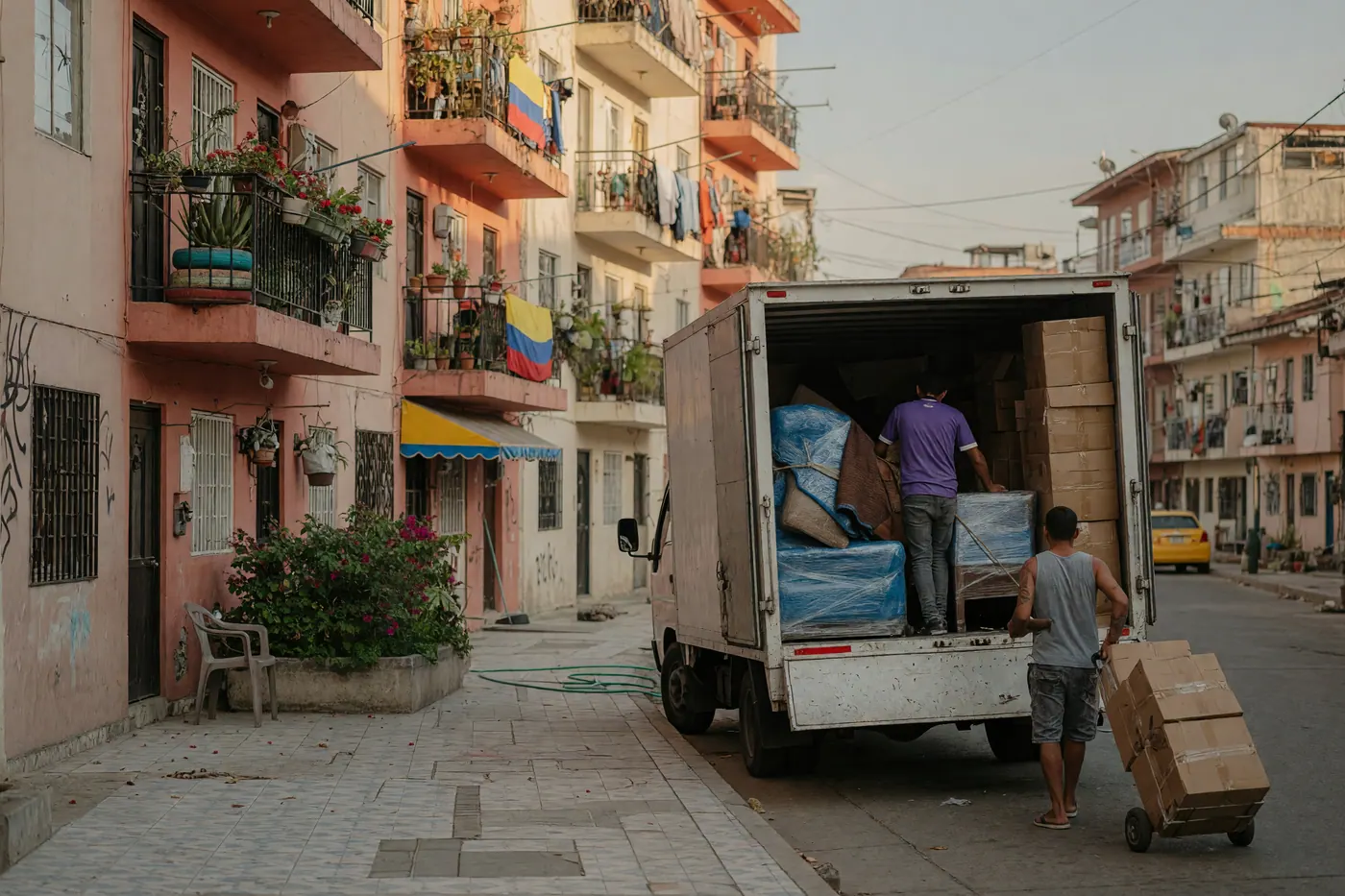
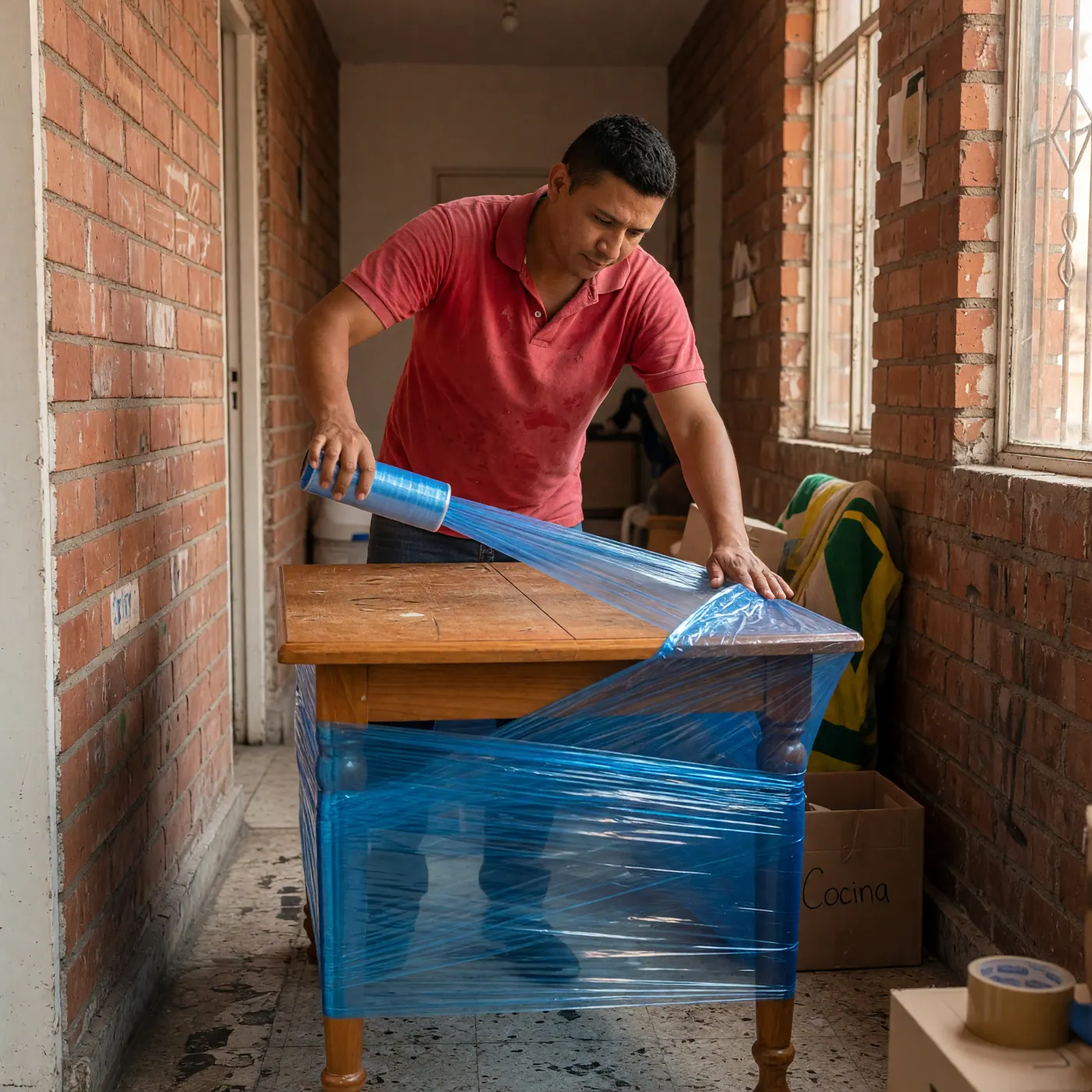
Most moves, deliveries, and one-off driving jobs in Colombia get arranged informally and fast, usually over WhatsApp: you message someone with the right vehicle, agree on a price, and they show up. For a small apartment move, that might be a van with one or two helpers who wrap your couch in plastic and have everything across town in a couple of hours.
The trick is knowing which kind of help to hire and how to describe the job so nobody shows up with the wrong vehicle.
What to know first
- For furniture, appliances, or a full apartment move, hire a mover with a truck — not a ride app.
- For small parcels, documents, or food, a courier or delivery app is faster and cheaper.
- For airport runs or a day of errands, a ride app or a private driver works.
- Agree on price, vehicle, and helper count over WhatsApp before anyone arrives.
Choose the right kind of help
Match the job to the right person — mixing these up is the most common (and most expensive) mistake.
- Mover (trasteo/mudanza) — truck plus helpers, for bulky items or a full apartment.
- Helper-only — extra hands to carry and load when you already have a vehicle.
- Courier / domicilio — small packages, documents, or food across the city.
- Private driver — scheduled airport trips or a day of multi-stop errands where someone waits for you.
- App ride — quick passenger trips with a bag or two.
- Truck or van with driver — when you have the muscle but need the transport.
A ride-app driver won't carry a fridge up three flights, and a courier on a motorbike can't take your dining table.
How to describe the job clearly
The clearer your message, the more accurate the quote. Vague messages get vague — usually inflated — quotes. I keep a reusable template and swap the details (it works the same in Spanish):
WhatsApp template
“Hi, I need a move on a weekday morning.
• Pick up: [area], 3rd floor, with elevator
• Drop off: [area], ground floor
• Items: a double bed, a fridge, a sofa, and about 10 boxes
• Does the quote include two helpers? What is the total?”
Whatever the job, include: the item count, rough sizes, stairs or elevator at both ends, pickup and drop-off zones, timing, helper count, and whether a truck is needed.
What to ask before booking
- Vehicle type and size — will everything fit in one trip?
- How many helpers are included in the price?
- Is the price a total or per hour, and does it cover extra floors or stairs?
- What's the arrival window, realistically?
- What happens if access is hard — no elevator, narrow street, no parking?
- Can they send a photo of the vehicle or a past job?
Apps vs local listings
Apps are great for what they're built for. Rappi handles food, groceries, pharmacy runs, and small errands where it has coverage — availability depends on your area. Uber operates through its app in major Colombian cities, and inDrive lists rides, intercity trips, couriers, and freight. But don't treat a passenger ride app as a cargo or moving service: Colombia regulates public and special passenger transport separately from private use, so a regular app ride isn't a licensed transport service. For the full breakdown of ride apps, see our complete ride-app guide.
For bulky jobs or scheduled help, a local service listing usually beats an app: you see profiles, photos, and past work, and message providers directly. You can browse local movers, couriers, and drivers by category and contact them with no middleman. If you're furnishing a first apartment, lining up the move and the delivery together saves a second trip. For small parcels, delivery apps like Rappi still win on speed.
Safer payment and handoff habits
- Avoid paying the full amount before the job. A small deposit for scheduled work can be normal; pay the balance on completion.
- Confirm the final price in writing before they start.
- Be present at both ends, or send someone you trust.
- Count your boxes at pickup and again at dropoff.
- Pay by Nequi, transfer, or cash when the job is done — not in advance.
Moving in an Apartment Building: Know the Rules
If your destination is a unit in a multi-story building — which covers most rentals in Bogotá, Medellín, Cali, or Cartagena — you're operating under Colombia's propiedad horizontal (horizontal property) regime, governed by Ley 675 of 2001. Each building has a reglamento de propiedad horizontal and a manual de convivencia that governs day-to-day rules, including moves. Both apply.
Building administrators cannot legally block your move or hold your belongings over unpaid administration fees (Ley 675 of 2001). Your furniture is protected under Colombian civil law. What administrators can do is withhold your paz y salvo — a certificate of good standing — which you may need for utility transfers or other administrative processes. If you're moving in as a new tenant, ask the outgoing occupant or the owner for this certificate before signing anything.
Beyond the legal baseline, each building's manual de convivencia can impose additional restrictions: no moves on Sundays or holidays, mandatory protection of elevator walls, specific unloading zones. Violating these rules can result in fines — often COP 200,000 or more per incident — and you forfeit any damage deposit you paid. For the full picture of what buildings can and cannot require, see Colombia Apartment Building Rules: Visitors, Noise, Pets, and Moving Days.
One-Day Apartment Move: What to Line Up in Advance
Most problems on local apartment move day in Colombia are avoidable — they just require coordination with building administration a day or two before the truck arrives. Before you book, it's worth reviewing your apartment inspection checklist so you know the state of common areas before any movers touch them.
48 hours before your move
- Reserve the cargo elevator (ascensor de carga) with building administration — most buildings require at least 48 hours notice.
- Pay the refundable damage deposit (depósito de daños) if required. You get this back after a post-move inspection of common areas.
- Confirm permitted move hours in your manual de convivencia. In Bogotá, Decreto Distrital 495 of 2002 allows moves from 6:00 AM to 6:00 PM daily — but your building almost certainly restricts this further (often no Sundays, no holidays, limited Saturdays).
- Notify the portería with your mover’s name, ID number, and approximate vehicle size.
- Verify parking or loading-zone clearance for the truck at both origin and destination buildings.
Day of the move
- Your movers should protect elevator walls and hallway corners with cardboard or moving blankets — damage means deductions from your deposit or a direct fine.
- Keep someone stationed at the elevator on both floors to hold it and watch for scuffs.
- After the move, request a signed inspection from administration to speed up getting your deposit returned.
On truck sizing: a studio or small one-bedroom typically fits in a camioneta (pickup truck with two helpers) or a small Turbo. A two-bedroom needs a larger sencillo or dedicated moving truck. Confirm vehicle size before booking — arriving with the wrong truck means a second trip and extra cost.
Worth knowing: as of July 2026, Colombia Move has just 1 active mudanzas listing nationwide — demand for local apartment movers far outpaces available providers on the platform. If you need moving help, check the category and also message recently active providers, since many work informally and post intermittently.
You can browse local mudanzas providers on Colombia Move — filter by city, see profiles, and message directly over WhatsApp to compare quotes before committing.
Frequently Asked Questions
❓ What's the easiest way to hire moving help in Colombia?
For furniture, stairs, or a full apartment move, a local mover or service listing beats an app. Message a few providers with your item list, floor numbers, and elevator availability, then compare quotes and confirm the vehicle size before committing.
❓ How far in advance do I need to notify the building administration before moving?
Notify building administration and reserve the cargo elevator at least 24 to 48 hours before your moving day. Most buildings limit the number of moves per slot and need time to install protective elevator padding. For Saturday moves, request your slot earlier since those fill fastest — and confirm permitted hours in the same call so you're not surprised by a Sunday or holiday restriction.
❓ What should I ask before paying a mover or driver?
Ask about vehicle size, helpers included, whether the price is a total or hourly rate, and the arrival window. Also confirm they'll protect elevator walls and hallways — unprotected moves can cost you your building deposit.
❓ Can a Colombian building administrator block my move if there are unpaid fees?
No — under Ley 675 of 2001, administrators cannot legally block a move or hold your personal belongings over outstanding administration fee debts. The debt stays valid and can be pursued separately. What administrators can withhold is your paz y salvo, which may be needed for utility transfers or other administrative steps.
❓ What are the legal hours for moving (trasteos) in Colombia?
In Bogotá, Decreto Distrital 495 of 2002 permits moves from 6:00 AM to 6:00 PM, Sunday to Sunday — but this is a district maximum, not a guarantee. Individual building manuales de convivencia almost always restrict this further: often no Sundays, no holidays, and limited Saturdays. Check your building's rules before scheduling.
❓ Do I need a government permit to move in Colombia?
No. National public moving permits from local alcaldías were abolished by Ley 962 of 2005. You only need to coordinate with your building's administration: reserve the elevator, notify the portería, and comply with the manual de convivencia. No municipal paperwork required.
❓ What is a 'depósito de daños' and who pays it?
A refundable security deposit that many Colombian apartment buildings require before a move. The tenant typically pays it to administration beforehand. After the move, administration inspects common areas and returns the deposit if there is no damage. Get written confirmation when you pay and request a signed inspection afterward to speed up the refund.
Comments
Loading comments...
Checking sign-in status...