
Opening a High-Yield Savings Account in Colombia as a Foreigner: Lulo Bank, Nu & Trad Banks
A realistic guide for foreign residents looking to earn competitive interest yields on local Colombian pesos (COP) while staying covered by Fogafín deposit insurance.

IDIOMA DEL ARTÍCULO
Showing original language
When you relocate to Colombia as an expat or long-term resident, managing local currency effectively becomes a immediate priority. While holding US Dollars or Euros in foreign accounts protects against currency fluctuations, maintaining operational Colombian Pesos (COP) locally is necessary for paying monthly rent, utilities, credit card statements, and daily living costs. Until recently, leaving COP in a traditional Colombian bank account meant earning zero interest while inflation slowly chipped away at your purchasing power.
The arrival of Superfinanciera-supervised neobanks like Nu Colombia and Lulo Bank has fundamentally transformed domestic savings in Colombia. By offering high-yield savings sub-accounts with daily liquidity and competitive floating annual returns (E.A.), local digital accounts now rival traditional short-term fixed-deposit certificates (CDTs). However, foreign residents face specific regulatory requirements, tax withholding rules, and onboarding limits that every expat must understand before transferring funds.
Related Reading: Before diving into high-yield savings, check out our comprehensive guide on Opening a Bank Account in Colombia as a Foreigner to compare traditional brick-and-mortar options.
Quick Summary: High-Yield COP Savings for Foreigners
| Financial Institution | Account Structure | Yield Mechanism | Foreigner Onboarding Requirement | Deposit Insurance |
|---|---|---|---|---|
| Nu Colombia | Digital Savings Account | Cajitas (Daily Yield) | Valid Cédula de Extranjería (CE) | Fogafín (Up to $50M COP) |
| Lulo Bank | Digital Savings Account | Bolsillos & Lulo Pro | Valid Cédula de Extranjería (CE) | Fogafín (Up to $50M COP) |
| Traditional Banks | Standard Checking/Savings | CDT Fixed Certificates | Valid Cédula de Extranjería (CE) | Fogafín (Up to $50M COP) |
1. The Foreigner Eligibility Gate: Cédula de Extranjería vs Tourist Passport
The single biggest point of confusion for expats seeking high-yield savings accounts in Colombia is identity verification. Many newcomers assume that a valid foreign tourist passport and an entry stamp are sufficient to open a digital bank account on their phone. Under Colombian anti-money laundering frameworks (SARLAFT) governed by the Superintendencia Financiera de Colombia, digital neobanks cannot open accounts for foreign nationals using only a tourist passport.
To complete the 100% digital biometric onboarding required by Nu Colombia or Lulo Bank, foreign residents must possess a valid Cédula de Extranjería (CE) issued by Migración Colombia (or a Permiso por Protección Temporal - PPT for eligible Venezuelan nationals). The automated facial recognition and document verification systems check your national identification number against government registries in real time. If you are currently in Colombia on a standard 90-day tourist entry or PIP-5 entry permit, you will need to finalize your visa process and obtain your physical Cédula de Extranjería before applying.
2. Top High-Yield Digital Accounts in Colombia Compared
Nu Colombia (Nu Compañía de Financiamiento S.A.)
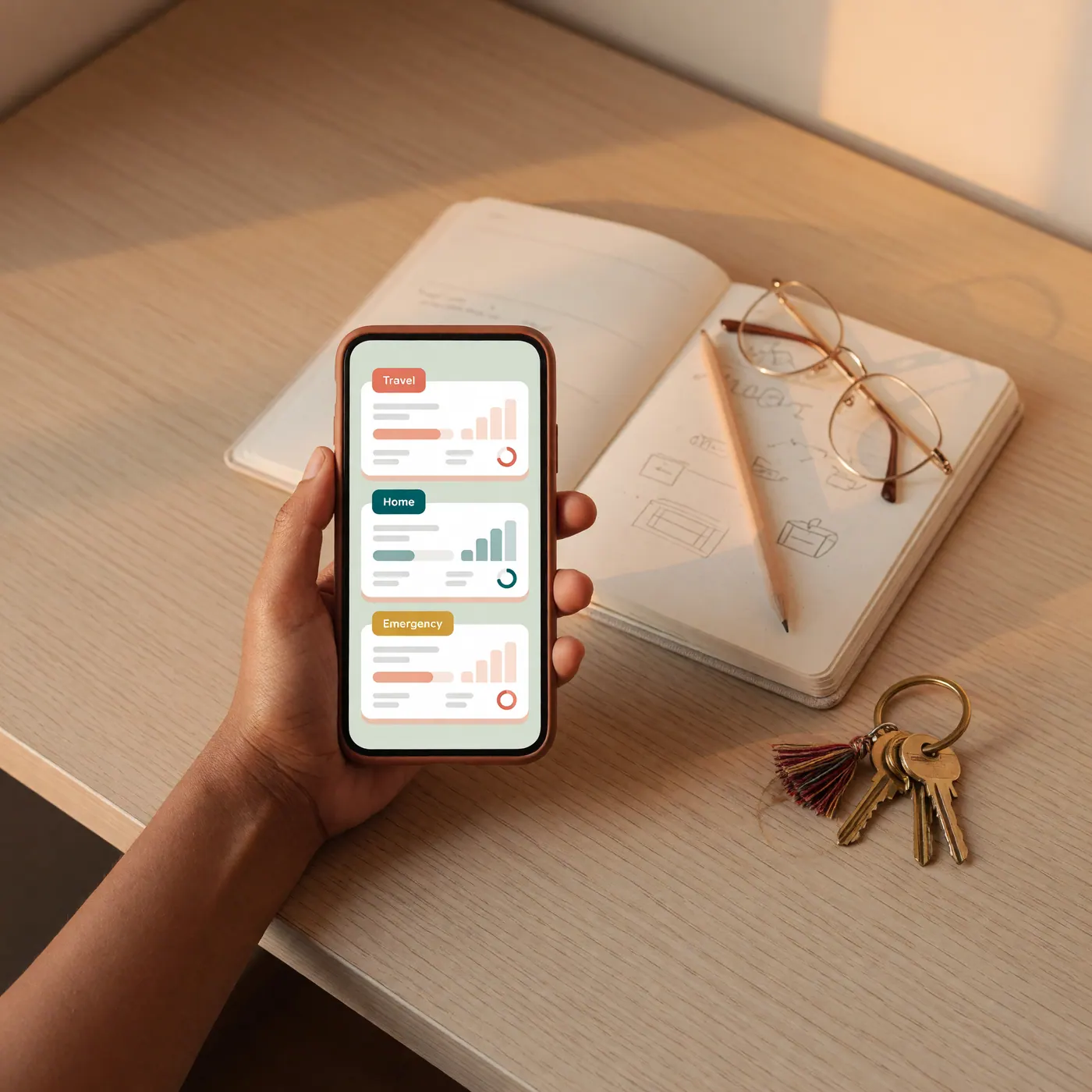
Nu Colombia has grown rapidly by providing a transparent, fee-free mobile banking platform. To earn high yields on Nu, you do not simply leave money in your main transactional balance. Instead, you move funds into designated sub-accounts called Cajitas.
- Yield Structure: Floating interest rates (E.A.) accruing daily on funds stored inside your Cajitas, giving you complete liquid access to withdraw back to your main account instantly at any time.
- Fees & Transfers: $0 monthly maintenance fees and $0 transfer fees when sending money to other Colombian banks via PSE or Transfiya.
- Onboarding: Completed entirely inside the mobile app by scanning your Cédula de Extranjería and completing a brief video facial verification.
Lulo Bank S.A.
Lulo Bank operates as a fully licensed digital commercial bank in Colombia. Similar to Nu, Lulo encourages users to organize their money using digital sub-accounts known as Bolsillos.
- Yield Structure: Tiered yield structure offering baseline rates on main balances, with elevated floating E.A. interest rates applied to funds moved into Bolsillos or held under active Lulo Pro membership tiers.
- Perks & Cashless Access: Free cash withdrawals at green-network Servibanca ATMs across Colombia and 0.5% cashback on qualifying debit card transactions.
- Onboarding: Digital verification requiring a valid Cédula de Extranjería, a local Colombian line (+57 mobile number), and a registered Colombian tax address.
3. Traditional Banks vs Fixed CDTs
Traditional brick-and-mortar financial giants like Bancolombia, Banco de Bogotá, and Davivienda remain essential for complex international operations, mortgage loans, or receiving direct foreign wire transfers. However, baseline savings accounts at these traditional institutions offer nominal interest yields well below 1.0% E.A., making them unsuitable for wealth preservation against inflation.
To earn competitive returns at a traditional bank, foreign residents must open a CDT (Certificado de Depósito a Término). A CDT locks up your COP capital for a fixed period—typically 90, 180, or 360 days—in exchange for a guaranteed interest rate. While CDTs provide fixed predictability, they lack the daily liquidity offered by Nu's Cajitas or Lulo's Bolsillos. If you need immediate access to funds to cover unexpected living expenses, high-yield digital savings accounts are significantly more flexible.
Financial Planning Tip: Comparing fixed returns and local asset strategies? Read our breakdown on Investing in the Colombian Stock Market and Fixed-Income Assets for broader portfolio context.
4. Safety & Protection: How Fogafín Deposit Insurance Works
A primary concern for expats depositing significant funds into digital neobanks is capital security. Both Nu Colombia (Nu Compañía de Financiamiento S.A.) and Lulo Bank S.A. are official financial entities supervised by the Superintendencia Financiera de Colombia.
Crucially, deposits in both institutions are covered by Fogafín (Fondo de Garantías de Instituciones Financieras) deposit insurance. Under Resolution 002 of 2017, Fogafín automatically protects up to $50,000,000 COP per depositor, per insured financial institution. In the unlikely event that an insured institution enters forced administrative liquidation, Fogafín guarantees principal recovery up to that statutory limit per natural person. Foreign residents holding a valid Cédula de Extranjería enjoy the exact same deposit protection rights under Colombian law as Colombian citizens.
5. Taxes & Financial Regulations: What Foreign Residents Must Know
Managing high-yield savings in Colombia requires compliance with local tax rules and financial transaction regulations:
- Retención en la Fuente (Tax Withholding): Financial institutions in Colombia are required by DIAN regulations to automatically withhold tax on earned interest yields (typically a 7% withholding tax on gross interest income). This is deducted automatically before interest is credited to your statement.
- The 4x1000 Tax Exemption (GMF): Colombia imposes a Financial Movement Tax (Gravamen a los Movimientos Financieros) of $4 COP per $1,000 COP moved out of an account. However, each taxpayer in Colombia is legally entitled to designate one savings account as exempt from the 4x1000 tax, up to a monthly transaction limit of approximately $16.4 million COP. You can mark your Nu or Lulo account as exempt directly within their respective mobile apps if it is your primary transactional account.
- FATCA Reporting for US Citizens: Because Nu and Lulo are regulated Colombian financial institutions, US passport holders will be prompted during onboarding to provide their US Social Security Number (SSN) or Taxpayer Identification Number (TIN) to comply with FATCA reporting guidelines.
Housing & Proof of Funds: If you are using local high-yield savings statements to secure housing, check out our practical guide on Proving Local Income and Bank Status for Colombian Rental Applications.
6. Moving Foreign Currency into Your High-Yield COP Account
Neobanks like Nu and Lulo do not operate SWIFT receiving nodes for direct international USD/EUR wire transfers. To deposit foreign currency into your high-yield COP account safely and legally, foreign residents typically use one of two established pathways:
- Remittance Services (Wise, Remitly, WorldRemit): Convert foreign currency online and payout directly into your Colombian neobank via local bank deposit (providing your Colombian account number and Cédula de Extranjería details).
- Two-Step Local Transfer via Traditional Bank: Receive direct international wire transfers or pension payments into a traditional bank account (such as Bancolombia), then transfer funds instantly to Nu or Lulo using PSE or Transfiya.
Receiving International Transfers: For US retirees living in Colombia, learn more in our detailed resource on Receiving International Deposits and Social Security in Colombia.
Frequently Asked Questions
❓ Can I open a high-yield savings account in Colombia with just a tourist passport?
No, you cannot open a high-yield account with Nu, Lulo, or other regulated neobanks using only a tourist passport. Superfinanciera SARLAFT rules require foreign residents to present a valid Cédula de Extranjería (CE) or PPT for digital identity verification.
❓ Are my savings safe in digital neobanks like Nu Colombia and Lulo Bank?
Yes, deposits in Nu Colombia and Lulo Bank are safe and fully regulated. Both entities are supervised financial institutions covered by Fogafín deposit insurance, protecting up to $50,000,000 COP per depositor in the event of liquidation.
❓ How does the Fogafín $50 million COP deposit insurance work for foreigners?
Fogafín coverage applies automatically to all natural person account holders at insured institutions. As a foreign resident holding a valid Cédula de Extranjería, your deposit principal is protected up to $50,000,000 COP per bank without requiring additional insurance sign-ups.
❓ Do I have to pay taxes on interest earned from high-yield savings in Colombia?
Yes, interest yields in Colombia are subject to automatic local tax withholding (Retención en la Fuente, typically 7% on gross interest earned). In addition, US citizens must report foreign financial bank accounts and interest under FATCA rules.
❓ How do I avoid paying the 4x1000 tax on my high-yield savings account?
You can designate one Colombian savings account as exempt from the 4x1000 financial movement tax (GMF) up to a monthly transaction limit of approximately $16.4 million COP. This exemption can be configured directly within the mobile app of your chosen bank.
❓ What is the difference between Nu Cajitas and Lulo Bolsillos?
Both Cajitas and Bolsillos are app-based sub-accounts designed to separate your spending money from your savings. Moving funds into Cajitas or Bolsillos activates daily earning yields while preserving instant liquidity to move money back whenever needed.
❓ How do I transfer USD or foreign currency into my Nu or Lulo account?
Because neobanks do not accept direct international SWIFT wire transfers, you must convert currency using online remittance platforms like Wise or Remitly, or transfer COP domestically from a traditional Colombian bank account via PSE.




Comments
Loading comments...
Checking sign-in status...