
Cuotas de Administración de Apartamentos en Colombia: Qué Pagan Inquilinos y Propietarios
Una guía completa para entender las cuotas de administración de apartamentos en Colombia, cómo se calculan y las responsabilidades legales tanto para inquilinos como para propietarios.

IDIOMA DEL ARTÍCULO
Mostrando idioma original
You finally find the perfect apartment in Laureles or Chapinero. The rent is an absolute steal. Then the landlord mentions, almost as an afterthought, that there's also the administración to pay on top. Suddenly, your monthly housing budget jumps by $100 or $200 USD. The cuota de administración (administration fee) is the Colombian equivalent of an HOA or condo fee, and it is a non-negotiable reality of living in any modern building here.
Honestly, the confusion around who pays this fee, and what happens if it doesn't get paid, causes more disputes between expats and landlords than almost anything else in the local real estate market.
Quick Answer:
- What is it? A mandatory monthly fee covering building security, maintenance, and common area utilities.
- Who pays? Landlords and tenants negotiate this in the lease, but legally, the building can collect ordinary fees from either party.
- Extraordinary fees? Major building repairs are strictly the owner's legal responsibility.
What is the "Cuota de Administración"?
If you live in a property under the propiedad horizontal regime (which includes almost all apartment buildings, gated communities, and commercial centers in Colombia), you have to pay this fee. It is the lifeblood that keeps the building running.
The monthly charge covers the 24/7 portería (security guards), the todero (the building's handyman), cleaning of common areas, elevator maintenance, and electricity for the hallways. Paying this fee gives you access to the amenities, though you still have to strictly follow the building rules to use them.
How Colombian Buildings Calculate Your Fee
The administration fee is not a flat rate picked out of thin air, nor is it a percentage of your rent. Under Colombian law (Ley 675 de 2001), the fee is calculated using the coeficiente de copropiedad (co-ownership coefficient).
This means the cost is based purely on the square meters of your private area compared to the total private built area of the whole building. Larger apartments pay a higher administration fee. Furthermore, this fee is mandatory whether you live there full-time or the unit is sitting completely vacant.
Renters vs. Owners: Who Actually Pays?
This is where foreign renters get tripped up. When you look at apartment listings, you will see two types of pricing structures:
- Administración incluida: The fee is baked into the rent. You pay one lump sum to the landlord, and the landlord is responsible for paying the building.
- Más administración: You pay the base rent to the landlord, and you pay the administration fee directly to the building's bank account.
Landlords and tenants have total contractual freedom under Ley 820 de 2003 to negotiate who physically makes the payment. However, there is a massive legal catch called solidaridad legal (joint and several liability). Under Article 29 of Ley 675, the building administration can legally collect ordinary fees from either the owner or the tenant, regardless of what your lease contract says. If your lease says the landlord pays the fee, but they pocket your rent money and default on the building, the building can still come after you for the debt.
Additionally, Colombian law states that rent prices cannot exceed 1% of the commercial value of the property. If your lease includes the administration fee in a single lump sum, that entire amount counts toward the 1% legal cap. Knowing this can be a useful tool for avoiding gringo pricing.
Ordinary vs. Extraordinary Fees
There are two distinct types of administration fees, and knowing the difference will save you money.
Cuotas Ordinarias (Ordinary Fees): These cover the recurring monthly budget, cleaning, guards, and basic maintenance. As mentioned, both the owner and tenant are legally on the hook for these.
Cuotas Extraordinarias (Extraordinary Fees): These are special assessments for major, non-recurring capital improvements. Think structural repairs, repainting the entire facade, or buying a brand-new elevator. Under Colombian law, extraordinary fees are the sole responsibility of the property owner (propietario) because they increase the long-term value of the asset. Legal solidarity does not apply here. If a landlord tries to pass a cuota extraordinaria onto you as a renter, push back immediately.
What Happens If the Fee Isn't Paid?
Colombian building administrations do not mess around with defaults. If the fee goes unpaid, they will immediately start charging late interest.
They can also legally restrict your access to non-essential common areas. If the bill isn't paid, say goodbye to the pool, the gym, and the social room. However, there are limits. By law, building administrations cannot cut off essential services. They cannot shut off your water, block your security entry into the building, or stop you from using the elevator to reach a high-floor apartment.
If the debt drags on, unpaid fees go to a cobro ejecutivo (executive collection), a legal process that can eventually result in a lien or embargo on the property itself.
Practical Tips Before You Sign a Lease
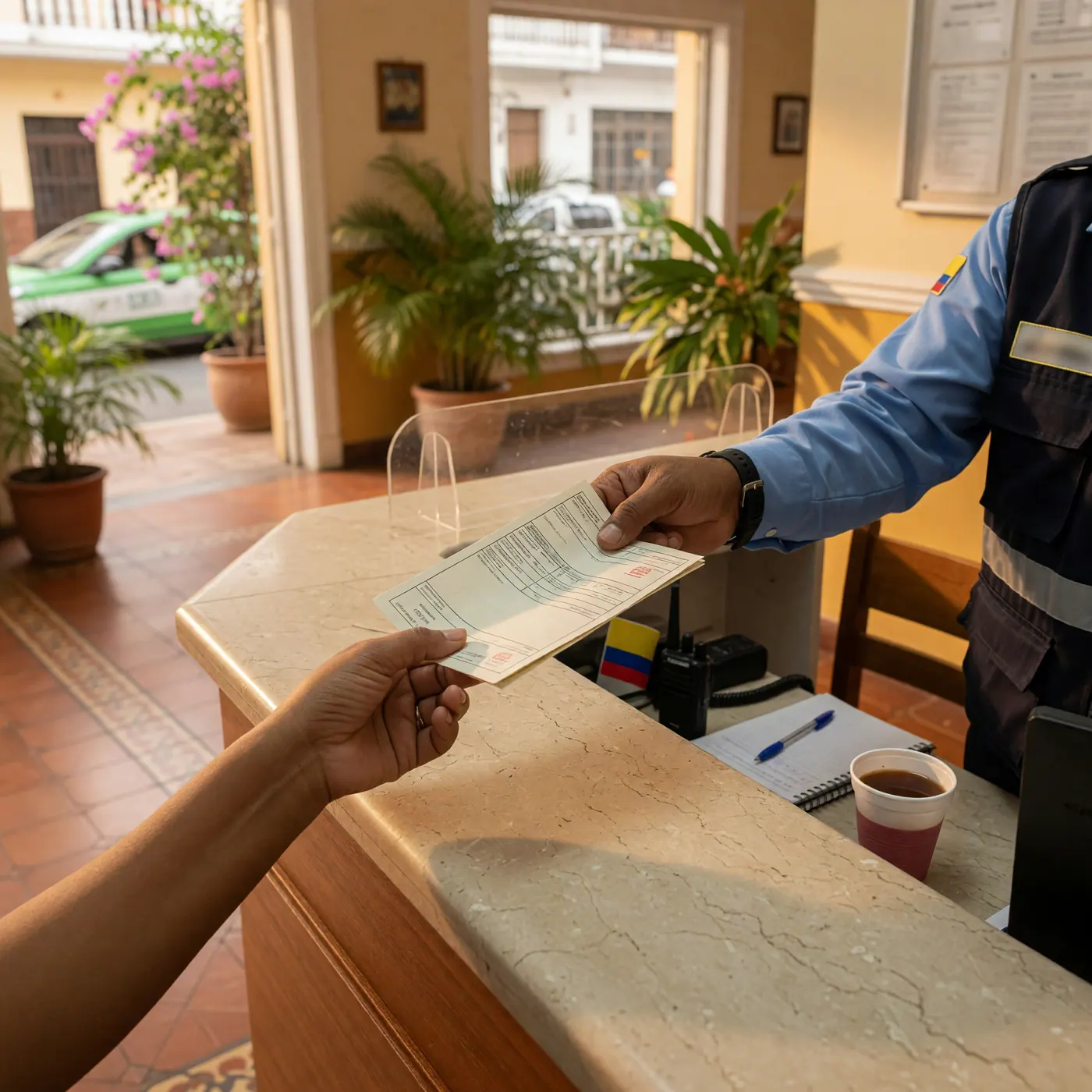
Never sign a lease without asking for the latest payment receipt, known as a paz y salvo. This document proves the apartment has zero debt with the building. You do not want to inherit a landlord's past-due balance and suddenly find yourself locked out of the gym on day one. Add this to your apartment inspection checklist.
Also, remember that while the estrato system heavily dictates the cost of your utility bills, the administration fee is strictly based on the building's internal budget and your square footage. A high-end building in estrato 4 can easily have a higher administration fee than an older building in estrato 6.
According to active listings on Colombia Move (July 2026), there are currently 105 active housing properties with buyer demand exceeding 23,000 views. When browsing that much inventory, always use the listing details to check if the price includes the administration fee so you can compare your options accurately.
Frequently Asked Questions
❓ ¿Qué cubre la cuota de administración en un apartamento colombiano y cuánto cuesta normalmente?
La "cuota de administración" mensual cubre el mantenimiento, la limpieza y la seguridad de las áreas comunes del edificio, incluidos los salarios de los vigilantes, el mantenimiento de los ascensores y los servicios públicos de los espacios compartidos. El costo exacto varía significativamente, ya que se calcula en función de los metros cuadrados de tu inmueble y el presupuesto general del edificio en lugar de una tarifa fija.
❓ ¿Quién es legalmente responsable de pagar la cuota de administración, el propietario o el inquilino?
Según la ley colombiana (Ley 675 de 2001), tanto el propietario como el inquilino son solidariamente responsables ante el edificio por las cuotas ordinarias. Sin embargo, pueden acordar libremente en el contrato de arrendamiento quién realiza físicamente el pago cada mes.
❓ ¿Quién paga las cuotas de administración extraordinarias (cuotas extraordinarias)?
Las cuotas extraordinarias para mejoras mayores de capital, como pintar el edificio o reemplazar los ascensores, son legalmente responsabilidad exclusiva del propietario según la Ley 675 de 2001. Estas cuotas aumentan el valor a largo plazo de la propiedad y no se le pueden imponer a un inquilino.
❓ ¿Puede la administración del edificio cortar mi agua, electricidad o acceso de seguridad si no se paga la cuota?
No, según la Ley 675 de 2001, las administraciones de los edificios no pueden restringir el acceso a servicios esenciales como agua, electricidad, entrada de seguridad o acceso al ascensor para los pisos superiores, por lo que tu seguridad y servicios básicos se mantienen protegidos. Legalmente solo se les permite restringir el acceso a áreas comunes no esenciales como la piscina o el gimnasio.
❓ ¿Cómo se calcula la cuota de administración y dónde puedo encontrar el coeficiente de copropiedad de mi apartamento?
La tarifa se calcula utilizando el "coeficiente de copropiedad" según la Ley 675 de 2001, que es el porcentaje del área privada total del edificio que ocupa tu apartamento. Si no estás seguro del coeficiente de tu unidad, el administrador de tu edificio te puede decir exactamente dónde está documentado.
❓ ¿La cuota de administración aumenta todos los años?
Sí, la tarifa suele aumentar una vez al año tras ser aprobada por la Asamblea General de Copropietarios. El incremento normalmente se basa en la tasa de inflación del año anterior (CPI/IPC) o en el aumento anual del salario mínimo colombiano.



Comments
Loading comments...
Checking sign-in status...