
How to legally sell used spare parts and auto parts in Colombia
Law 738 of 2002 was declared unconstitutional in 2003. The real risk when selling auto parts is Receiving Stolen Goods (Art. 447 of the Penal Code: 6 to 13 years). Here you will find the correct legal framework, the RUNT procedure, DIAN restrictions, and how to set competitive prices.
IDIOMA DEL ARTÍCULO
Showing original language
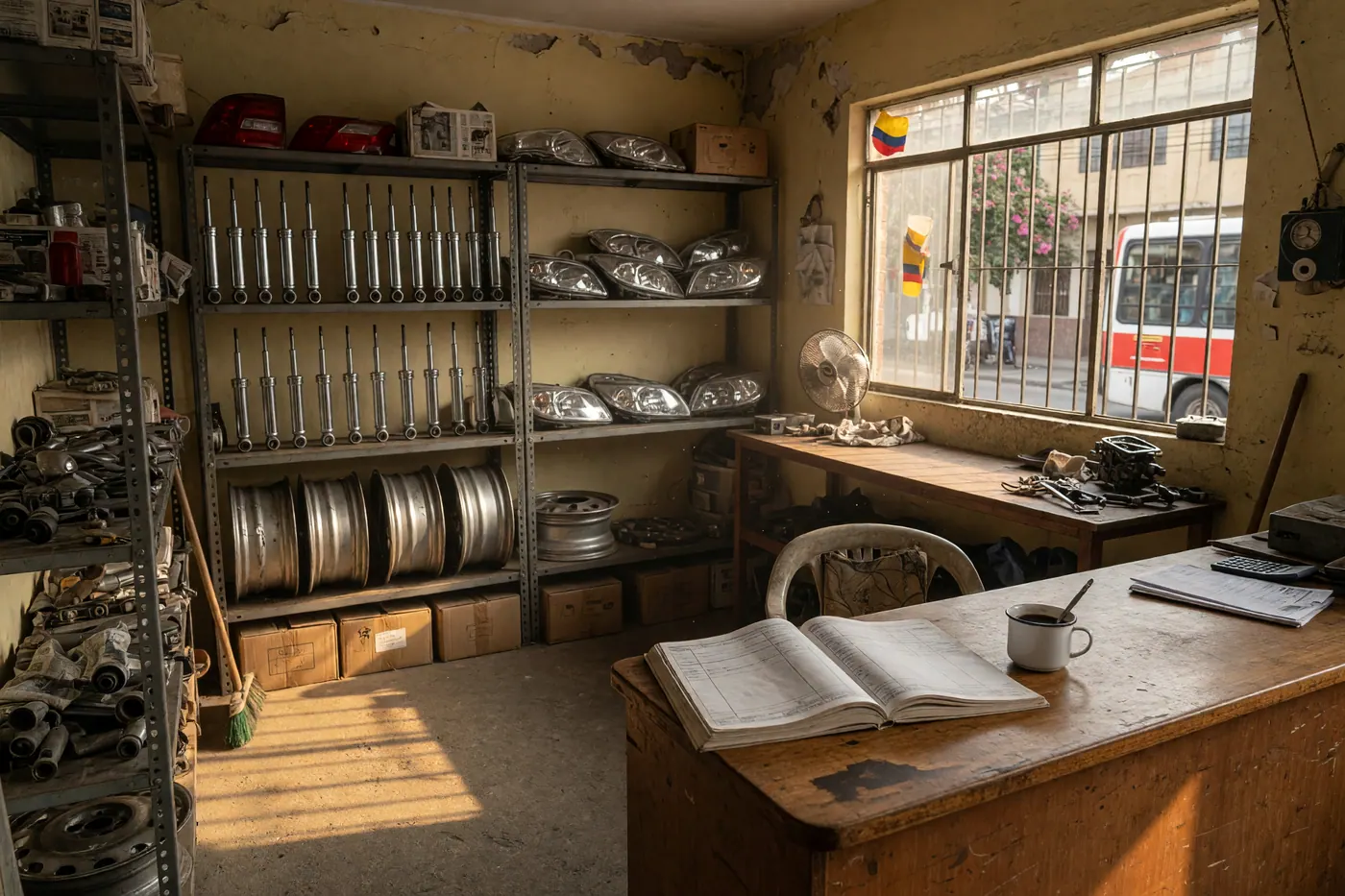
If you own a repair shop, dismantled a vehicle after an accident, or simply have parts piling up in your garage, selling used auto parts is a high-demand business in Colombia. However, this market is under the microscope of the authorities. Be careful with this: selling a headlight or an alternator without clear paperwork can become a very serious legal issue. Honestly, I would skip any deal where the origin of the part is questionable.
In this guide, you will find the updated legal framework, how to process a vehicle deregistration with RUNT, why the DIAN blocks imports of used auto parts, how to set competitive prices, and where to post to maximize your profit without paying commissions.
- Law 738 of 2002 no longer exists: The Constitutional Court declared it unenforceable in 2003 (Sentence C-205/03). The real risk today is the crime of Receiving Stolen Goods (Art. 447 of the Penal Code): 6 to 13 years in prison for trading in illicitly obtained auto parts.
- Price: Parts from authorized scrapyards save between 40% and 70% compared to new ones (Cesvi Colombia, 2026). In sales between individuals, the typical range is 30% to 50% of the value of the original new part.
- Key filter: Posting the OEM part number ensures compatibility and reduces questions from curious people who are not going to buy.
The legal framework: why you must avoid the crime of Receiving Stolen Goods (Article 447)
There is a fact that surprises many sellers: Law 738 of 2002 —which still circulates in forums and Facebook groups as the regulation that governs the auto parts trade—was declared unenforceable (unconstitutional) in its entirety by the Constitutional Court of Colombia through Sentence C-205 of 2003. The court determined that the law violated the principle of presumption of innocence by forcing the seller to prove the parts were not stolen. Today, that law is no longer in effect.
What is fully in effect is the crime of Receiving Stolen Goods, typified in Article 447 of the Colombian Penal Code (Law 599 of 2000, modified by Law 1142 of 2007). Whoever buys, receives, hides, sells, or helps market auto parts coming from a crime can face penalties of 6 to 13 years in prison and fines of up to 700 minimum wages. For essential vehicle parts such as engines, transmissions, or chassis, the penalty is automatically aggravated.
The practical conclusion is clear: you need to demonstrate the lawful origin of every part you sell. A purchase invoice, a RUNT disintegration certificate, or an insurance salvage document are the supporting documents that protect you. Without them, the transaction can trigger a criminal investigation.
How to deregister your vehicle in RUNT to sell its parts legally
If you want to dismantle your own car or motorcycle to sell the parts, the legal path is the Registration Cancellation due to physical disintegration with RUNT. This process is irreversible: once processed, the vehicle ceases to exist legally and cannot be registered again. Make sure it is the right decision before you start.
The process has two mandatory steps. First, you must turn over the complete vehicle to a disintegration entity authorized by the Ministry of Transport. That company issues the Physical Disintegration Certificate, which is the document that legally supports the origin of every part that comes off the vehicle. Without that certificate, the parts remain in a legal limbo. Second, with the certificate in hand, you process the Registration Cancellation with RUNT, which frees you from SOAT and the technical-mechanical inspection, and gives you the definitive support for the sale (procedures updated according to RUNT in 2025-2026).
Do you have a total loss vehicle that the insurer has already declared a write-off? The insurer normally manages the process. Ask them for the salvage number and the documentation so you can sell the remaining parts.
DIAN restrictions: you cannot import used auto parts freely
The short answer is no, at least not in a general way. The DIAN and the Ministry of Commerce classify used auto parts under the prior license regime (DIAN Customs Concept 54 of 2007), which means that every import needs prior approval from the Import Committee. In practice, that committee systematically rejects requests for used auto parts.
The only recognized exception applies to classic or antique vehicles with certification from the Automobile Club of Colombia. If someone offers you imported salvage parts from the United States at a bargain price, be careful: those parts almost certainly do not have the import permits in order.
Your legal sources for used auto parts are: authorized local scrapyards and recycling centers, documented salvage from Colombian insurers, and parts removed from your own vehicle that was deregistered in RUNT with its certificate. Everything else carries legal risk.
Prices and valuation: how much is a second-hand part worth?
Pricing a used part requires distinguishing between two scenarios with very different logic.
If the parts come from an authorized scrapyard with a Physical Disintegration Certificate, the market supports higher prices because the buyer has documentary proof of the origin. According to analysis by Cesvi Colombia (2026), parts legally recovered in authorized scrapyards offer savings of 40% to 70% compared to new originals, and workshops and independent mechanics know this and seek them out.
In sales between individuals, where there is no company warranty or backing from a disintegration entity, the typical market price fluctuates between 30% and 50% of the commercial value of the original new part, depending on wear and the rarity of the part. Asking for more than that range without solid documentation will generate immediate mistrust.
A fact in your favor: according to active ads on Colombia Move (June 2026), the vehicle parts category currently has 0 active ads against a growing demand from buyers. If you post at a fair price with good technical documentation, you will have no direct competition on the platform.
How to prepare your ad to sell faster
Technical information is the filter that keeps the curious away. So that the buyer knows from the start if the part works for their vehicle, always include this data:
- Exact make and model of the donor vehicle (e.g., Chevrolet Spark GT 2015)
- Confirmed compatibility years (e.g., compatible with 2013-2018 models)
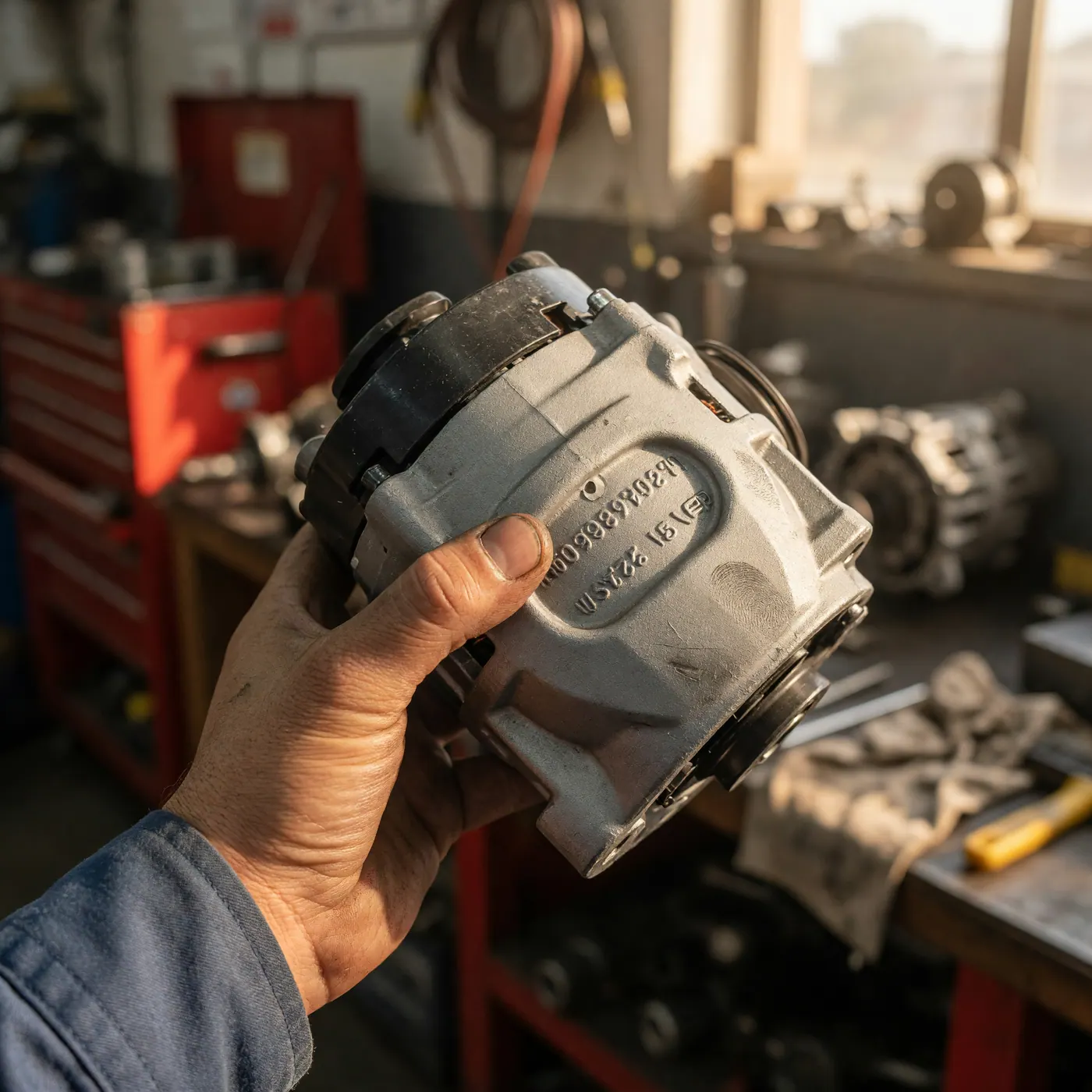
- OEM part number: the unique manufacturer code engraved on the part
- Real physical condition and original mileage if applicable (vital for engines and gearboxes)
- Documentary support available: invoice, RUNT certificate, or insurance salvage document.
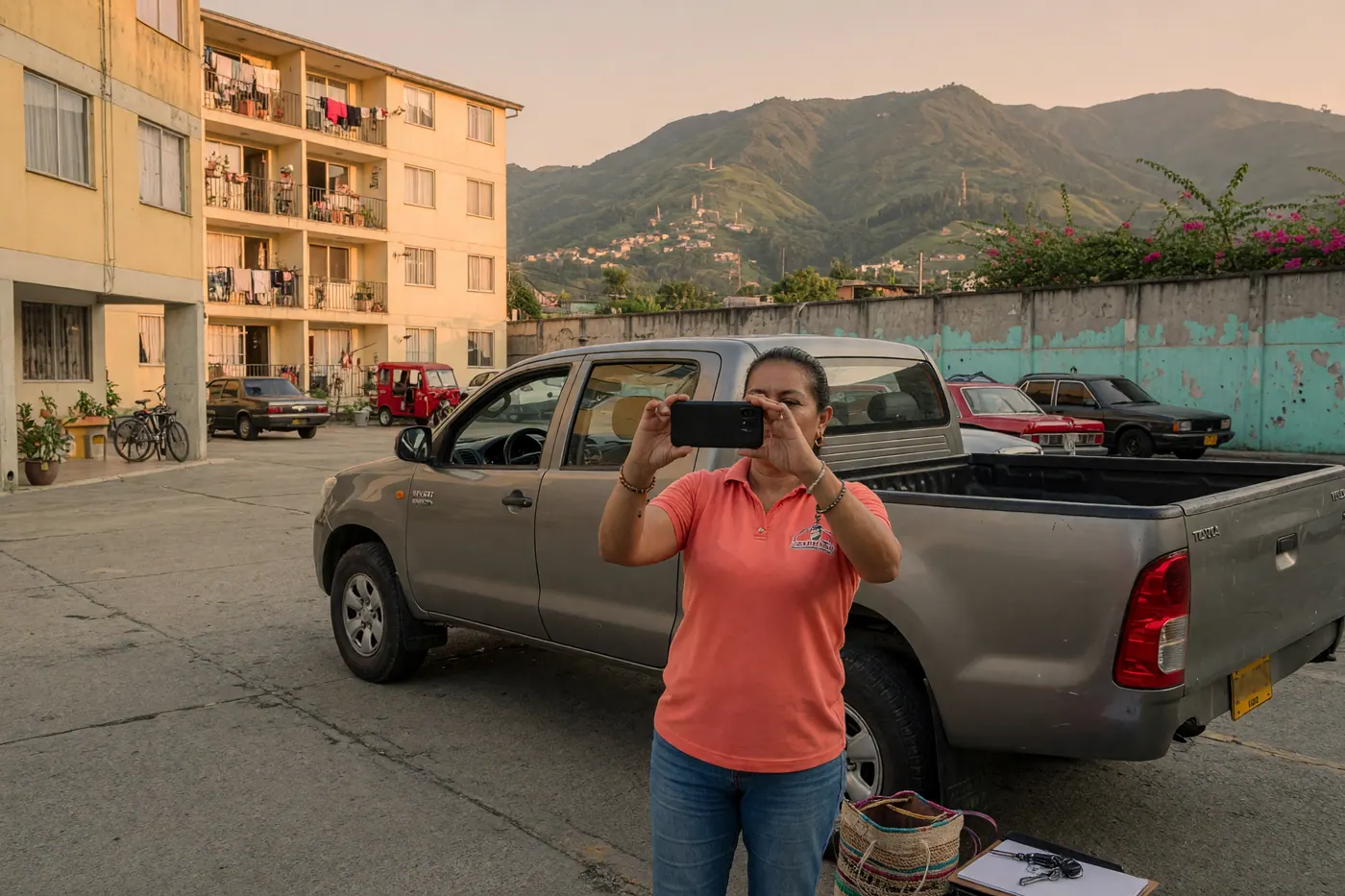
For photos, clean the part with degreaser before photographing it. The most important shot is a close-up of the serial number or manufacturer's stamp, with the electrical connectors and mounting points visible and intact. A clean, well-documented part communicates professionalism, and that is worth more than any description.
Where to post your auto parts without paying commissions
Facebook groups are the most used channel for selling auto parts, but also the riskiest: fake profiles, buyers who don't show up, and zero reliability filters. MercadoLibre has an audience, but their commissions cut into margins on low-to-mid-priced parts. WhatsApp groups work if you have a network, but they don't expose you to new buyers outside your circle.
On Colombia Move, you can post your auto parts for free, organize them in the auto parts category, and receive messages directly to your WhatsApp without intermediaries. Ads are indexed on Google with the OEM number in the title, which means someone searching for a specific part can find your ad directly. To compare all available options, check out where to sell used items in Colombia without paying commission.
When it's time to close the deal: meet the buyer at your workshop or in a crowded public place. Never deliver an expensive part to someone you don't know. If the payment is via Nequi, Bancolombia, or Daviplata, always verify from your own app that the money has arrived before handing over the part. Fake screenshots are the most common trick in these transactions.
Frequently asked questions
Is Law 738 of 2002 still in effect for the sale of auto parts?
No. Law 738 of 2002 was declared unenforceable (unconstitutional) in its entirety by the Constitutional Court of Colombia through Judgment C-205 of 2003. The court determined that it violated the presumption of innocence by reversing the burden of proof onto the seller. Today it has no legal effect. The trade of illicitly sourced auto parts is indeed punished, but under the crime of Handling Stolen Goods (Article 447 of the Penal Code, in effect in 2026).
What is the penalty for selling illicitly sourced auto parts in Colombia?
Selling or buying illicitly sourced auto parts constitutes the crime of Handling Stolen Goods according to Article 447 of the Colombian Penal Code (Law 599 of 2000, modified by Law 1142 of 2007). The penalty is 6 to 13 years in prison and fines of up to 700 minimum wages when it involves essential vehicle parts such as engines, transmissions, or chassis. The Police conduct regular verification operations of serial numbers in workshops and scrapyards.
Can used auto parts be legally imported into Colombia?
Not generally. DIAN and the Ministry of Commerce restrict the import of used auto parts under the prior license regime (DIAN Customs Concept 54 of 2007). The Imports Committee does not approve them except for very strict exceptions for classic or antique vehicles with certification from the Automóvil Club de Colombia. For regular trade, the legal source is authorized local scrapyards and Colombian insurance salvages.
How can I dismantle my own car to sell the parts legally?
You must perform the Registration Cancellation (Cancelación de Matrícula) before the RUNT due to physical disintegration, an irreversible process according to RUNT regulations in effect in 2026. First, turn the vehicle over to a dismantling entity authorized by the Ministry of Transport; that company issues the Physical Disintegration Certificate. With that certificate, you process the cancellation in the RUNT, which releases you from the SOAT and the technical-mechanical inspection, and provides you with documentary support for every part you sell.
How much can I charge for a used original part?
It depends on the origin. According to analysis by Cesvi Colombia (2026), parts from authorized scrapyards offer savings of 40% to 70% compared to new original parts. In private sales without a company warranty, the typical market price ranges from 30% to 50% of the value of a new original part. The rarity of the part and its state of conservation adjust that range up or down.
Where can I post my used auto parts for free in Colombia?
Colombia Move allows you to post auto parts in the auto parts category for free and without commissions, with ads indexed on Google so you can be found by OEM number or exact reference. Buyers contact you directly via WhatsApp. There are also Facebook groups (higher risk of scams) and MercadoLibre (which charges commissions). The auto parts category on Colombia Move currently has 0 active ads, so if you post today, you will have guaranteed visibility.
How do I collect payment safely and avoid scams when selling auto parts?
Always verify the payment from your own banking app (Nequi, Bancolombia, or Daviplata) before handing over the part. Do not accept screenshots as confirmation: it is the most common trick in these sales. Meet the buyer at your workshop or in a public place with people, never at home if you don't know them. Be wary of urgent offers or prices well below market value, as they are often a sign that something is not right.

Comments
Loading comments...
Checking sign-in status...