
How to sell your used bicycle in Colombia (fair price and safe delivery)
Discover how to calculate the right price, complete the mandatory legal transfer, and avoid scams when selling your used bicycle in Colombia.
IDIOMA DEL ARTÍCULO
Showing original language
Quick answer: Selling a used bicycle in Colombia requires three key steps to avoid losing money or falling for scams. First, calculate the real price considering a depreciation of 20% to 30% in the first year. Second, make sure you have the frame serial number and, if you are in Bogotá, complete the mandatory virtual transfer on Registro Bici. Finally, hand over the bike only when the money is available in your bank account (no pending checks or screenshots).
1. Know your bicycle: Size, components, and real condition
Before pricing it, you need to know exactly what you are selling. Many buyers will ask for technical details, and if you don't know the answers, you will lose the sale or they will ask for absurd discounts. Start by identifying the frame size (it is usually on a sticker on the seat tube as S, M, L, or in centimeters). Then, check the drivetrain (Shimano, SRAM, etc.) and the state of the brakes. If you want to see real options right now, you can see pets and accessories on Colombia Move — posting is completely free.
Watch out for chain and tire wear; a serious buyer will spot that right away. According to active ads on Colombia Move (June 2026), there are currently 0 bicycles posted on our platform. This means demand exceeds supply and your ad will have maximum visibility if you post it with all the technical details clearly stated.
2. How to calculate a fair price (Without the "sentimental value")
We all think our "bike" is worth gold because of the kilometers covered and the anecdotes, but the market says otherwise. A bicycle depreciates between 20% and 30% during its first year of use. If it is already 4 or 5 years old, its value can drop up to 50% from the original purchase price.
If you made upgrades (like adding carbon rims or upgrading the drivetrain), keep in mind that these improvements do not add directly to the original value. They make your bicycle more attractive, but you rarely recover the full cost of those parts. If you need a reference, you can look for tools like the Velominata "Green Book" to guide you. Additionally, if you are thinking about selling several items at the same time, I recommend reading our guide on where to sell used things in Colombia.
3. The Bicycle Registry: The mandatory legal step before handing it over
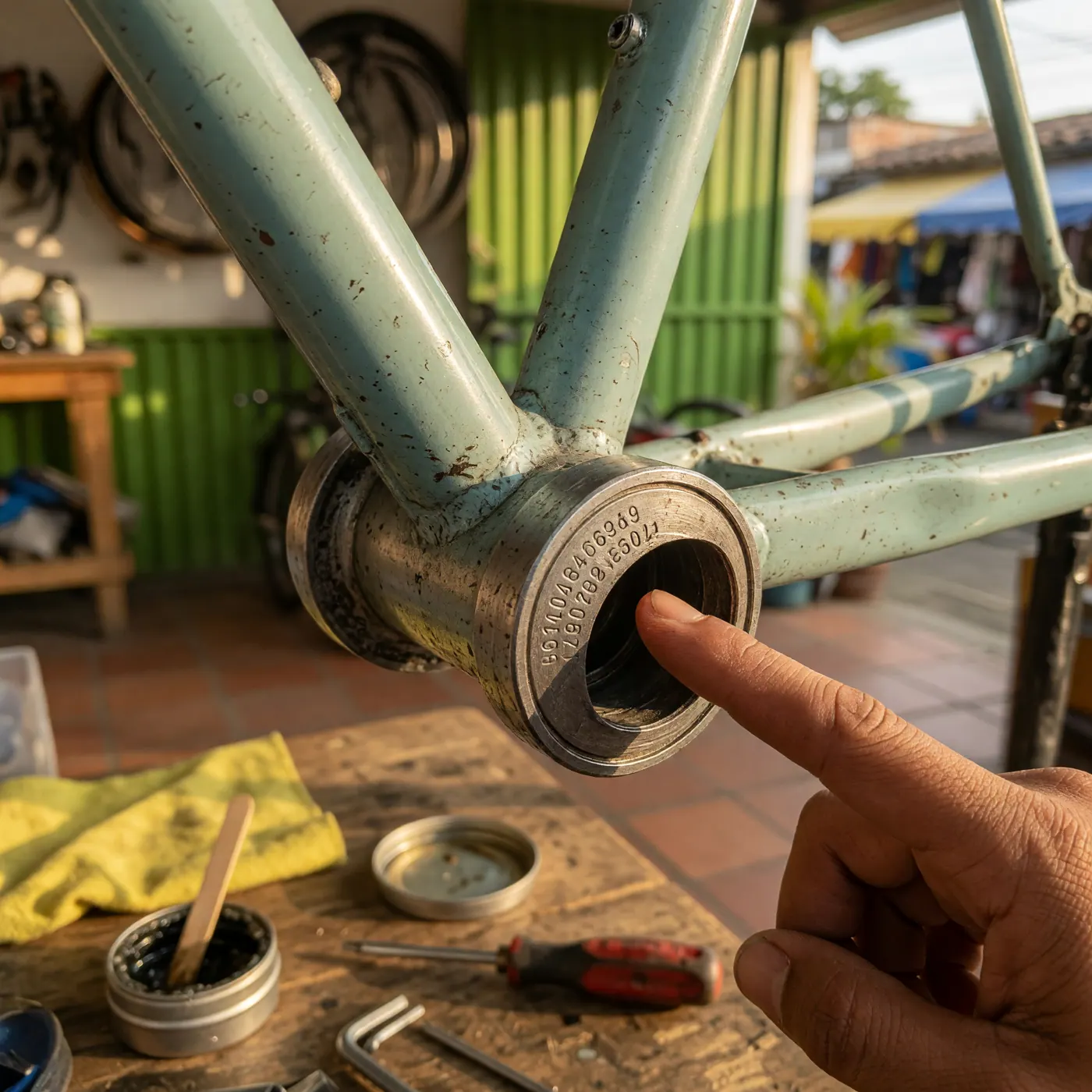
This is the point where many fail. The frame serial number, which is usually engraved under the bottom bracket, is your bicycle's ID and the ultimate proof of ownership.
If you are in the capital, the Registro Bici Bogotá is a mandatory procedure and is now 100% virtual (you no longer need the old physical sticker). When you sell the bike, you must perform a digital "Transfer": you start the process with the buyer's email and they accept it from their account. If, on the other hand, you are in Antioquia, Medellín and the Aburrá Valley have the official app MiBici from AMVA. Although it is a voluntary registry there, using it gives the buyer a lot of confidence that the bicycle has not been reported stolen.
4. How to take photos that attract serious buyers
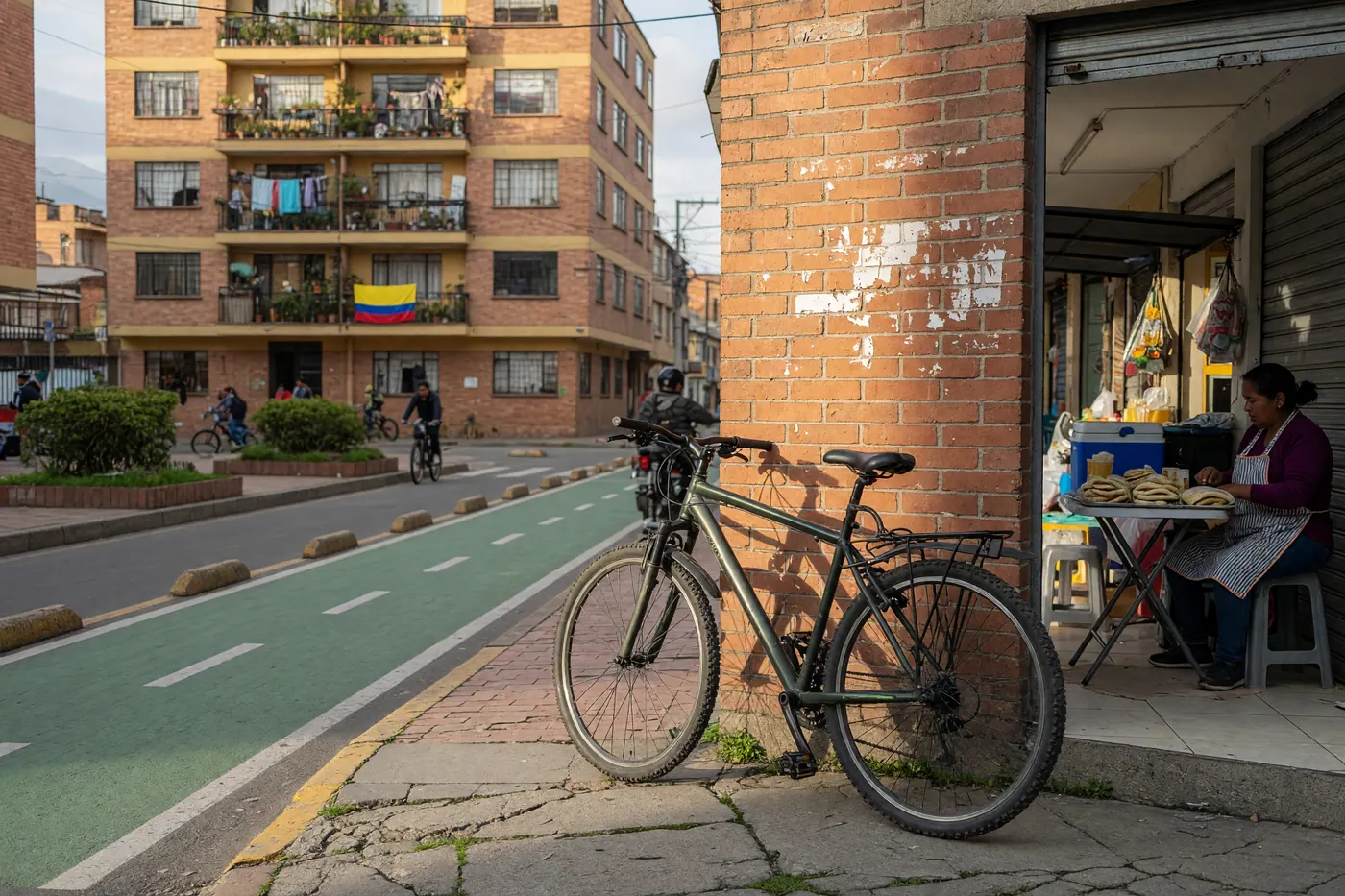
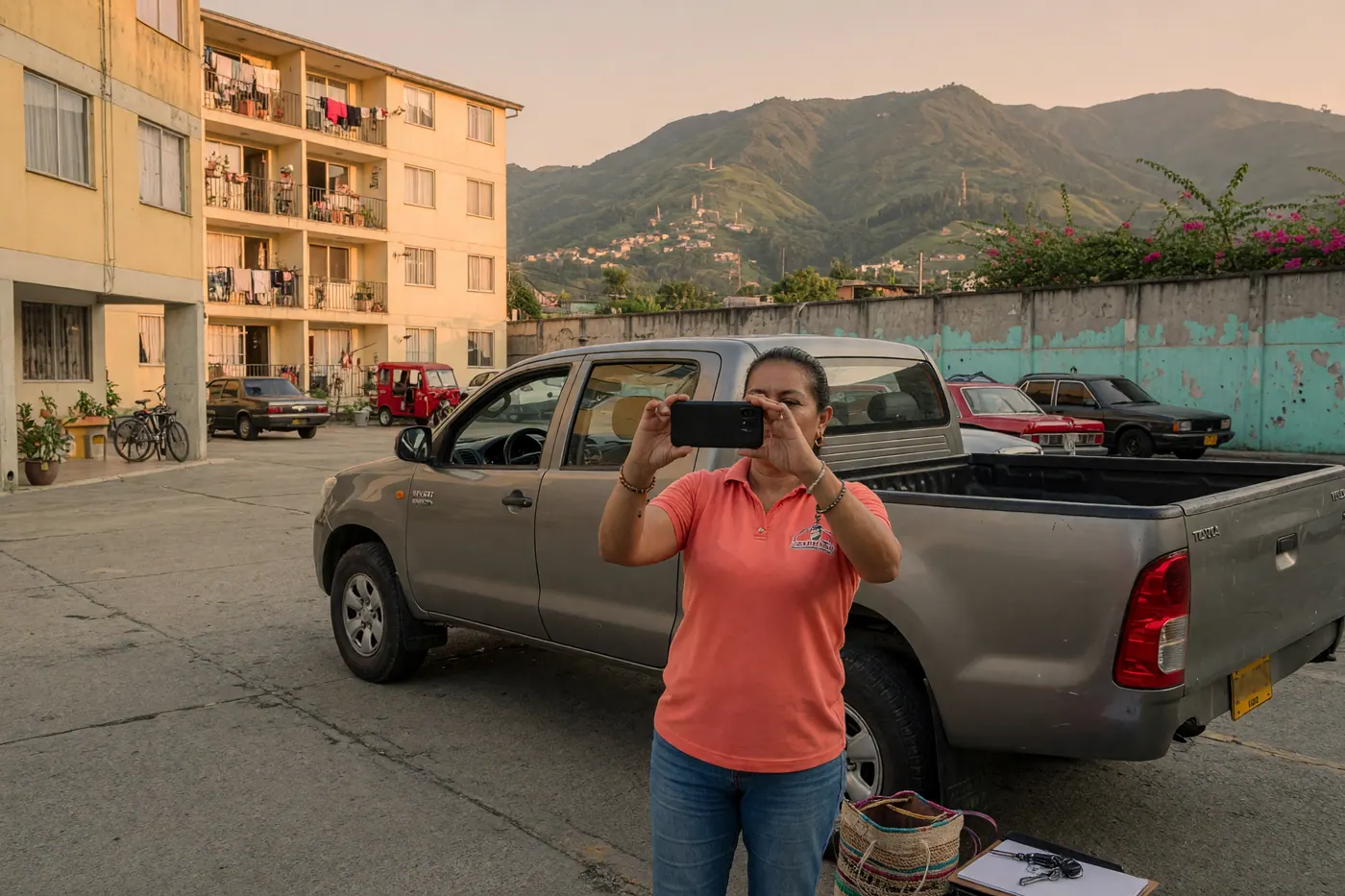
A blurry photo in a dark garage doesn't sell. Wash the bicycle, find a place with natural light (ideally a brick wall or near a bike path to give it an urban touch), and take photos from the drivetrain side (the chain side).
Make sure to include close-ups of key components: the derailleurs, the brakes, the tires, and above all, a clear photo of the frame serial number. If the bicycle has scratches, show them without shame. Honesty from the start avoids headaches and unnecessary haggling on the day of delivery.
5. Safe delivery and how to avoid common scams in Colombia
The moment of delivery is the most critical. Meet the buyer in a public, crowded, and safe place, ideally near a police station (CAI) or inside a shopping mall. Never allow them to take a "test ride" without having a real guarantee in your hands, such as their physical ID, the buyer's cell phone, or cash.
Watch out for phantom transfers. It is one of the most common methods when selling on Facebook Marketplace in Colombia. Never hand over the bicycle to an app delivery person if the money is not effectively available and reflected in your bank account. Always be wary of payments via checks on a Friday afternoon or the famous screenshots of interbank transfers that "take time to go through".
Frequently Asked Questions
❓ Is it mandatory to register the bicycle before selling it in Colombia?
In Bogotá, it is mandatory by law (District Agreement 242 of 2021). In the rest of the country, it is not mandatory, but it is highly recommended to use local registries (like the MiBici app in Medellín) to prove legitimate ownership of the vehicle.
❓ How is the transfer of a bicycle registered in Bogotá done?
The transfer is done 100% virtually through the Registro Bici Bogotá platform. The seller starts the process by entering the buyer's email, and the latter must log into their account to accept the ownership transfer.
❓ How much does a second-hand bicycle depreciate in Colombia?
A bicycle loses between 20% and 30% of its commercial value during the first year of use. From the fourth or fifth year onwards, the accumulated depreciation can reach 50% of its original purchase price (source: Velominata and Specialized, data updated to 2026).
❓ How do I prove the bicycle is mine if I lost the purchase invoice?
You can prove ownership by signing a simple purchase contract that specifies the frame serial number, accompanied by the Registro Bici certificate if you are in Bogotá.
❓ How do I avoid scams when receiving payment for my bicycle?
Never hand over the bicycle until the money is effectively available in your bank account. Be wary of buyers who send couriers to pick up the bike before the payment has been reflected in your banking app.
Comments
Loading comments...
Checking sign-in status...