
How to sell a used motorcycle in Colombia with less risk
Up-to-date paperwork, honest listing, confirmed payment and formal transfer: the method to sell your used motorcycle in Colombia with less risk.
IDIOMA DEL ARTÍCULO
Showing original language
Selling a used motorcycle in Colombia should be simple: you have the bike, someone wants it, done. But in practice you post and get twenty WhatsApp messages where half ask "final price?" without even looking at it, two want to trade it for a cell phone, and one offers you half "because it's cash". And in the end, the real risk isn't giving it away: it's handing it over and being stuck with fines or paperwork that are no longer yours.
Motorcycles have their own logic: people decide quickly, pay in cash more often than with a car, and many buyers are first-timers who don't know what papers to ask for. That works in your favor if you prepare the ad well, and against you if you improvise. If you want to see real options right now, you can see cars and motorcycles available in Colombia Move — posting is completely free.
This guide is a practical checklist for selling with less risk: what to have ready, how to write the ad, which photos actually work, how to filter curiosity seekers, and how to handle payment and transfer without messing up. It's not legal advice — procedures vary by city — but it is the method that avoids costly mistakes.
What to have ready before posting
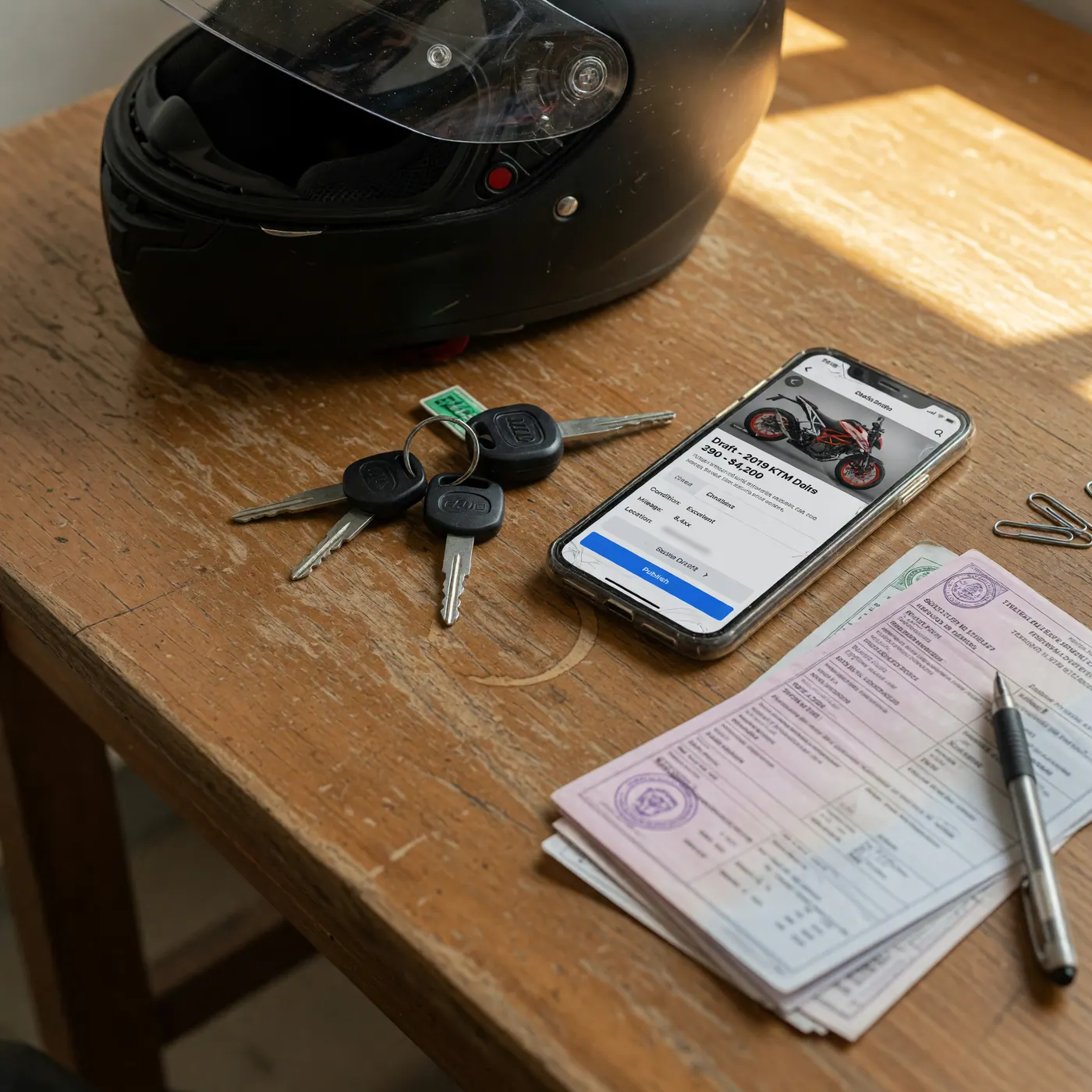
The serious motorcycle buyer asks about paperwork in the first three messages. If you hesitate or have something expired, they notice and lose interest. Before uploading the ad, gather and check this:
- Title card (traffic license) in your name and with no errors in the data.
- Current SOAT and technical-mechanical inspection (RTM) up to date, if the motorcycle's age requires it.
- Maintenance history: oil changes, tires, drive kit, brakes. A notebook or photos of receipts are worth gold.
- Real mileage from the dashboard and the honest reason for the sale.
- Status of violations and procedures: no surprises on closing day.
Here's a step almost nobody takes and that saves you problems: check your own motorcycle in the RUNT. The citizen query by license plate shows you the information reported to the system about the vehicle — including, when reported, the status of SOAT, technical-mechanical inspection and expiration dates — so you'll know what the buyer will see before they bring it up. Also check violations and payment agreements on the official SIMITportal, administered by the Colombian Federation of Municipalities. Keep in mind that these queries reflect what's reported in the system, not always in real time (consulted June 3, 2026).
How to write the ad to filter only serious buyers
A good ad does two things: attracts the right buyer and scares off those who just want to haggle. The key is giving so much real data that serious people arrive almost decided. Always include:
- Brand, line, model (year) and displacement. "Selling red motorcycle" doesn't help anyone.
- City and approximate area — nobody wants to cross the city for a motorcycle they don't even know where it is.
- Mileage, number of owners and real condition, with visible details included (scratch on the tank, tire needing replacement).
- Paperwork status: SOAT and technical-mechanical current until when.
- Price. An ad without a price multiplies messages from curiosity seekers and reduces real buyers.
About the price: look at it as market, not as sentiment. Search for your same motorcycle — brand, line, model and displacement — in classifieds and look at the range. Ignore the extremes (the most expensive usually take months to sell) and use the middle value as reference. If you're in a hurry, place yourself slightly below the median. What doesn't work is making up a number and defending it "because it's very good".
And mentioning an imperfect detail honestly, instead of hiding it, raises your credibility: the buyer who finds exactly what you described trusts and closes; the one who discovers something hidden leaves or uses it to knock down your price.
Photos that build trust (and the ones you shouldn't upload)
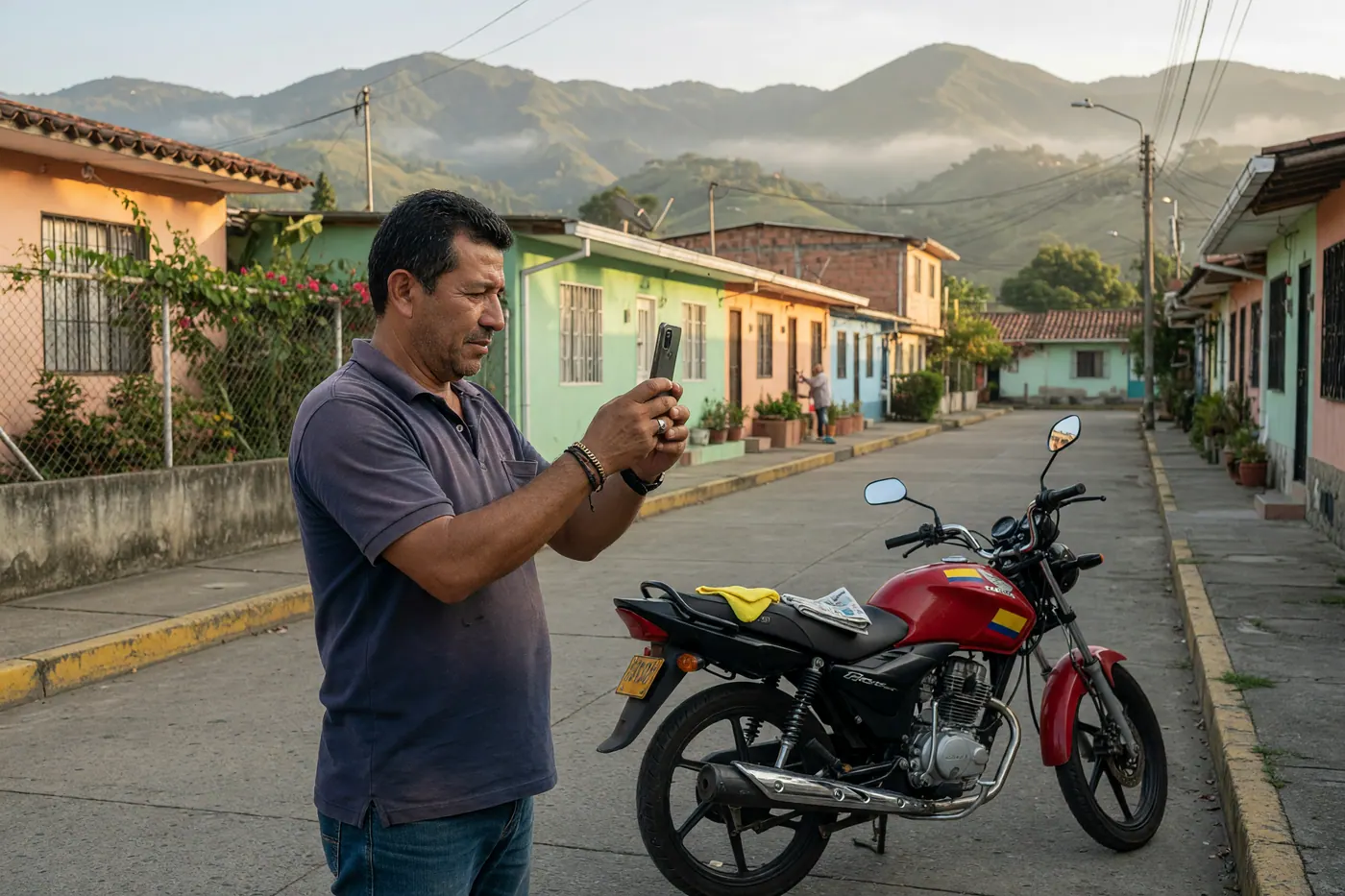
Photos sell the motorcycle before the text does. Your cell phone is enough, but take them during the day, with the motorcycle clean and a neutral background. The ones that really matter:
- Both complete sides, with the motorcycle standing and straight (use a stand or ask someone to hold it).
- Dashboard on showing real mileage.
- Tires (to see the tread), chain/drive kit, and the engine unwashed with degreaser to hide leaks.
- Honest details: if there's a scratch or a part needing replacement, take a photo. Transparency closes sales.
An important warning: don't upload photos of the title card, SOAT or your ID to the ad, and if you show the license plate, cover it partially. That complete data can be used to impersonate you. The serious buyer will see the papers in person, not by chat. If you want to learn more about how to present yourself well, read how to build trust as a seller in Colombia.
How to filter curiosity seekers and talk to real buyers
Most messages aren't buyers: they're bored people, professional hagglers and the occasional person who wants to "trade" for something that doesn't help you. You don't have to answer everyone with infinite patience. A few simple questions separate the wheat from the chaff:
- "When are you looking for it?" — the one who's really going to buy has a date.
- "Do you want to see it and test drive it this week?" — if they don't commit to seeing it, they're not a buyer.
- Avoid closing the price by chat before they see it. Someone who negotiates without looking usually wants to knock down your price later.
Handle the conversation on WhatsApp, but without turning it into a chaos of twenty identical chats. If you post on Colombia Move, contact comes straight to your WhatsApp with no intermediaries; I'll tell you how to use it well in how to post your ad on WhatsApp. And never share verification codes that arrive by SMS: no legitimate buyer asks for them, and asking for them is a classic sign of fraud.
Test drive and safe meeting
Yes, let them test it — a motorcycle that can't be tested generates distrust. But with clear conditions, not handing the keys to a stranger to disappear:
- Meet during the day and in a public and familiar place: a gas station, a parking lot or in front of a mall with cameras.
- Ask for the interested party's ID before the test drive and go accompanied if you can.
- Define a short and familiar route, ideally with the motorcycle in your sight or you going behind.
- If it gives you a bad feeling, don't do it. Your safety is worth more than a sale.
Payment and delivery: confirm before releasing the motorcycle
This is where money gets lost in a rush. The rule is simple: the motorcycle is not delivered until payment is truly confirmed. A transfer receipt on screen is not the same as money in your account — those screenshots are faked in seconds.
- Wait to see the money reflected in your account or app, not just the "I already transferred it".
- Be suspicious of cashier's checks, overpayments "by mistake" and anyone who pressures you saying "it's today's deal or nothing". Pressure is a tactic.
- Leave a simple purchase receipt signed by both parties, with the motorcycle's details, value and date.
Transfer, RUNT and SIMIT: don't leave it pending
The most expensive mistake when selling a motorcycle is delivering it and leaving the transfer "for later". The transfer is the official registration of the change of ownership with the traffic authority where the motorcycle is registered: a private purchase document alone does not transfer ownership. While the motorcycle remains registered in your name, traffic violations, fines or taxes associated with the vehicle can keep appearing charged to you as the registered owner. Requirements usually include registering both buyer and seller in the RUNT, the purchase contract, current SOAT and RTM in RUNT when applicable, and a check for traffic violations; exact requirements and costs vary by city and authority, so confirm the process with the corresponding traffic office (example of the process in Bogotá"). Consulted on June 3, 2026.
Before closing, make sure the motorcycle has no liens, restrictions or pending procedures; if it does, resolve or clarify them with the buyer before signing. And forget about the idea of an "open transfer" or "open sales letters": they leave you exposed and the motorcycle in legal limbo. If a transfer was left pending from a previous sale, there is an official guide on what to do to fix that situation. Do the formal transfer, period.
Where to post your used motorcycle
There is no single magic channel; the smart thing is to combine. Each has its logic:
- Facebook Marketplace and local groups: lots of traffic, but also lots of browsers and aggressive haggling. Good for volume of messages.
- Mercado Libre / Tucarro: good for researching prices and for buyers who are already seriously looking.
- WhatsApp groups in your area or for motorcycle enthusiasts: nearby buyers and trusted through referrals.
- Colombia Move: bilingual classified, free and no commission, with direct contact to your WhatsApp and space to put all the details a serious buyer needs.
If you sell used items frequently, you might also find useful the guide on where to sell used things in Colombia without paying commission — motorcycles just need more detail on papers and photos than furniture or an appliance.
Frequently asked questions
❓ Where can I post a used motorcycle in Colombia?
On classifieds like Colombia Move, Facebook Marketplace, Mercado Libre and local WhatsApp groups. Facebook gives you volume of messages, Mercado Libre attracts buyers who are already seriously looking, and groups in your area bring nearby contacts. The ideal is to combine two or three and put the same data and photos on each one.
❓ What documents should I review before selling my motorcycle?
Title of ownership in your name, SOAT and technical-mechanical inspection up to date when applicable by age, plus the vehicle's status in the RUNT and traffic violations in the SIMIT. Also verify that there are no liens or pending procedures. Exact requirements may vary by city and traffic authority.
❓ Is it mandatory to do the transfer when selling the motorcycle?
Yes: the transfer is the official registration of the change of ownership and is formalized with the traffic authority where the motorcycle is registered. If you leave it pending, you remain as the registered owner and traffic violations or vehicle taxes can keep being charged to you. Confirm the process and requirements with the corresponding traffic office (example in Bogotá"); never use "open transfer" or sales letters left blank.
❓ How much should I ask for my used motorcycle?
It depends on the brand, line, model, engine size, mileage, condition and papers, plus the local market at the moment. The best source is to search for your same motorcycle in classifieds and place yourself in the middle range, not at the extremes. There is no fixed price table that works for all.
❓ How do I reduce the risk of scams or wasting time?
Filter with simple questions, meet during the day in a public place, confirm payment in your account before delivering the motorcycle and don't share verification codes or your complete documents by chat. This doesn't eliminate risk, but it lowers it quite a bit. Always be suspicious of pressure to close "now".
❓ Should I let them test drive the motorcycle?
It can help close the sale, but with conditions: public place, during the day, asking for the interested party's ID, with a companion and a short, familiar route. If something makes you suspicious, you have every right not to allow the test drive.
❓ What photos help sell a motorcycle faster?
Clear photos during the day: both complete sides, the dashboard with the mileage, the tires, the chain and the engine, plus imperfect details honestly. Don't upload photos of your complete documents or the license plate uncovered, because that information can be used to impersonate you.

Comments
Loading comments...
Checking sign-in status...