
Temporary suspension of the employment contract in Colombia: grounds under article 51 of the CST and which payments continue
The seven grounds under article 51 of the CST, which one requires permission from the Ministerio del Trabajo, and what happens to salary, health, pension, severance pay, vacations, and bonus while the contract is suspended.
IDIOMA DEL ARTÍCULO
Showing original language
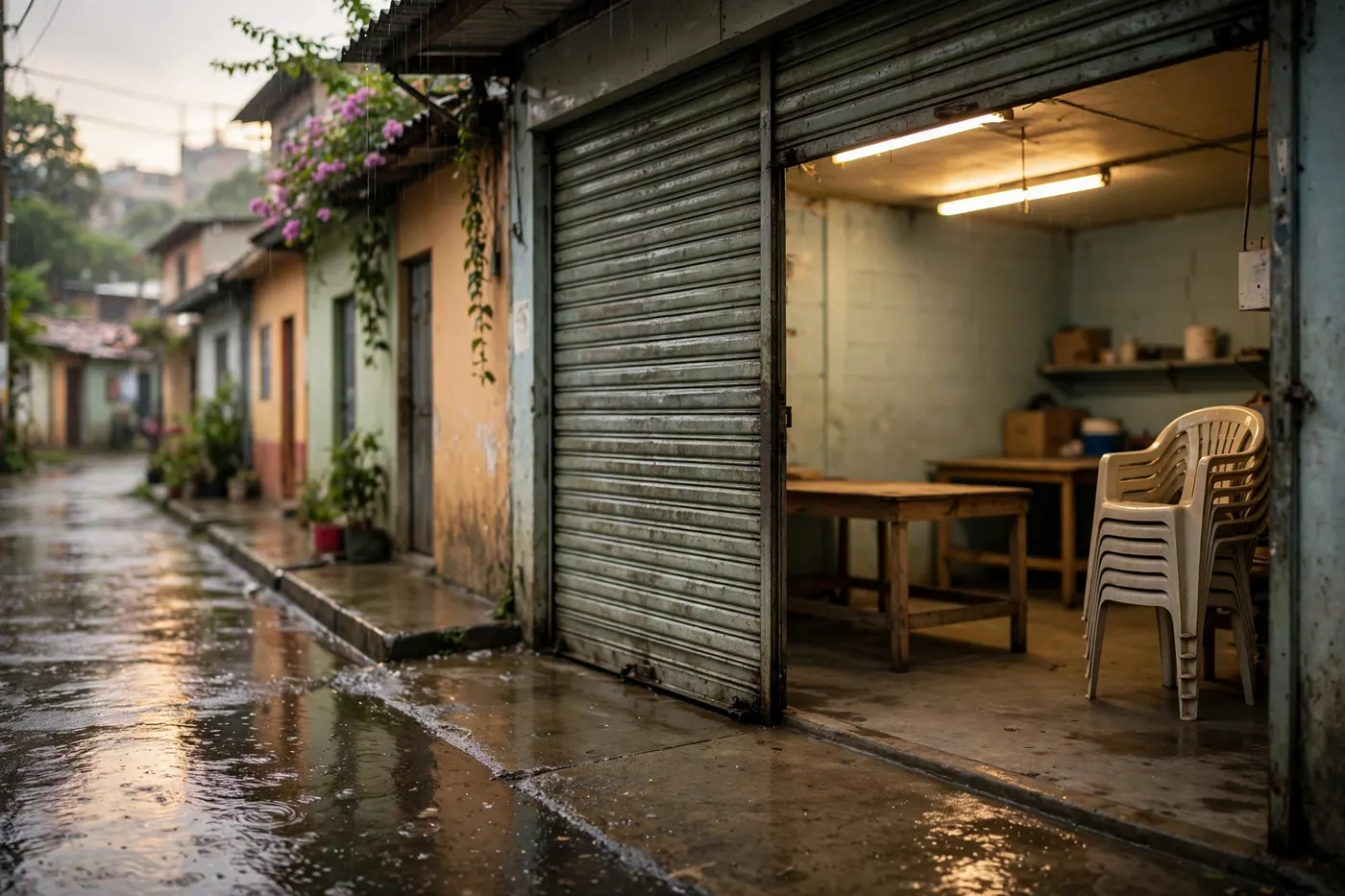
A neighborhood workshop that runs out of orders during a week of rain, and an employee who asks for a long leave, face the same dilemma: can the contract be paused without firing anyone? Yes, but only for the causes in article 51 of the Colombian Substantive Labor Code (CST), and each one has different rules. One warning right away: confirm your case with the labor inspector or a labor lawyer before closing payroll.
Short answer: suspension keeps the employment relationship, but it cuts the service and the salary for those days. It is not dismissal, it is not vacation, and it is not a public holiday.
The seven causes of article 51
The contract is suspended only in these cases (art. 51 of the CST, replaced by art. 4 of Law 50 of 1990):
- Force majeure or fortuitous event that temporarily prevents performing the contract.
- Death or incapacity of the employer, if it is a natural person and this necessarily suspends the work.
- Suspension of activities or temporary closure of the company, establishment or business, in whole or in part, for up to 120 days, due to technical, economic or other reasons beyond the employer's control. It is the only one that requires prior authorization from the Ministry of Labor and simultaneous written notice to the workers.
- Leave or temporary permission granted by the employer, or disciplinary suspension.
- Worker called to military service: the employer keeps the position for up to 30 days after the service ends.
- Preventive detention or correctional arrest not exceeding 8 days, when that cause does not justify ending the contract.
- Strike declared in accordance with the law.
Outside this list there is no suspension. A holiday long weekend or a rainy season, by themselves, are not force majeure.
Force majeure versus technical or economic closure
This is where many employers make mistakes. Force majeure (numeral 1) requires an unattributable, unforeseeable and irresistible event that prevents work. It does not require prior Ministry permission nor is it subject to the 120-day limit; the Labor Chamber of the Supreme Court distinguishes it this way (for example, SL2430-2024).
Closure for technical or economic reasons (numeral 3) works the other way around: first the request with its evidence, at the same time the written notice to your workers, and only with the authorization can you suspend, for up to 120 days. If you close before having the permit, the contract was not suspended and wages remain owed. A written notice protects more than a chat message.
I did not find a published form, fee or response time for this specific authorization, so I will not make them up: check with the territorial office of the Ministry of Labor on how to file it today. And an honest detail: the process is neither quick nor guaranteed, so do not count on it as a last-minute lifesaver.
How it resumes and when the contract ends
When the cause of the first three numerals disappears, the employer announces the resumption date by personal notice or by notices published at least twice in a local newspaper, and must admit those who report within the following three days (art. 52).
Suspension does not terminate the contract, but there are two exits. If the worker does not return once the cause ceases, art. 61, literal i applies. And if the employer suspends activities for more than 120 days, we are no longer talking about suspension: it is the termination cause of literal f, which also requires Ministry permission, and which is resolved within two months. Watch out: if the closure does not meet the requirements, it can turn into dismissal without just cause; see how it is calculated in the guide to compensation for dismissal without just cause.

Salary, vacation, severance, pension and bonus
Article 53 is clear: during the suspension the worker does not provide the service and the employer does not pay salaries for those periods. Obligations already accrued remain in force, as well as those arising from the death or illness of the worker. In addition, the employer may deduct those periods when calculating vacation, severance and pensions. For the vacation calculation I will not repeat the formula: it is in the guide to labor vacations.
The service bonus (prima de servicios) does not appear in that list. An opinion from the Legal Advisory Office of the Ministry of Labor, which is guiding and not binding, concludes that the bonus is paid including the suspension period. It is neither law nor a ruling, but it is worth considering before prorating the bonus for days worked.
Health, pension and occupational risk insurance (ARL) during suspension
For health, art. 3.2.5.2 of Decree 780 of 2016 states that there is no contribution from the affiliate, but there is the portion corresponding to the employer, calculated on the last base salary reported before the suspension. The general health rate, when contributions are made, is 12.5% (8.5% employer and 4% worker). If your company is exempt under art. 114-1 of the Tax Statute, that employer portion does not accrue for someone earning less than 10 monthly minimum wages; natural persons with fewer than two workers do not have that exemption.
For pensions there is no single rule that sets what to contribute during any private-sector suspension. Some 2020 concepts, issued during the health emergency, spoke of paying 100% and recovering the worker's share later, but they are guiding criteria, not current rules. Confirm the entry with whoever processes your PILA. Also do not close the ARL with a percentage without verifying it.
If the worker has beneficiaries, see how to enroll beneficiaries in the EPS. For ordinary payroll, without suspension, check how net salary is calculated.
Unpaid leave and disciplinary suspension
The leave under numeral 4 is granted by the employer and it is advisable to put it in writing: dates, and what will happen with the contributions. An "economic leave" imposed unilaterally is not this figure.
The disciplinary sanction is capped in art. 112: a maximum of 8 days the first time and 2 months if there is repeat offending of any degree. Furthermore, since Law 2466 of 2025 (art. 7), art. 115 requires formal communication, facts in writing, transfer of evidence, at least 5 days to defend oneself, a reasoned decision, a proportional sanction and the possibility of appealing it. Without that procedure, the suspension may fall and those days should be counted as ordinary work.
Monday, November 2, 2026: paid rest day, not suspension
In 2026 November 1 falls on a Sunday, so the All Saints' Day rest moves to Monday, November 2. It is a paid holiday under Law 51 of 1983 and not a cause under art. 51: if you close that day, you pay the rest day. If you want to stop several days due to lack of orders, that is a different figure and, if it is economic, you must look at numeral 3.
Frequently asked questions
❓ Does force majeure have to be requested from the Ministry of Labor?
No. Prior permission corresponds to numeral 3, for technical or economic reasons and for up to 120 days. Force majeure requires an unattributable, unforeseeable and irresistible event, and the law does not set a maximum number of days for it (verify with the official source).
❓ Is salary paid while the contract is suspended?
Salaries for those days are not paid, but the employment relationship remains in force. The employer may also deduct that time when calculating vacation, severance and pensions, according to art. 53 of the CST (verify with the official source).
❓ Is the service bonus also deducted?
Art. 53 does not include the service bonus among the deductible items. A guiding opinion from the Ministry of Labor, consulted in 2026, indicates that it is paid including the suspension; it is not a ruling and has no binding value (verify with the official source).
❓ Do I have to keep paying health contributions during suspension?
The affiliate does not contribute. The employer pays its share on the last base salary reported, unless it is exempt under art. 114-1 of the Tax Statute because the worker earns less than 10 monthly minimum wages (verify with the official source).
❓ And pension and ARL during suspension?
In the sources consulted there is no single legal rule setting a mandatory pension or ARL percentage for every private-sector suspension. Confirm the entry with whoever processes your PILA before paying or stopping payment (verify with the official source).
❓ How many days can a disciplinary suspension last?
Up to 8 days the first time and up to 2 months if there is repeat offending. It only applies after the written procedure of art. 115, with at least 5 days for the worker to defend themselves (verify with the official source).
❓ Does Monday, November 2, 2026 suspend the contract?
No. It is the paid All Saints' Day rest moved from Sunday, November 1. Closing for the holiday is not a cause under art. 51, and the day is paid according to Law 51 of 1983 (verify with the official source).


Comments
Loading comments...
Checking sign-in status...