
Where to Get a Vehicle Inspection Before Buying or Selling a Used Car in Colombia
Learn what a complete vehicle inspection evaluates in Colombia, how much it costs, which centers to visit, and how to use it to buy or sell a used car with total confidence.
IDIOMA DEL ARTÍCULO
Showing original language
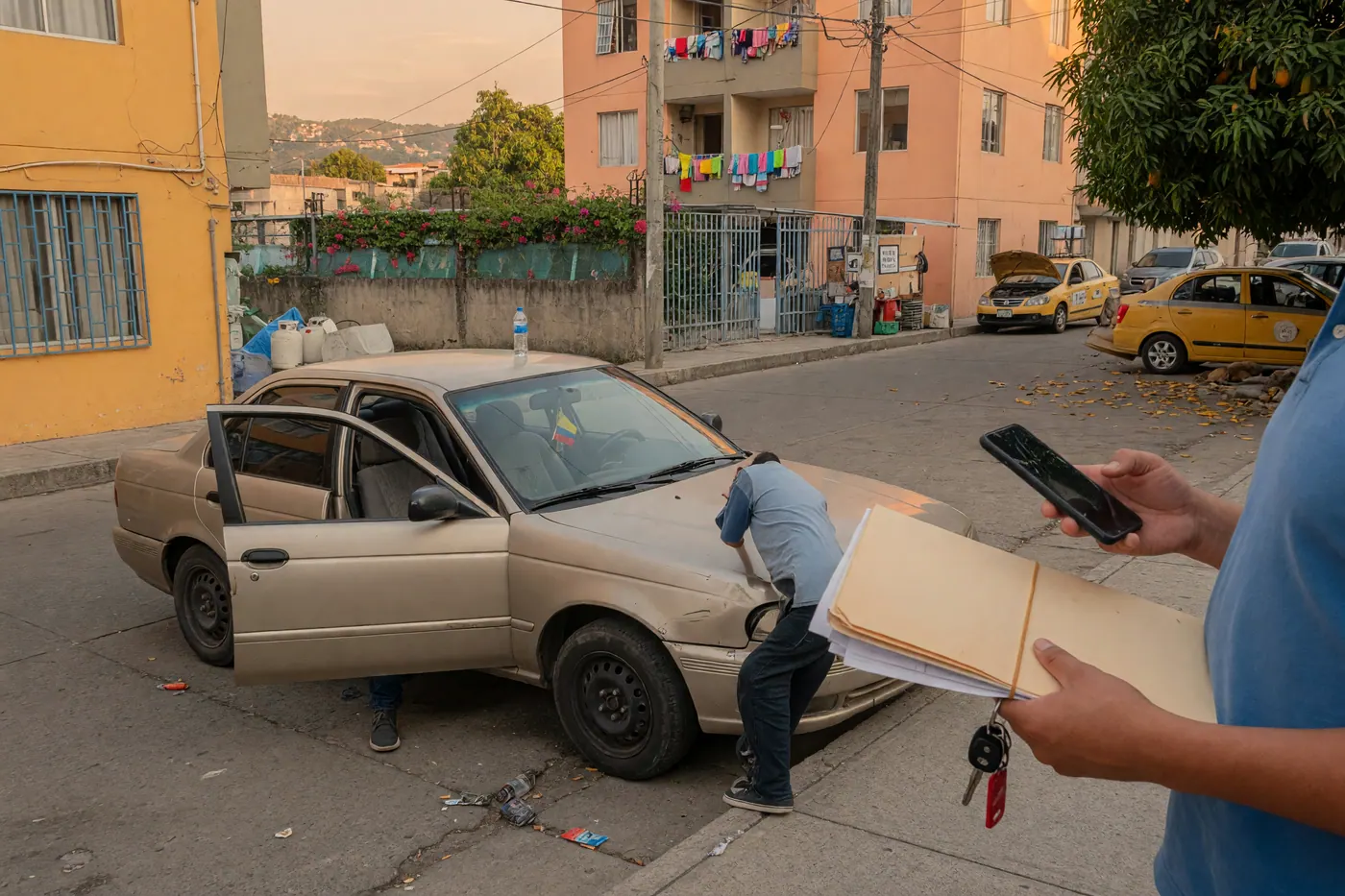
Closing a deal on a used car in Colombia can become a stress-free experience or a costly headache if proper precautions aren't taken. Between repainted sections hiding severe accidents, engines with disguised leaks, and uncleared liens, the vehicle inspection (peritaje) stands out as the essential filter before signing any sales contract or paying a deposit.
For the buyer, it is the insurance that you aren't investing your savings in a vehicle with a twisted chassis or hidden accidents. For the seller, having a technical inspection report in hand is the best tool to justify the price, build immediate trust with skeptical buyers, and accelerate the sale without getting worn down by endless negotiations.
Key difference: Commercial Inspection vs. Technical-Mechanical Review (RTM)
One of the most frequent mistakes made by private buyers and sellers in cities like Bogotá, Medellín, or Cali is confusing the Technical-Mechanical Review (RTM) with a commercial vehicle inspection. Although both processes involve putting the car on a lift and checking mechanical components, their goals and legal scopes are completely different.
- Technical-Mechanical Review (RTM): This is a mandatory state inspection governed by the National Traffic Code (Law 769) and supervised by the Ministry of Transport. Standard: Law 769 of 2002. It is performed exclusively at authorized Automotive Diagnostic Centers (CDA), and its purpose is to certify minimum road safety conditions and pollutant emission controls so that the vehicle can legally circulate on the country's roads. The RTM does not determine if the car was severely crashed, if it has putty on the pillars, or if its commercial value matches the real state of the engine.
- Commercial vehicle inspection: This is a comprehensive and voluntary technical diagnosis requested by private individuals, dealerships, or insurance companies. Its goal is to evaluate the vehicle's overall condition, its aesthetic and structural originality, the remaining useful life of mechanical parts, and its insurability for full-coverage policies.
Having an up-to-date RTM is legally required to drive, but it by no means guarantees that the car is free of hidden serious faults. For that reason, no serious buyer should skip the private inspection.
What exactly is checked in a complete vehicle inspection
A qualified automotive diagnostic center doesn't just look at the car from the surface. A modern inspection report covers four fundamental modules that reveal the machine's true history:
1. Structure, chassis, and bodywork
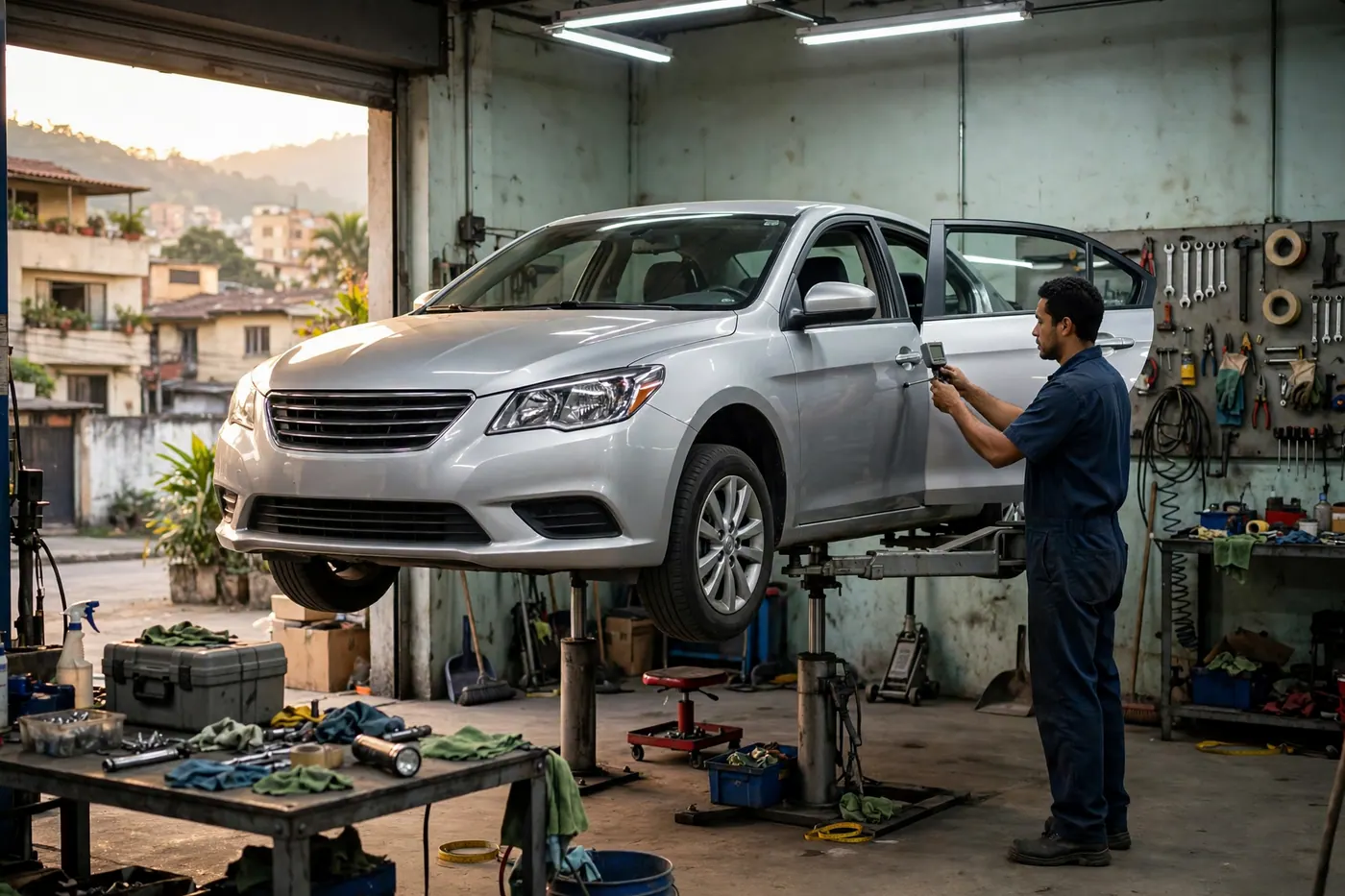
This is the most critical part of the inspection. Inspectors verify the integrity of the chassis, chassis tips, structural components, pillars, rocker panels, and the floor of the vehicle in a pit or on a lift. Any deformation, non-original welding bead, or wrinkle in the side rails indicates that the car suffered a high-impact collision.
Likewise, technicians use a digital coating thickness gauge (micrometer). Original factory paint usually oscillates within uniform micron ranges; drastic variations on a panel reveal the presence of plastic body filler and repaired metal after a collision.
2. Mechanics, engine, and fluids
The mechanical review analyzes the wear of moving components. Depending on the purchased package, it includes:
- Cylinder compression test and compression leak check to evaluate the internal health of the engine block.
- Detection of leaks in engine oil, brake fluid, coolant, and steering or transmission fluid.
- Condition of the clutch, slack in the gearbox, and functioning of the exhaust system.
- Inspection of control arms, shock absorbers, tie rods, steering terminals, and bushings in the front and rear suspension.
- Braking efficiency on a roller test bench or dynamometer.
3. OBD-II electronic scan
Through the on-board diagnostic port (OBD-II), the inspector connects a professional scanner to communicate with the car's computers (ECU, ABS module, airbags, and transmission). This allows for the detection of stored error codes (DTC), dashboard warning lights that have been intentionally disconnected, and, in several modern models, cross-referencing hours of use or real mileage to rule out odometer tampering.
4. Legal study, imprints, and background
A perfect engine is useless if the vehicle cannot be transferred legally. The technical inspection includes the physical taking and verification of imprints (engine, serial, and chassis numbers) against the ownership card (transit license). In parallel, the vehicle's history should be checked on the RUNT platform to certify that the vehicle does not have pending bank liens or legal encumbrances.
That license plate inquiry also shows if the SOAT and RTM are valid. If a lien appears, stop the deposit: look at how to sell a car with a registered lien in the RUNT. Fines are separate, checked in SIMIT on the same day.
Where to get a vehicle inspection in Colombia
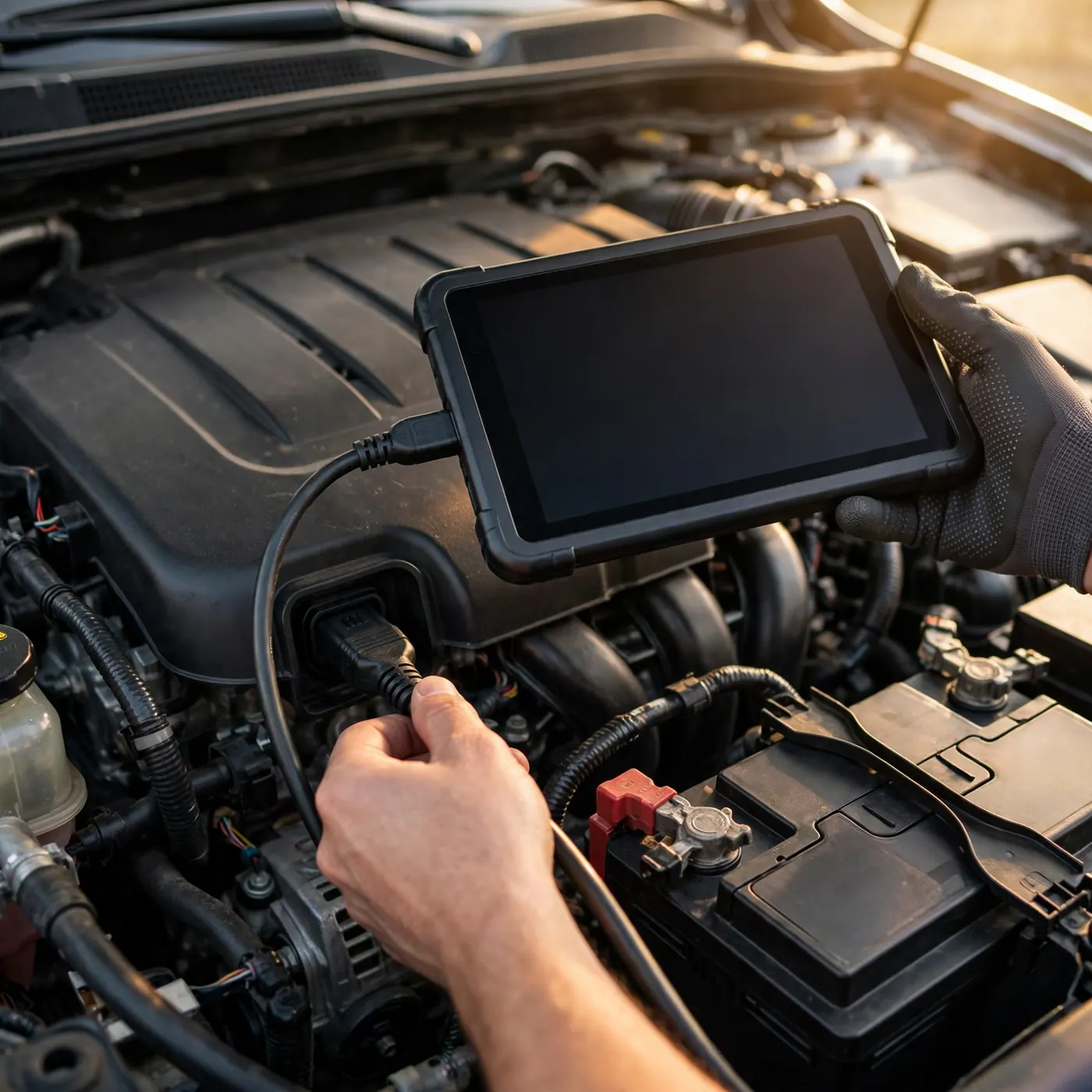
It is not a Ministry of Transport procedure. It is provided by private workshops. In Bogotá, Medellín, Cali, Barranquilla, Bucaramanga, and Pereira, you can find AutoMás, Colserauto, SURA's Autos Service Centers, and El Perito. Some CDAs sell a commercial line in addition to the RTM. If the document only says “approved to circulate,” it didn't serve your purpose for buying.
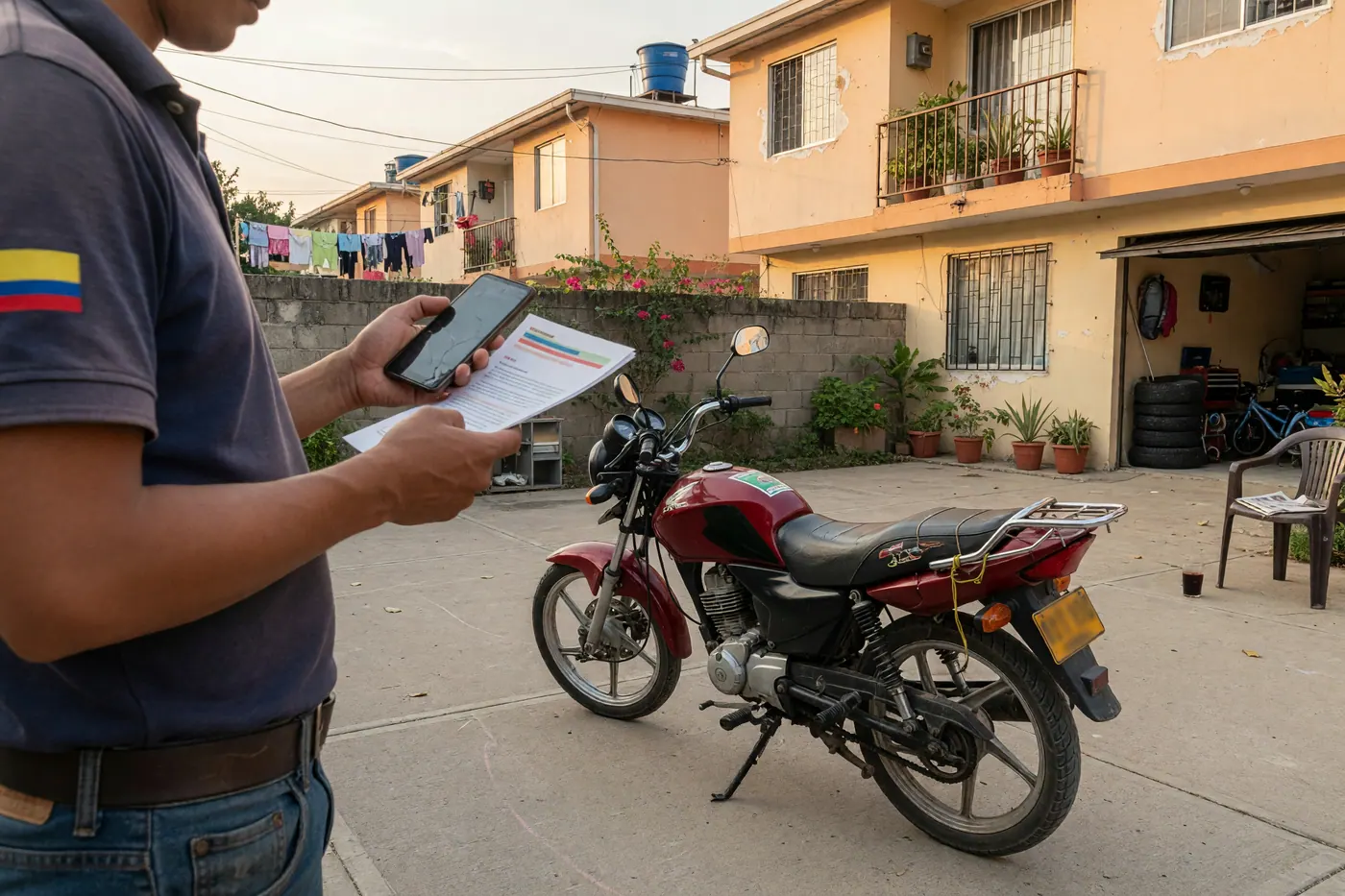
A mobile inspection helps when the car is in a gated community. Without a pit, the floor and chassis tips are harder to see. I would skip any PDF sent via WhatsApp without an appointment: the report must come from the center's official email. Bring the transit license and the owner's ID. If the engine number doesn't match the card, the rest of the check is pointless.
How much does an inspection cost and who pays for it
There is no official rate. In commercial packages from Colserauto and AutoMás, a private inspection is around $140,000 COP, and for high-end or 4x4 vehicles, it can exceed $350,000 COP (about $44 to $110 USD, near $3,193 per dollar). This is a reference range, not a price list.
Cutoff: September 22, 2026.
| Standard package | What it usually includes | Reference range |
|---|---|---|
| Basic | Structure, paint in microns, and short road test | Around $140,000 COP |
| Intermediate | OBD-II scan, leaks, and suspension | Half of the range, depending on the center |
| High-end or 4x4 | Compression and accident history study | Can exceed $350,000 COP |
Who pays isn't in the law. Usually, the buyer covers it, or it is split in half, or the seller takes it on if the deal closes. If they won't let you put the car on a lift, I would walk away. A report from eight months ago is an old photo, not a promise that the engine will hold up.
How to post the car with the inspection visible
With the report in hand, the buyer negotiates a number, not a 'what if it has been crashed.' The text includes the date, the name of the center, and the condition or insurability percentage, if provided. A photo of the lift and another of the scanner weigh more than ten rims.
According to the active listings on Colombia Move, there are 3 cars for sale and those listings have 256 views: there are people looking and few offers published. In the section for vehicles the listing remains with documents and inspection in plain sight, without an intermediary's commission or the silence of Facebook groups.
Frequently Asked Questions
❓ What is the difference between an inspection (peritaje) and the technical-mechanical review in Colombia?
The RTM at a CDA is mandatory for driving and only certifies road safety and emissions. The inspection is voluntary and reviews structure, engine, electronics, and sales documents. A car can pass the RTM and still have body filler on the pillars. The Ministry of Transport review, based on Law 769, does not replace this commercial diagnostic.
❓ How much does a vehicle inspection cost in Colombia?
There is no official rate: based on commercial listings, the market is around $140,000 COP and can exceed $350,000 COP for high-end or 4x4 vehicles. The price is set by each center according to the package, not by the Ministry of Transport. Ask in writing if it includes compression, a scanner, and a collision history check before paying.
❓ Who should pay for the cost of the inspection when negotiating a used car?
There is no rule that obligates one of the parties. It is customary, updated as standard business practice, for the interested buyer to pay for it. It can also be agreed to split the cost, or that the seller covers it if the deal is closed. Leave it in writing in the chat before the appointment.
❓ Does structural damage to the chassis affect the car's insurance?
Yes: a deformed chassis tip or pillar lowers the value and can leave the car out of a comprehensive insurance policy. The report, checked on the day of the appointment, describes that moment and does not guarantee that the insurance company will accept it. If the insurability percentage comes out low, negotiate the price or discard the purchase.
❓ How does an approved inspection help sell a car faster?
It shows the actual condition and cuts down the suspicion of a hidden accident. The buyer negotiates the report, not an eternal 'what if.' A PDF from the center, checked with a visible date, justifies the price and filters out those who just want to haggle without seeing the car.
❓ Where to publish a used car with an inspection in Colombia without commission?
On Colombia Move, in the car category, the owner uploads photos of the vehicle and the report and speaks directly with the buyer. You do not pay a commission for publishing. The ad works better if the date of the inspection and the name of the center are in the first paragraph, as a sales practice among private individuals.
Comments
Loading comments...
Checking sign-in status...