
How to offer hauling and small moving services in Colombia and get direct clients
A practical guide for drivers and pickup truck owners who want to better present their hauls, quote without surprises, and build trust with direct clients.
IDIOMA DEL ARTÍCULO
Showing original language
A Saturday at seven, in front of a building without an elevator, is when you find out if a delivery job was quoted correctly. If nobody mentioned the sofa had to be carried down four floors, a simple trip becomes a wasted morning. I would clarify the vehicle, capacity, zones, assistants, and conditions right from the ad.
Quick answer: writing “I do moves” isn't enough. Show real photos, explain what cargo you accept, ask for details to provide a quote, and confirm what the price includes. This filters out the curious and builds trust. If you want to see real options right now, you can post your services for free on Colombia Move — posting is completely free.
Define the delivery work you can actually fulfill
This guide is for those with a van, truck, or small lorry who move furniture, appliances, or boxes. Do not mix moving, courier services, passengers, and corporate cargo: a focused service is understood and quoted better. Describe useful space, protective elements, assistants, and limits; many damages arise from expectations that no one wrote down.
- Spot delivery: one or a few items, with a defined origin and destination.
- Small move: several boxes and furniture from a studio apartment or bedroom.
- Loading support: transport with agreed-upon assistants.
The ad that avoids twenty repeated questions
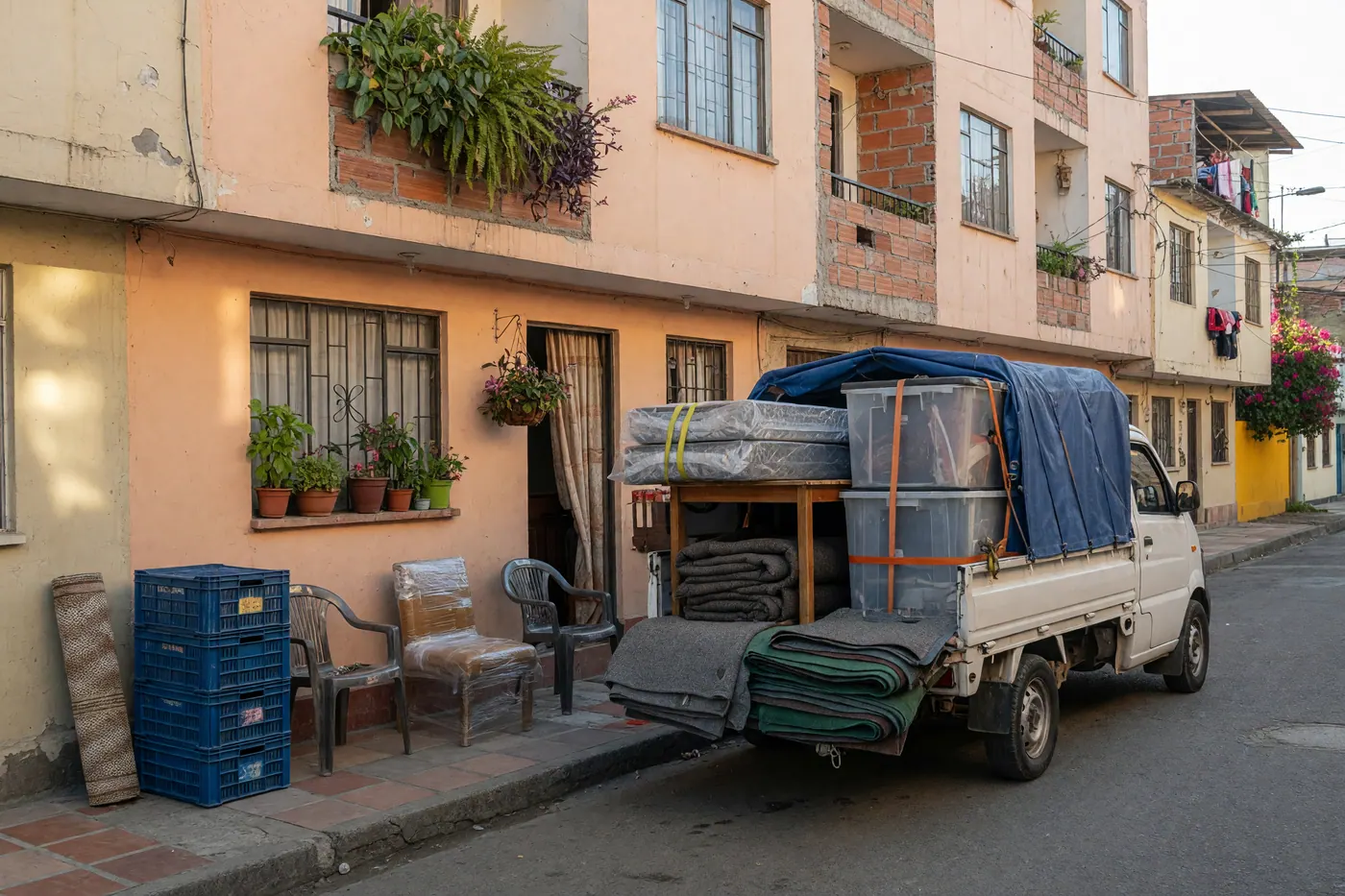
A useful listing indicates zones, schedule, vehicle, assistants, excluded cargo, and quoting method. Post your own photos of the exterior, empty space, blankets, and tie-downs; don't use a catalog photo different from the vehicle that will arrive.
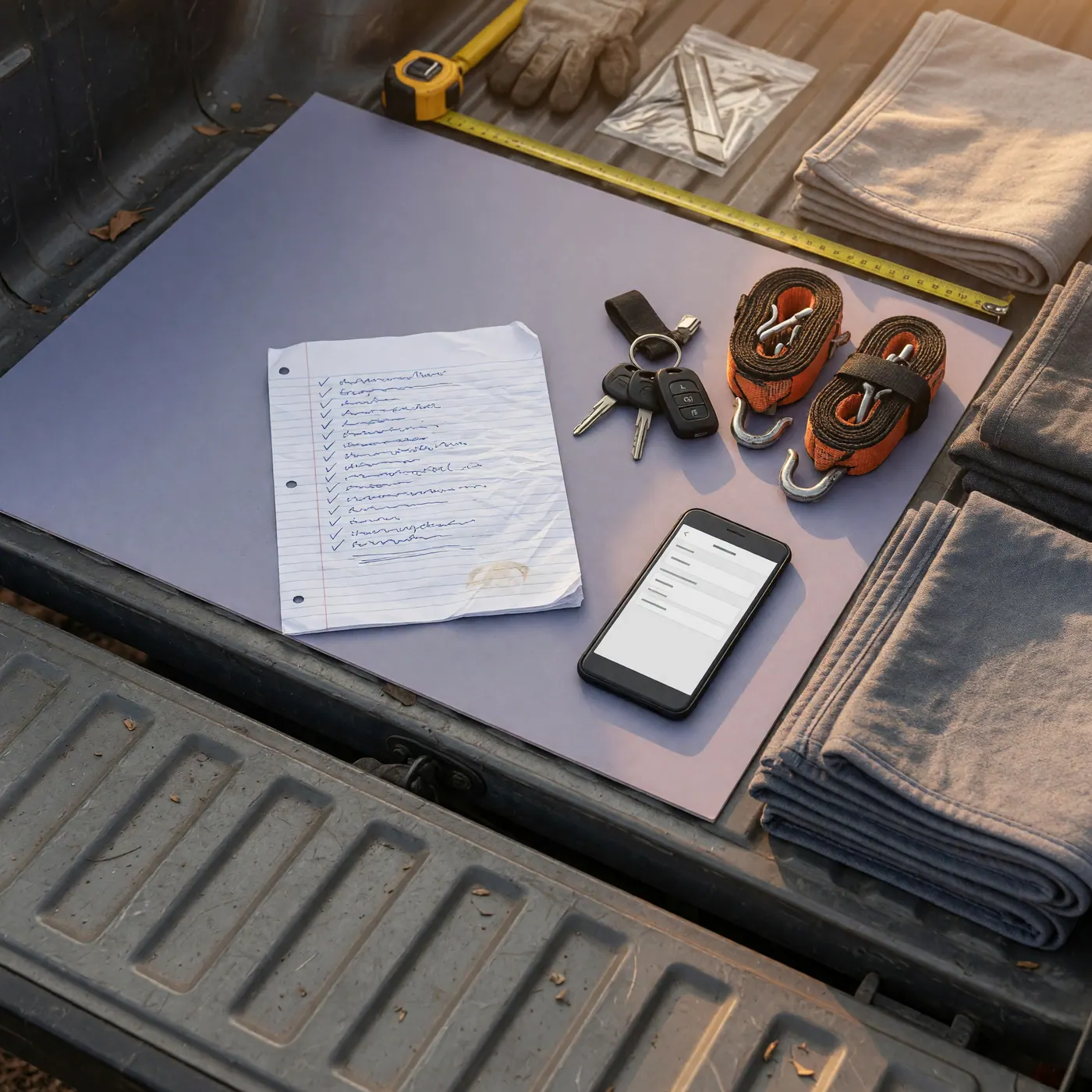
Include a “starting from” price only if you explain what scenario it covers, or indicate that you quote based on photos and route details. Before booking, ask for the approximate origin and destination, date, floor numbers, elevator access, inventory, photos of the items, the need for disassembly, and who will be loading. This checklist resembles the one I recommend for creating a home repair ad: concrete scope, real evidence, and visible conditions.
Quote without giving away your work or surprising the client
There is no universal rate. Distance, loading, stairs, volume, assistants, waiting time, and risk all matter. I would ask for photos before giving a fixed price; quoting a “small fridge” without seeing it usually ends up being expensive.
Charge per trip with a defined inventory and route; per hour if the loading is uncertain; or separate the transport, assistants, and extras. Leave the total in COP, clearly stating what it includes and what would trigger a re-quote. The Superintendency of Transport requires clear information regarding price and conditions.
For automotive cargo transport operations, the SICE-TAC from the Ministry of Transport works as an official reference for efficient costs. Do not turn it into a universal table for moving a sofa on an urban route: it serves as cost context, not as a single rate for every domestic move.
Paperwork and trust signals worth showing
Keep your license, SOAT, technical-mechanical inspection (when applicable), and vehicle registration/RUNT up to date. The client may ask for evidence before handing over their belongings. The RUNT citizen portal allows you to check the vehicle, SOAT, and technical inspection; hide unnecessary personal data.
With a cargo manifest, waybill, and RNDC, be careful about generalizing. In public cargo transport, the manifest protects the merchandise before authorities and is part of a formal operation; the RNDC explains the flow of information, waybill, and manifest. For private cargo or different configurations, documentation depends on the relationship with the merchandise, the vehicle, and the service. Confirm your specific case with the Ministry of Transport or specialized advisory: a small move is not automatically exempt nor automatically subject to the same document.
Authorities check the vehicle and documents; non-compliance can lead to sanctions. Colombia Move does not replace certifications, insurance, contracts, or tax duties. If a company hires you, review this guide on withholding tax for services and confirm your situation with an accountant.
Filter risks before revealing the full address
Ask for approximate sectors, inventory, and photos; provide the exact address upon confirmation. Summarize the date, time, vehicle, assistants, price, payment, and loading in writing. If you ask for an advance payment, explain the return policy and receipt. No filter eliminates fraud, but verifiable rules reduce arguments.
- Confirm that the person has the right to dispose of the goods when there are suspicious signs.
- Do not accept sealed packages whose contents or origin they refuse to explain.
- Record the inventory and the visible condition of delicate items before loading them.
- Reject overloading, insecure tie-downs, or route changes that exceed what was agreed.
- Keep the chat, the accepted quote, and the proof of payment.
Where to post to receive more complete requests
Facebook Marketplace, neighborhood groups, MercadoLibre, and referrals provide contacts, although the posts eventually get lost. I would combine them with a stable and shareable listing.
There is a concrete opportunity: according to the active ads on Colombia Move as of August 7, 2026, the vehicle category had only 1 active ad and an internal supply gap of 74 points. That doesn't guarantee clients, but it does show a still-thin storefront to present your vehicle, coverage, and conditions without competing against hundreds of identical listings.
Frequently asked questions
❓ How much to charge for a small delivery in Colombia?
There is no universal rate, according to official sources consulted in 2026. Quote based on route, volume, loading, floors, assistants, and waiting time. SICE-TAC references cargo costs, not automatic domestic prices.
❓ What papers should a driver show for the service to be safe?
They can show a driver's license, SOAT, technical-mechanical inspection (when applicable), and consistent vehicle data. The registered status of the SOAT, technical inspection, and vehicle can be verified via RUNT; share only the necessary information and protect numbers or personal data that do not contribute to the verification.
❓ Do I need a cargo manifest to do small moves?
It depends on the type of operation, vehicle, and relationship with the cargo. Public cargo transport handles manifests, waybills, and RNDC reports, while private cargo has different documentation logic. Before operating formally, confirm your specific case with the Ministry of Transport, RNDC, or specialized advisory.
❓ How to avoid clients who waste time?
Using sources consulted in 2026, filter before quoting by origin, destination, photos, inventory, date, floors, and helpers. Summarize price and scope; if data is missing or the inventory changes, I would not block the schedule.
❓ What photos should I upload to offer moving services?
Upload real photos of the exterior and cargo space, plus images of blankets, straps, covers, and tools. Avoid legible license plates, personal documents, unsafe cargo, or photos that aren't yours. An image of the empty vehicle allows the customer to better estimate if their items will fit.
❓ Where can I post a moving or hauling service?
According to marketplace trends reviewed in 2026, you can combine marketplaces, groups, networks, and referrals. Include the zone, vehicle, capacity, photos, availability, and price conditions to receive contacts with more realistic expectations.
❓ Is it better to charge by trip, hour, or distance?
It depends on what you can define, according to references consulted in 2026. By trip works with clear inventory and route; by hour, with uncertain loading; and itemized, if there are helpers or extras. Explain wait times and re-quoting.






Comments
Loading comments...
Checking sign-in status...