
Manual coffee grinder: the secret to the best coffee at home
Grinding your beans right before brewing makes all the difference. We explain how to choose the right manual grinder, what to expect from each type of burr, and how much they cost in Colombia in 2026.
IDIOMA DEL ARTÍCULO
Showing original language
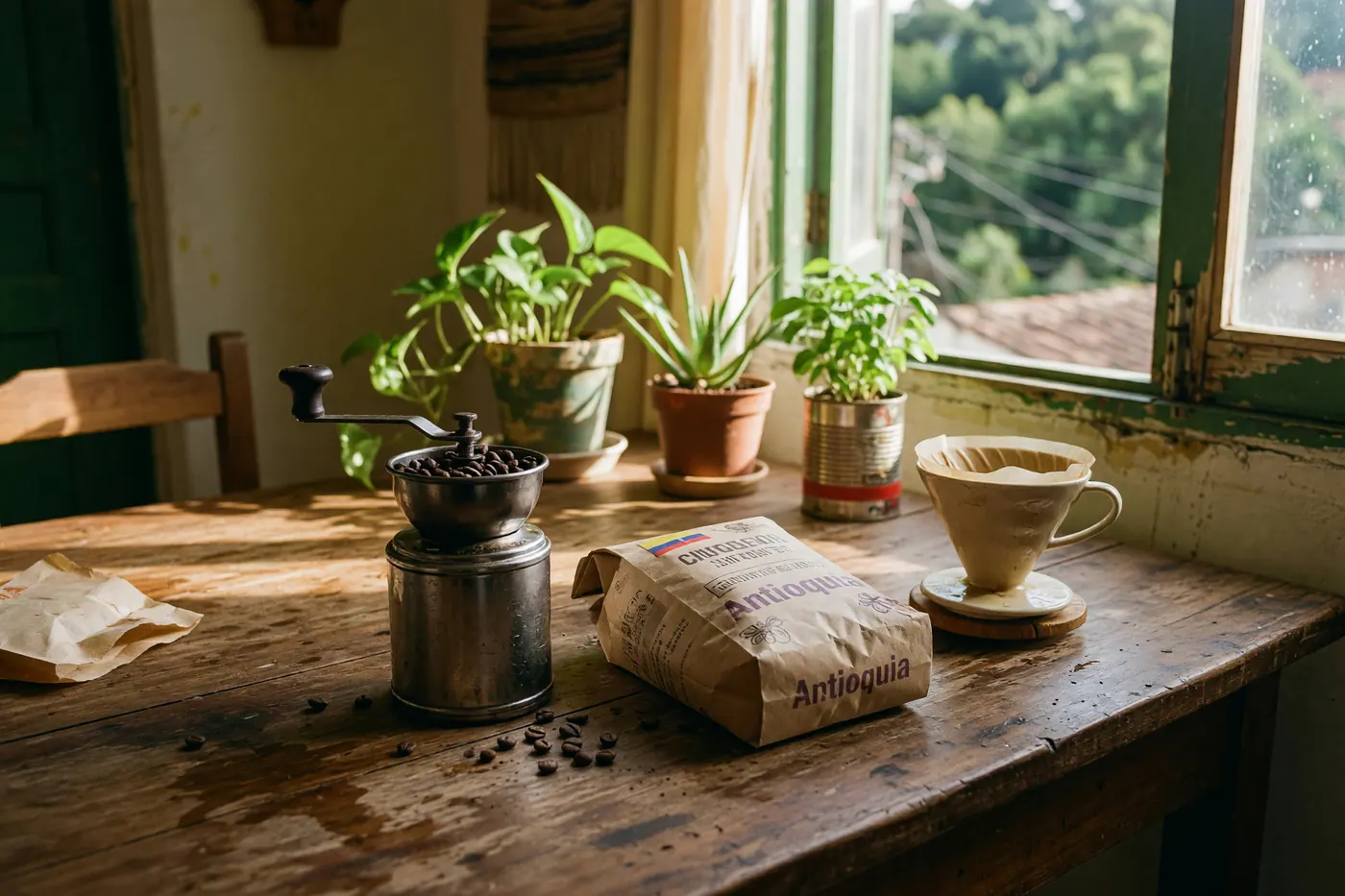
There is nothing like the aroma that fills the kitchen at 6:00 a.m. when you freshly grind your own beans. If you are buying Colombian specialty coffee, grown with care on our farms, but ask for it to be ground at the shop to take home, honestly, you are wasting money. Oxidation destroys the coffee's volatile aromas in just 15 to 30 minutes after grinding.
For many enthusiasts, the ultimate dream is to have an espresso machine with an integrated conical burr grinder. But if your budget is smaller, you move around a lot, or you prefer gentle brewing methods like the V60 or French press, a good manual coffee grinder is, without a doubt, your best initial investment.
| Grinder Type | Consistency | Ideal for |
|---|---|---|
| Electric Blade | Very poor (dust and chunks) | Spices, NOT for coffee |
| Manual (Ceramic Burrs) | Acceptable | Beginners, low budgets |
| Manual (Steel Burrs) | Excellent | Specialty coffee, V60, Espresso |
Why grind by hand? The advantages of a manual grinder
The greatest enemy of coffee is heat. Cheap electric blade grinders spin at extremely high revolutions (RPM), heating the bean and altering its delicate tasting notes before the water even touches it. A manual burr grinder crushes the bean at low revolutions, ensuring no heat transfer and achieving a uniform particle size.
Interestingly, although the specialty coffee culture is booming in the country, there is a huge opportunity for local sellers. According to active ads on Colombia Move (June 2026), the coffee category currently has 0 active ads and a very high demand gap of 52 points. It is the perfect time for roasters and coffee farms to list their beans and equipment, because demand far exceeds supply.
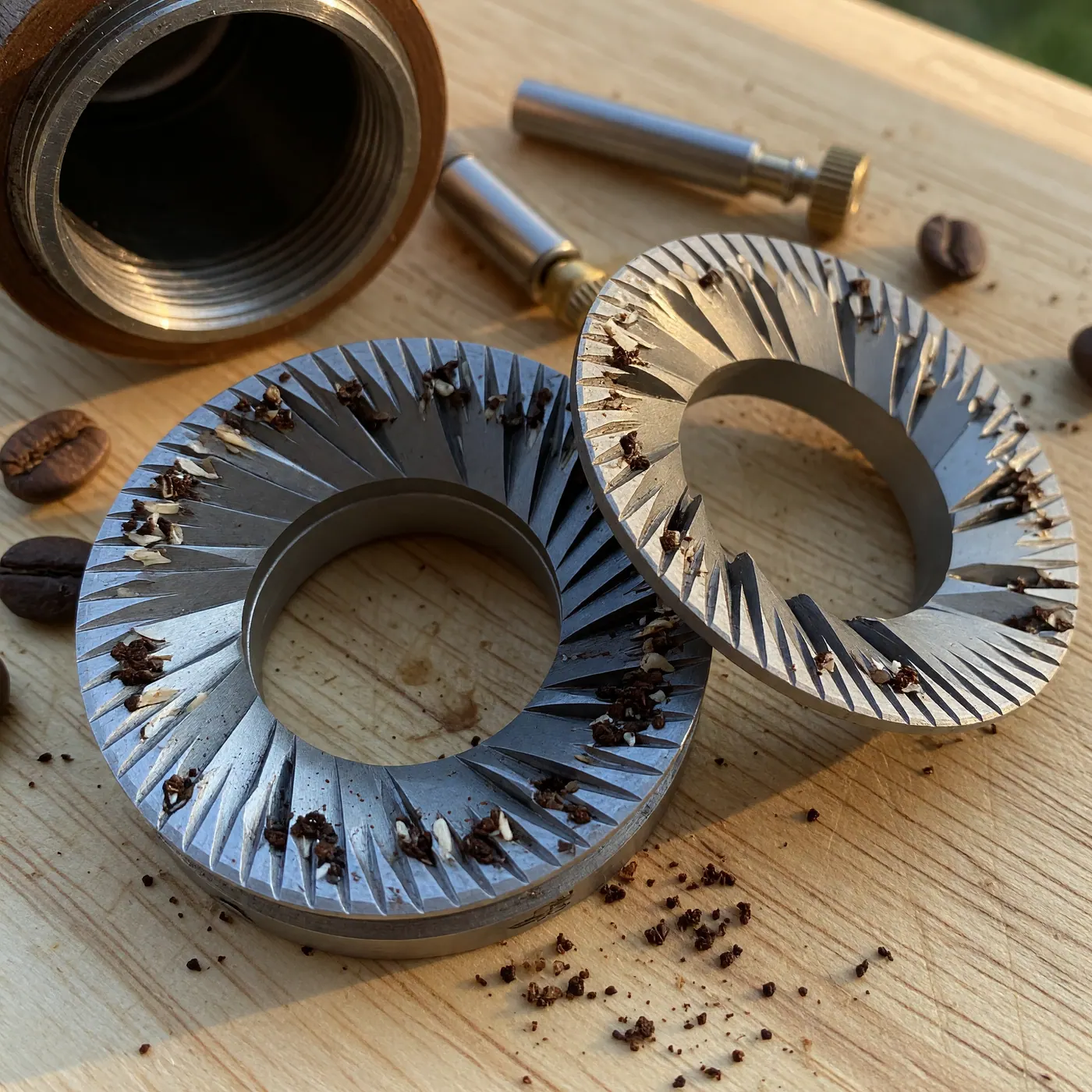
When looking for your first grinder, you will face this decision. Ceramic burrs are very resistant to friction wear and do not rust — which makes them durable under normal conditions of use. However, they are fragile against impacts: if a small stone gets into the coffee (something that happens with uninspected origin beans), the burr can crack. Additionally, their mechanism tends to crush the bean by compression rather than cutting it, generating more ultra-fine particles (fines) that can contribute to over-extraction and a more bitter taste.
Stainless steel burrs cut the beans with greater precision, producing fewer ultra-fine particles (fines). That translates into greater grind uniformity, better extraction control, and, in the cup, a cleaner profile with reduced bitterness — especially noticeable in brewing methods like the V60 or Chemex. In most models, grinding with steel also requires less physical effort than with ceramic.
Stainless steel burrs usually offer a more uniform cut, which helps achieve more balanced extractions. In many models, grinding with steel is also faster and requires less physical effort than with ceramic, although the actual impact in the cup varies depending on the equipment and the setting.
Guide to manual grinder brands and prices in Colombia (2026)
If you decide to go the manual route, there are options for every budget. The following ranges are for reference (June 2026); prices vary by store and availability — confirm before buying:
- Comandante C40 MK4: The German gold standard, preferred by competition baristas worldwide. In Colombia, it costs between $1,800,000 and $2,400,000 COP (June 2026; distributors like La Feria de la Greca and MercadoLibre Colombia). Prices vary by distributor and whether it includes accessories. It is a long-term investment; the local second-hand market usually has options 20 to 30% cheaper.
- Timemore Chestnut C3 / C3 ESP Pro: The sweet spot between price and performance. With good-caliber conical steel burrs, the Chestnut C3S can be found for around $499,900 COP and the C3 ESP Pro is around $583,000 COP at Colombian distributors (June 2026, Rasgos Medellín and Yaxa). Prices vary by store and availability. If you find a second-hand one in good condition — burrs without nicks and a firm adjustment — even better.
- Entry-level generics and Hario Mini Slim / Skerton Pro: Low-cost generic grinders (basic ceramic burrs) can be found on MercadoLibre Colombia from $30,000 to $50,000 COP (June 2026). If you want to make the leap to something of real quality without breaking the budget, the Hario Mini Slim and Hario Skerton Pro are the most recommended options for beginners: you can find them in specialty stores like Café San Alberto (Bogotá) and Pergamino (Medellín) between $220,000 and $299,000 COP (June 2026). Hario ceramic burrs are reliable and wear-resistant, although the physical effort to grind is greater than with steel models.
How to adjust the grind according to your brewing method
Having the best grinder is useless if you don't adjust the grind size (the famous "clicks"). If you look at the best specialty coffee shops to work from in Medellín, you will see that baristas adjust the grind several times a day depending on humidity and the bean.
- Fine (like fine table salt): Exclusive for espresso machines or Moka pots.
- Medium (like beach sand): Ideal for drip methods like the V60, Chemex, or the traditional greca.
- Coarse (like sea salt): Perfect for French Press or Cold Brew, where the coffee sits in the water for longer.
Where to buy and sell coffee equipment in Colombia
The second-hand market for specialty coffee equipment is very active. If you are a roaster, own a farm, or just want to sell your Hario grinder to upgrade to a Timemore, read our guide on how to post local food, desserts, and coffee in Colombia.
Frequently Asked Questions
❓ Why is a manual grinder better than an electric blade one?
Electric blade grinders chop the bean irregularly and can heat it up, which affects its volatile aromas and generates uneven flavors (a mix of over-extraction and under-extraction in the same cup). A burr grinder cuts the bean to a more uniform size and at low revolutions, which helps preserve the coffee's oils and aromas. For brewing methods like the V60 or French press, the difference is usually noticeable.
❓ What is the real difference between ceramic and steel burrs?
Stainless steel burrs cut the beans with greater precision, producing fewer ultra-fine particles (fines) for a cleaner cup with less bitterness. Ceramic burrs are highly resistant to friction wear and do not rust, but they tend to crush the bean by compression rather than cutting it, generating more fines. Additionally, they are more fragile against impacts—a small stone can crack them. For specialty filter methods, steel usually yields better results; for casual use with commercial coffee, ceramic works well and is more economical.
❓ How much does a good manual grinder cost in Colombia in 2026?
In June 2026, an entry-level grinder with steel burrs like the Timemore Chestnut C3 ranges between $450,000 and $600,000 COP at Colombian distributors (Rasgos Medellín, Yaxa). A high-end model like the Comandante C40 MK4 is priced between $1,800,000 and $2,400,000 COP (MercadoLibre Colombia, La Feria de la Greca). Prices vary by store, whether accessories are included, and availability—confirm before buying and consider the second-hand market for more accessible options.
❓ How do I know which grind size to use for my coffee maker?
It depends on the contact time with the water. Use a fine grind for espresso machines or Moka pots, a medium grind for filter methods like the V60 or Chemex, and a coarse grind for French press or Cold Brew. The exact setting varies between grinders, so start at a middle point and adjust little by little.
❓ Is it difficult to clean a manual grinder?
No, maintenance is simple: a dry brush after each use is sufficient for most grinders. If you have steel burrs, avoid water to prevent oxidation; if they are ceramic, check the manufacturer's manual before getting them wet. An air blower helps remove fine residue in the grooves.
❓ Where can I sell my used coffee grinder in Colombia?
Post a free ad on Colombia Move with clear photos, brand and model, the condition of the burrs, and your delivery terms. Transparency in the ad speeds up the sale and attracts more serious buyers. You can also share it in specialty coffee WhatsApp groups, where the audience already knows what they are buying.
❓ Is it safe to buy a second-hand coffee grinder?
It can be a good option if you inspect it well before paying: check the wear on the burrs, ensure the grind adjustment works without excessive play, and that the handle turns smoothly without squeaking. Be wary of prices well below market value, which usually indicate worn-out burrs, and ask for photos of the inside or a demonstration before agreeing on the price.


Comments
Loading comments...
Checking sign-in status...